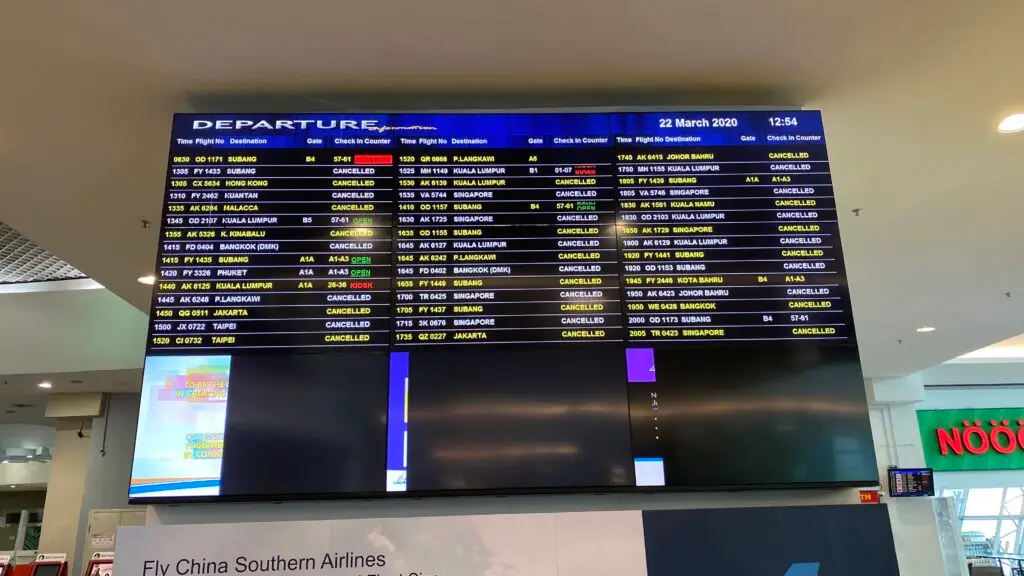
In March 2020, we travelled to the Philippines for a wedding invitation. On our return, we visited Malaysia, which included locations such as Singapore, Malacca, Kuala Lumpur, Langkawi, and Penang. When we departed from England, COVID-19 was just being mentioned on the news, but no one seemed concerned and travel was running as usual. However, throughout the two weeks during our stay in Malaysia, the lockdown enforcement became more severe each day, to the point where the streets were empty. In the end, we only just managed to get back home because all flights out of Kuala Lumpur airport were cancelled!
We returned to England in the third week of March to find the streets busy and packed. The Cheltenham races were in full swing, as though nothing unusual was happening at all.
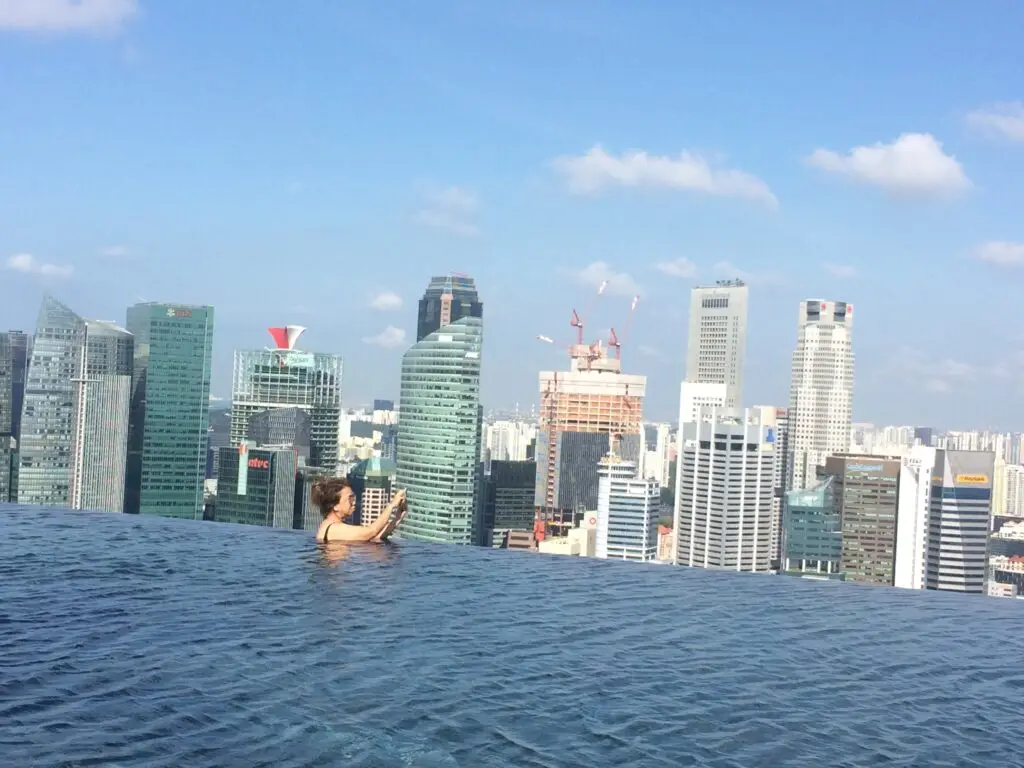
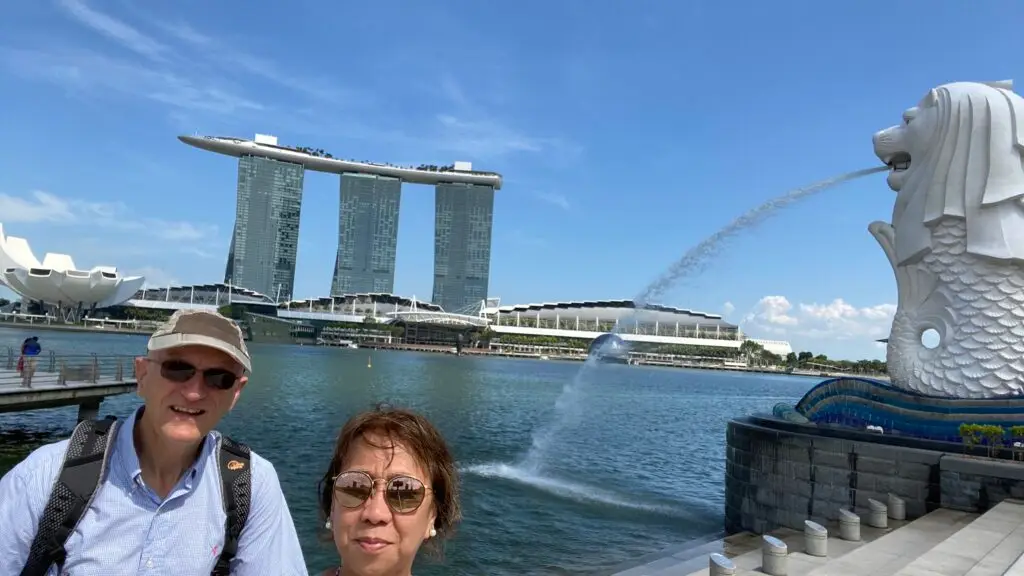
We stayed for one night in the famous Marina Bay Sands (MBS) hotel in Singapore. It was opened in 2011 and fronts the Marina Bay and is a landmark of the city.
In 2022 an expansion plan was announced for a 4th tower to be completed by 2028 containing 1000 hotel rooms and an adjoining concert venue with seating for 15,000 guests.
We stayed for only one night just for the experience because it is very expensive. After that it was back to the YMCA.
Infinity Pool on MBS skydeck
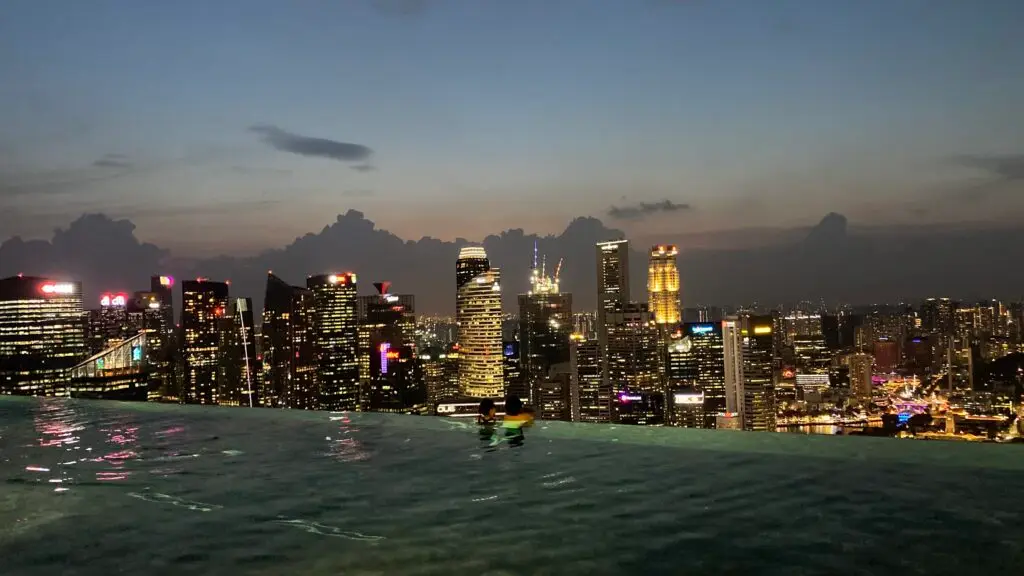
During our stay at MBS we spent all our time at the infinity pool on the famous Skydeck.
The pool is 150m long and is especially impressive at night time.
View of Manila Bay from the Skydeck. Note all the shipping and also the artificial trees in the garden that are connected by aerial walkways. The half dome structures on the left are the botanical gardens.
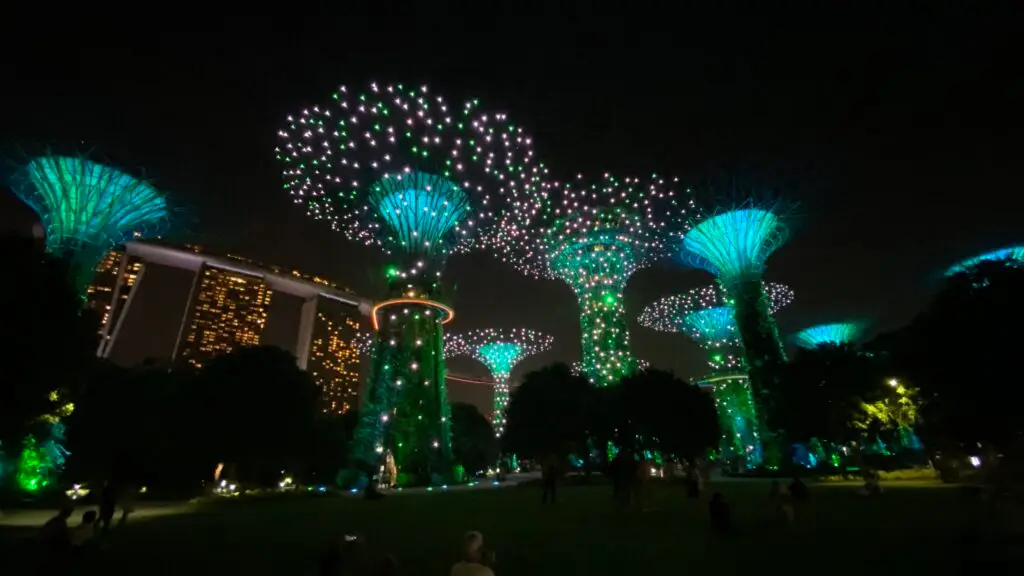
The Marina Bay has much more than just the hotel, there is a multi-storey botanical garden “Gardens by the Bay”.
Every evening, there is a sound and light show with these artificial musical trees.
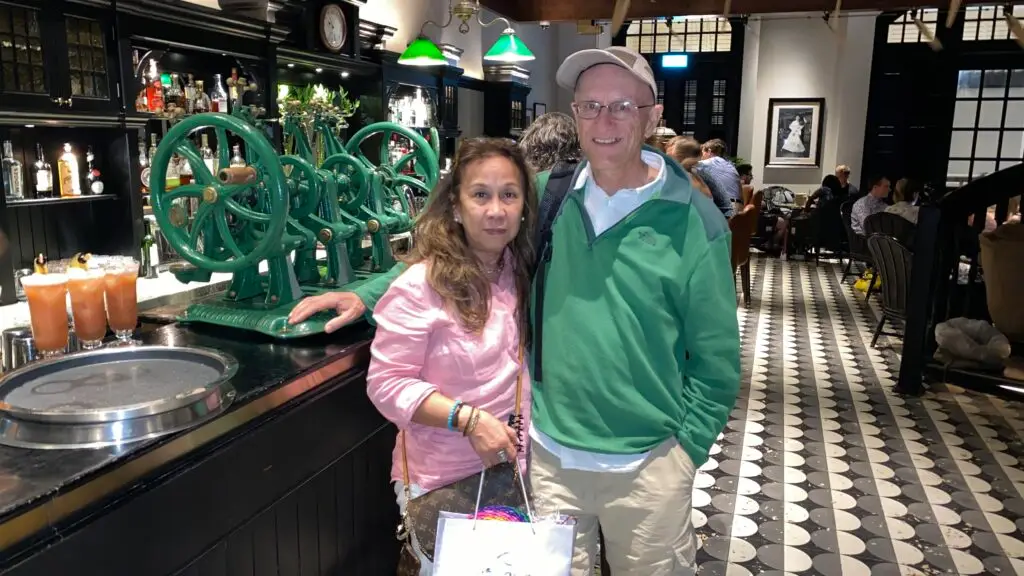
No visit to Singapore would be complete without a Singapore Sling at the famous Raffles Long Bar. Back in the day, the seafront was closer, and the bar was located on what was called “Cads Alley”. It had tables placed outside and was a popular place for wealthy colonial plantation owners to sit and watch the world go by.
The Singapore Sling is based on gin and also contains pineapple juice, lime juice, curaçao, and Bénédictine, while grenadine and cherry liqueur give it its rosy pink hue. It was originally designed for female clientele as disguised fruit juice to bypass the rule of no alcohol served to female customers.
Raffles Long Bar
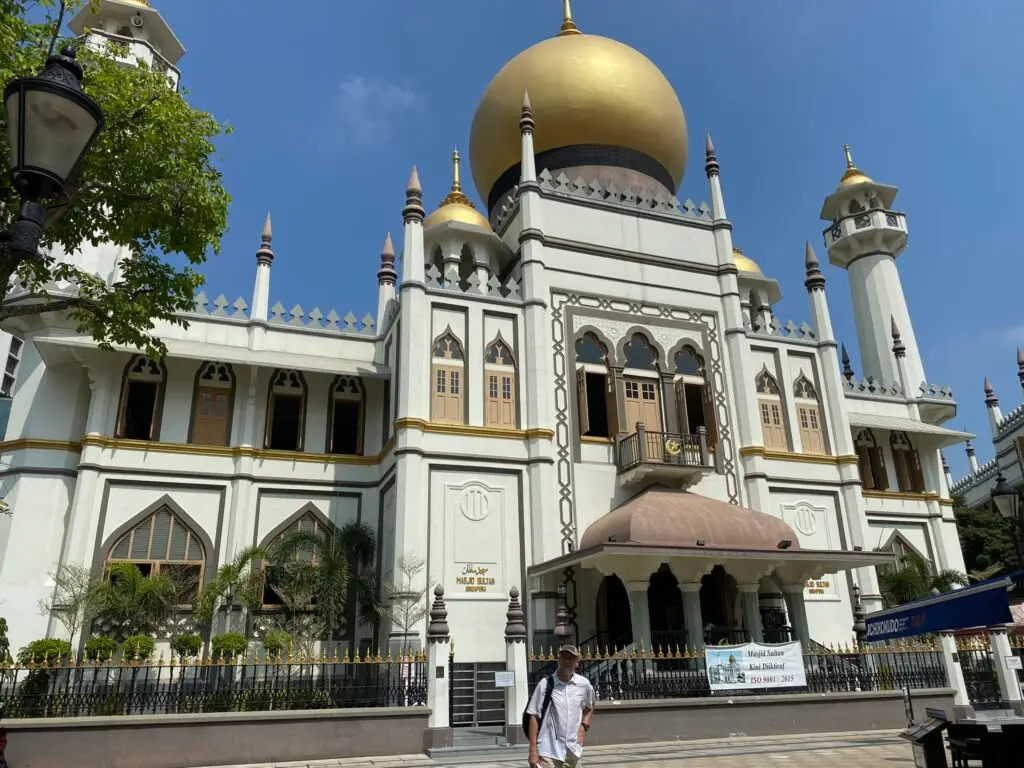
This is the Sultan Mosque in Kampong Glam, or ‘Little India’ district of Singapore. It is the former home of the local sultan and was originally built in 1825 with the aid of a grant from Raffles and the East India Company under the terms of a treaty allowing the Malay leader to retain sovereignty over the area. This is not the original building, which was replaced by the present building in 1928.
Singapore is a very ordered society
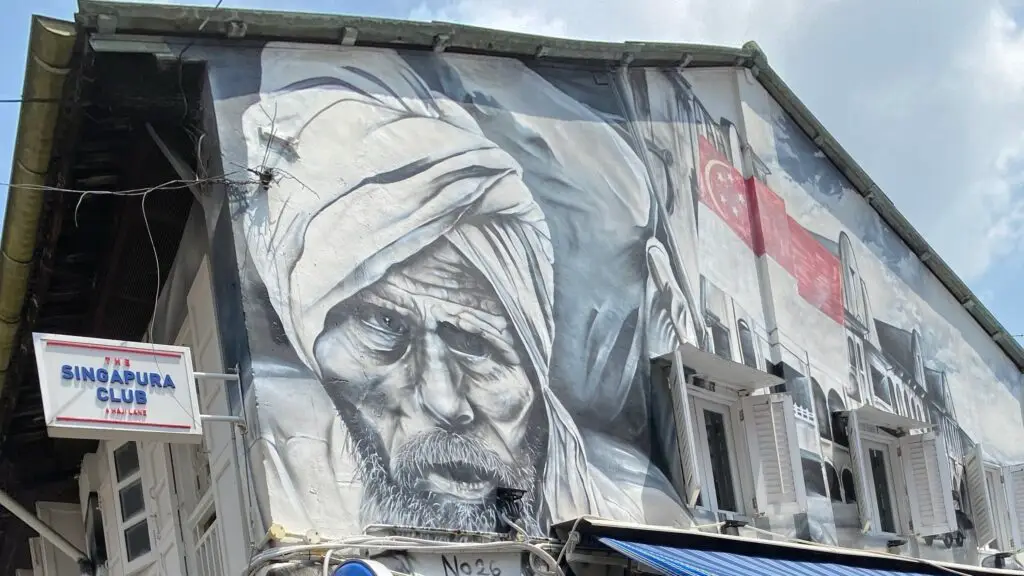
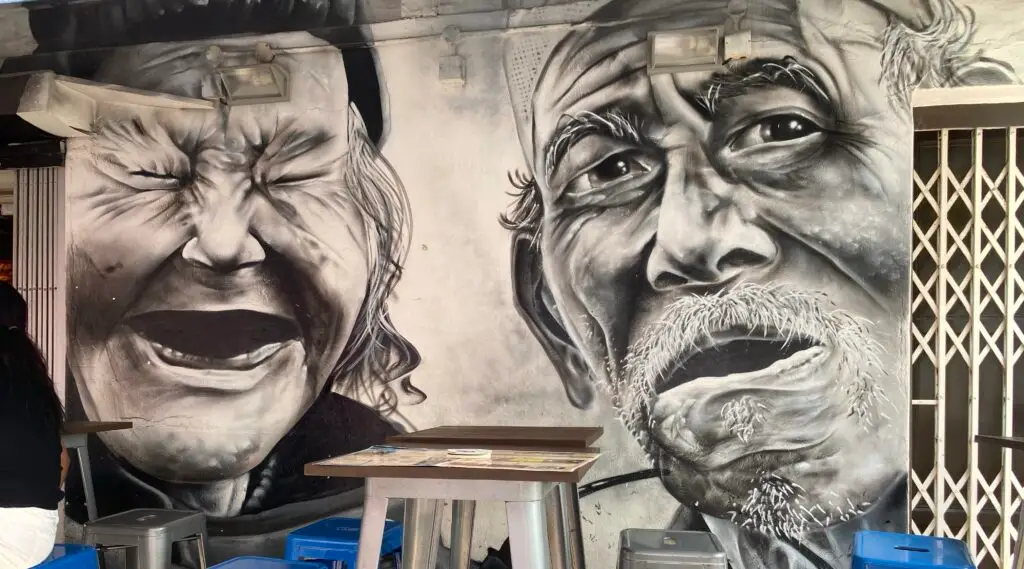
Kampong Glam
Kampong Glam
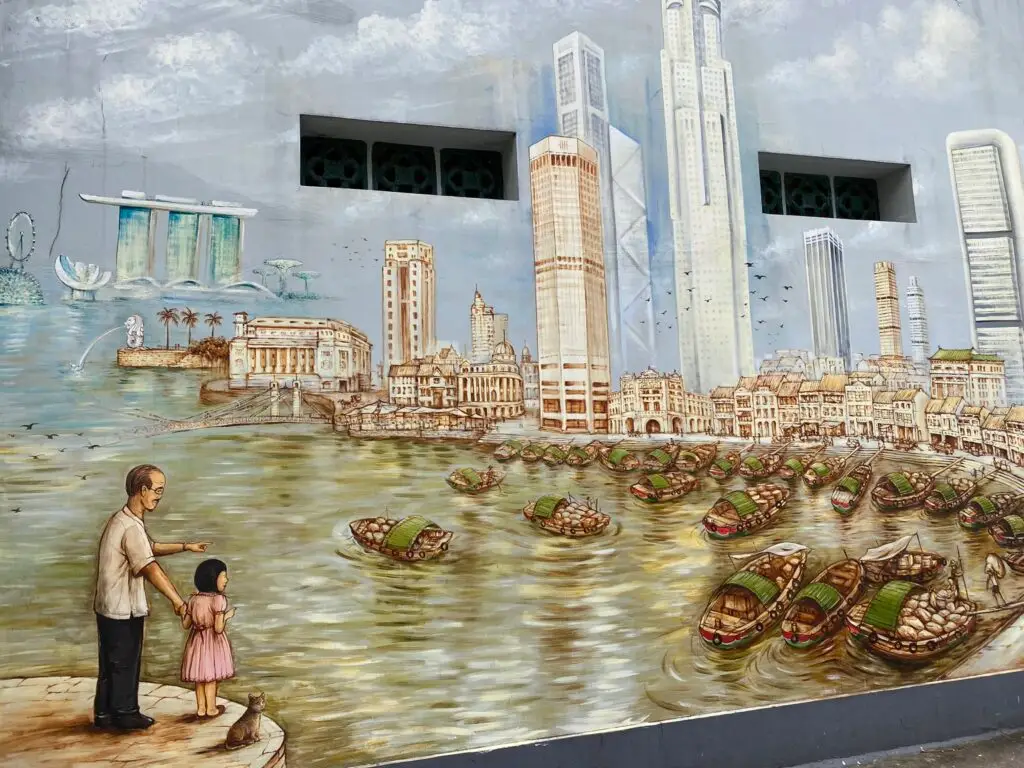
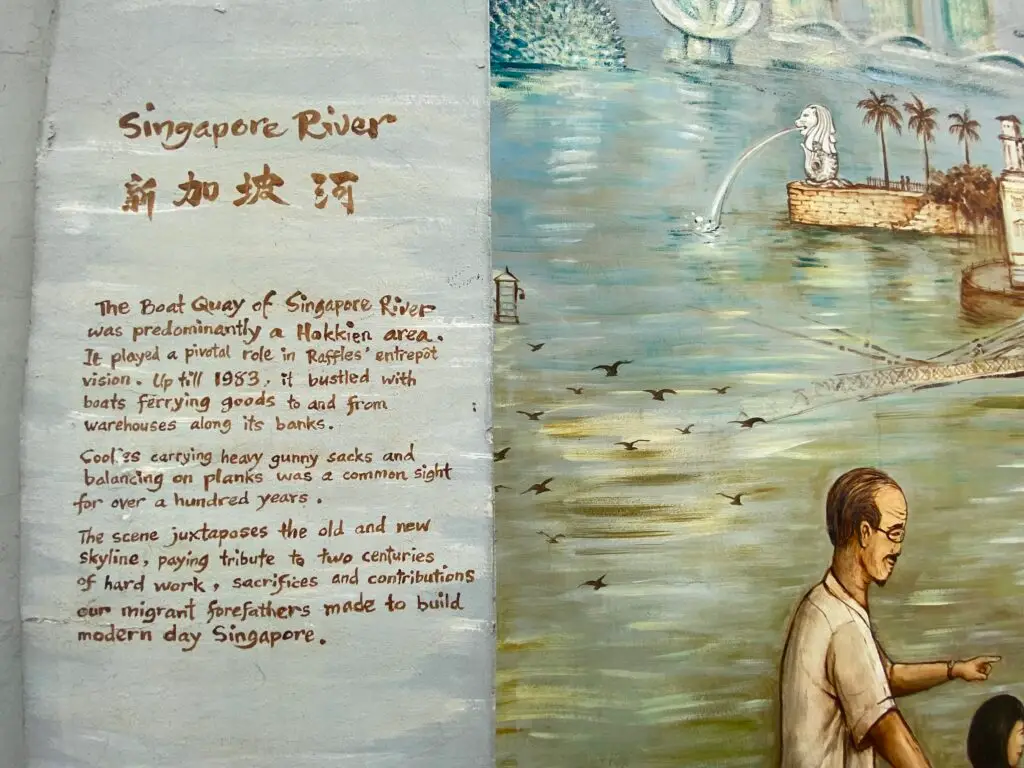
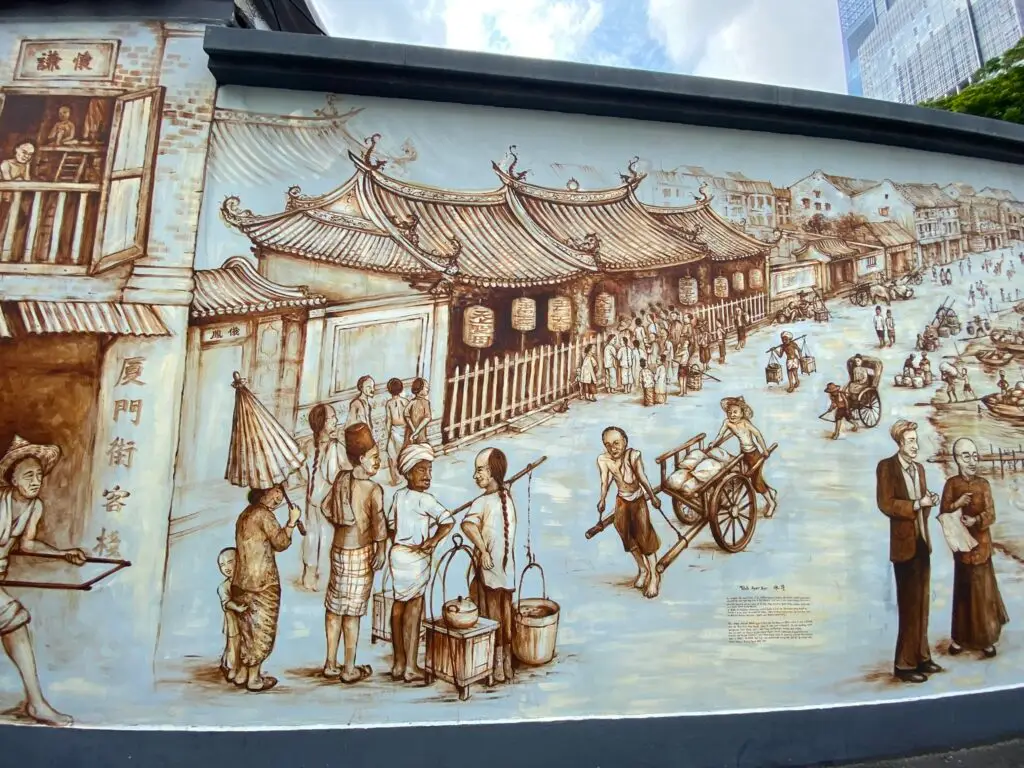
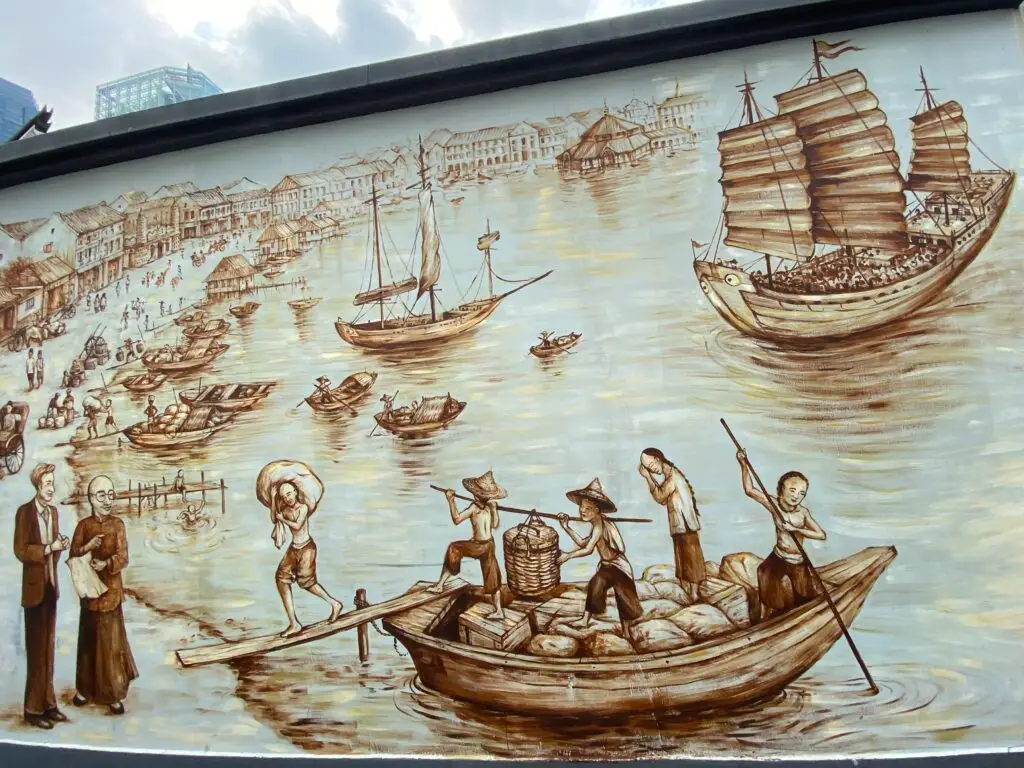
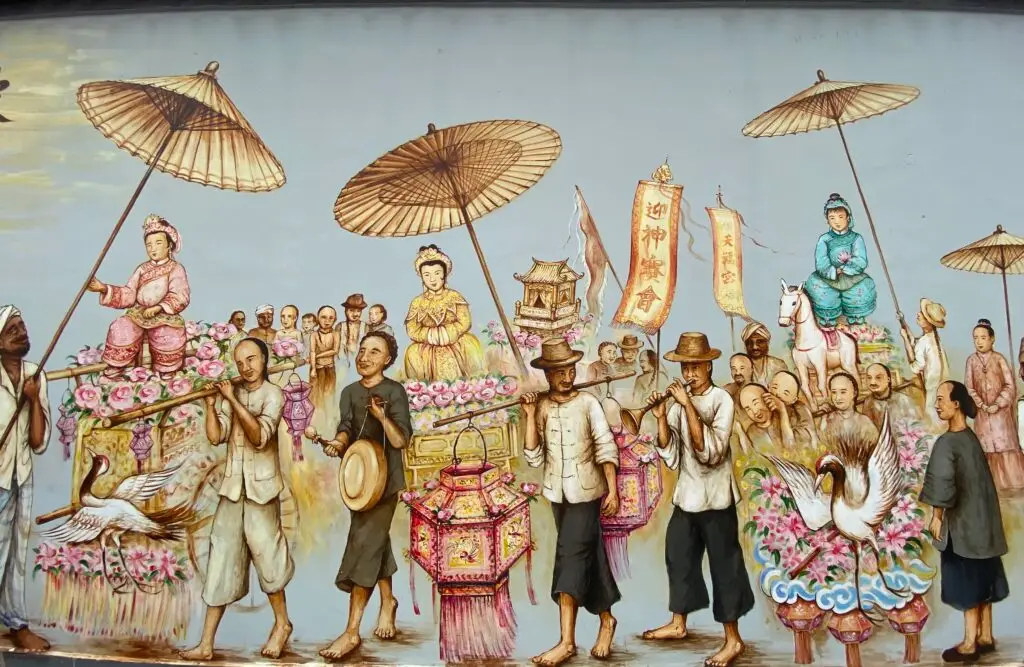
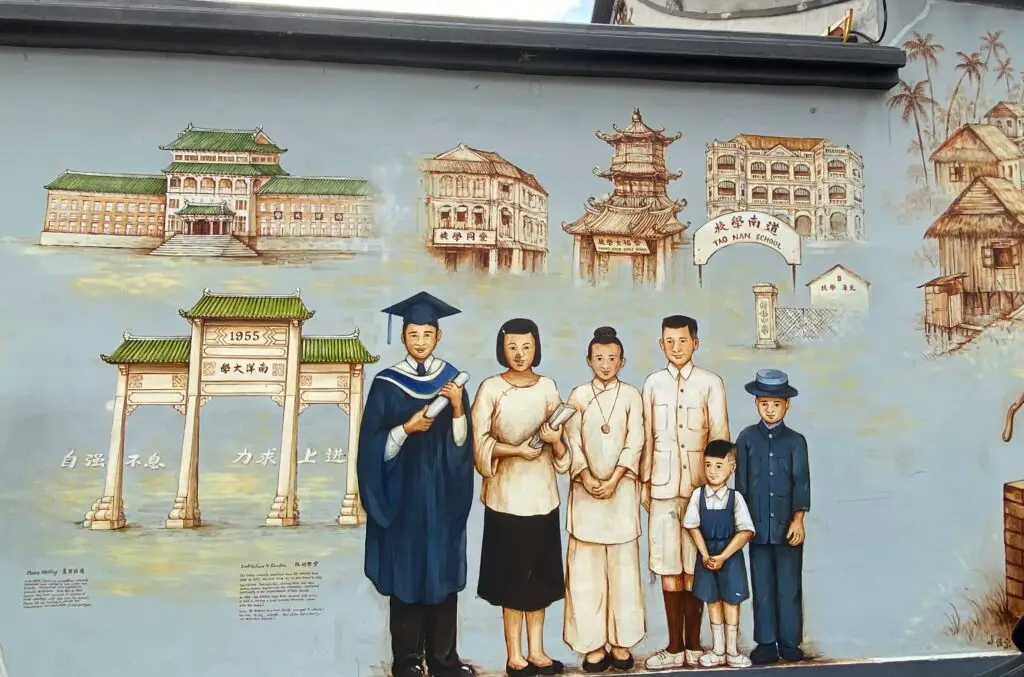
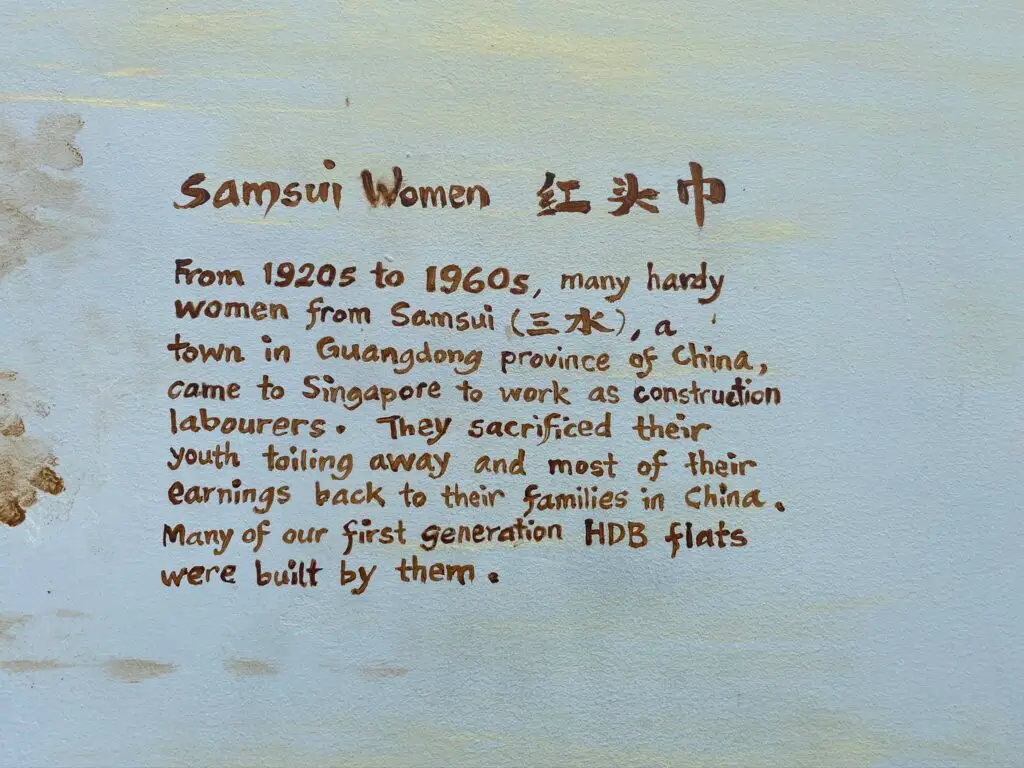
The ‘Thian Hock Keng Mural’ is 44m long and was painted on the rear wall of the Thian Hock Keng Temple by Singaporean artist Yip Yew Chong. It tells the story of Singapore’s early Hokkien immigrants, from leaving China to arriving in Singapore, and the sacrifices, joys, and hardships they experienced along the way.
Thian Hock Keng Mural
Thian Hock Keng Mural
Thian Hock Keng Mural
Thian Hock Keng Mural
Thian Hock Keng Mural
Thian Hock Keng Mural
Thian Hock Keng Mural
Singapore Chinatown
We had our portrait done by this paper cutout artist in Chinatown. Using nothing but a pair of scissors and a single sheet of paper, he made this cutout in just 3 minutes – even with my glasses on!
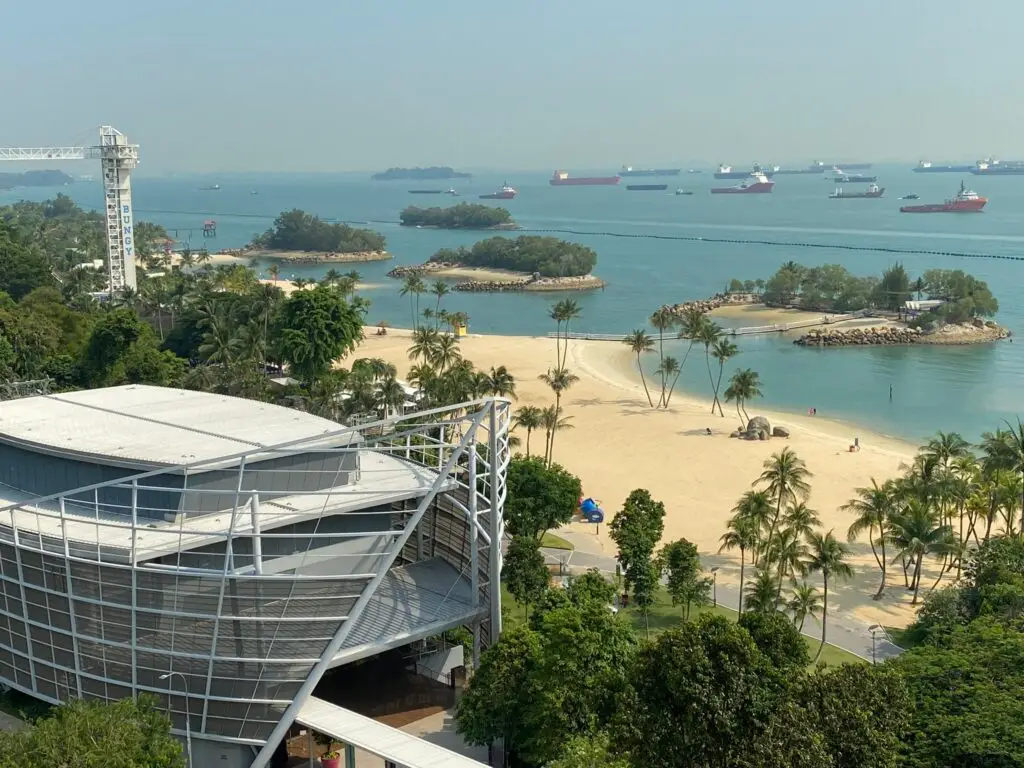
This is Siloso Beach, the most popular beach on Sentosa Island which is essentially one giant pleasure island connected to the mainland by a causeway and packed with rides, activities, and shows. The beach is free, and at night, there is an interactive light show on the sand using projected light which simulates ripples in the water that change as you walk on the beach.
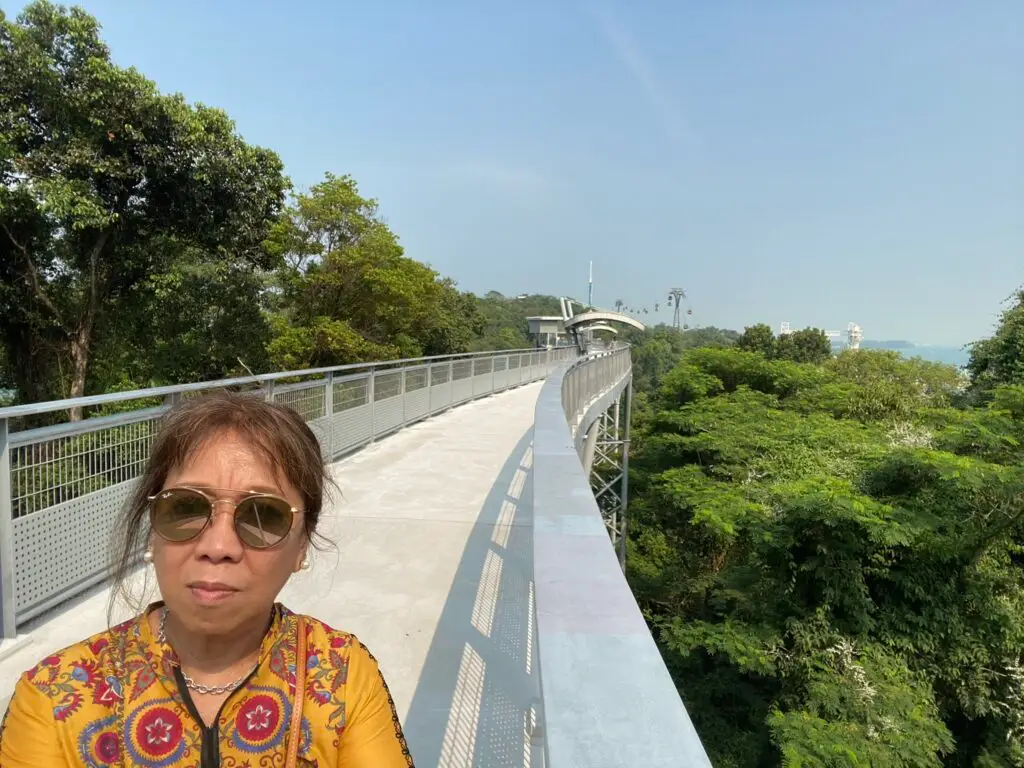
This is a picture of Siloso beach taken from the ‘Skywalk’ – which is a 43m high 181m long bridge connecting Siloso beach to Fort Siloso. As you can see, the normally packed beach is deserted – this is because all the attractions and rides were closed due to COVID. Also note all the cargo ships waiting to unload.
On the Skywalk bridge
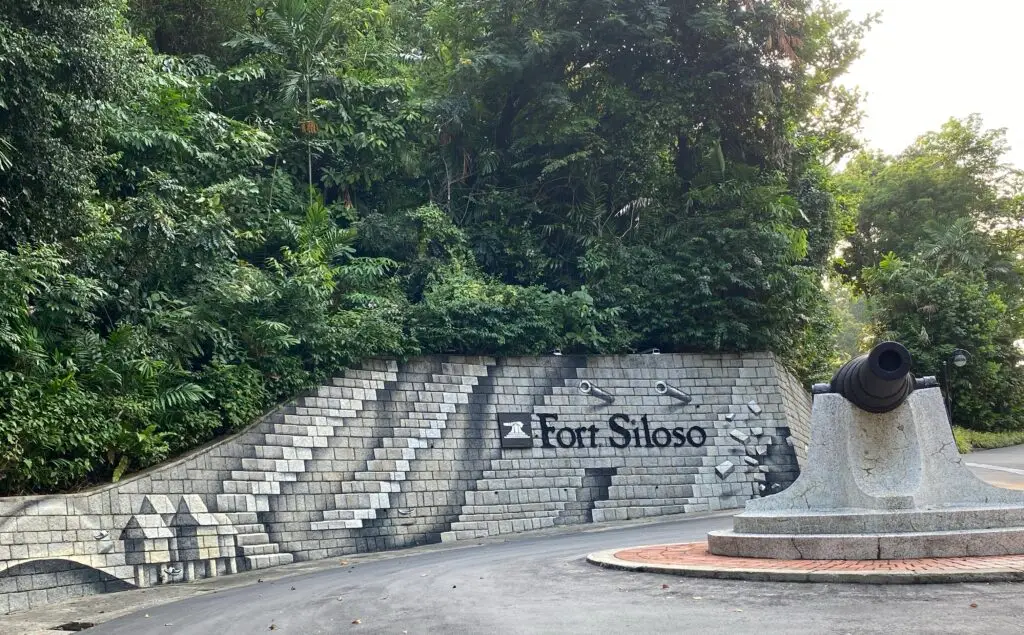
Fort Siloso is at the very tip of Sentosa Island and was built by the British in the 1880s to defend this vital colonial asset against sea invasion. It was famously useless during the Japanese invasion of 1942 because the Japanese did not attack from the sea but through the jungle behind Singapore. You can visit the recreated historical scene of the British surrender which happened here in one of the underground chambers.
Melaka
We traveled by bus from Singapore to Melaka. The bus was full of other Singaporeans going for a weekend away and to do some cheap shopping at the famous weekend market.
In the 15th century, Melaka was one of Southeast Asia’s greatest trading ports, due to its location halfway between China and India and with easy access to the spice islands of Indonesia. In 1824, Melaka was permanently ceded to the British and together with Penang and Singapore, formed the three British territories named the Straits Settlements. Melaka city center gained World Heritage listing in 2008 to protect its ancient architecture from development. Since then, it has developed into a tourist hotspot.
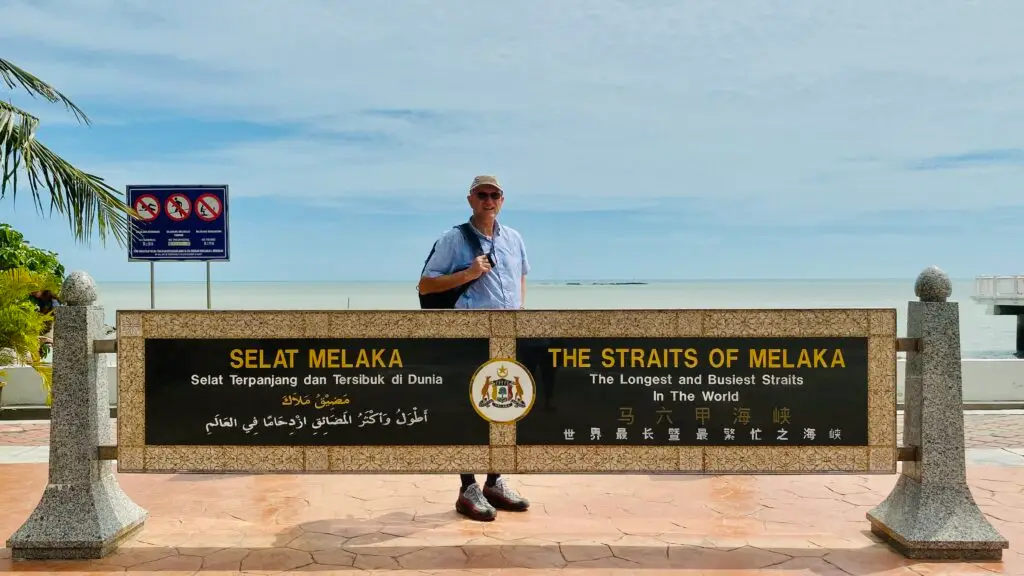
The straits of Melaka run between the Malaysia penisula and Indonesia.
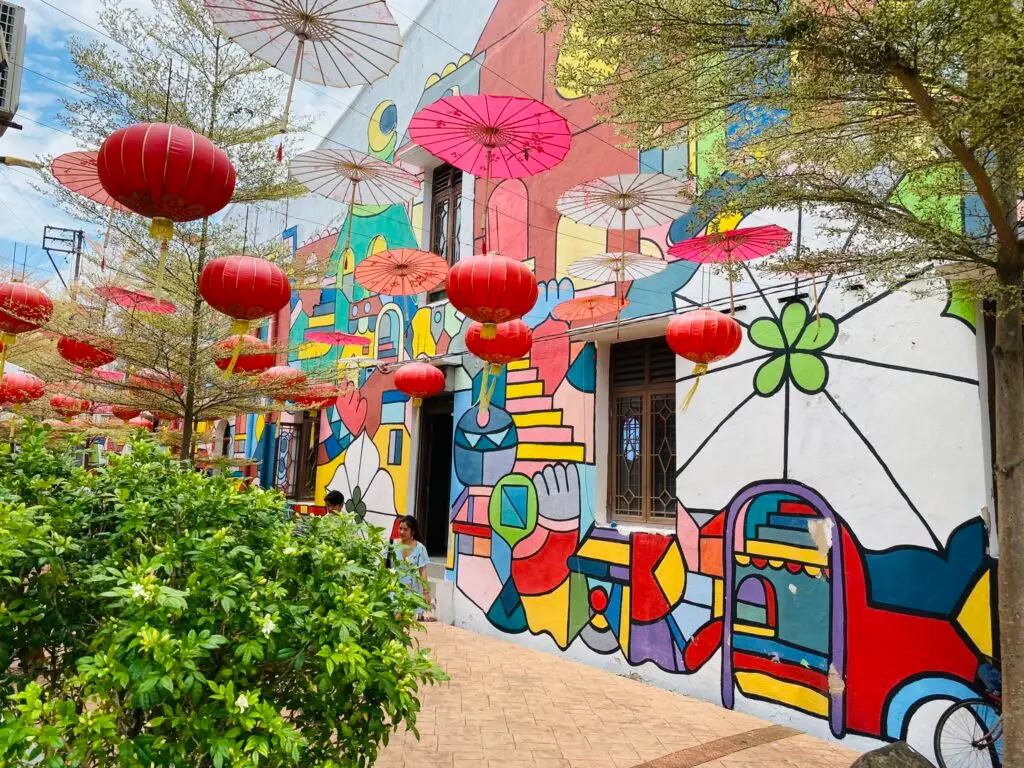
Melaka street scene
Melaka street scene
Melaka street scene
Melaka street scene
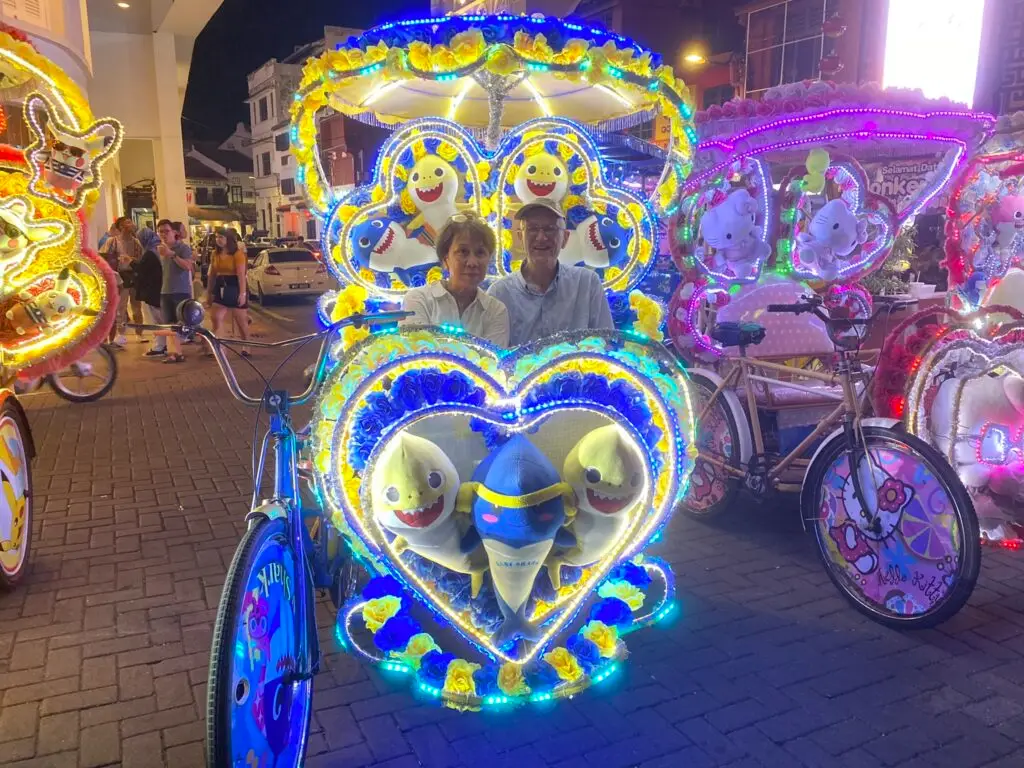
These kitschly decorated trishaws are a part of the tourist experience
The bridges are illuminated at night time
Melaka street scene
Melaka street scene
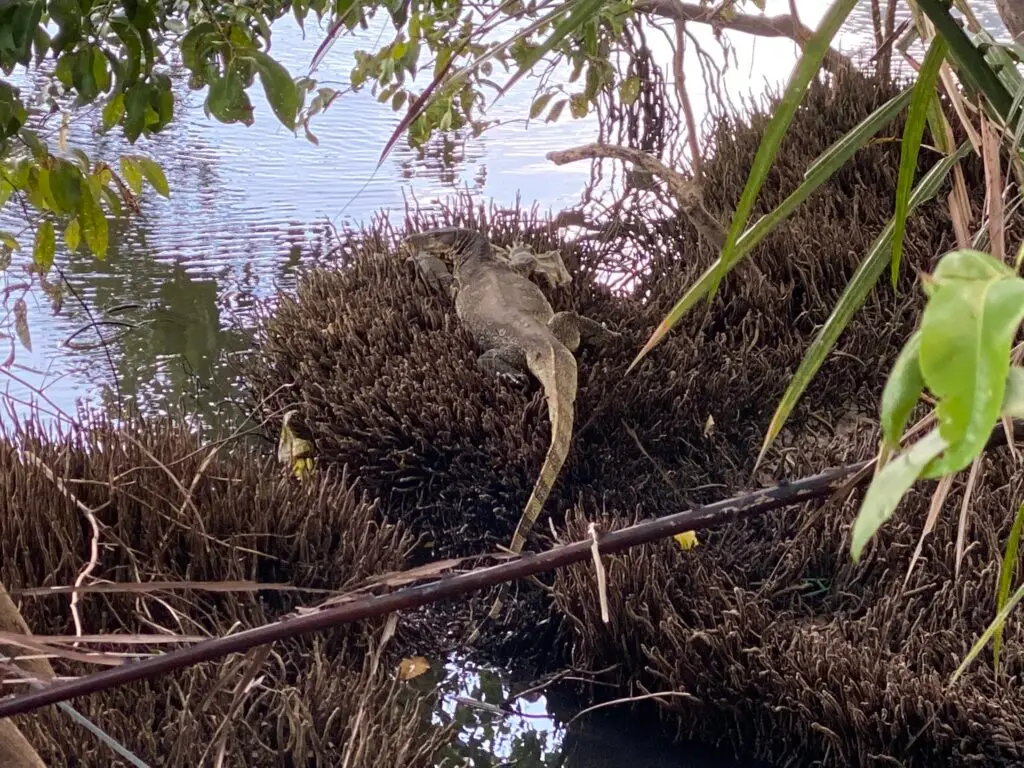
These monitor lizards can be seen from the riverside walkway
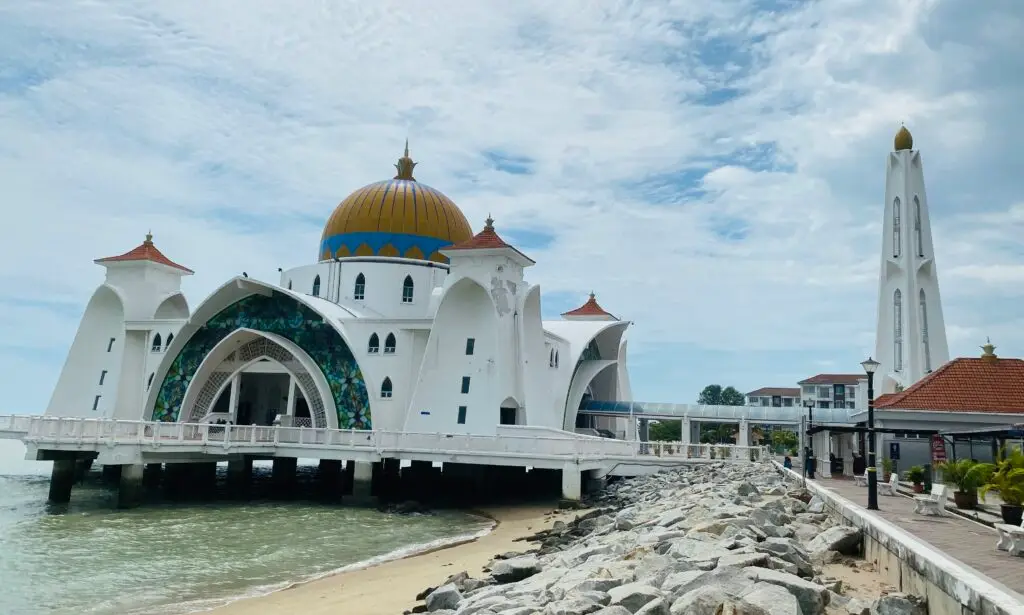
Completed in 2006, the gold-domed Masjid Selat Melaka overlooks the staits of Melaka, and when water levels are high it appears to float – hence its name the ‘Floating Mosque’.
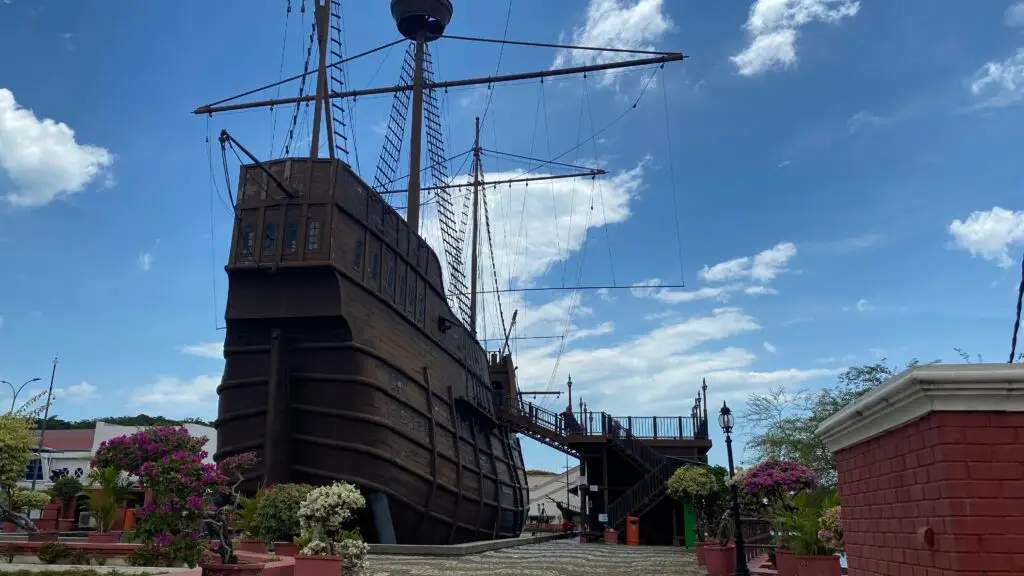
This is a replica of the Flora del Mar held in the maritime museum, a Portuguese carrack of 400 tons.
Nobleman Afonso de Albuquerque was returning from the conquest of Malacca in 1511, bringing with him a vast treasure trove for the Portuguese king, when the ship was caught in a storm and wrecked on some shoals off the coast of Sumatra.
The cargo was irretrievably lost, as well as 400 men on board. Flora del Mar still lies undiscovered on the seabed.
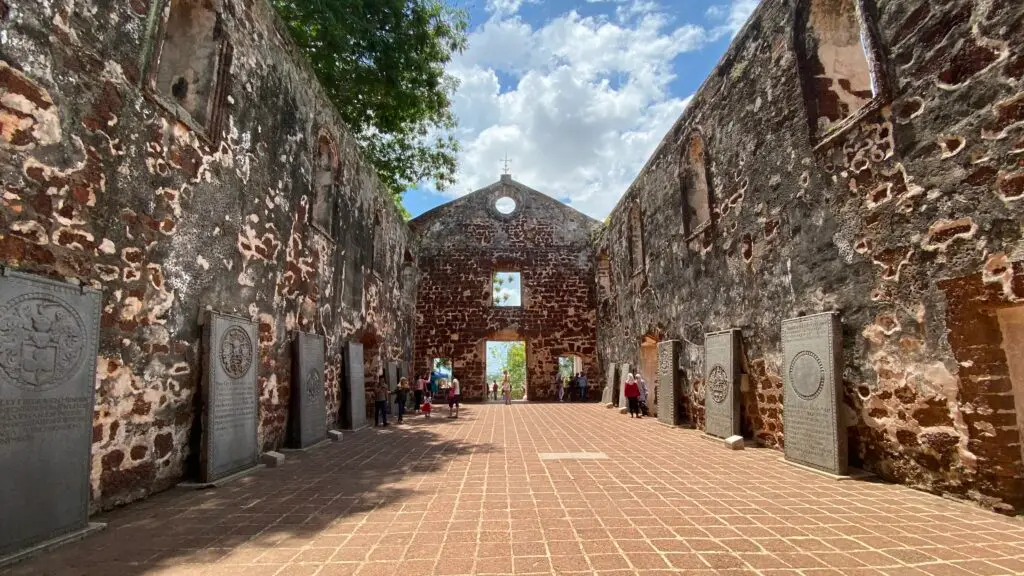
The ruin of St Pauls Church, built originally by a Portuguese captain in 1521. St. Francis Xavier was a regular visitor here and his statue stands outside.
Kuala Lumpur
We traveled all the way from Melaka to KL by taxi, which, although a distance of over 100 miles, was surprisingly cheap due to low petrol prices in Malaysia, as it is an oil-producing country.
The scenery during the journey was not very inspiring; it was mostly oil palms as far as one could see. It is a sad reflection that all of this used to be primary forest.
KL is the capital of Malaysia and this affluent 21st century metropolis has grown from nothing in less than two hundred years and all due to the discovery of tin in 1857 by Chinese prospectors.
Our hotel was very close to the Petronas Towers. Tickets to visit are usually sold well in advance, but because of the pandemic most people were not going out and we just walked straight in with no waiting at all.
The towers are 88 storeys high standing at 452 meters and were the tallest buildings in the world from 1998 to 2004 when they were surpassed by the completion of Tapei 101.
This picture is taken from 86th floor observation deck at 370m.
The view from the Skybridge on the 41st floor.
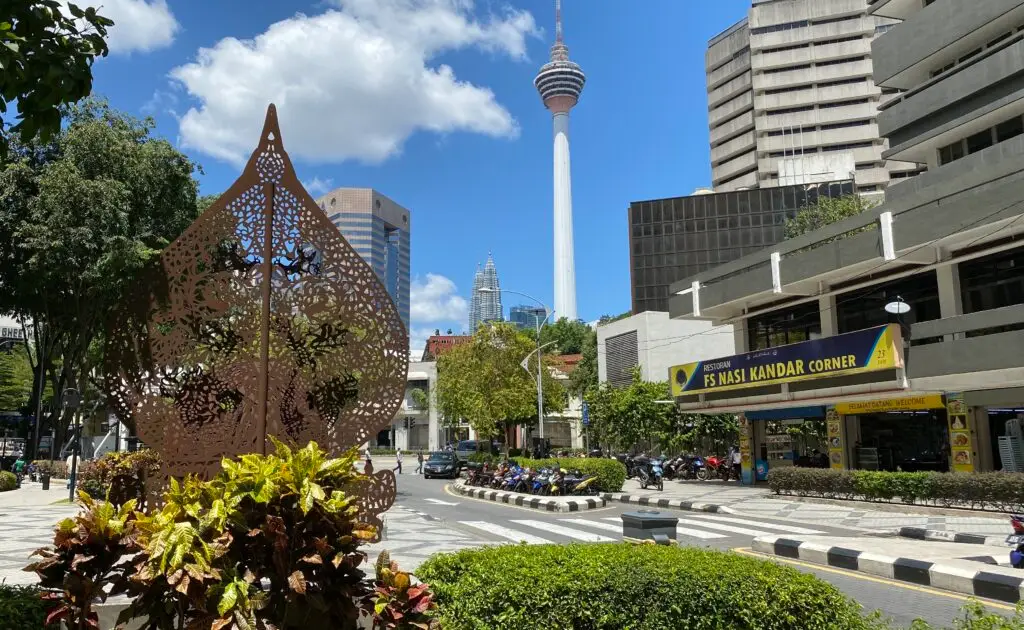
KL communications tower with the Petronas towers in the background. The KL tower (Menara Kuala Lumpur) at 421m was the tallest structure in Malaysia at its topping out ceremony in 1996 until surpassed three years later by the Petronas towers
Kuala Lumpur has a modern subway train
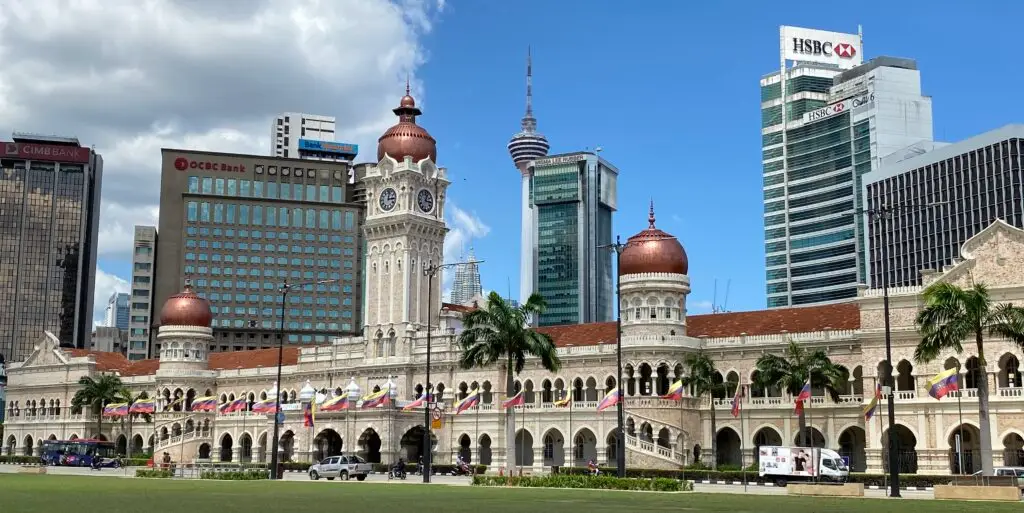
The Sultan Abdul Samad building is on Merdaka Square and originally housed the offices of the British colonial administration, when it was known simply as the Government Offices. Malaysian independence was declared on Merdeka square in 1957 – at that time it was used by the British as a cricket pitch.
The Masjid Jamek Sultan Abdul Samad mosque was designed by British architect AB Hubbak and completed in 1907.
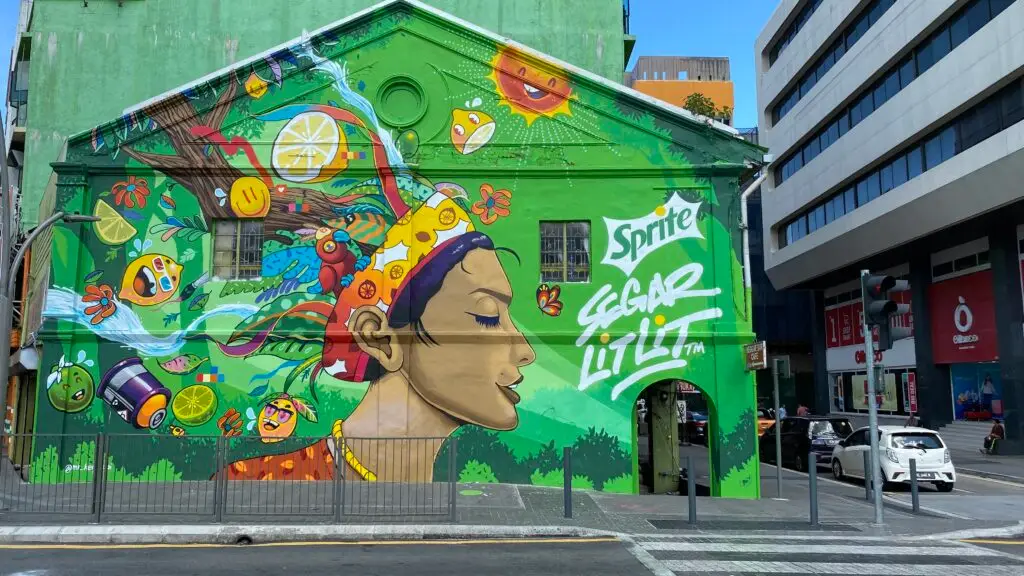
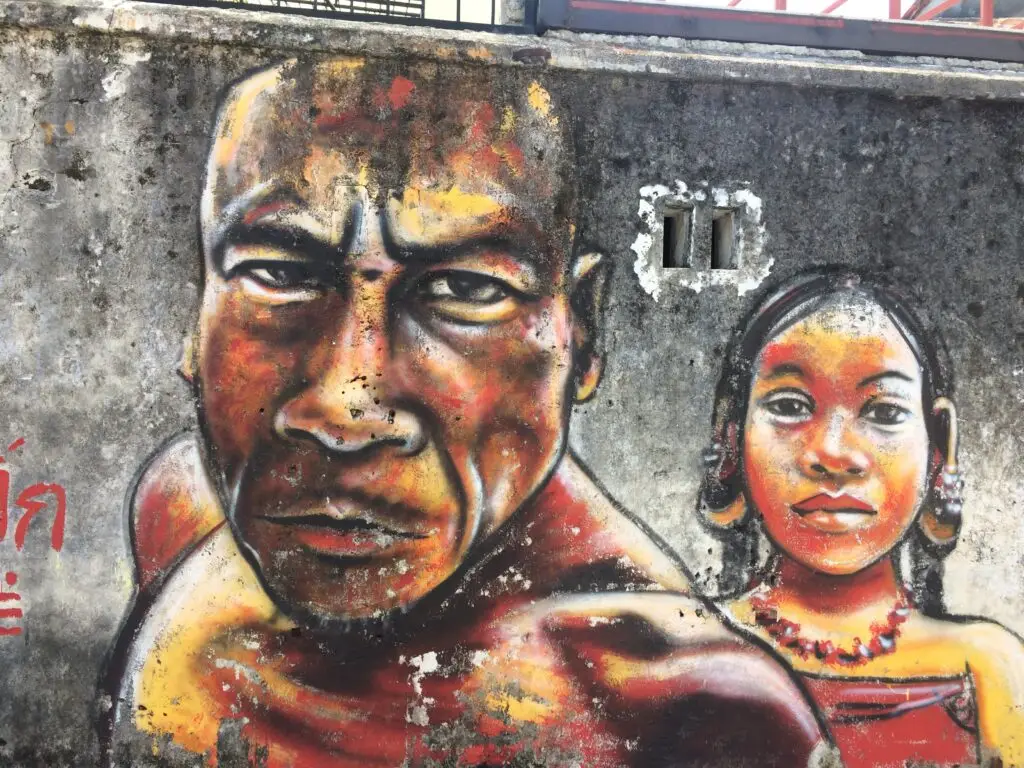
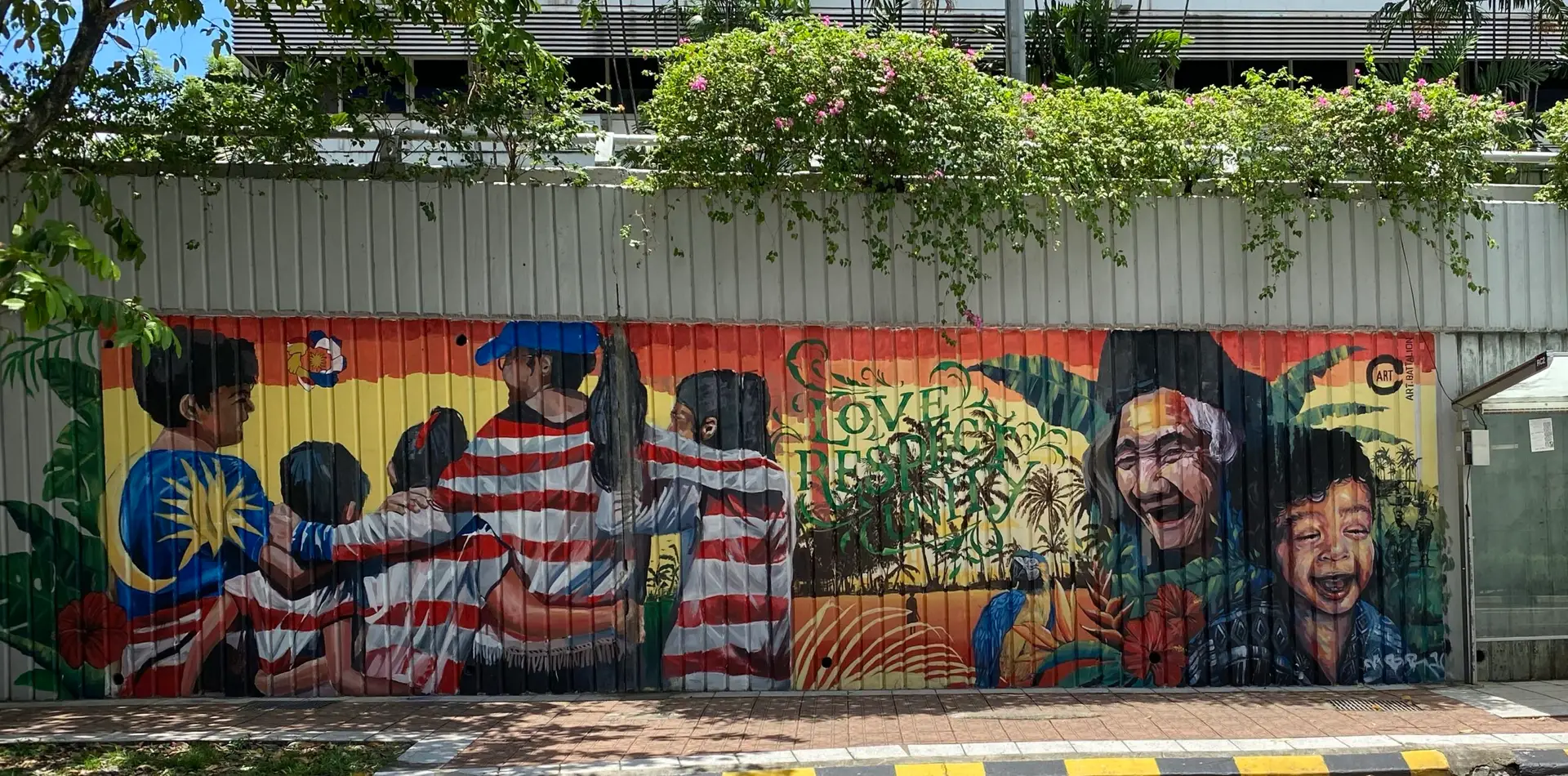
KL street art
KL street art
KL street art
KL street art
KL street art
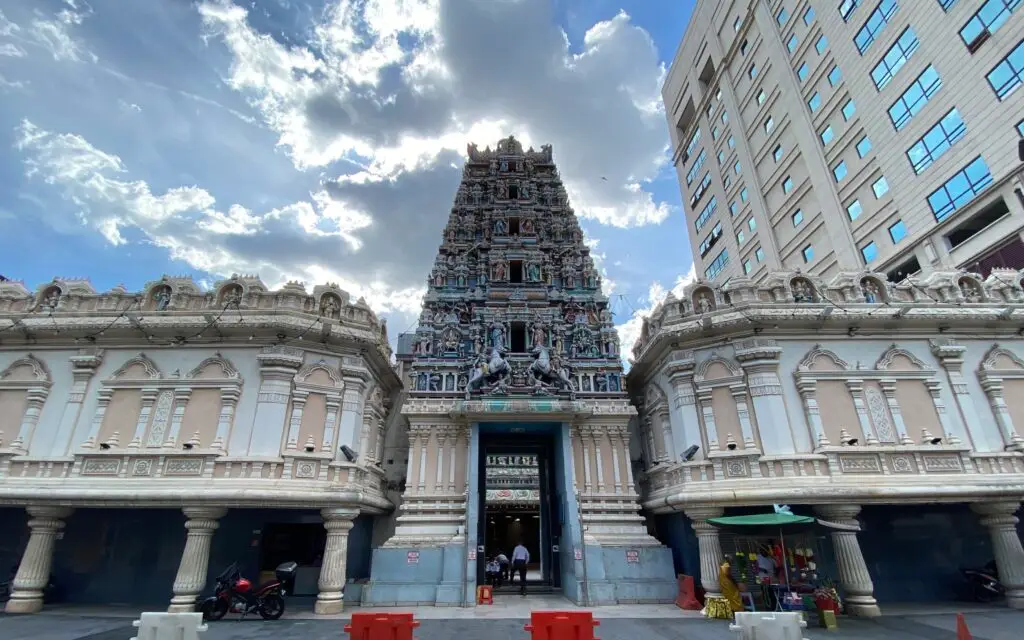
The Sri Mahamariamman Temple is a Hindu temple founded in 1872 and decorated in the South Indian style.
Street art by Julia Volchkova in KL Chinatown
Street art in KL Chinatown by Julia Volchkova
Street art in KL Chinatown by Julia Volchkova
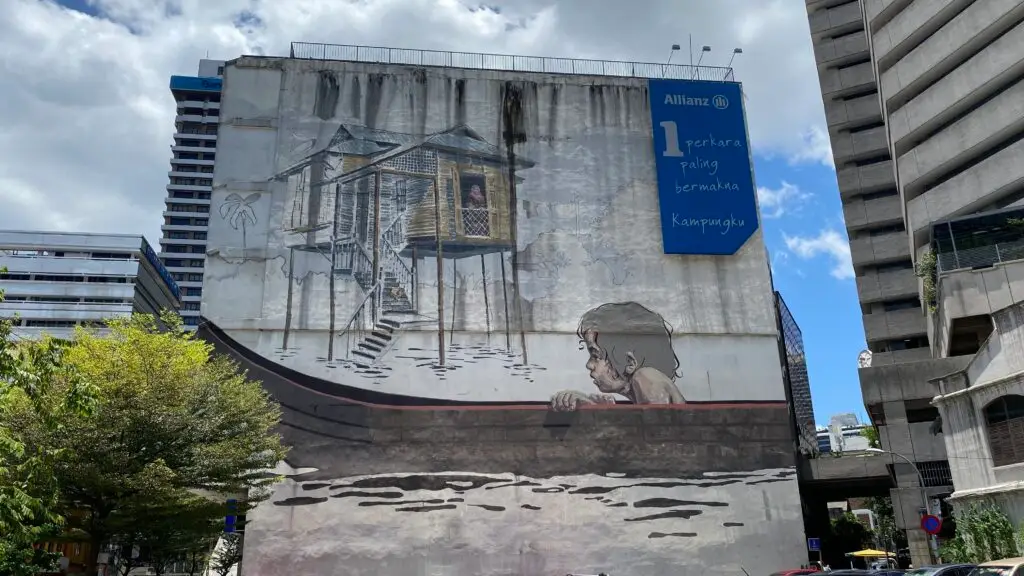
Sampan Boy Mural
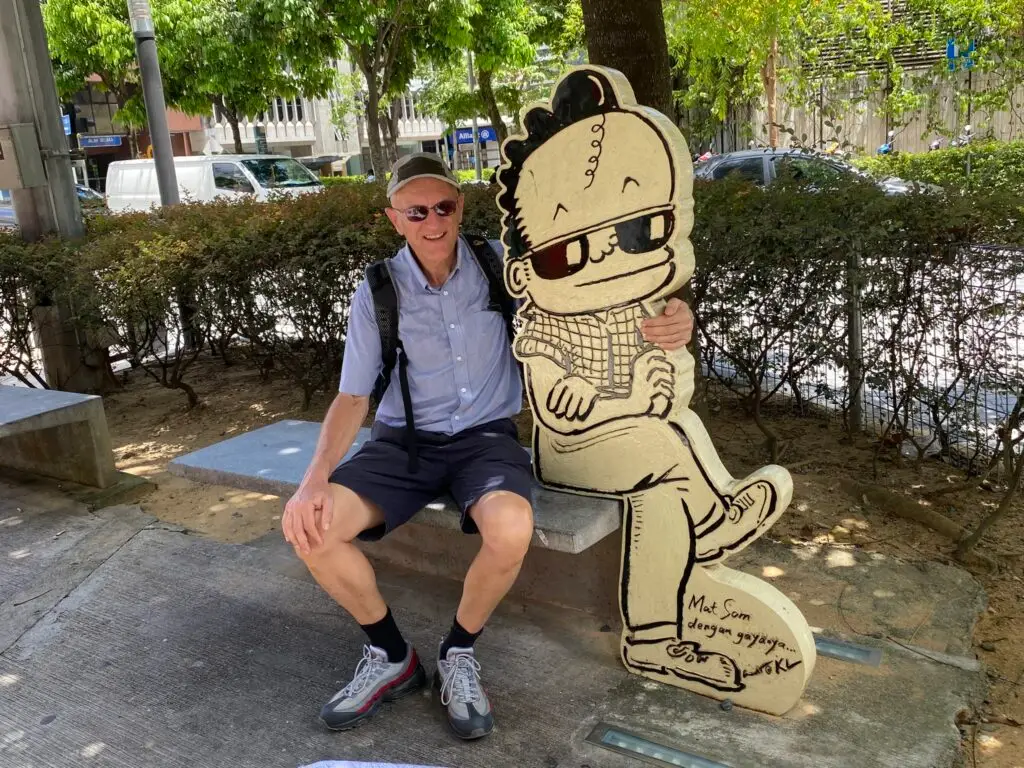
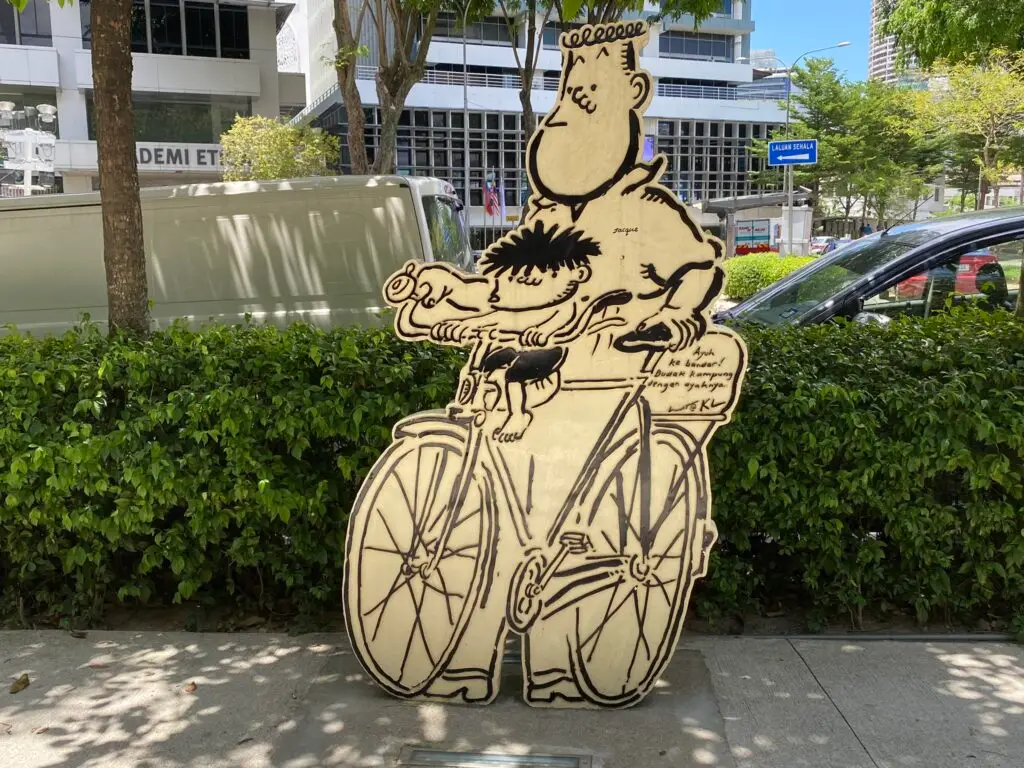
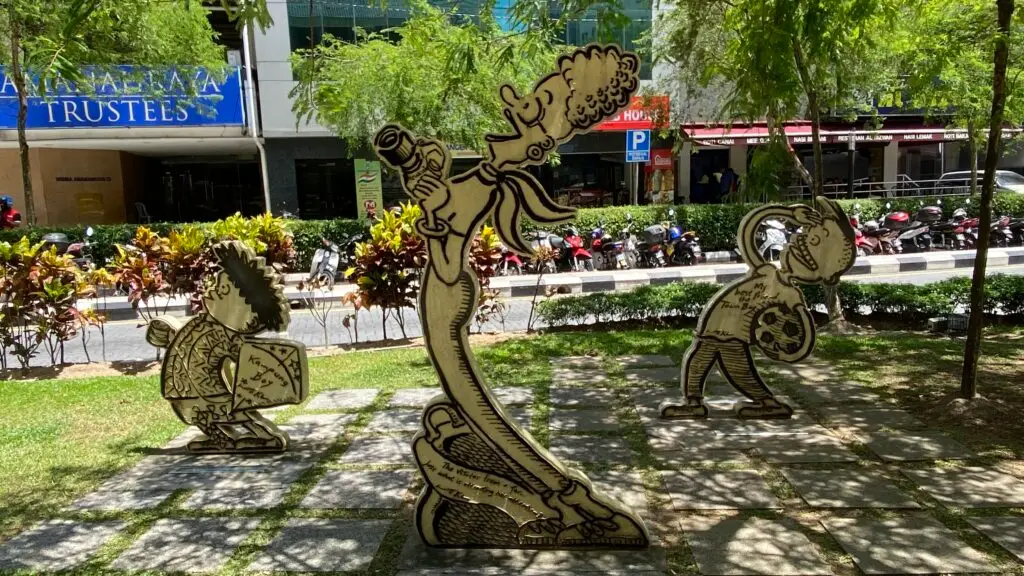
LAT Cartoon sculptures
LAT Cartoon sculptures
LAT cartoon sculptures
These LAT cartoon characters are looking up at the KL tower
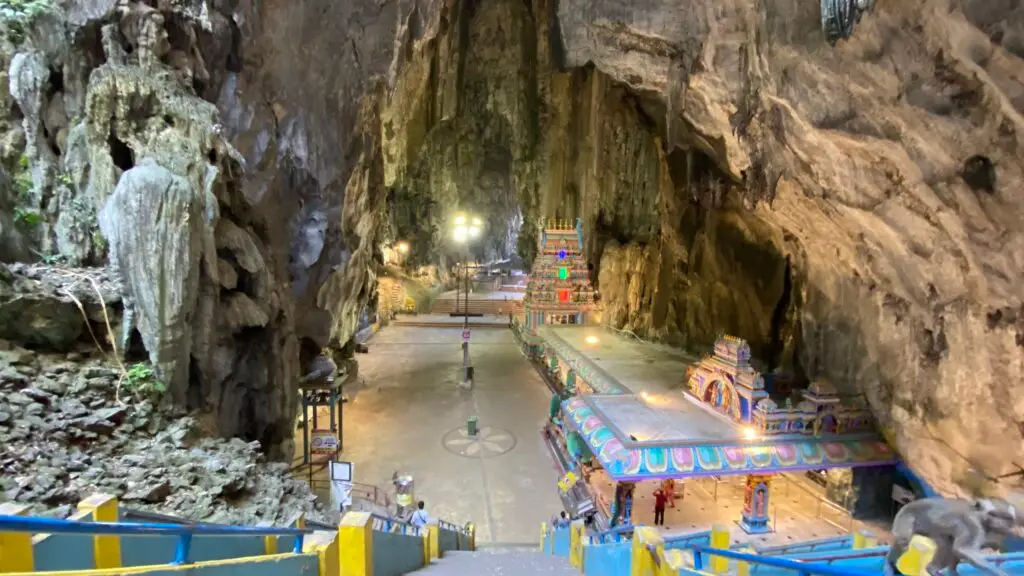
The Batu caves are 13 km north of Kuala Lumpur and house Hindu temples adorned with dioramas from Hindu mythology.
Batu Caves
Lankawi
We flew from Kuala Lumpur to Langkawi Island. However, upon arrival, we discovered that the entire island was under COVID lockdown, and we had to fight to secure our hotel reservation. The beautiful beach outside our hotel room window was empty, the hotel pool was closed, and breakfast was served on a tray left outside our door.
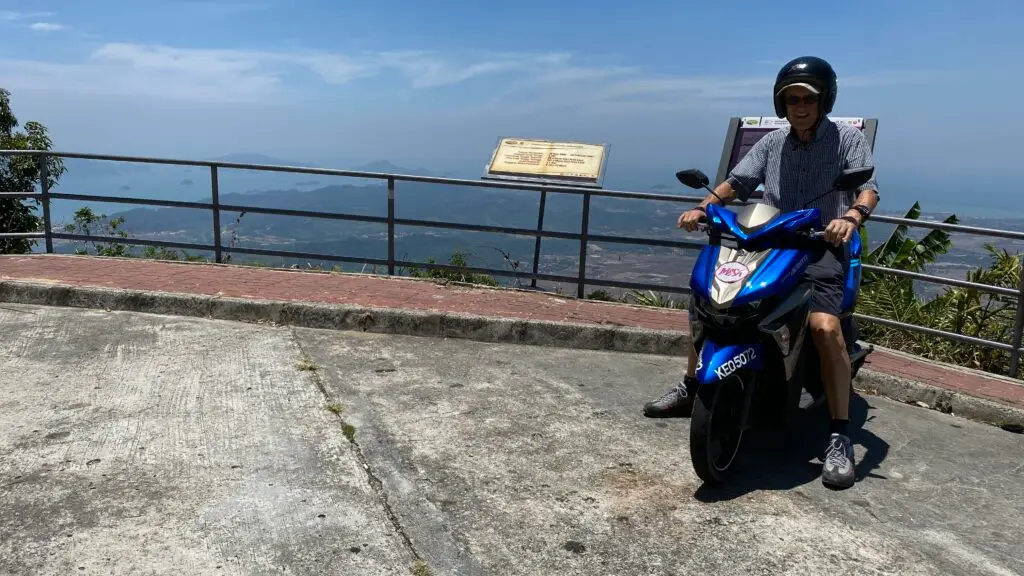
One thing we were allowed to do was hire a motor scooter so we could visit the island. This is the highest point on the island at 881m altitude and is reached by a spectacular road through the jungle.
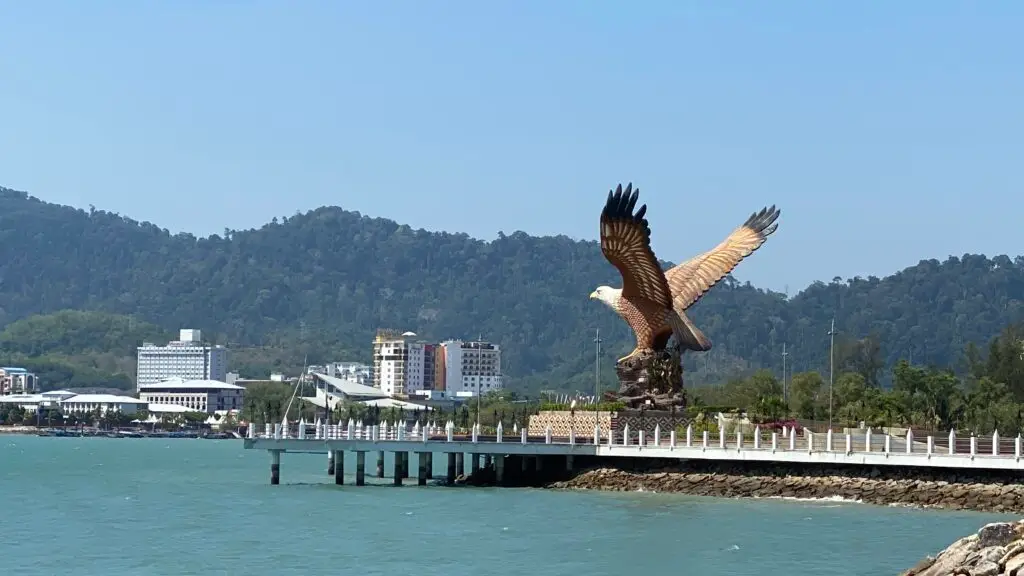
The name Langkawi comes from an old Malay word for eagle, and classical Malay literature claims that the island is one of the resting places of Garuda – the mythological bird that was Vishnu’s vehicle. Eagle watching is one of the activities on the island and this eagle statue greets visitors arriving by boat from the mainland.
Penang
We left Langkawi on the very last ferry boat service to Penang island (a 2-hour trip) before all transport links into and out of Langkawi were cut. When we arrived at our booked hotel in Georgetown, there was just a note on the door to say they were closed due to the pandemic restrictions and directing us to another hotel a mile away.
The tourist attractions, such as Penang Hill, were all closed, so we were restricted to exploring Georgetown on foot for a couple of days. Even that became awkward as we were starting to notice a hostile attitude towards foreigners on the street.
In 1826 Penang became the capital of the Straits Settlements including Melaka and Singapore, until it was surperceded by Singapore in 1832. The three and a half year Japanese occupation during WWII marked the end of British imperial rule, and the Straits Settlements were dissolved in 1946. Penang gained independance from Britain in 1957 and became one of Malaysia’s 13 states in 1963.
The historic center of Georgetown was designated as a UNESCO World Heritage site in 2008. This is probably the most photographed building inside the protected zone and is referred to as the Blue Mansion. It was built by the Chinese merchant Cheong Fatt Tze at the end of the 19th century and rescued from ruin in the 1990s. It has appeared in many films, the most recent of which is the Hollywood movie ‘Crazy Rich Asians’.
Unfortunately, due to the lockdown, we were unable to take the guided tour to visit the fabulous interior.
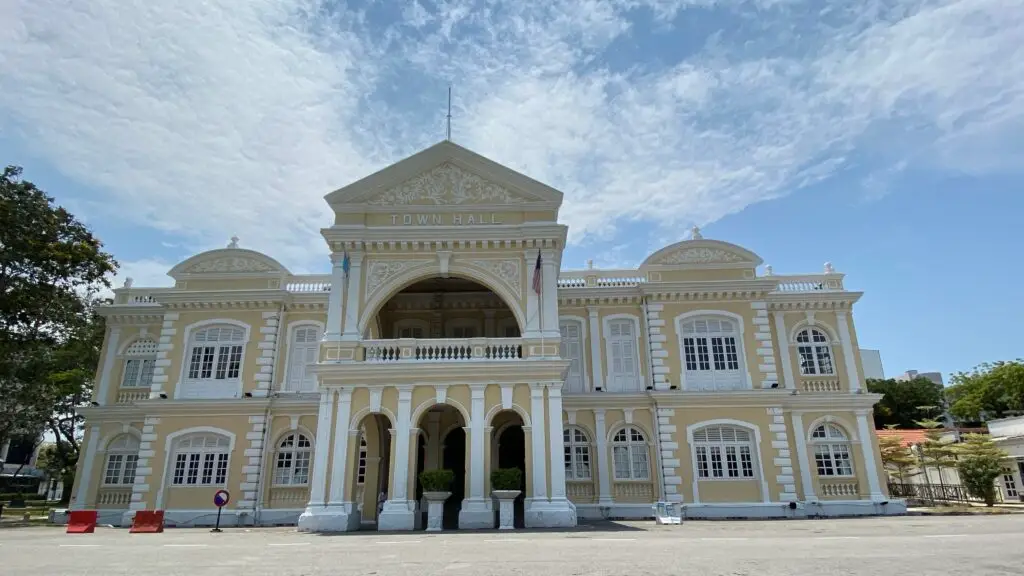
Georgetown Town Hall
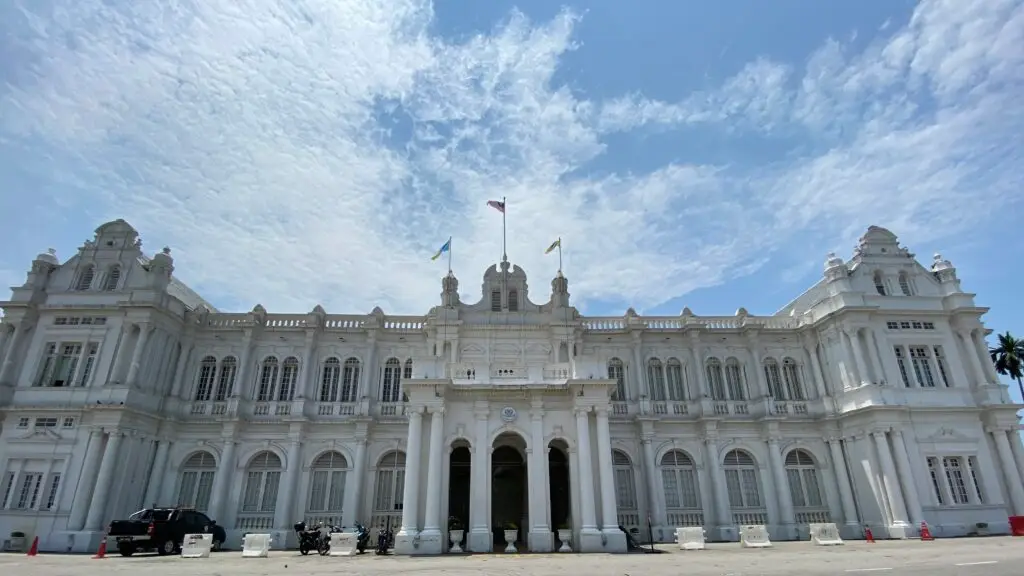
Penang City Hall
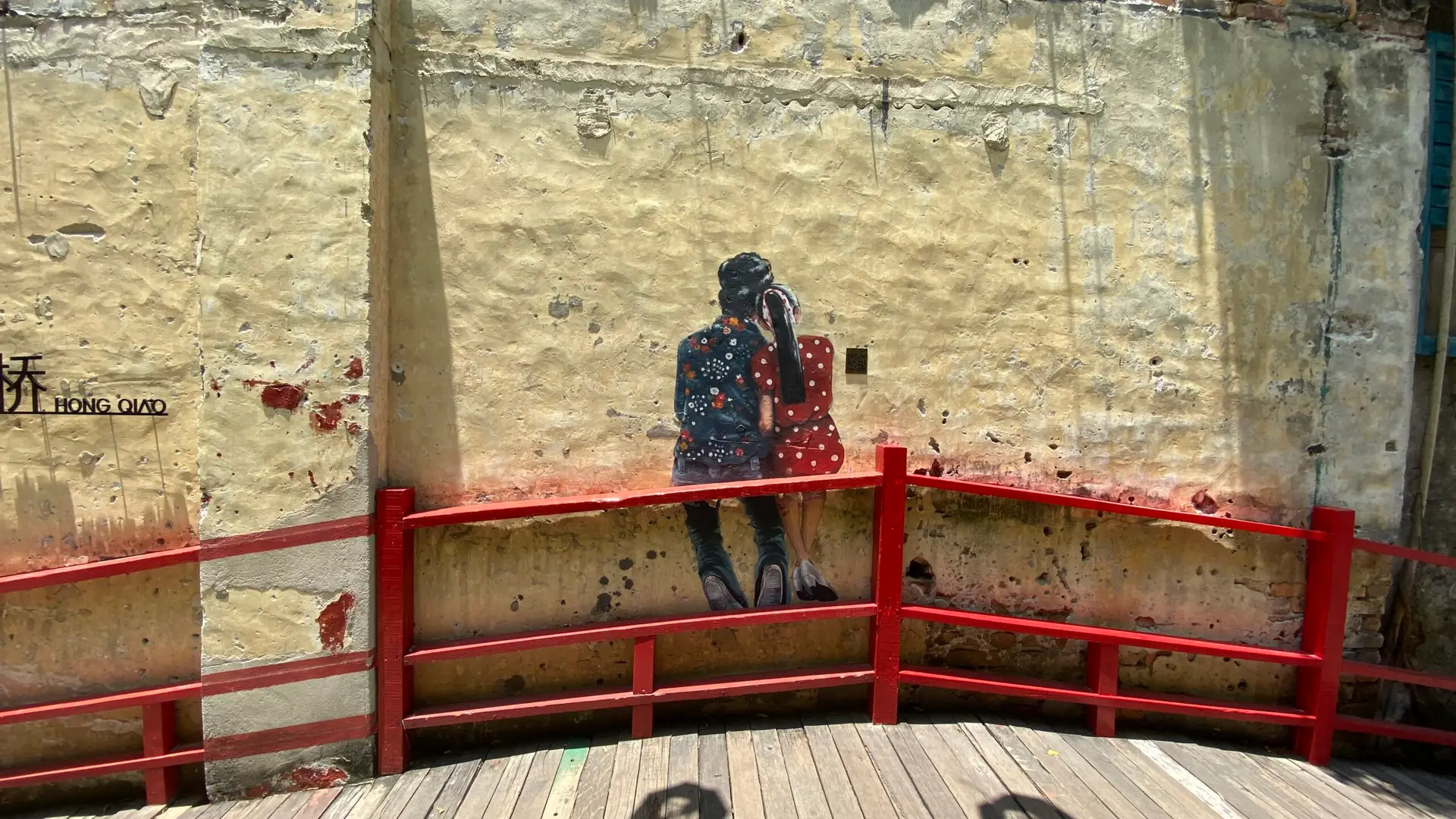
George Town street art
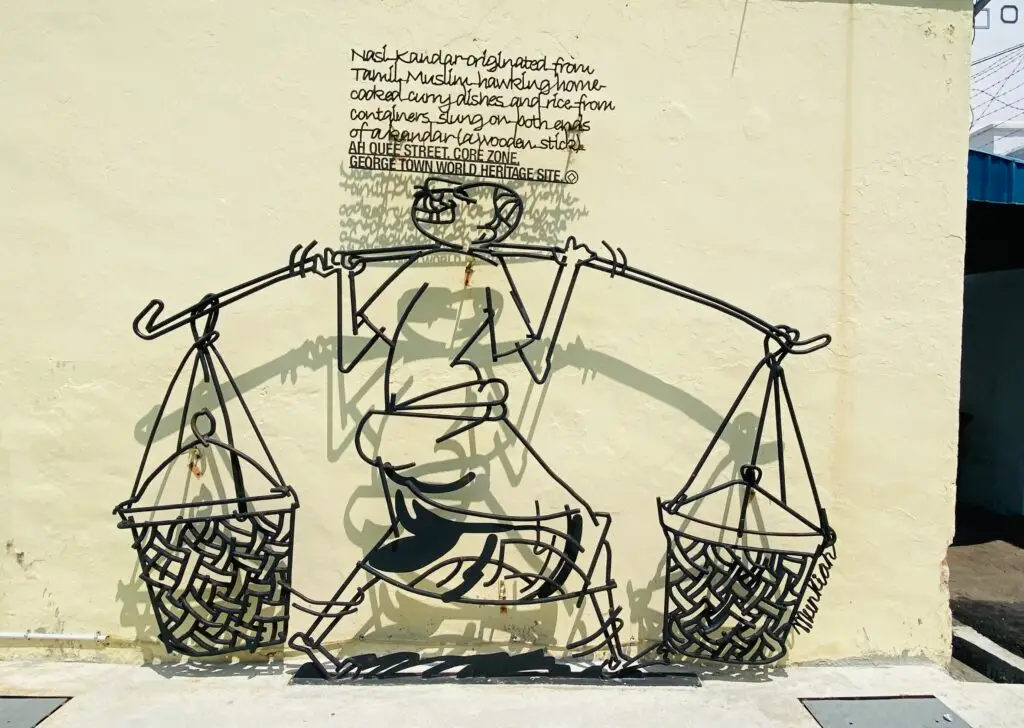
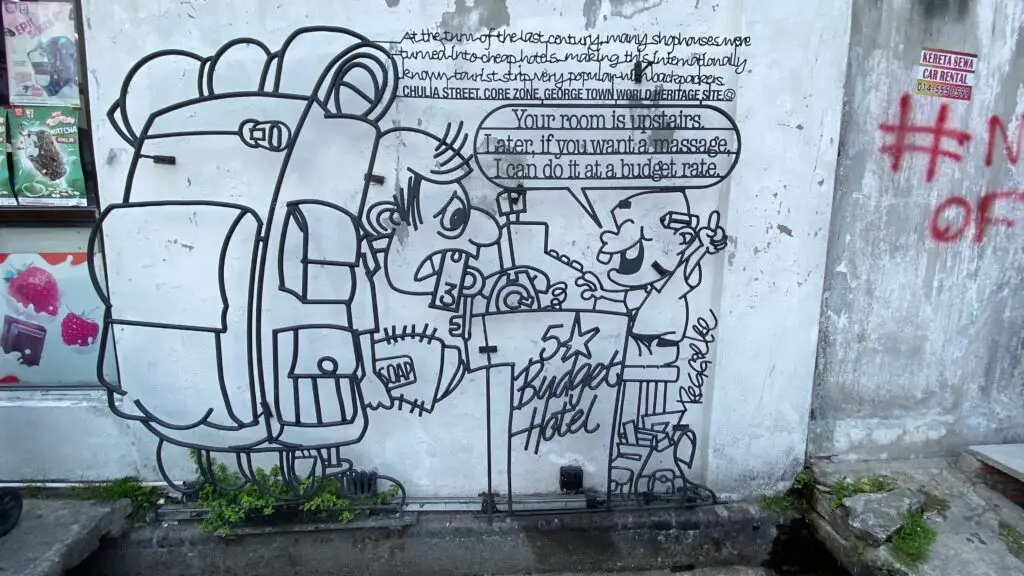
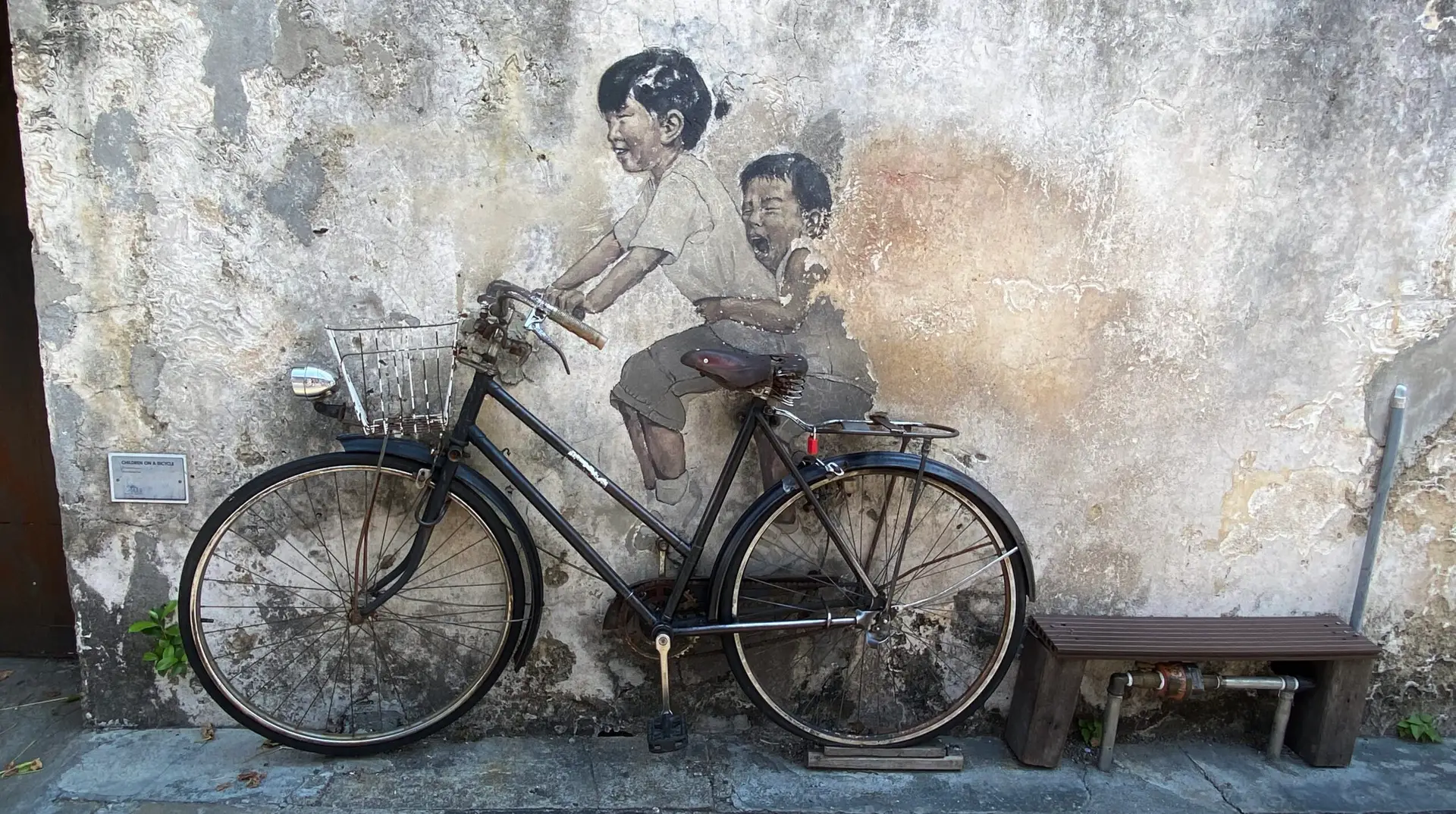
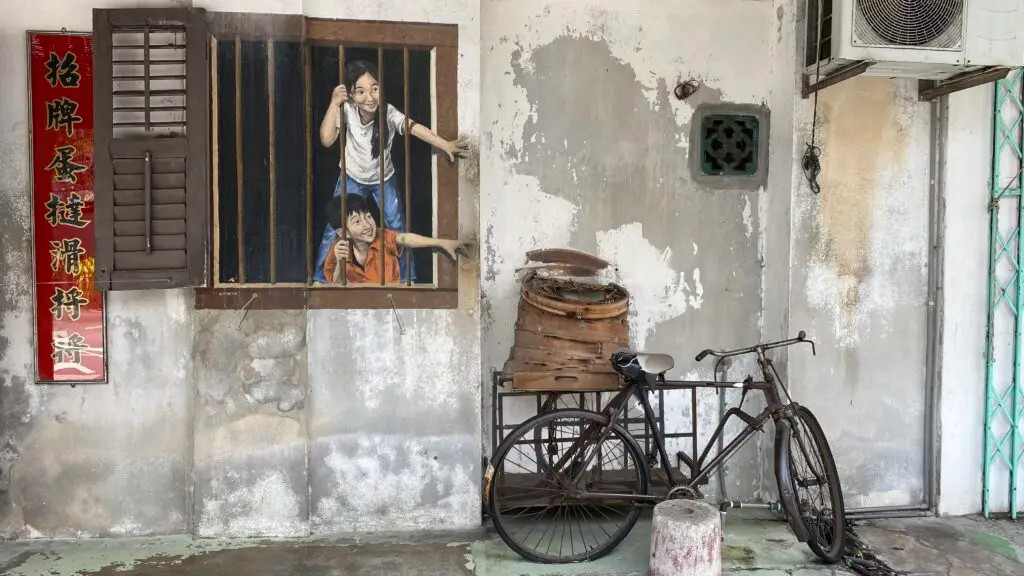
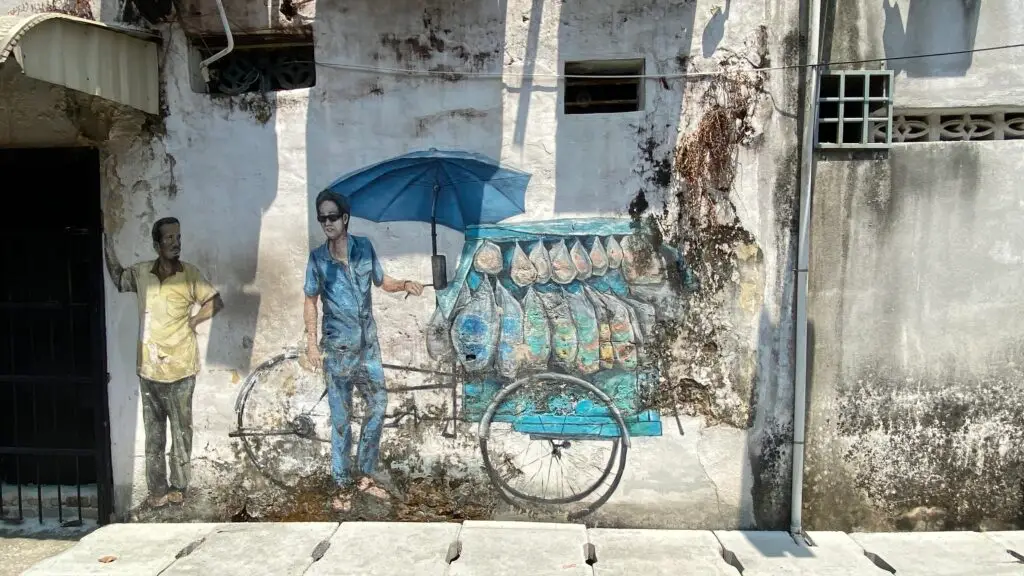
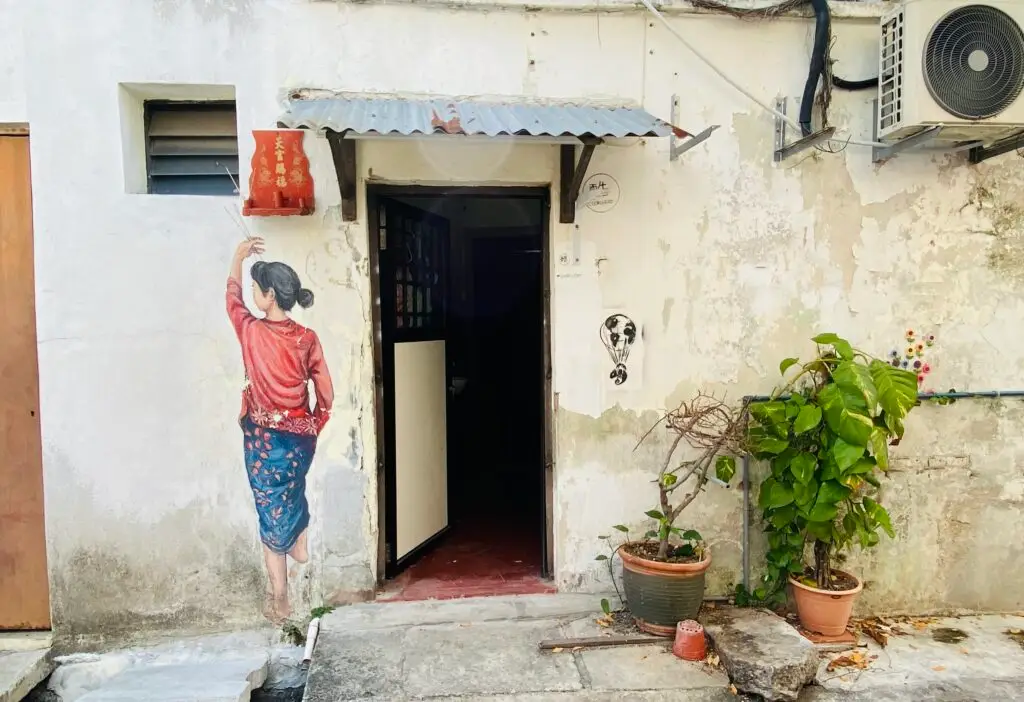
Georgetown is famous for its street art, which was one of the few things which we could visit.
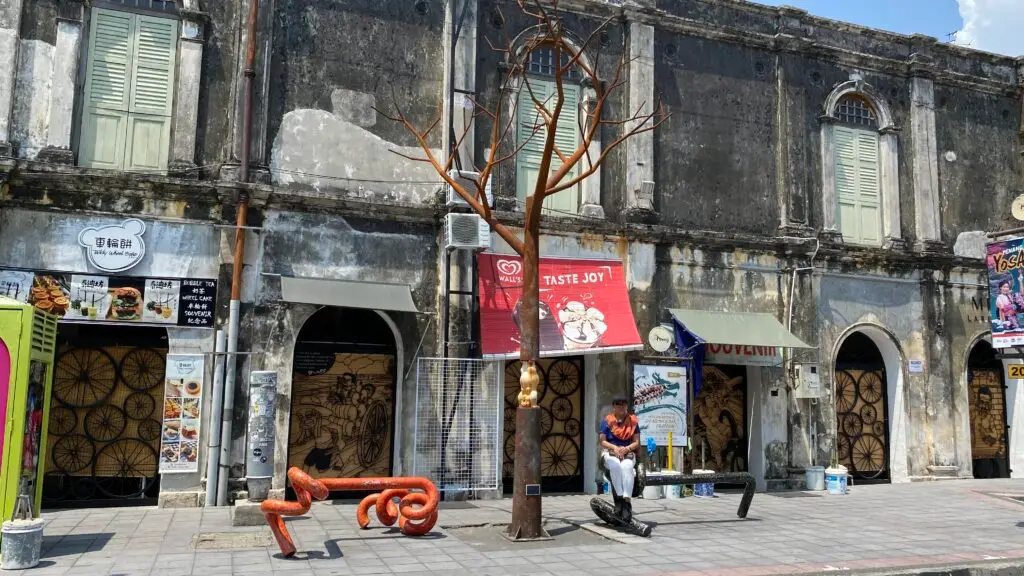
One can see many examples across town of these cartoon steel art pieces by the studio ‘Sculptures At Work’ commissioned by the state government in 2010.
GeorgeTown street art
George Town
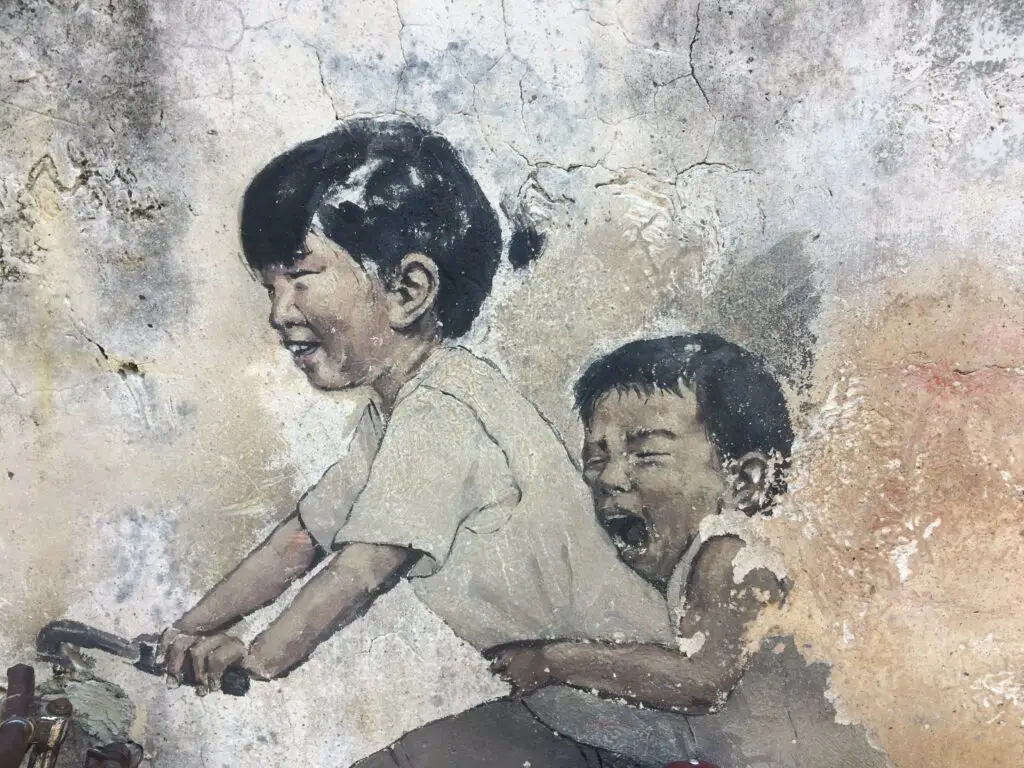
This is a well known piece of street art called ‘Kids on a Bicycle’ by Lithuanian artist Ernest Zacharevic
George Town
George Town
George Town
George Town
George Town
We arrived back in KL to find that our flight home had been cancelled due to the lockdown! All flights were being consolidated due to the very few aircraft that were leaving and we had to wait outside the airline office all day until we could get on a flight home.