During the Troubles era, spanning from the 1960s to the 1990s, Belfast was a city of conflict and division, with the city center protected by a ring of steel.
During this time, tourism was non-existent, and the only hotel available was the Europa. Due to its popularity among journalists, the hotel became a frequent target for bombing and was consequently dubbed the “hardboard hotel” as its windows had to be temporarily fixed with hardboard each time it was bombed. The hotel was bombed over 30 times throughout the Troubles.
Thankfully, the Good Friday Agreement in April 1998 marked the end of this difficult period, and since then, Belfast has transformed beyond recognition, emerging as a thriving tourist destination and a hub of economic growth.
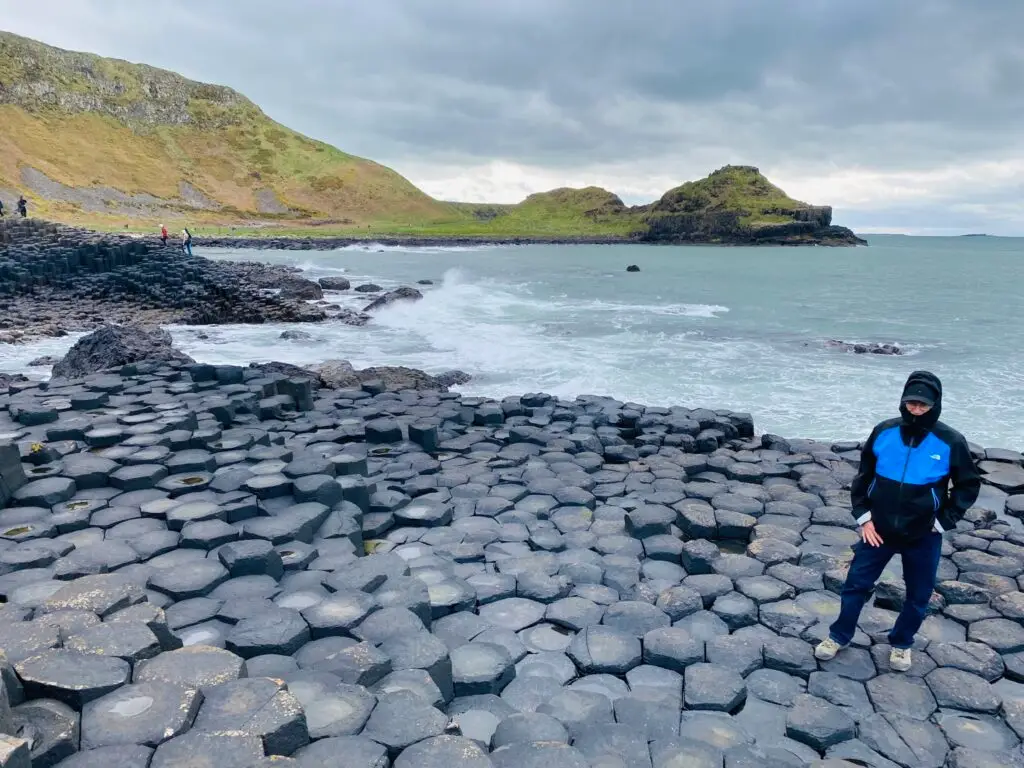
One of the most popular visits to Northern Ireland is the Giants Causeway.
The Giant’s Causeway is a UNESCO World Heritage site and was formed 60 million years ago by a cooling lava flow. As the lava hardened from the top and bottom surfaces inward, it contracted into a hexagonal pattern.
To visit the Causeway, there are several coaches that leave Belfast city center every morning for Causeway Coast tours. These tours include visits to various castles and locations used for filming “Game of Thrones” along the way.
Giants Causeway
Giants Causeway
Giants Causeway
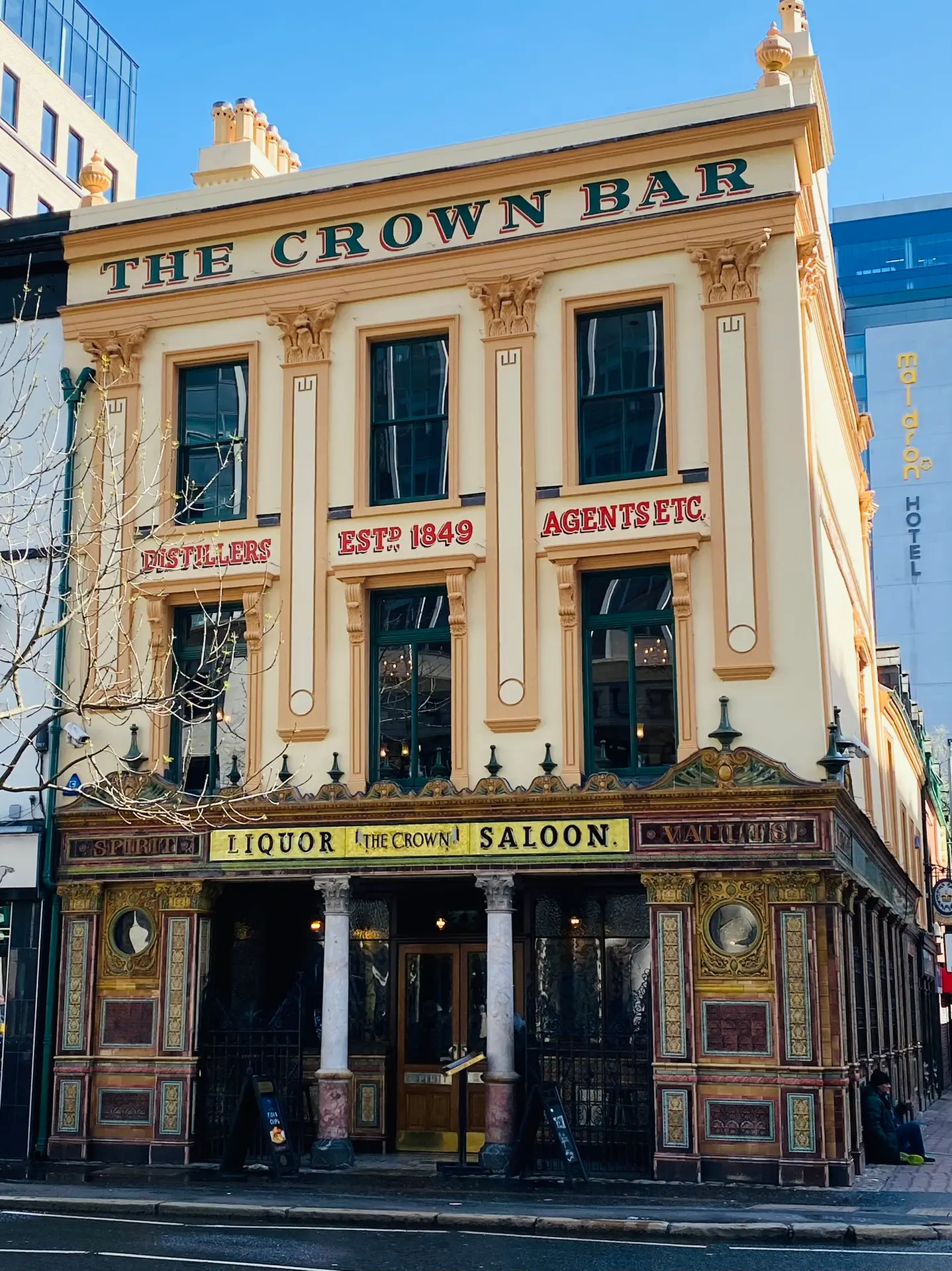
The Crown Liquor Saloon
Crown Liquor Saloon – historical monument and Belfast’s most famous bar, full of Victorian decorative flamboyance.
Belfast City Hall
Belfast City Hall was built to showcase how wealthy Belfast had become thanks to its shipbuilding industry. It was commissioned after Queen Victoria granted Belfast city status in 1888 and was built between 1898 and 1906. The exterior is made of white Portland stone, and the central dome is modelled after St. Paul’s Cathedral.
Belfast City Hall
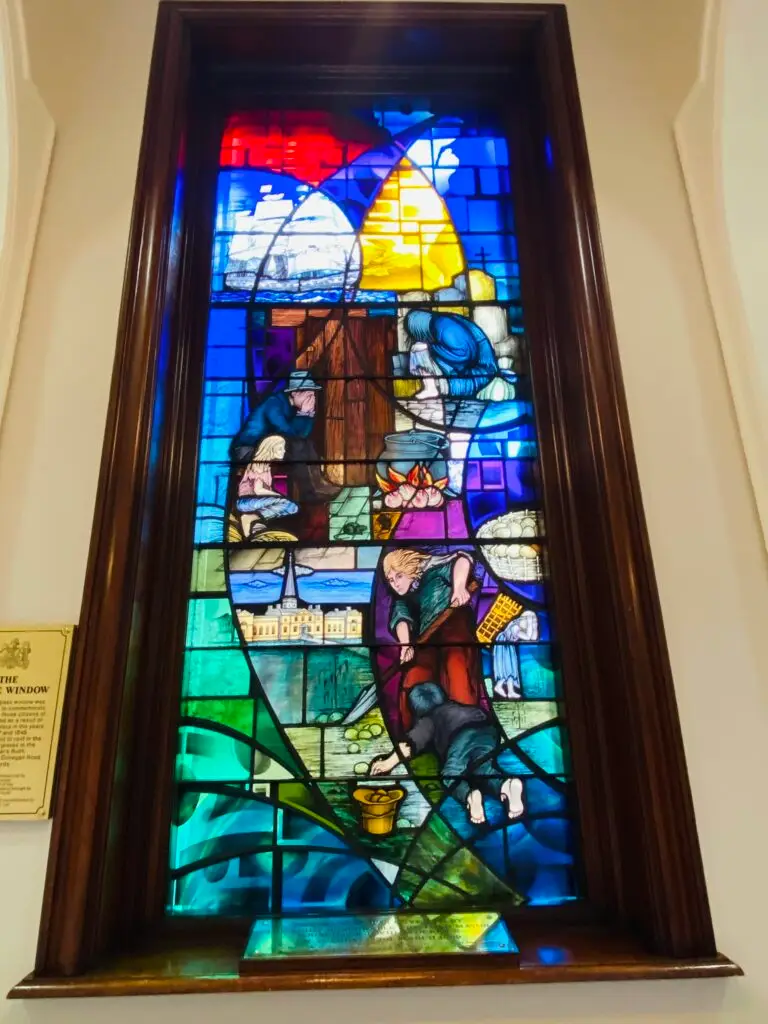
This is one of the stained glass windows in an inside corridor, depicting the suffering of Belfast’s citizens during the 1840s famine. It depicts a woman weeping over a grave, a destitute father and daughter next to a cooking pot, a family searching for edible potatoes among the blight-ridden crops, and a ship representing emigration to the new world.
The window is known as the famine window.
Belfast City Hall
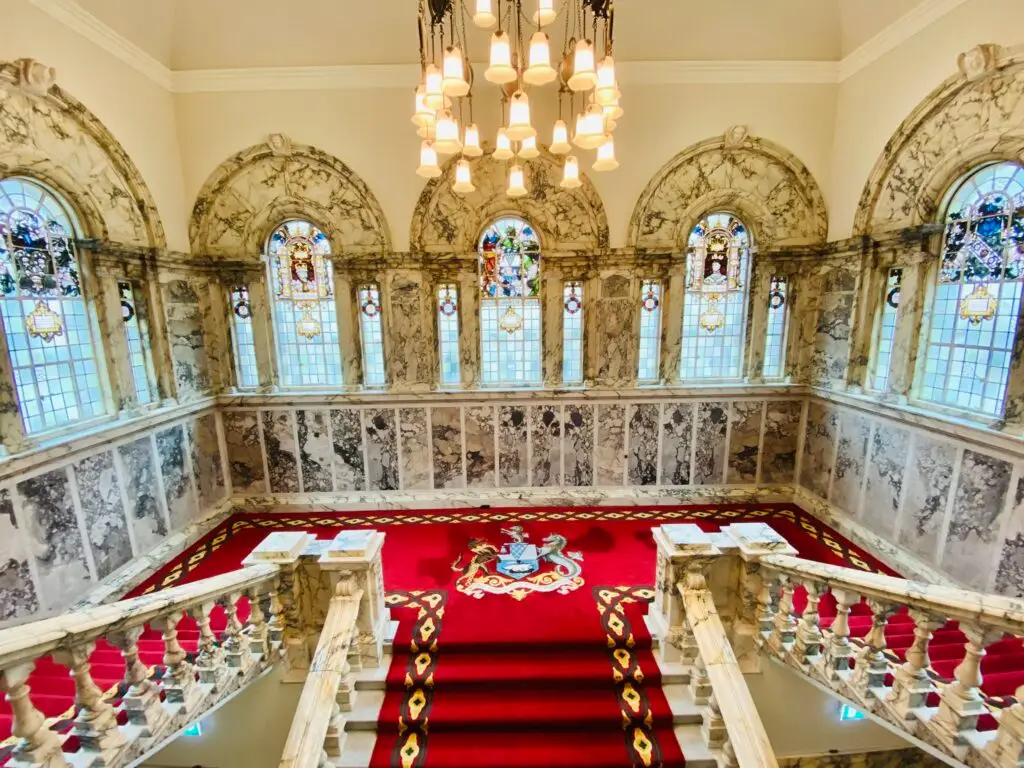
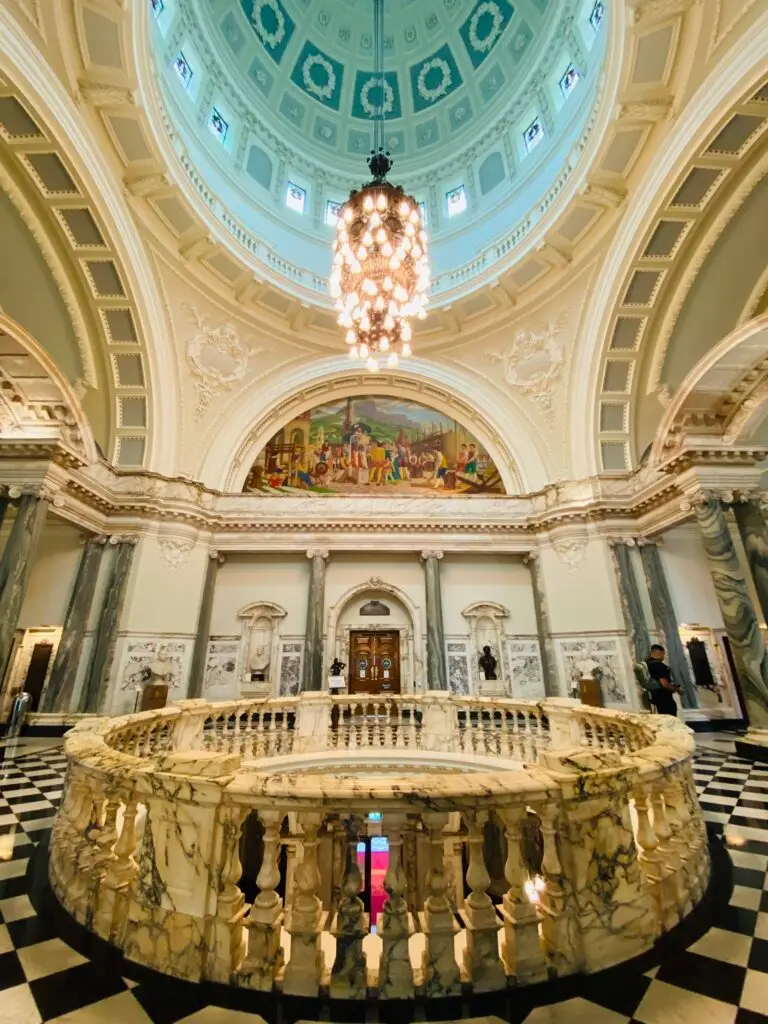
The interior of the City Hall is particularly magnificent and has the reputation of being the most beautiful City Hall in the UK.
Belfast City Hall
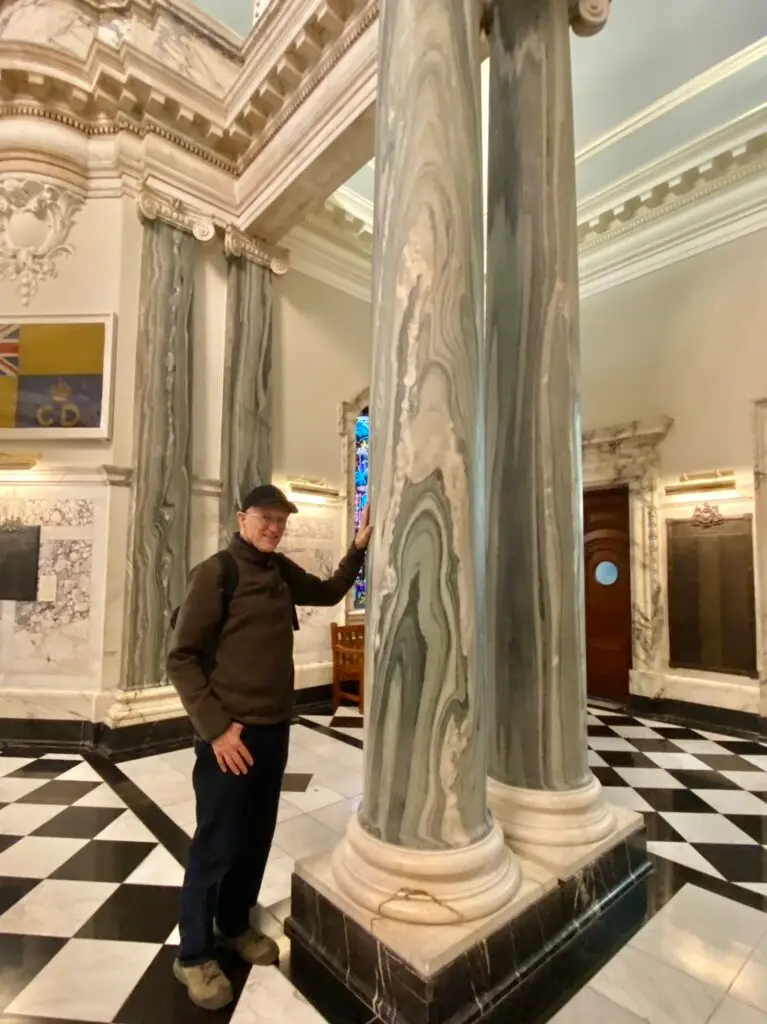
The entrance hall, grand staircase, and landings use four different types of marble, three from Italy and one from Greece.
Belfast City Hall
Titanic Memorial Garden
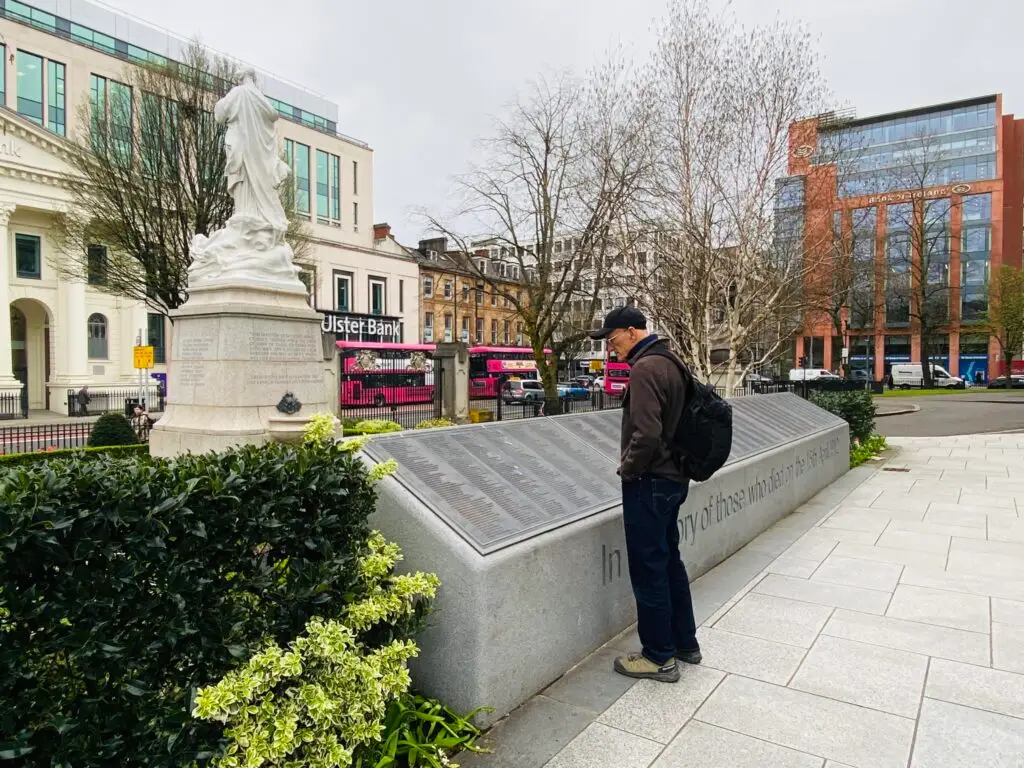
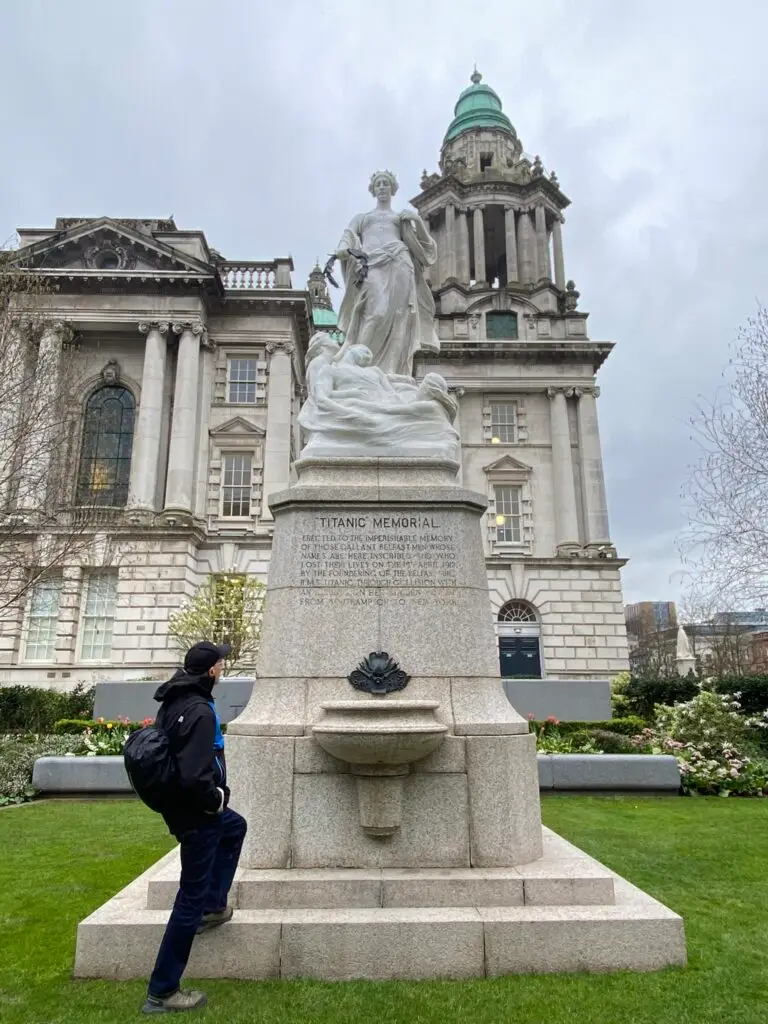
Next to City Hall lies the Titanic Memorial Garden, honoring the 1,500 passengers and crew who perished when the ship hit an iceberg and sank in the North Atlantic during its inaugural voyage in April 1912.
Titanic memorial, Belfast City Hall
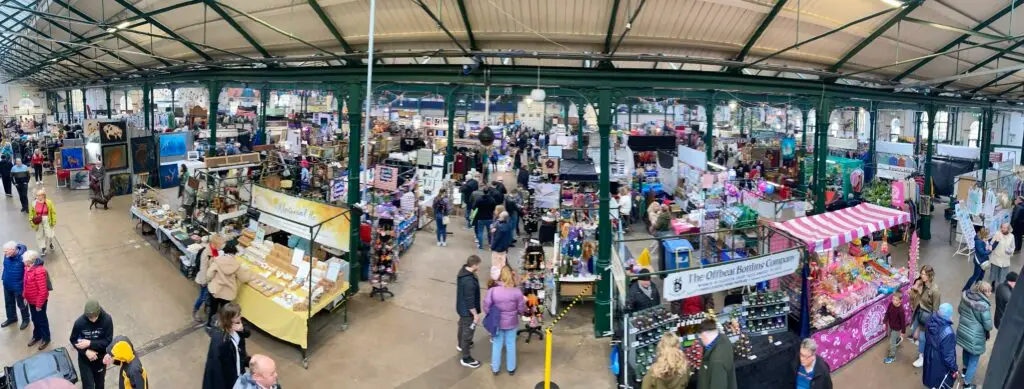
St. George's Market
St. George’s Market is a food and crafts market housed in an elegant Victorian building built in 1896.
Crumlin Road Gaol
The Crumlin Road Gaol was opened in 1846 and embodied the ideals of Victorian prison reformers who believed in solitary confinement mixed with hard labour, and floggings to break the mind and spirit. It was the scene of 17 executions between 1854 and 1961.
The gaol saw approximately 25,000 political prisoners from both sides of the sectarian divide during the Troubles. It was also the scene of daring escapes. Probably the most notorious was the 1981 escape of the M60 gang – eight of the IRA’s most dangerous men who escaped with the help of three smuggled pistols. They made their escape via the visitors’ room and through the front gate, overpowering the guards and dressing in their uniforms. This was the only route where the guards held keys to the several gates on the inside of the gate instead of the outside.
At the time they had a window of one week as they were due to be sentenced – likely spending the rest of their lives in H block, where escape would no longer be possible.
West Belfast Murals
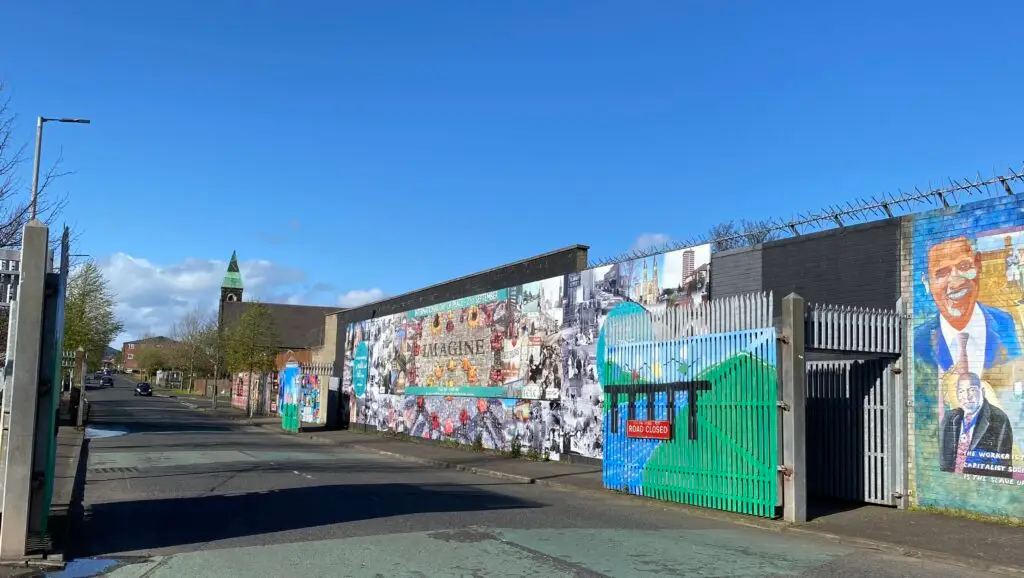
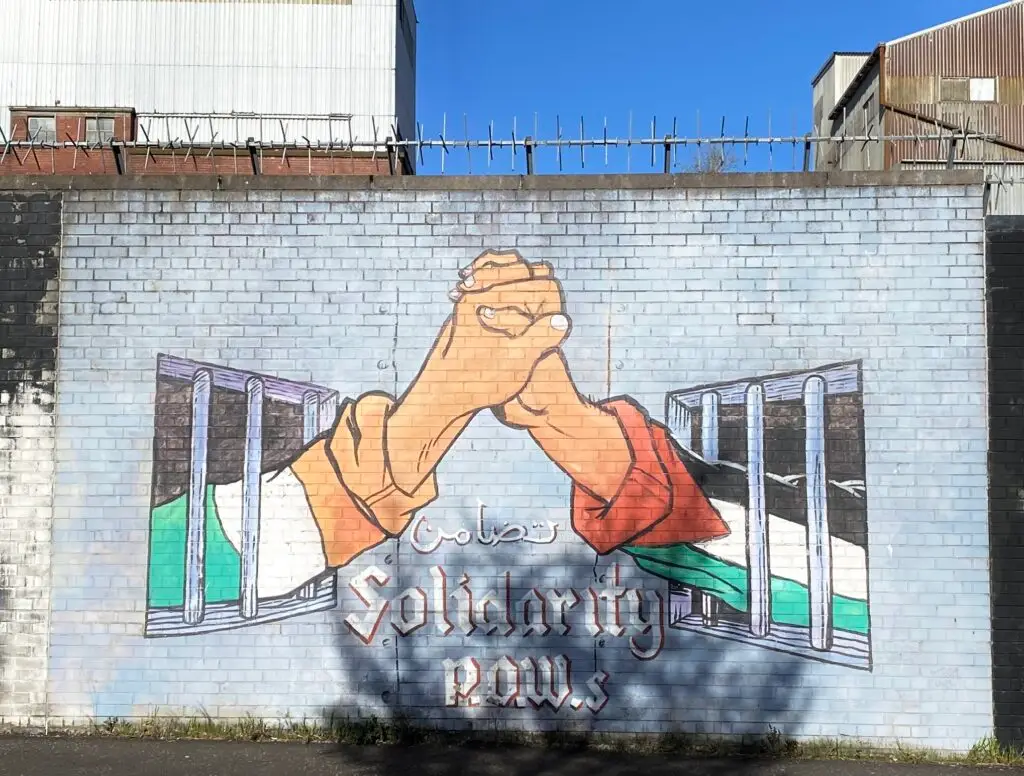
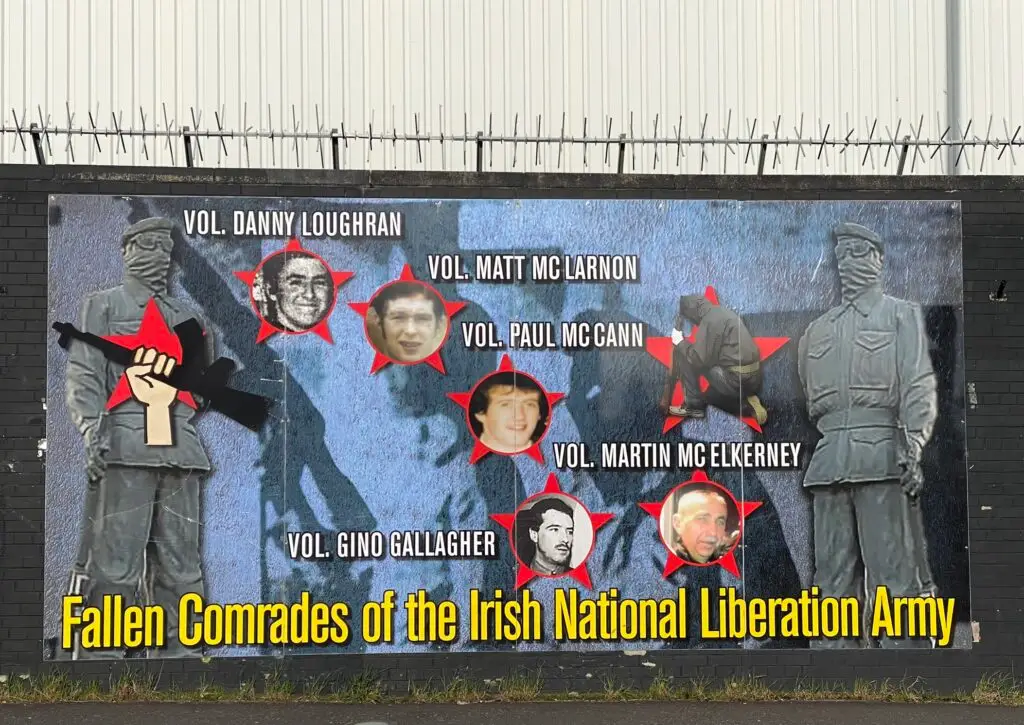
Just outside of the Crumlin Road Gaol lies the West Belfast Murals area. Upon crossing the Shankill Road towards the Protestant loyalist area and passing through the steel fencing of the peace line, you’ll enter the Falls Road Republican (Catholic) area.
Many of the gable ends feature artwork that chronicles the history of the conflict and memorials to fallen fighters on both sides of the divide.
West Belfast Peace Line
This is the peace line separating the Catholic and Protestant communities. The gate is closed at night.
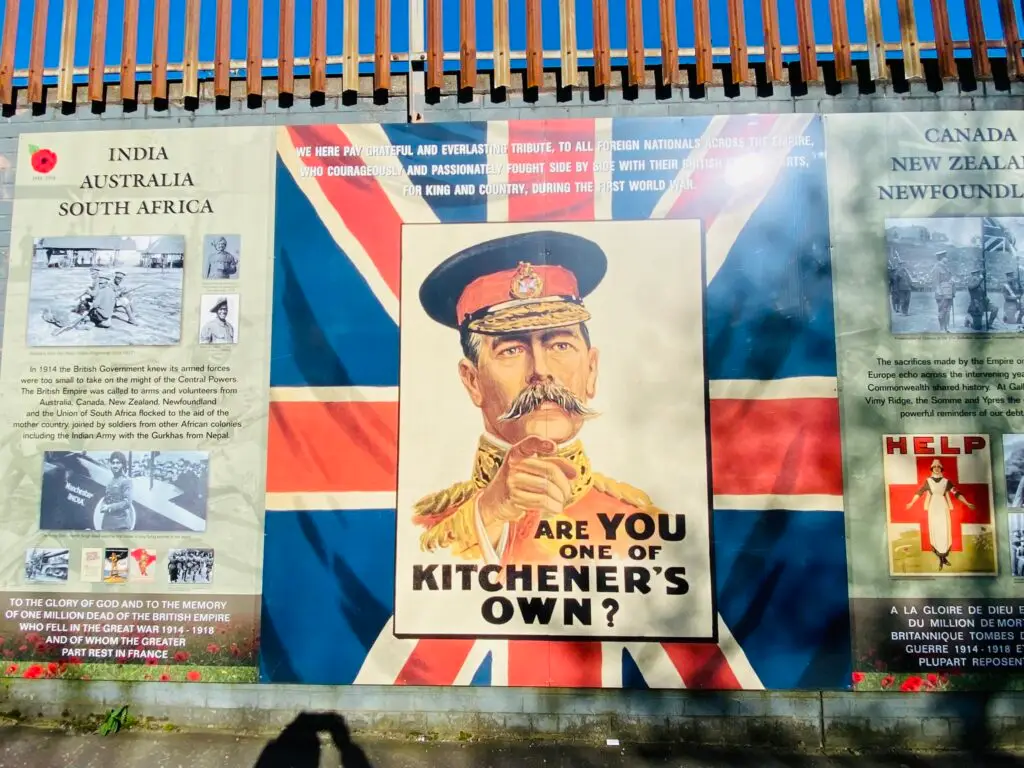
West Belfast Solidarity Wall
On either side of the peace line is the solidarity wall displaying sympathies respective to each side. On the Loyalist side the sympathies are all about glorifying the British empire.
West Belfast Solidarity Wall
On the Republican side, the solidarity wall is all about people who have been opressed by powerful neighbours – Kurds, Palestinians, Basques, and figures representing opressed people generally – Frederick Douglass, Martin Luther King, Nelson Mandela.
West Belfast Solidarity Wall
Solidarity Wall
Solidarity Wall
Solidarity Wall
Solidarity Wall
Solidarity Wall
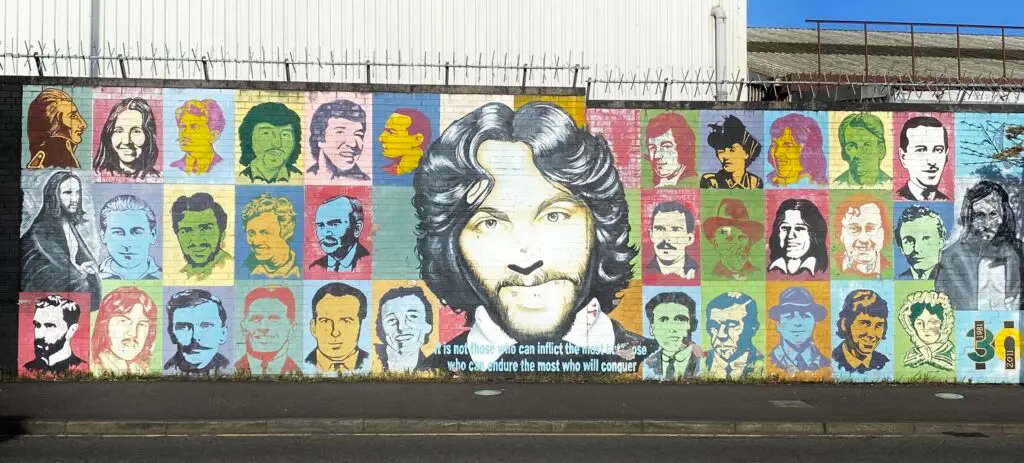
Falls Road
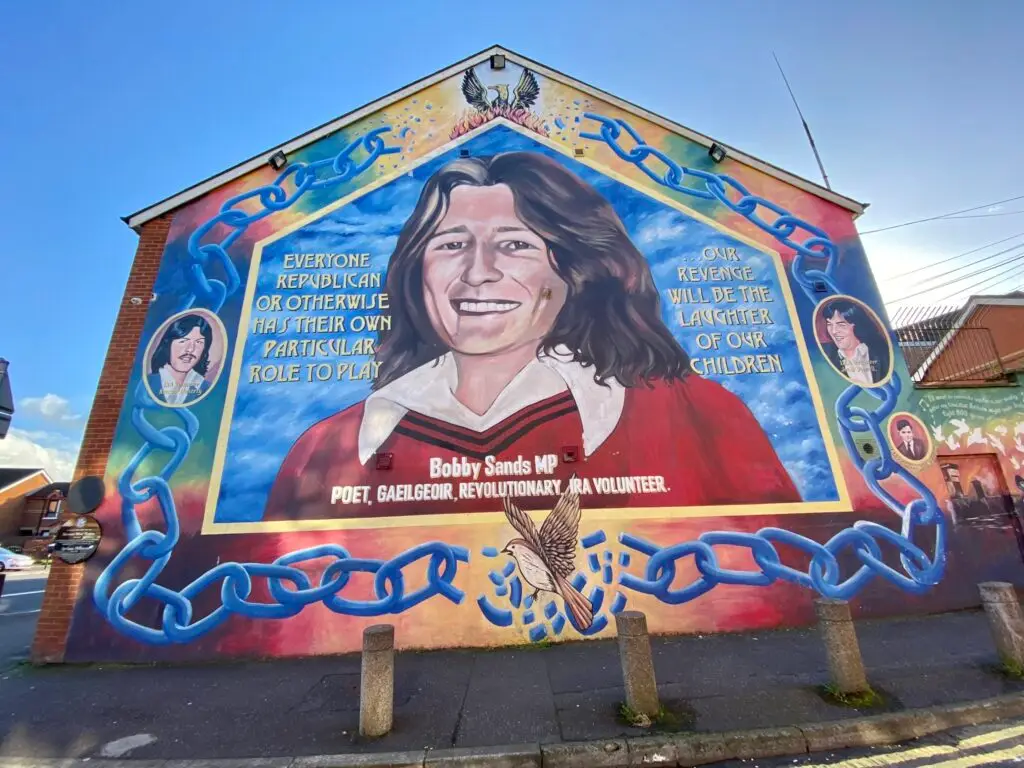
This is the Bobby Sands Mural on the Falls Road. Bobby Sands was a hunger striker who was elected as MP for West Belfast just a few weeks before he died in 1981.
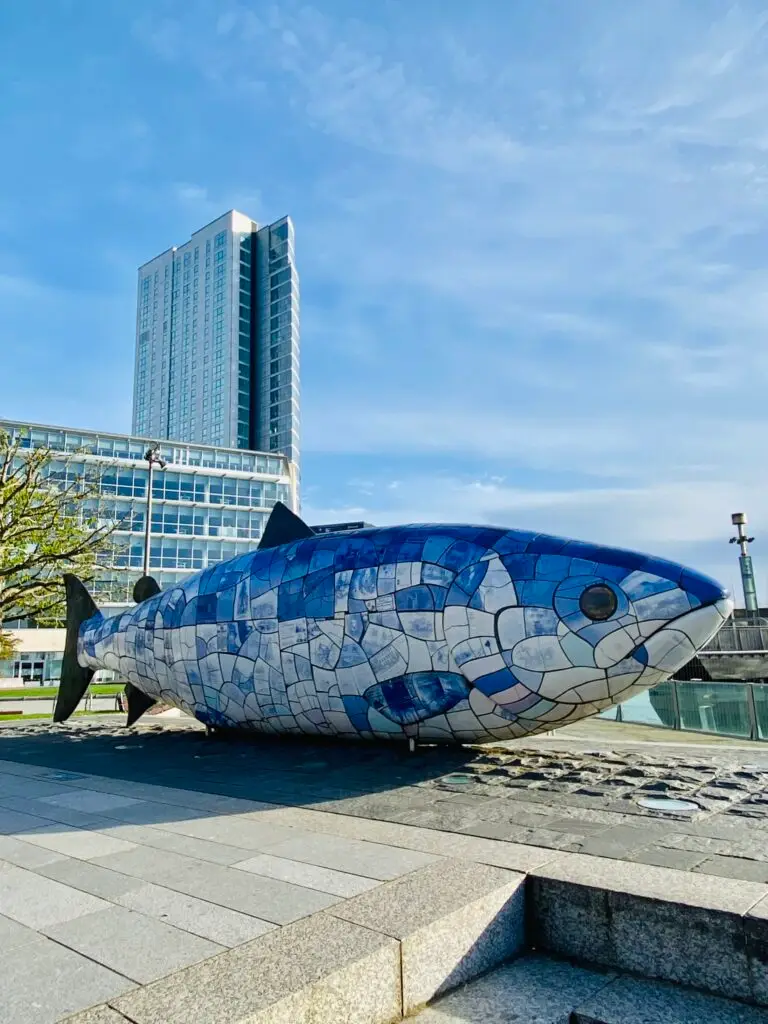
Bigfish
Bigfish is the most prominent of several modern artworks on the cathedral quarter river bank. It symbolises the regeneration of the river Lagan.
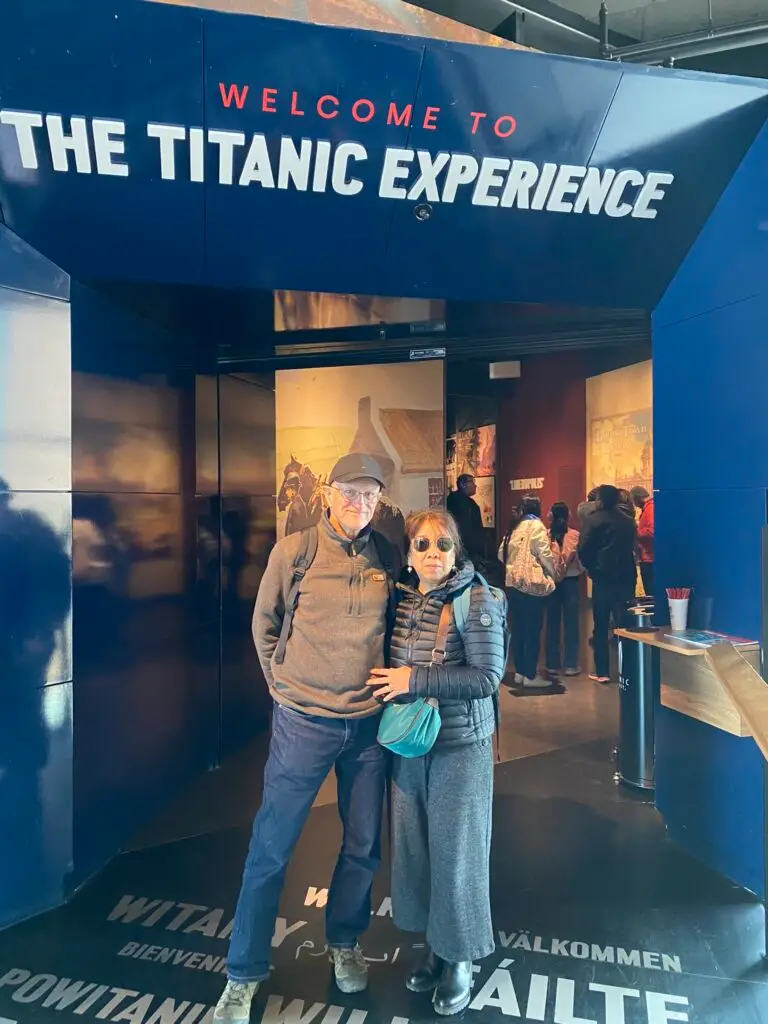
Titanic Experience Belfast
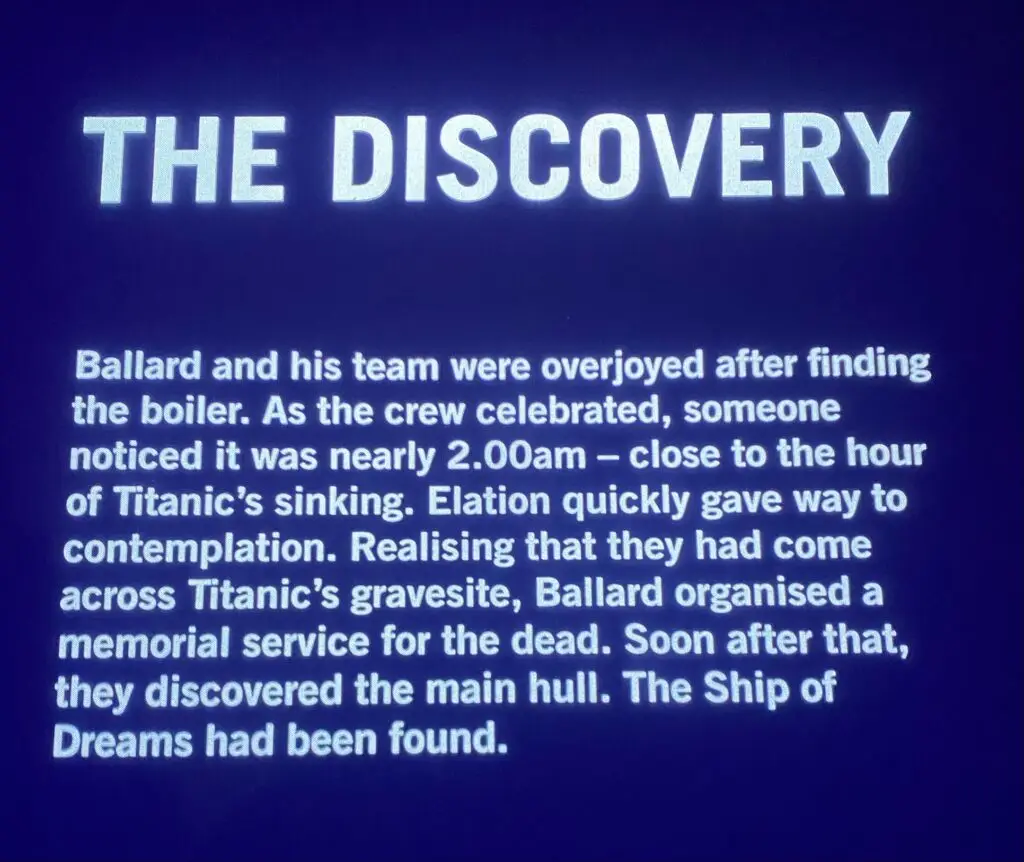
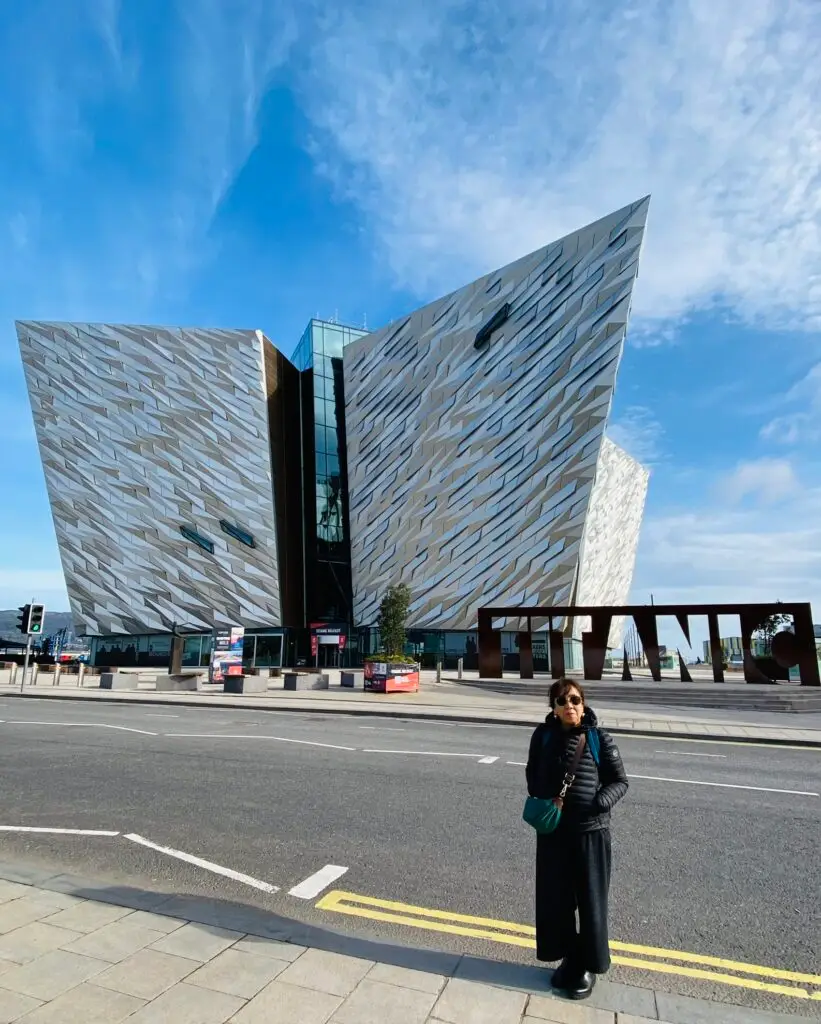
Titanic Belfast is an unmissable multimedia extravaganza that charts the history of Belfast and the creation of the world’s most famous ocean liner.
Titanic Experience Belfast
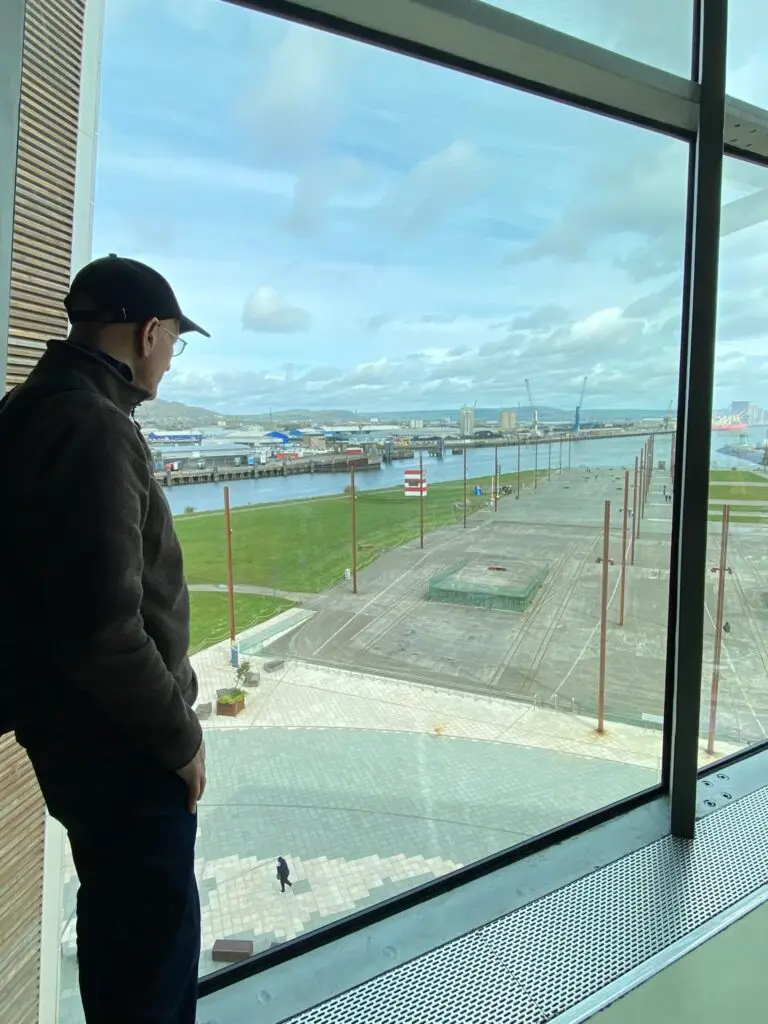
From an upper floor of the Titanic Experience building one has a view of the slipway from where Titanic was lanched in 1911.
The lines on the ground below mark the outline of the hull and the position where Richard is standing would be where the bow of the ship was.
Titanic Experience Belfast
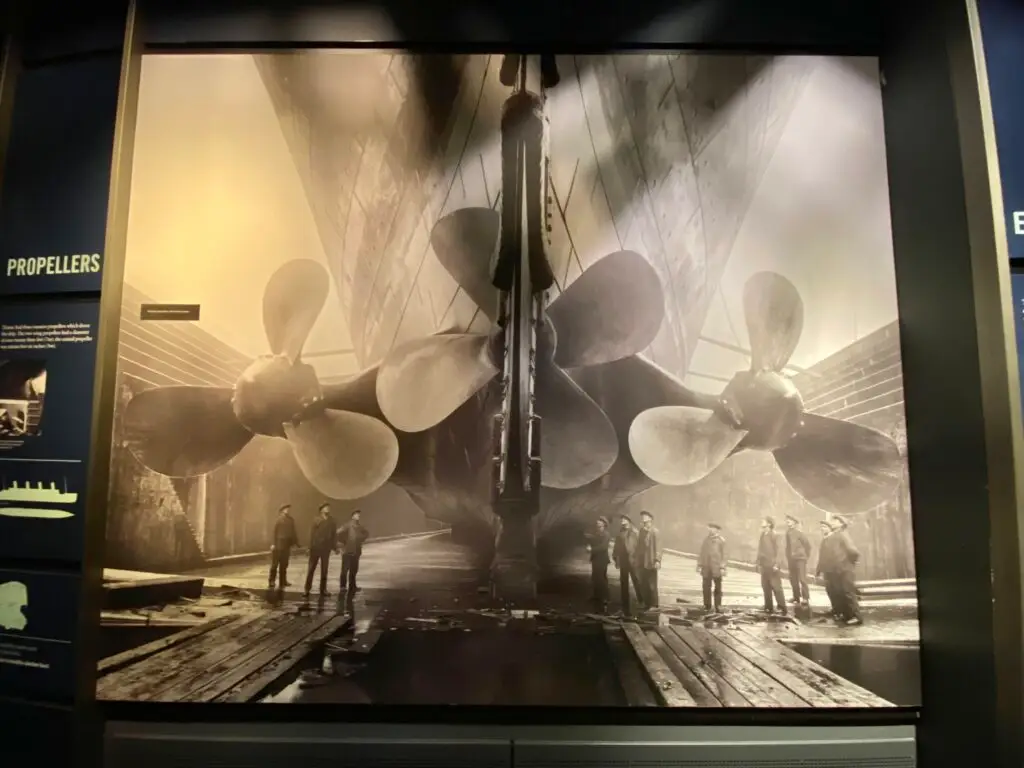
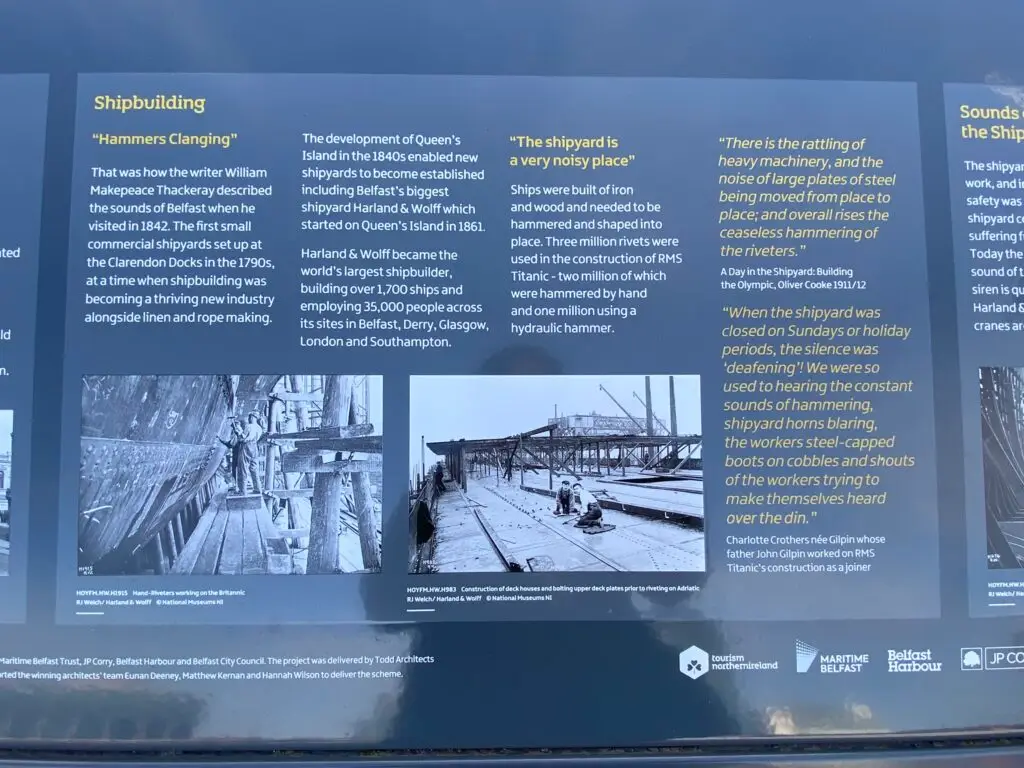
This is a picture of the Titanic’s three propellers taken from the slipway. The Harland and Wolff shipyard benefited from the potato blight in the rest of Ireland at the time because it resulted in great numbers of men traveling to Belfast seeking work.
Many of these workers were employed to hammer in the 3 million rivets used to hold the steel plates together. The noise in the shipyard from the hammering could be heard all over Belfast from dawn to dusk and resulted in most of the riveters going hard of hearing if not deaf.
Titanic Experience Belfast
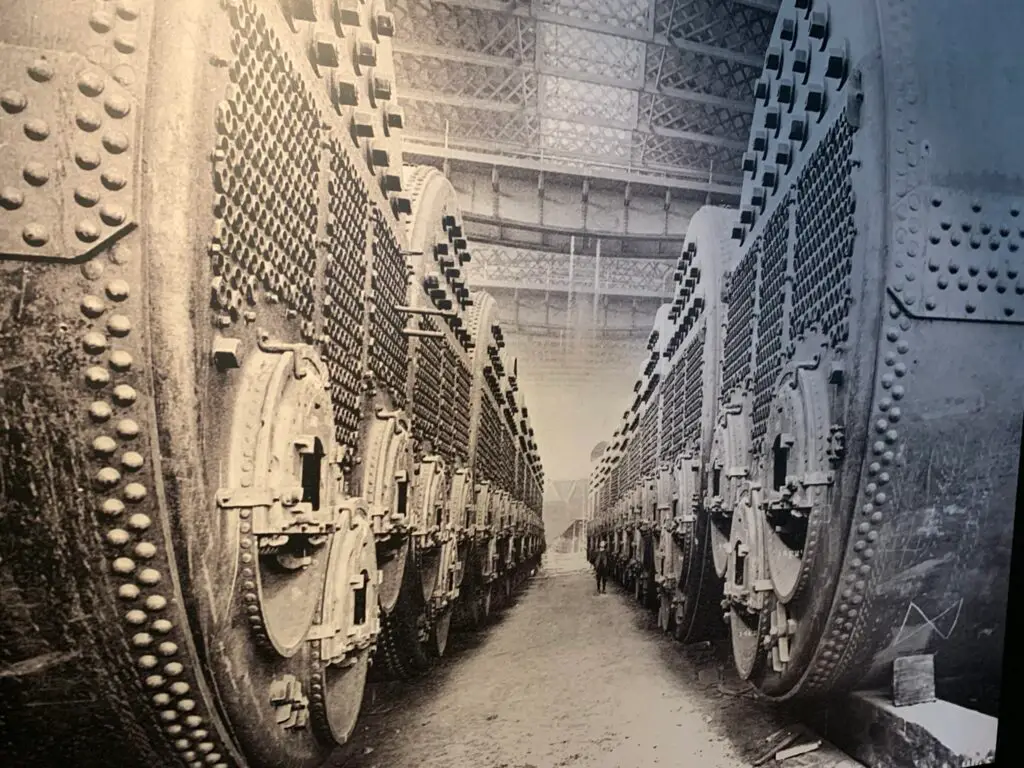
A picture of the boiler room
Titanic Experience Belfast
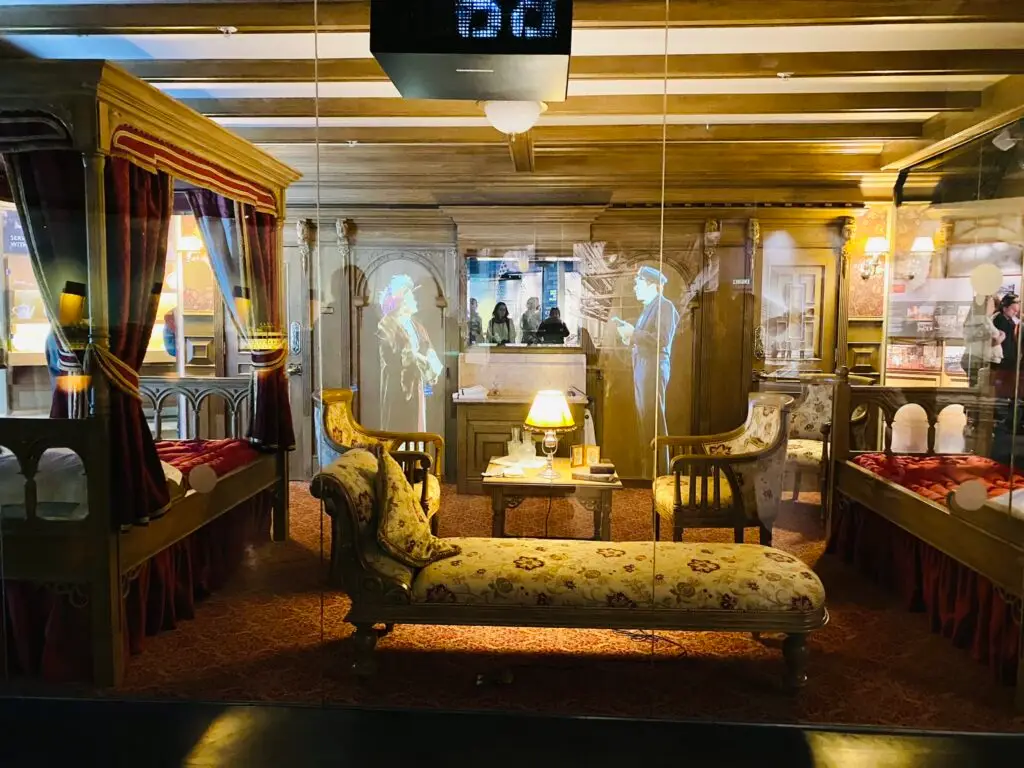
No expense was spared on the fitting out of Titanic and even steerage class was luxurious compared to previous liners. This is a recreation of a first class accomodation.
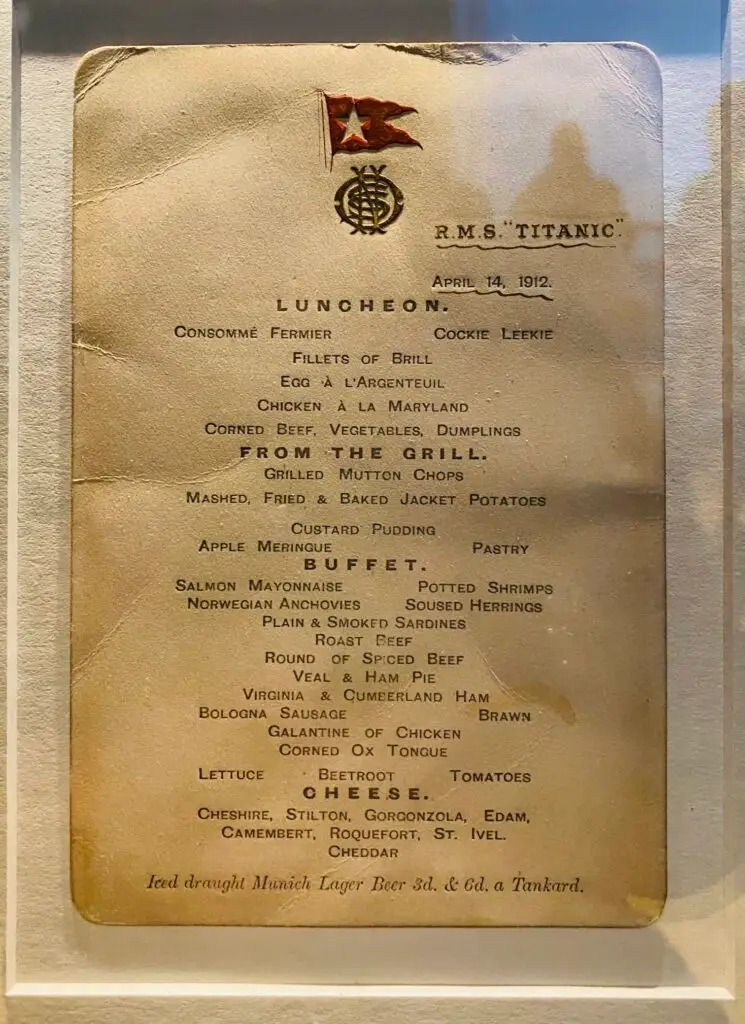
Titanic restaurant menu
Titanic Experience Belfast
Titanic Experience Belfast
Titanic Experience Belfast
Titanic Experience Belfast
Titanic Experience Belfast
Titanic Experience Belfast
Titanic Experience Belfast
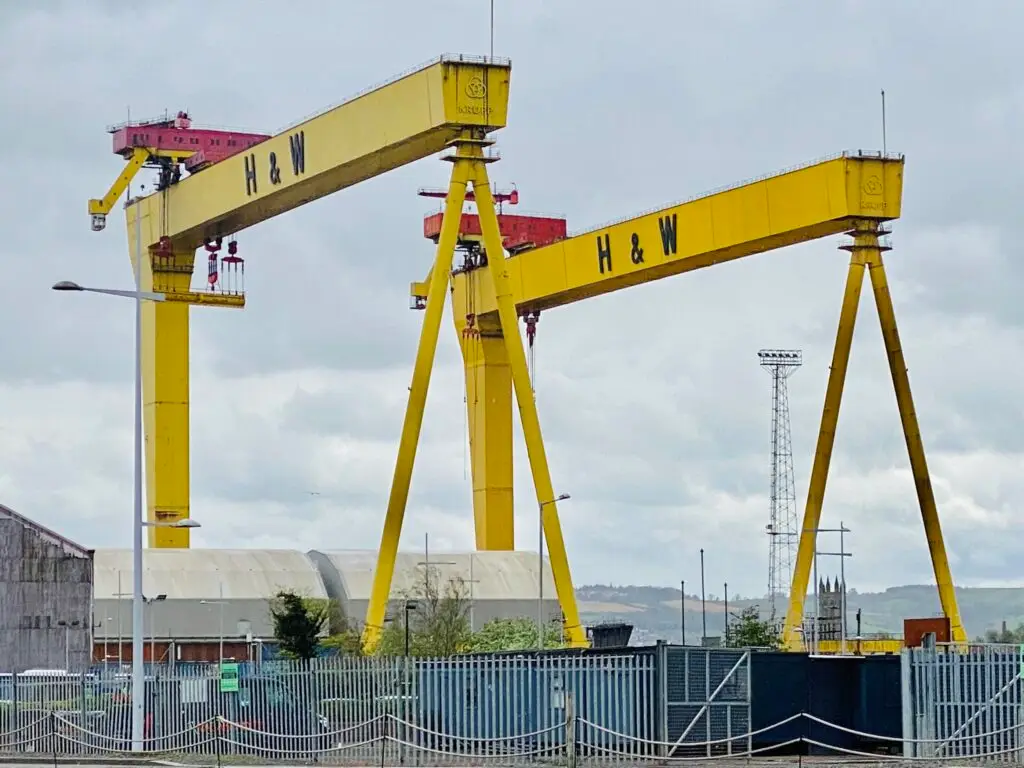
These are the iconic cranes ‘Samson’ and ‘Goliath’ in the shipyard. In the day, they were the largest cranes in the world.