Japan – January 2026

This was a three-week self organised trip to visit the main cities in Japan for a first time visit.

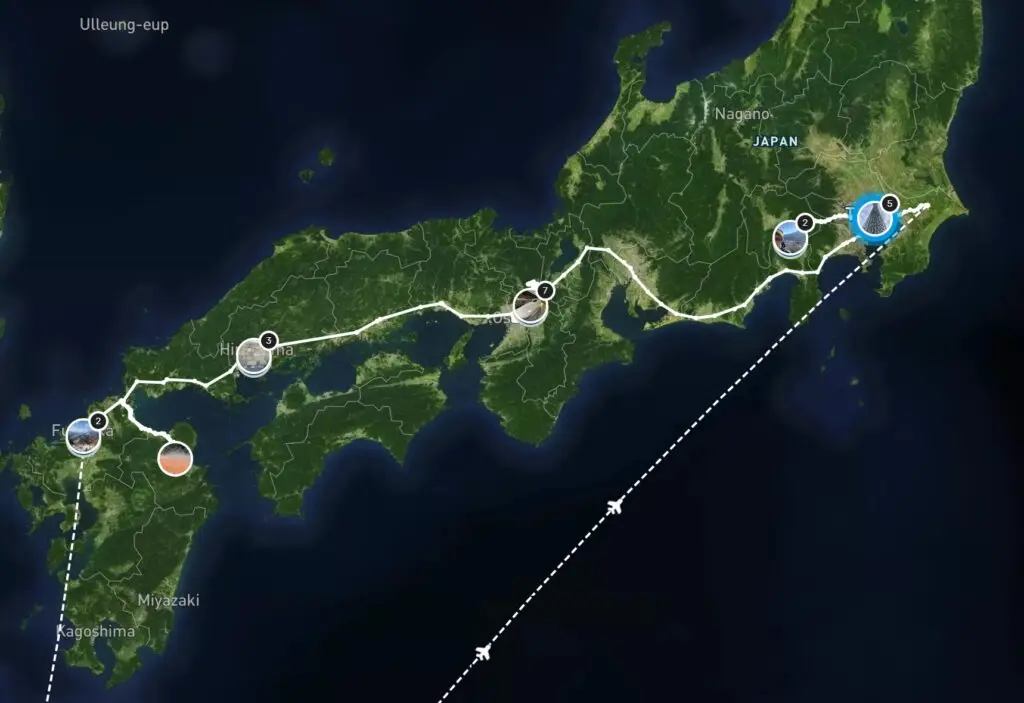
3 week itinerary: Tokyo, Fuji, Osaka, Nara, Kyoto, Hiroshima, Beppu, and Fukuoka

After arriving at Tokyo Narita airport the question asked by uniformed and white gloved attendants is “do you have a QR code “?  Be warned that if you do not have this essential code obtained on the “Japan Web” website you are in for some delay.  With the code you are seamlessly ushered through by the attendants pointing the way with their white gloves and face masks at each stage.  

Before leaving the airport install your esim and Suica card on your phone.  The Suica card is a top-up card which you use for all public transport in the country.

Tokyo

Ramen bar
Ramen bar
Ramen bar

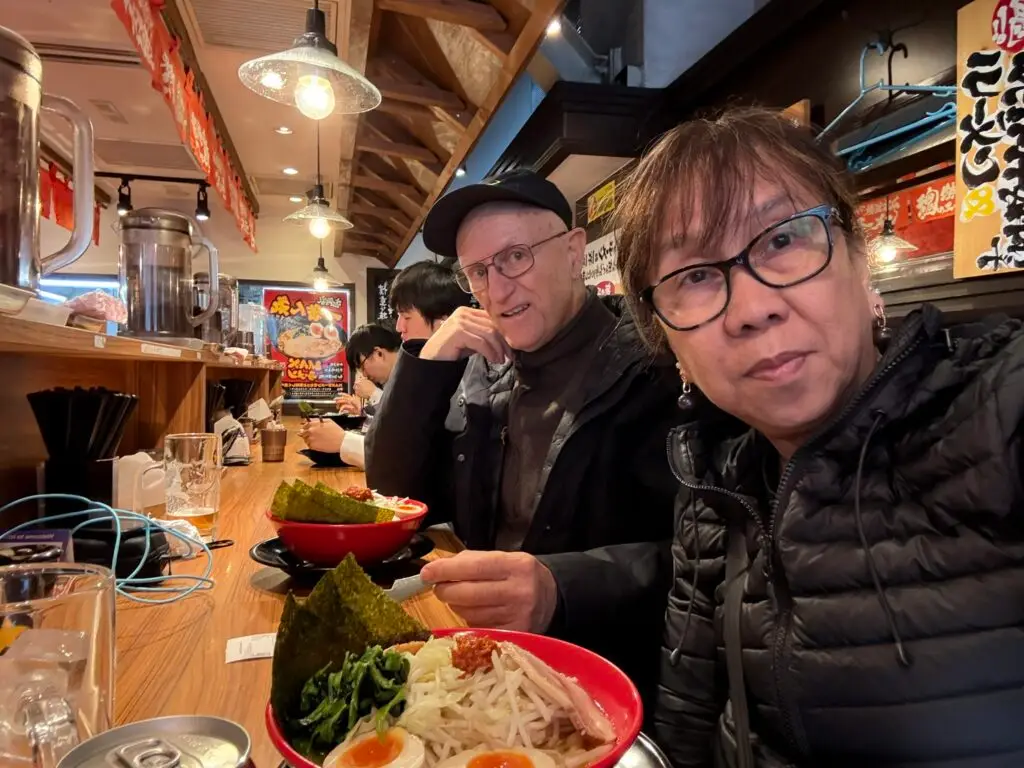
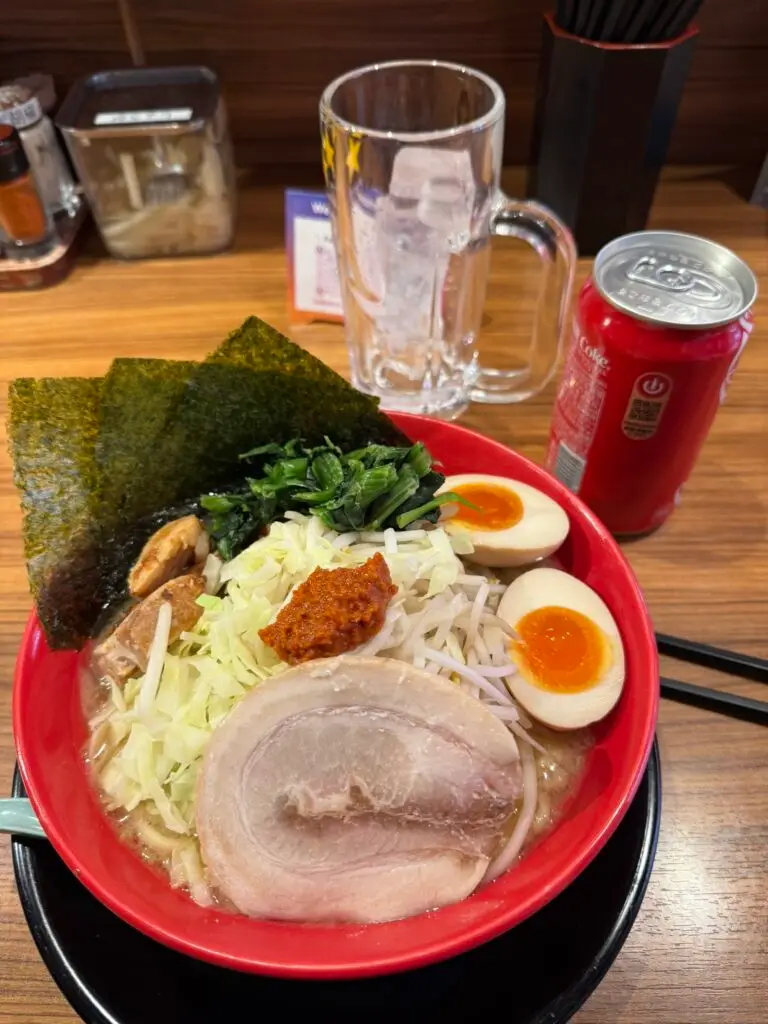
We took the hour long train ride from the airport to our hotel booked on booking.com in the Asakusa district.  The immediate priority was food and so we went to the Ramen bar across the road. 

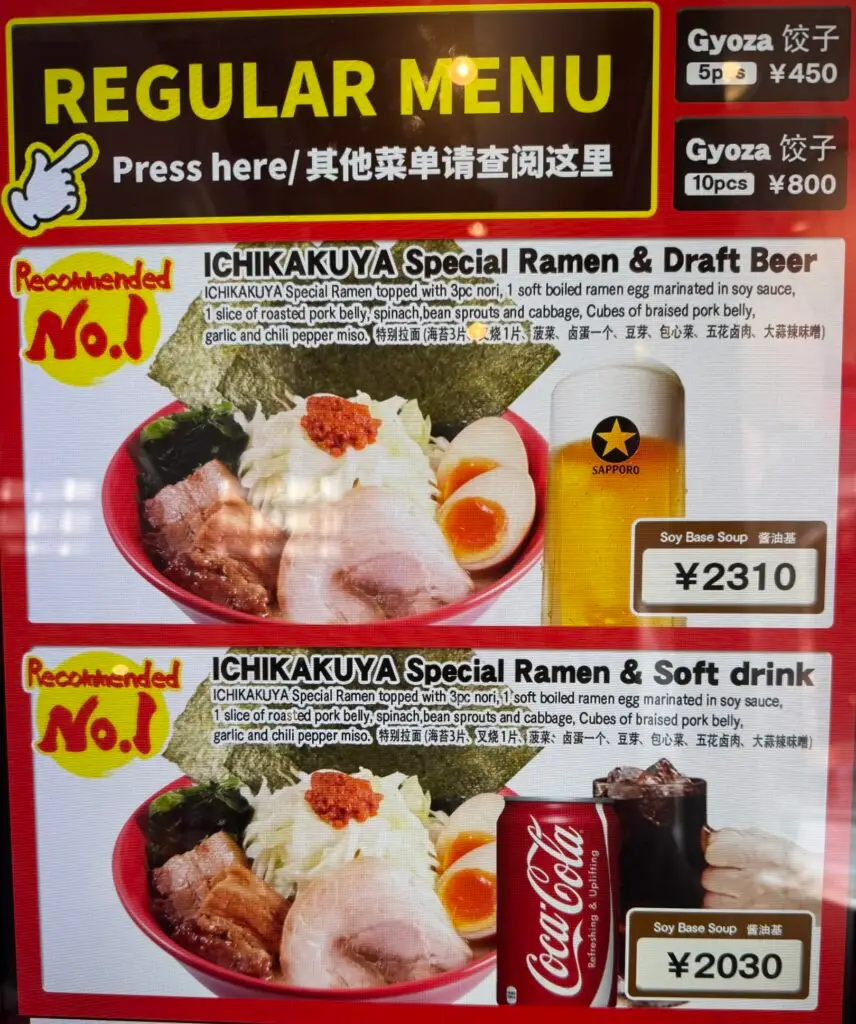
This was our introduction to how food is ordered in Japan: you select your choice on the tablet on the table or machine in the bar and sit down and it is delivered to you.  If you ask for help they just take you to the machine and show you how to select on the electronic screen.  Thankfully, one can select English menu version.

Japanese toilet

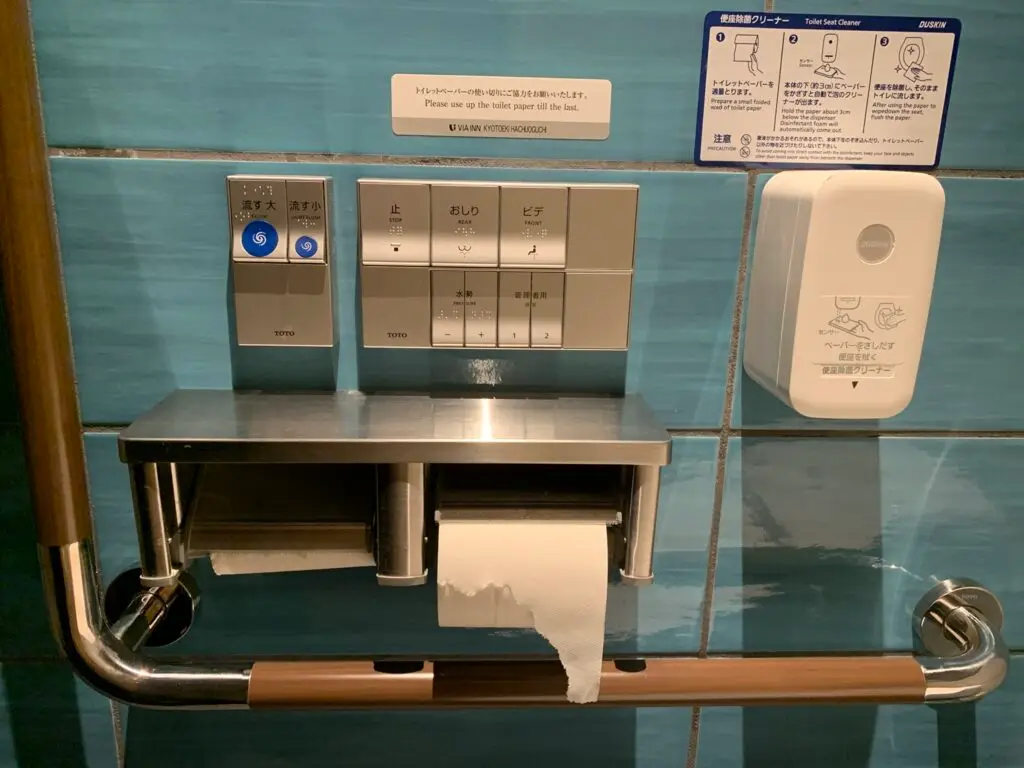
Another experience was a first introduction to the Japanese toilet (at the airport).

All toilets in Japan come equipped with heated seat and a ‘control panel’.  On this one you can select the pressure and temperature of your wash to your rear (also a front wash option for the ladies), you can then have a blow dry after your wash, then you select a normal flush or light flush.  I saw some toilets with a ‘privacy’ option that played a running water noise so that someone in another cubicle would not be able to hear you going about your business!

Every public toilet I used in Japan was spotlessly clean and always in working order.  It takes some time, after returning to UK, to get used to a normal toilet seat again that is not heated to a nice warm comfort level!

The Tokyo Skytree

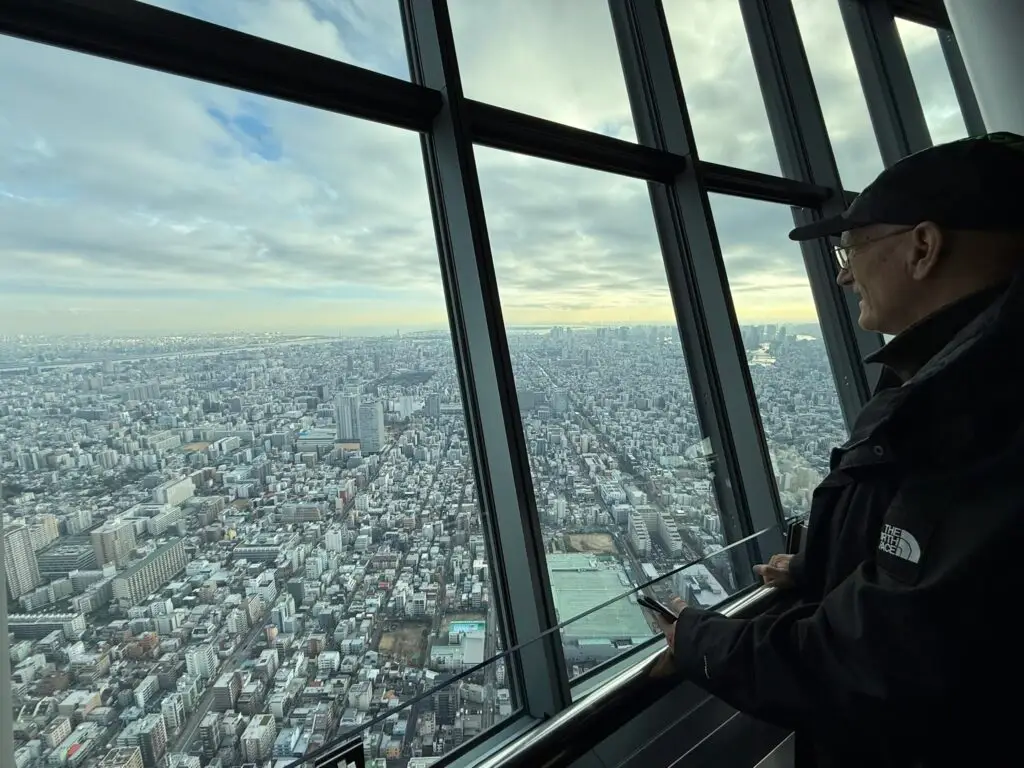
The Tokyo Skytree at 634 meters is the third tallest structure in the world behind Merdeka, and Burj Khalifa.  It was topped out in 2011 and was built as a television and broadcast site to replace the Tokyo tower which had become surrounded by high rise buildings.

From the observation deck at 451meters the true nature of Tokyo as a megacity of 37 million can be appreciated.
The tower is illuminated at night time

The tower has seismic proofing, including a central shaft made of reinforced concrete.

The main internal pillar is attached to the outer tower structure for the first 125 meters above ground.  From there until 375 meters, the pillar is attached to the tower frame with oil dampers, which act as cushions during an earthquake.

Additional resilience is achieved through an “added mass control mechanism” (or tuned mass damper) – a damping system which, in the event of an earthquake, moves out of step with the building’s structure, to keep the center of gravity as central as possible to the tower’s base.  

According to the designers, the dampers can absorb 50 percent of the energy from an earthquake.

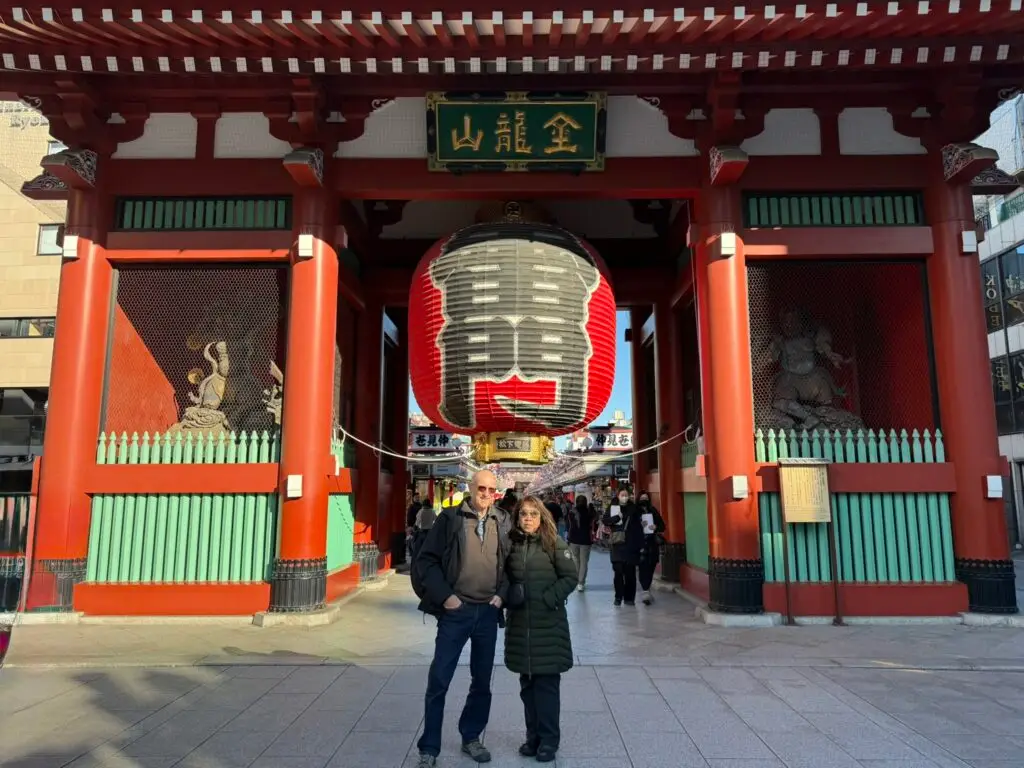
Gateway of the Senso-ji temple

The Senso-ji is the oldest temple in Tokyo (7th century) and probably the most famous.  The lantern in the gateway weighs 700kg and it is flanked by statues of two deities: Fujin (God of wind), and Raijin (God of thunder).

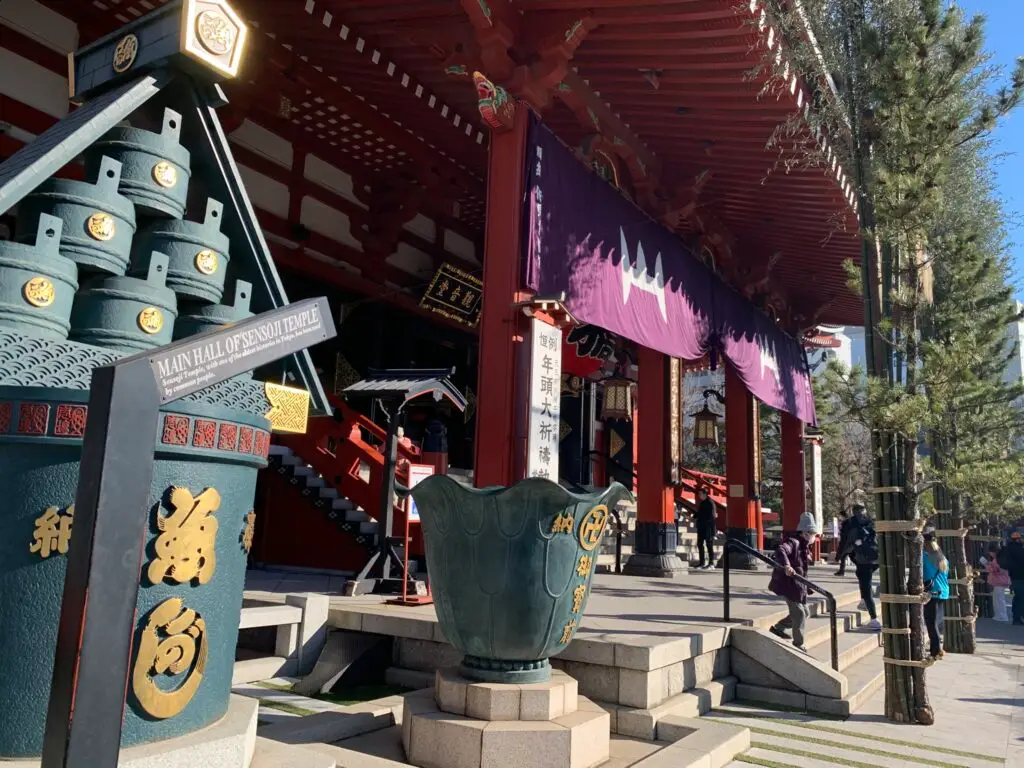
Senso-ji temple
Senso-ji temple

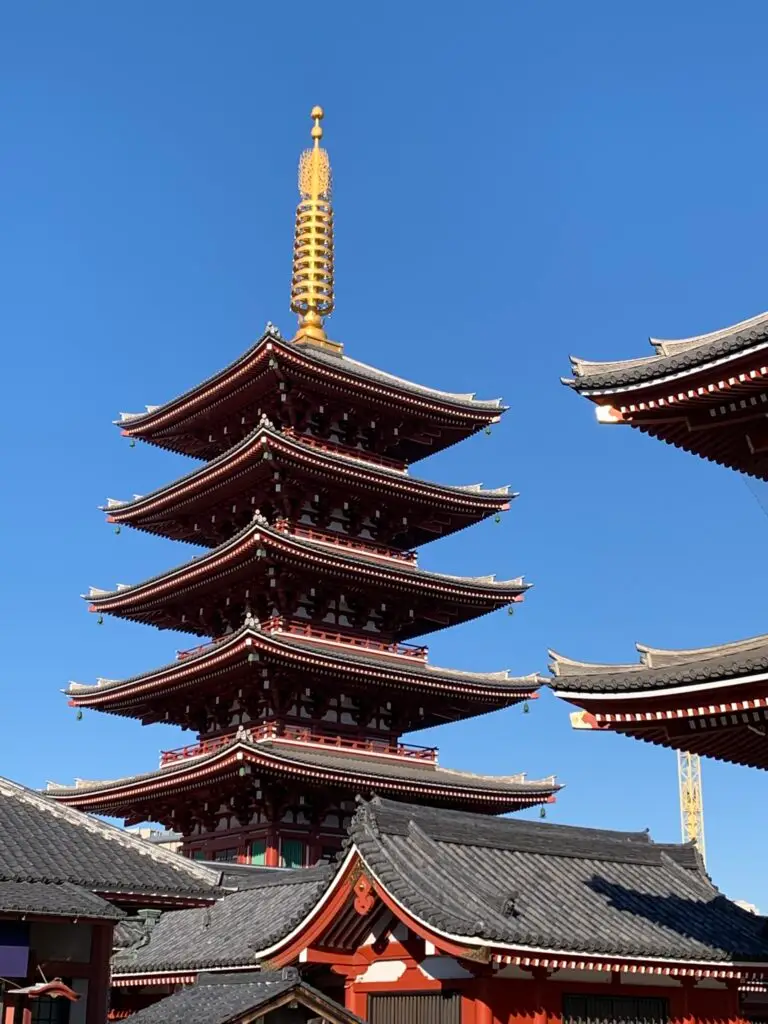
This five-storied pagoda is one of the buildings in the temple compound and is said to contain a relic of the Buddhas remains in the top story.

Senso-ji temple

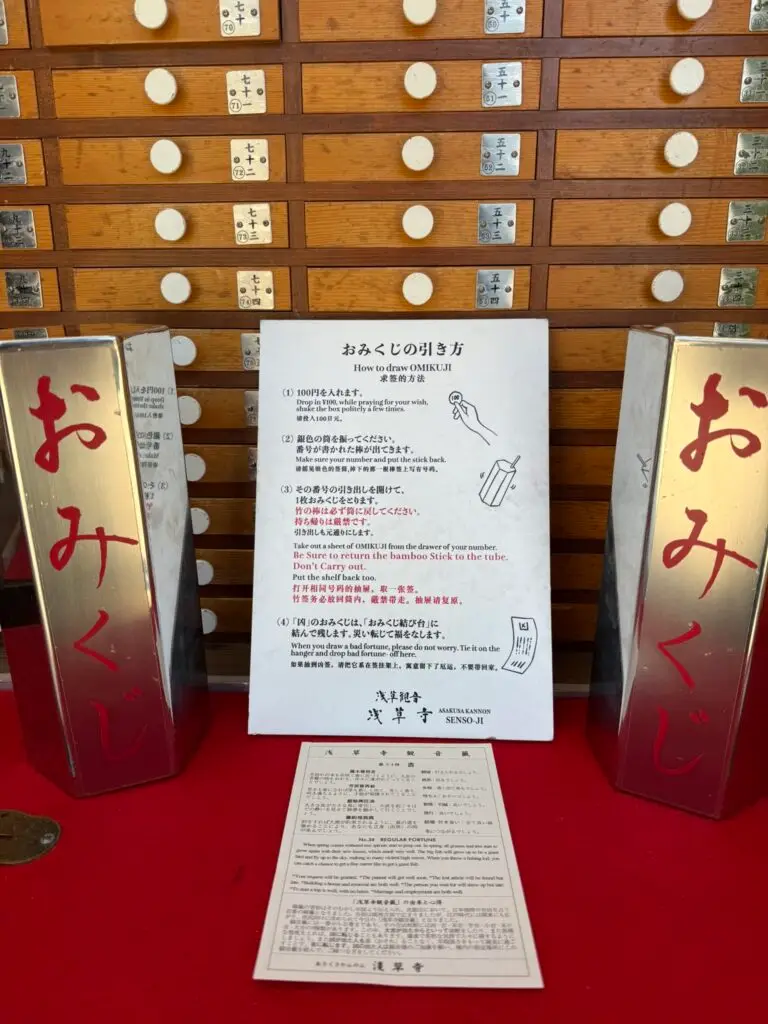
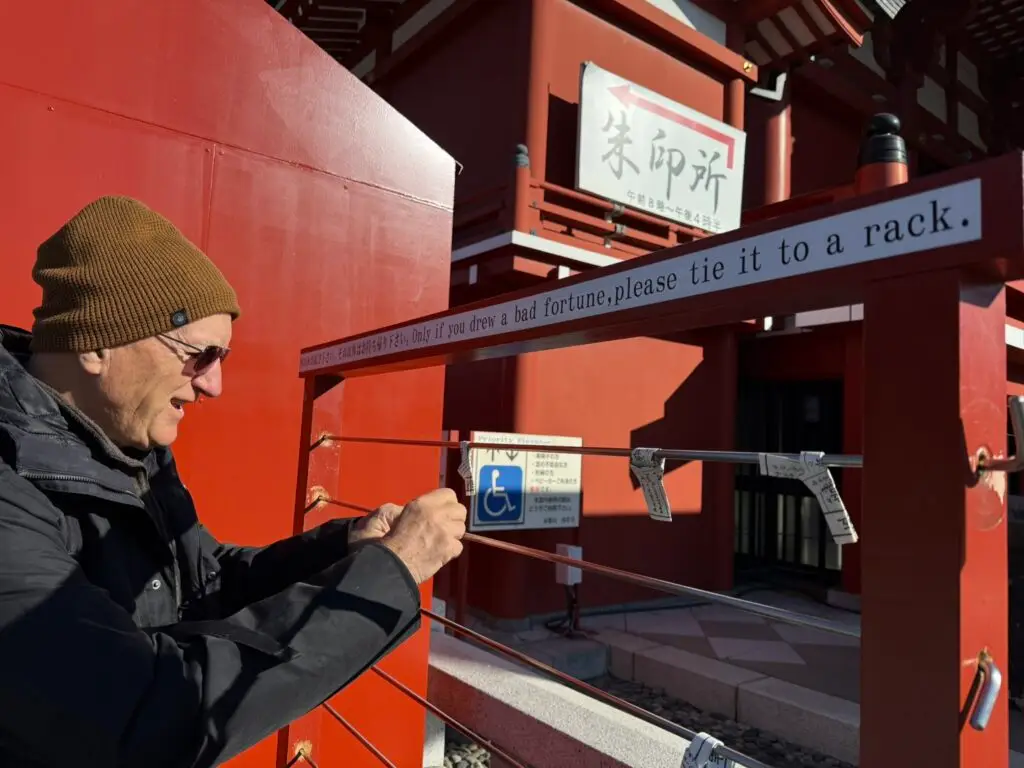
In many temples one can find these fortune telling boxes.  One puts a coin into the pay box, then one selects a stick from the barrel (after shaking), which has a number to identify one of the boxes.  Inside the box is your fortune.

If your fortune is not great, you have the option of tying it to the rack so it is blown away by the wind!

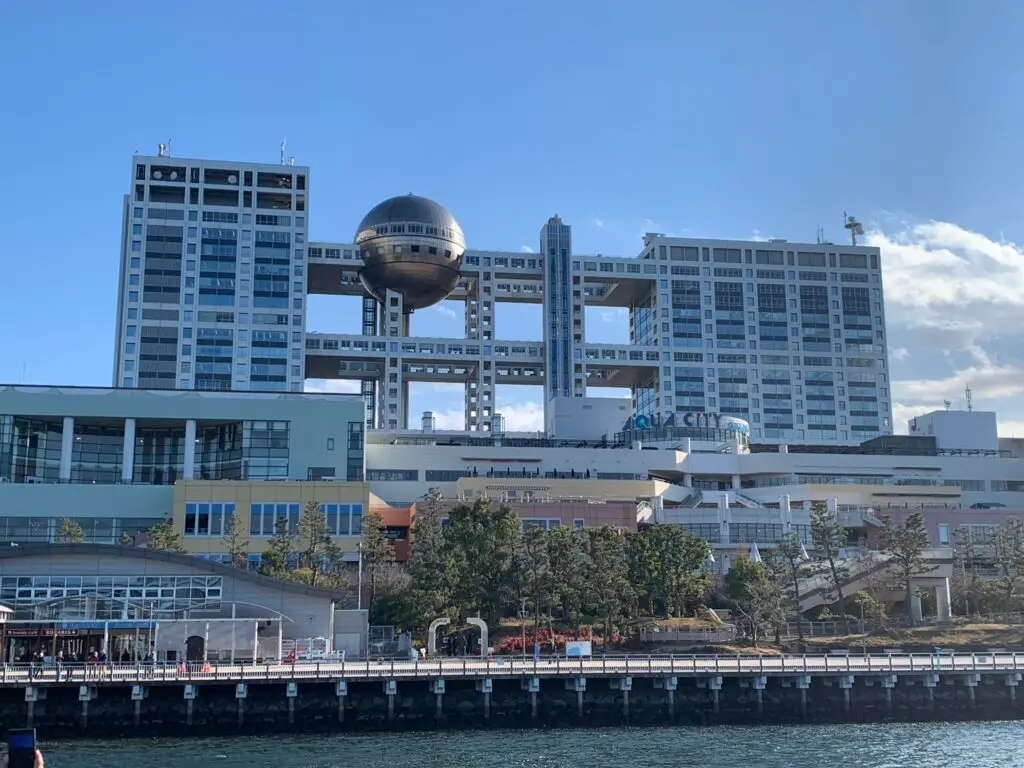
You can take a river boat trip down the Sumida river from Asakusa to Odaiba at Tokyo bay.  These are some of the buildings you see along the way:

Sumida river boat trip
Sumida river boast trip
Sumida river boat trip - at the destination at Odaiba
Shibuya crossing

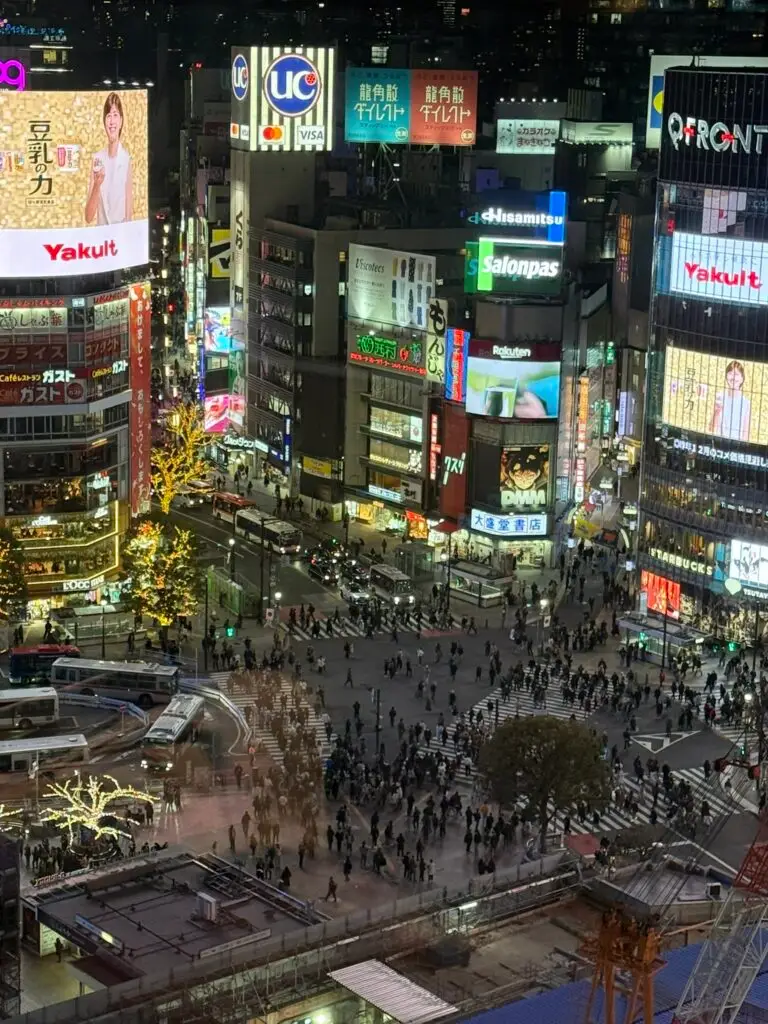
After the boat trip we took the metro to Shibuya.  On the 14th floor of the Shibuya sky building is the bookstore where you pay a small charge to sit for an hour in comfy chairs with a panoramic view of the famous Shibuya scramble traffic crossing below while browsing Manga comics.  Unlimited food and drink included!

Hachiko statue

At the foot of the Shibuya sky building is this iconic dog statue commemorating Hachiko – an akita who had the habit of waiting on this spot every day for his owner to return home on the train after work.  When his owner died in the 1920’s, Hachiko nevertheless continued to wait faithfully for another decade.

The Japanese are obsessed with these vending machine dispensed capsule toys (Gashapon).

Shibuya 109 shopping mall

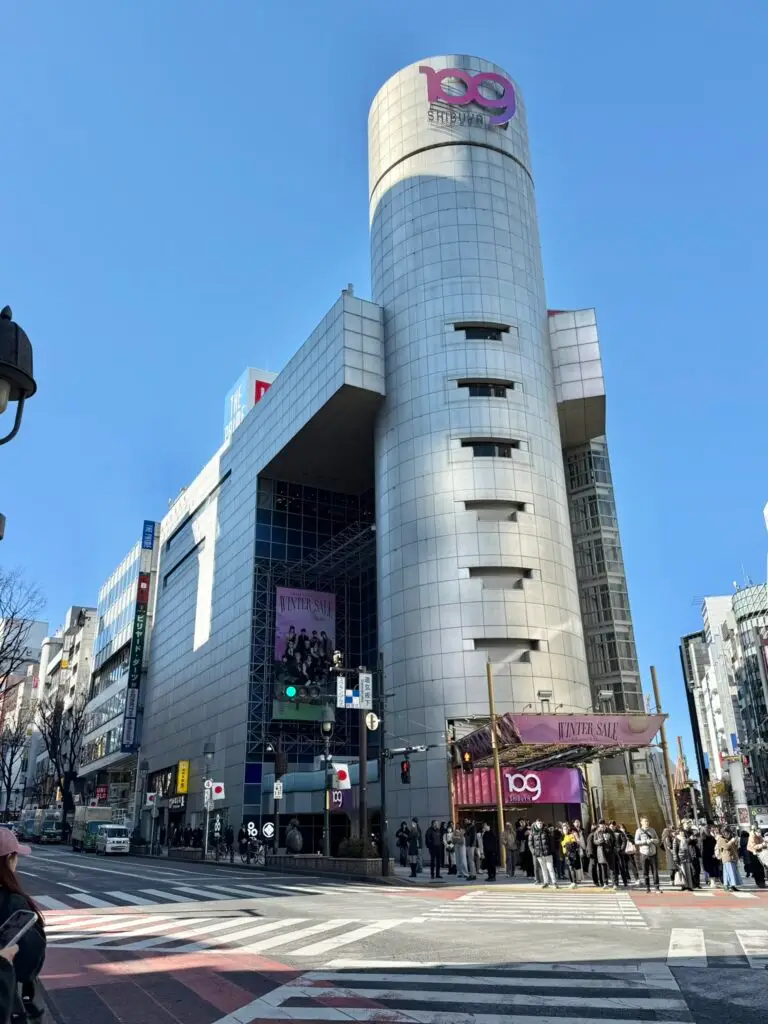
The Shibuya 109 is a legendary fashion destination and is another building on the Shibuya crossing.  It is one of the coolest places to see what the youth of today are wearing.

Shibuya sky building

We returned to the Shibuya sky building the next morning to visit the 47th floor open air observation deck at 229 meters high.  

Shibuya sky observation deck - Mt Fuji is clearly visible at 100km distance
Meiji jingu shrine at Yoyogi park

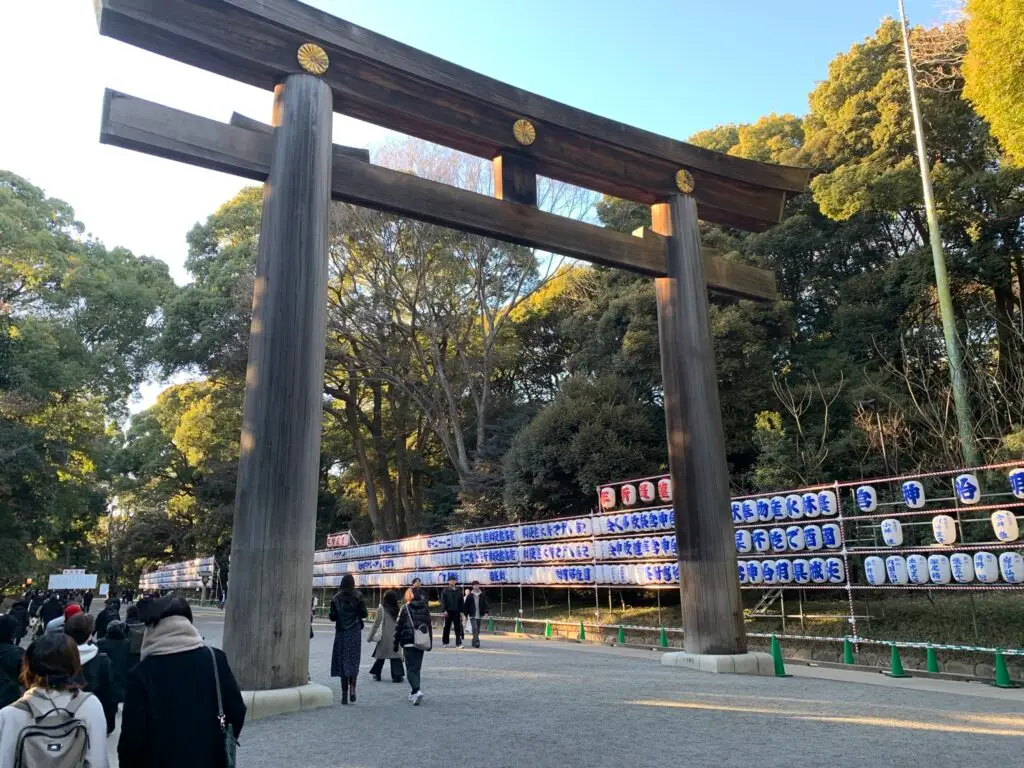
The Meiji-jingu shrine is entered via this 12m high torrii (entrance gate) built using Taiwanese cypress and is the tallest of its kind in Japan.  The temple itself is a further 10 minute walk through the park.

Meiji-jingu Shrine

The walk to the shrine takes you past these stacks of empty sake barrels given to the enshrined deities from local breweries.

Meiji-jingu Shrine

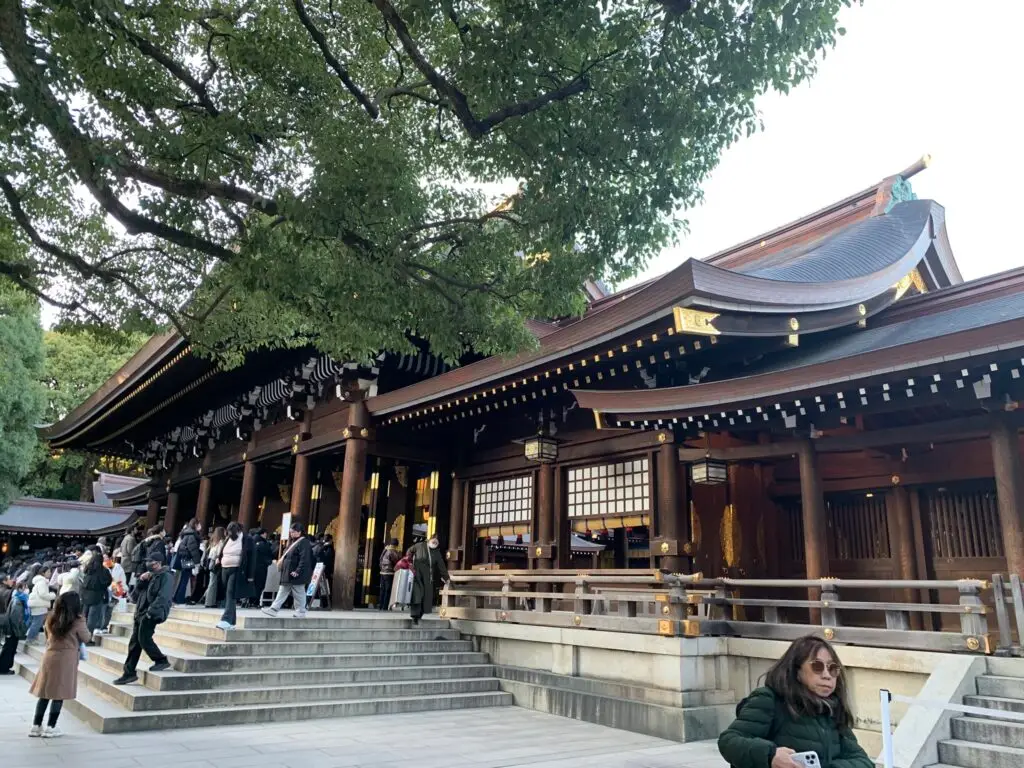
The main shrine is 100 years old.  The surrounding forest reflects the core belief of Shinto – that all elements in nature are sacred.

Ginza district
Ginza district
Ginza district

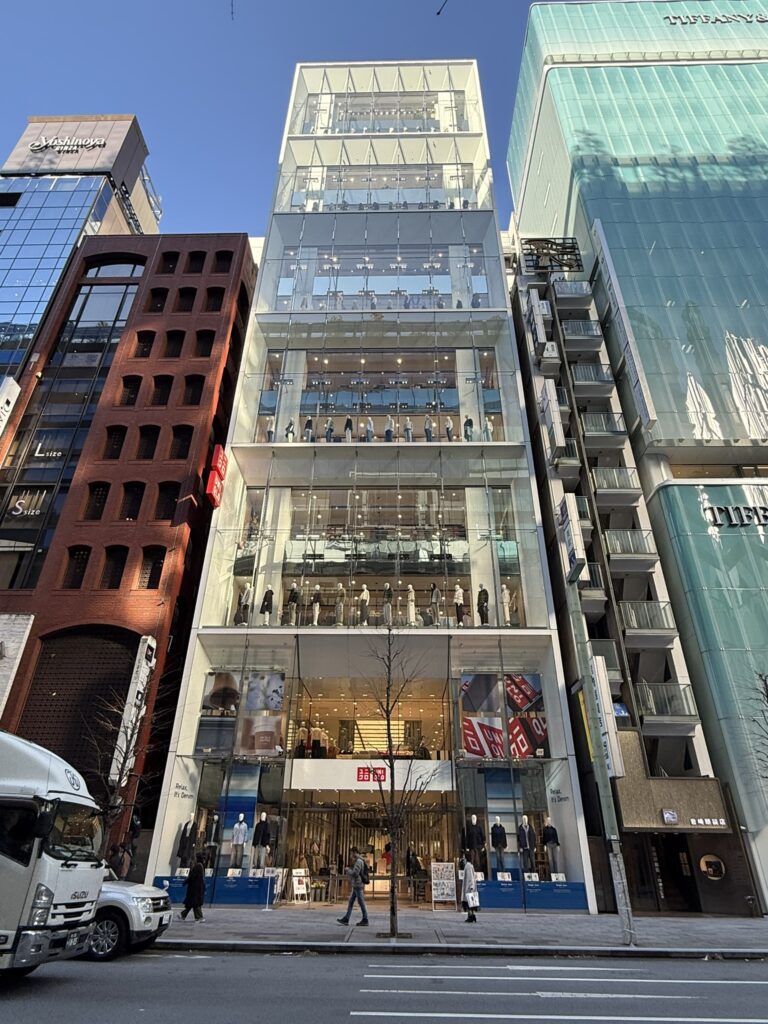
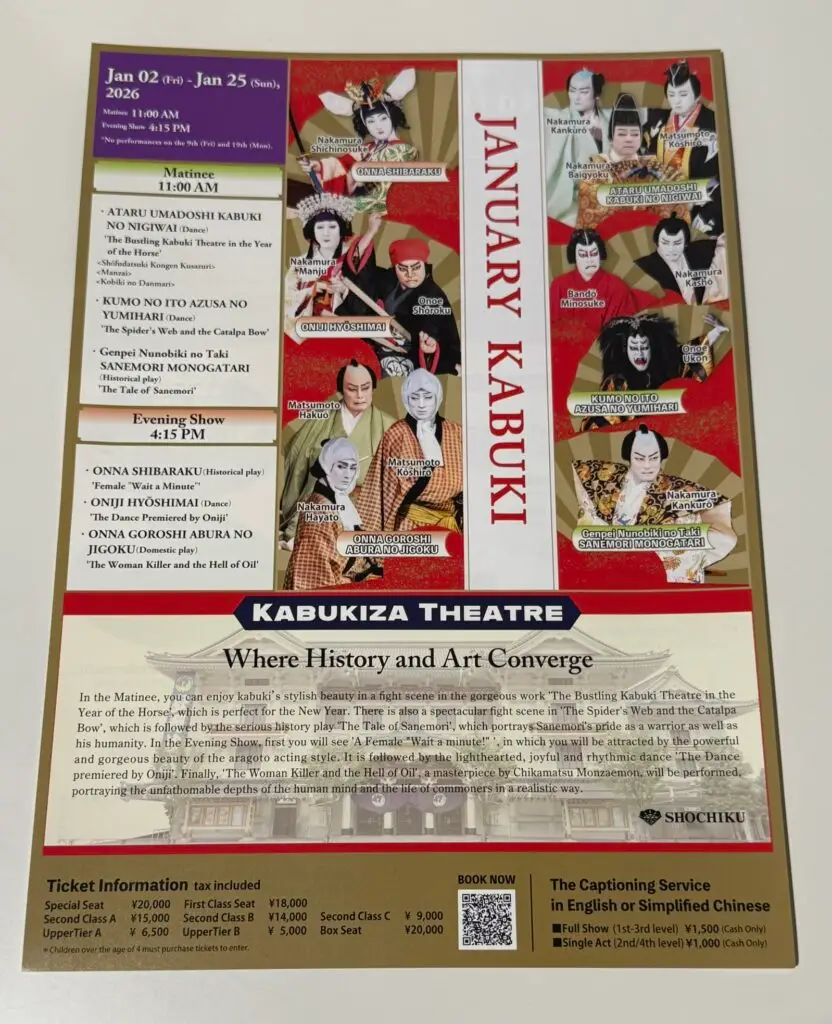
We went to the Kabukiza theatre in the Ginza district to get tickets for a Kabuki show.  The Ginza is Tokyo’s most upscale neighbourhood with its streets lined with sophisticated cafes, luxury boutiques, and grand shopping complexes.

Kabukiza theatre in Ginza

The Kabukiza theatre in Ginza is Tokyo’s premier spot to witness the dramatic art form of kabuki; a type of stylised Japanese theatre.  First established in 1889, the building was destroyed several times by fire and the present building is the result of renovations completed in 2013.

Kabuki Theatre
Kabuki theatre

The Kabukiza show can be four acts each lasting an hour. We had ‘single act’ tickets to see just one act lasting an hour,  – without understanding the show (in Japanese of course) this was plenty of time for an introduction! 

During the show, any kind of eating, drinking, filming, photos, talking or even leaning forward in your seat is strictly prohibited and will get you a tap on the shoulder from one of the white-gloved attendants.  This video was shot before the show started.

Tokyo station

We went to visit the Imperial Palace which is in the imperial gardens in front of the grand red-brick facade of Tokyo station.  After being bombed during the war it was restored to its original state in 2012.

Tokyo imperial palace

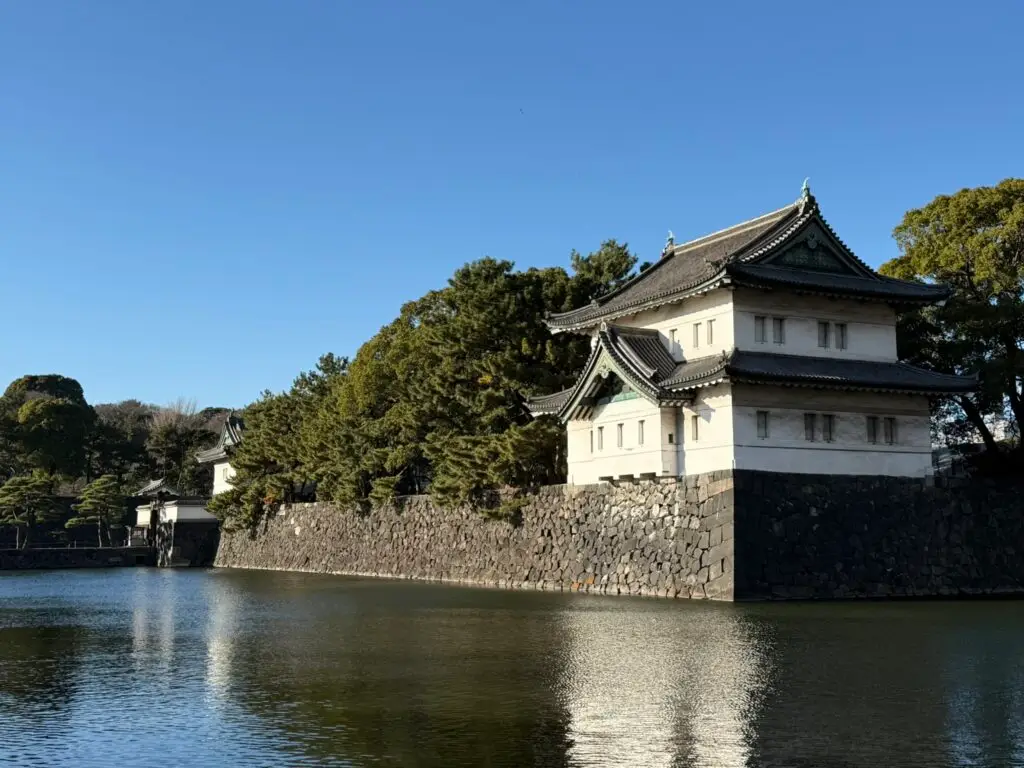
The closest you can get to the palace without booking a visit is from the other side of the moat, from where it is hidden behind dense trees.  The buildings within the palace’s vast compound are relatively new, having been rebuilt in the 1960’s following WWII air raids.

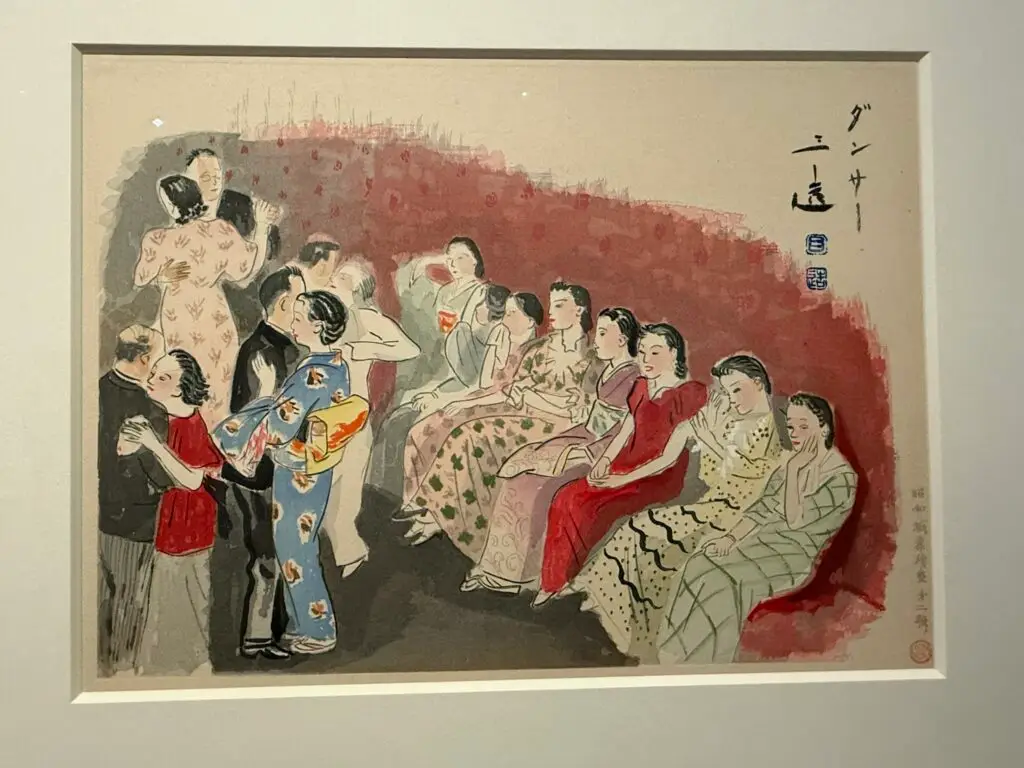
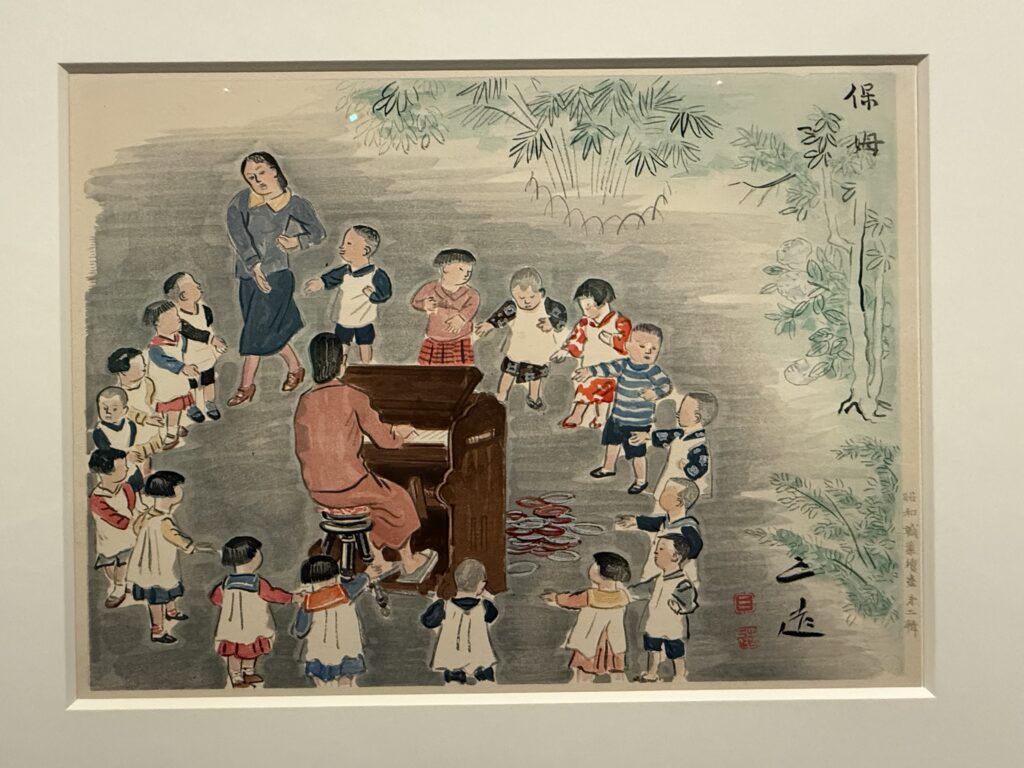
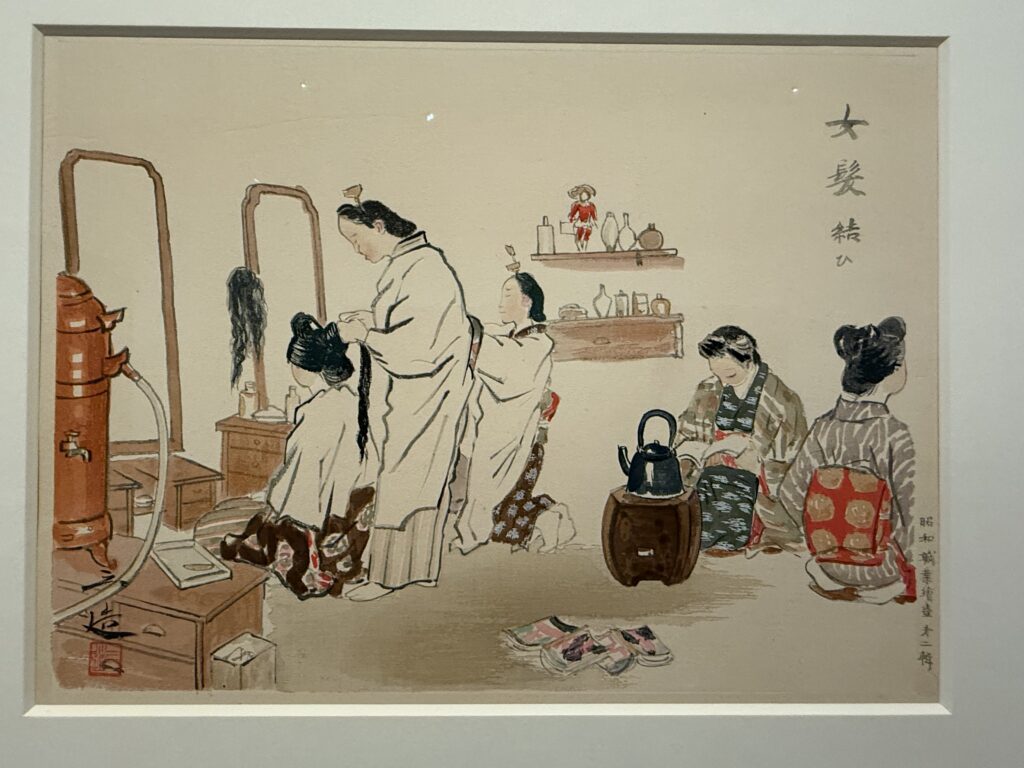
National Museum of Modern Art
National museum of modern art

We also visited the National Museum of Modern Art which is just the other side of the Imperial Park.

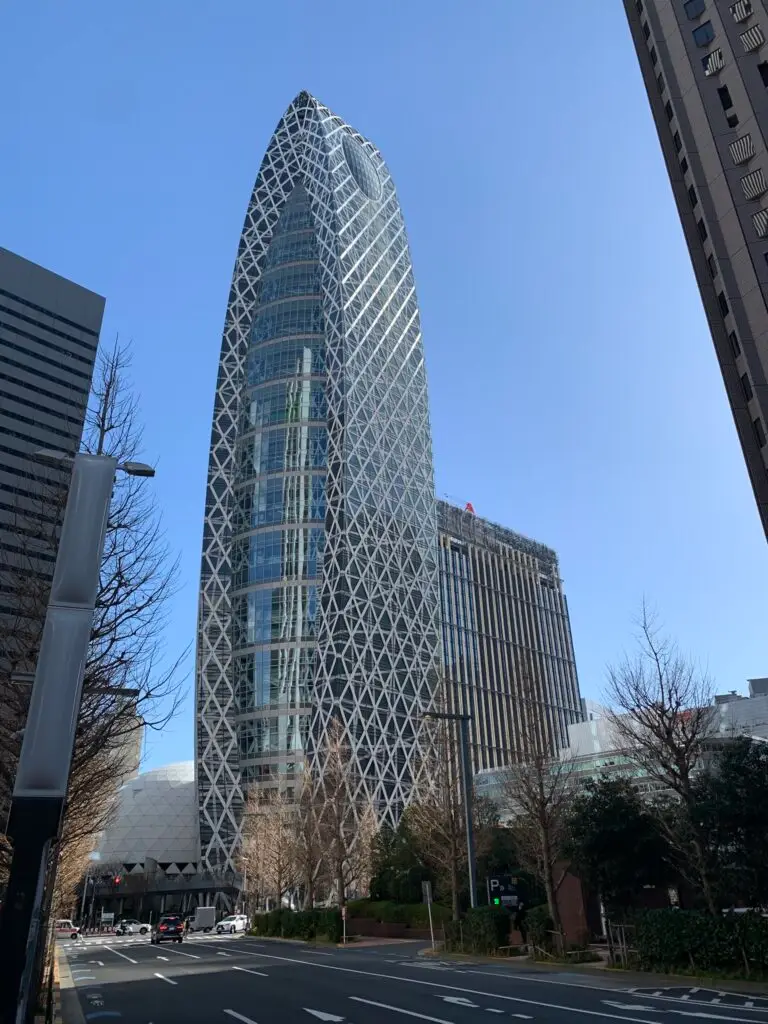
Shinjuku - business district
Shinjuku - government building
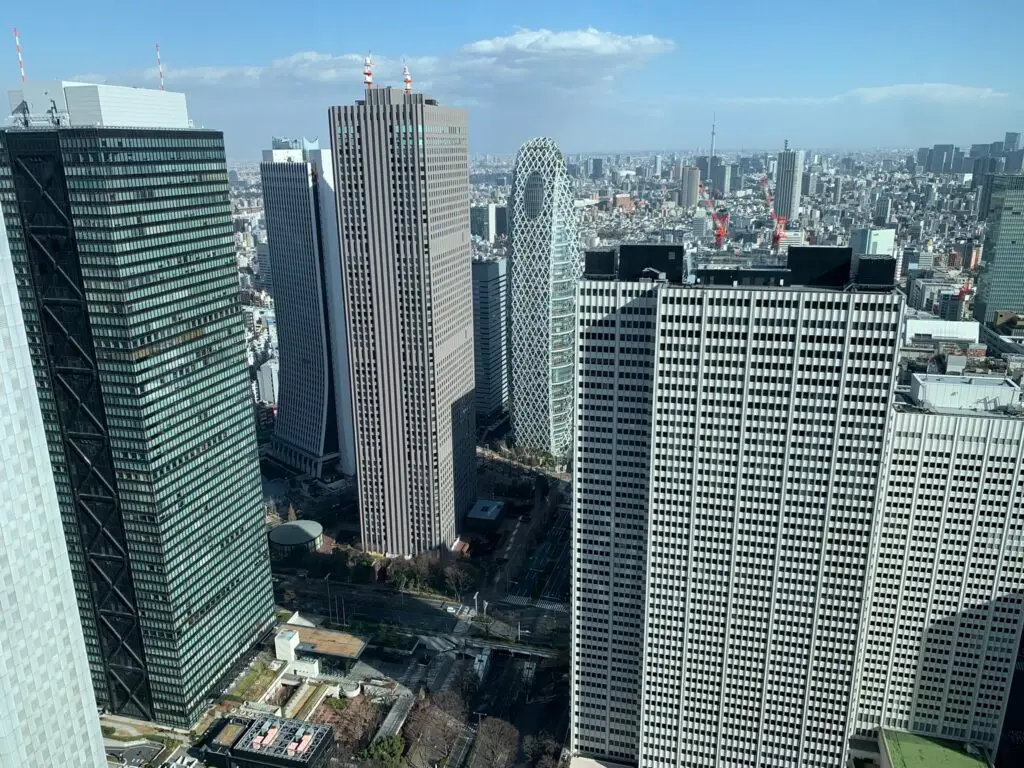
Shinjuku - view from government building observation floor

Shinjuku has two different districts on either side of the railway line: a business district to the west and a commercial district to the east.   We went the next day to visit both districts.

The government building has two towers each of which has a top floor open to the public and accessible by lift from the foyer.
Designed by architect Kenzo Tange and completed in 1990, the building stands 243 meters tall and is known for its unique design resembling an integrated circuit and a Gothic cathedral.

There are free observation decks on the 45th floor of both its north and south towers, offering panoramic views of Tokyo.

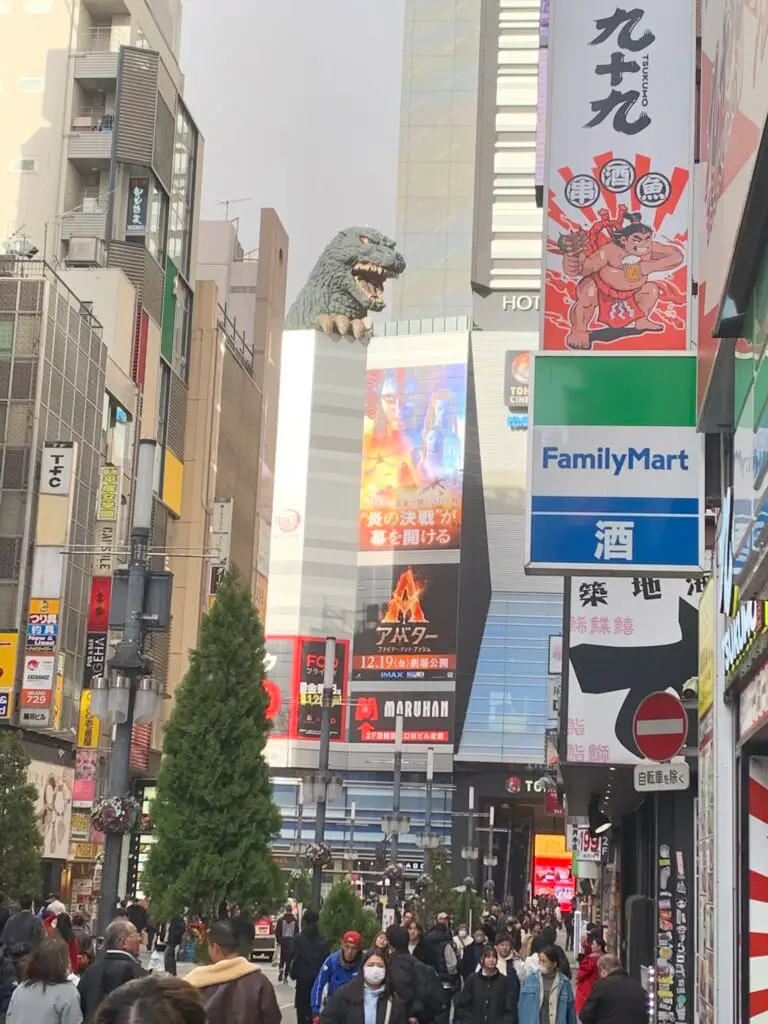
Shinjuku - Godzilla statue
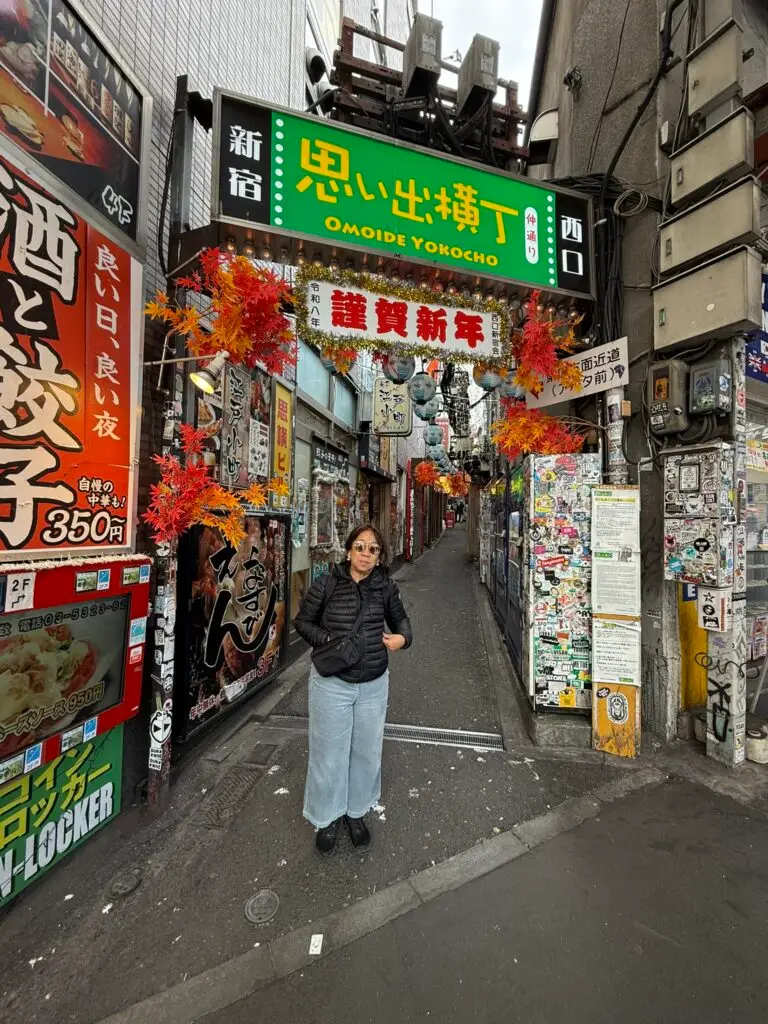
Shinjuku - memory lane
Shinjuku - Golden Gai (the old red light district)

This famous “3d cat” is a landmark in the Shinjuku commercial district.

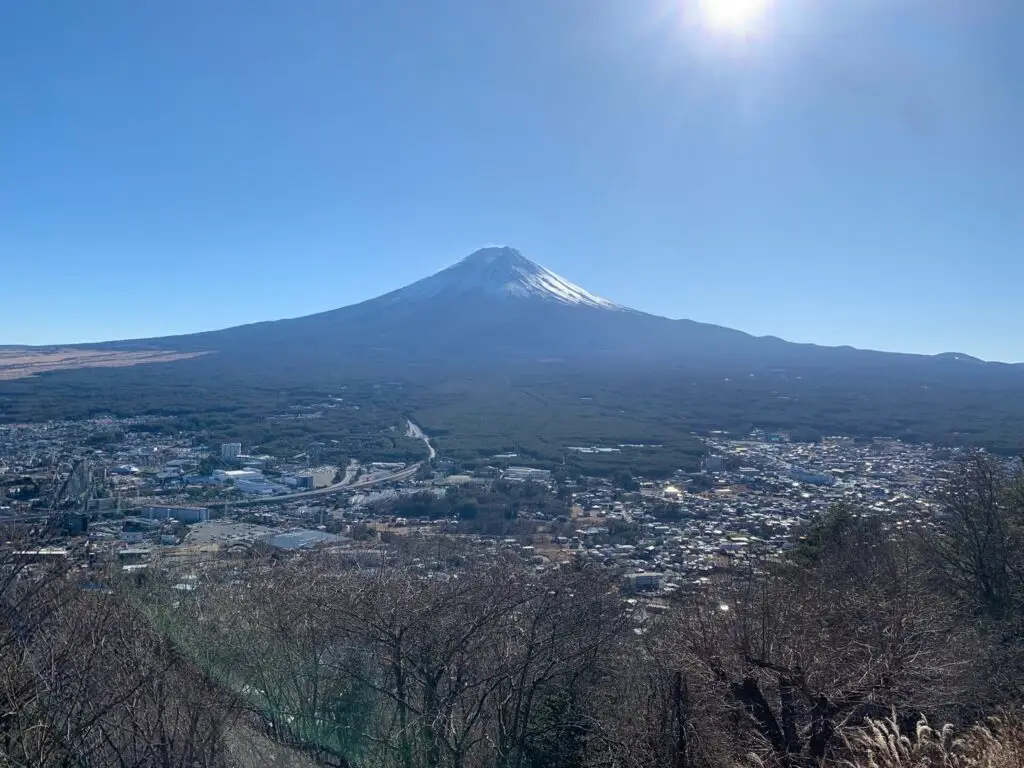
Mt Fuji

Kawaguchi-ko

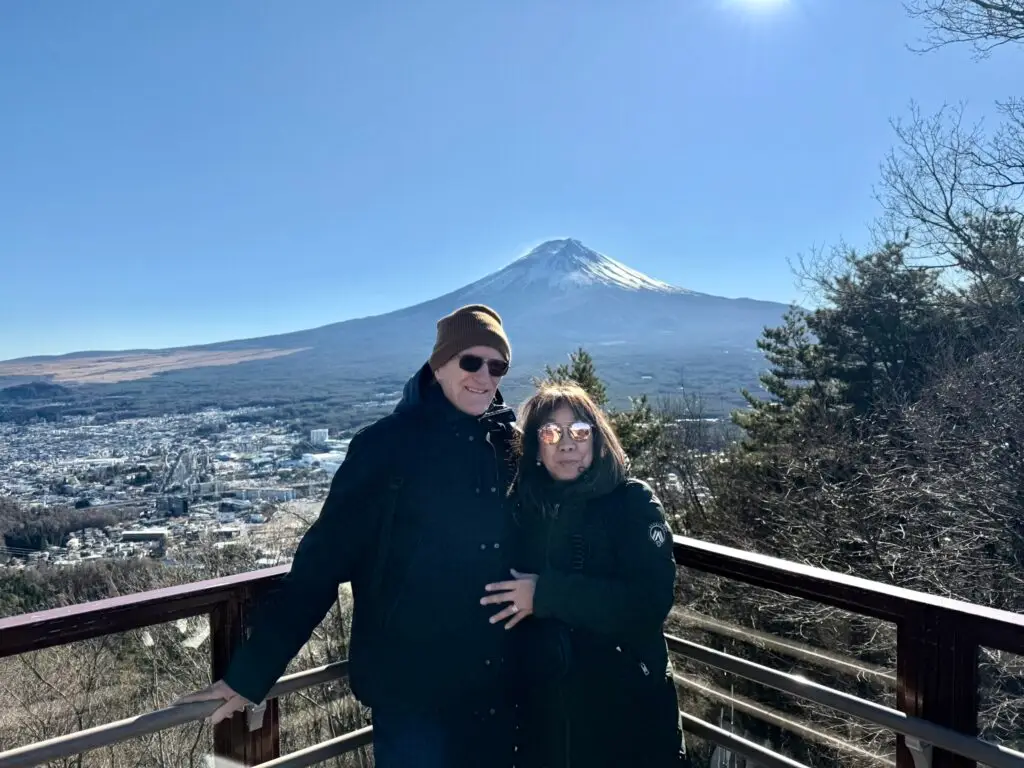
We took a bus ride out to Kawaguchi-ko to stay at a resort hotel by the lake for two nights.  From the lakeside you can take a cable car up to a viewing platform at 1104m.  Mt Fuji itself is 3,776m high.

A pilgrimage site for centuries, Mt. Fuji is considered one of Japan’s 3 sacred mountains.

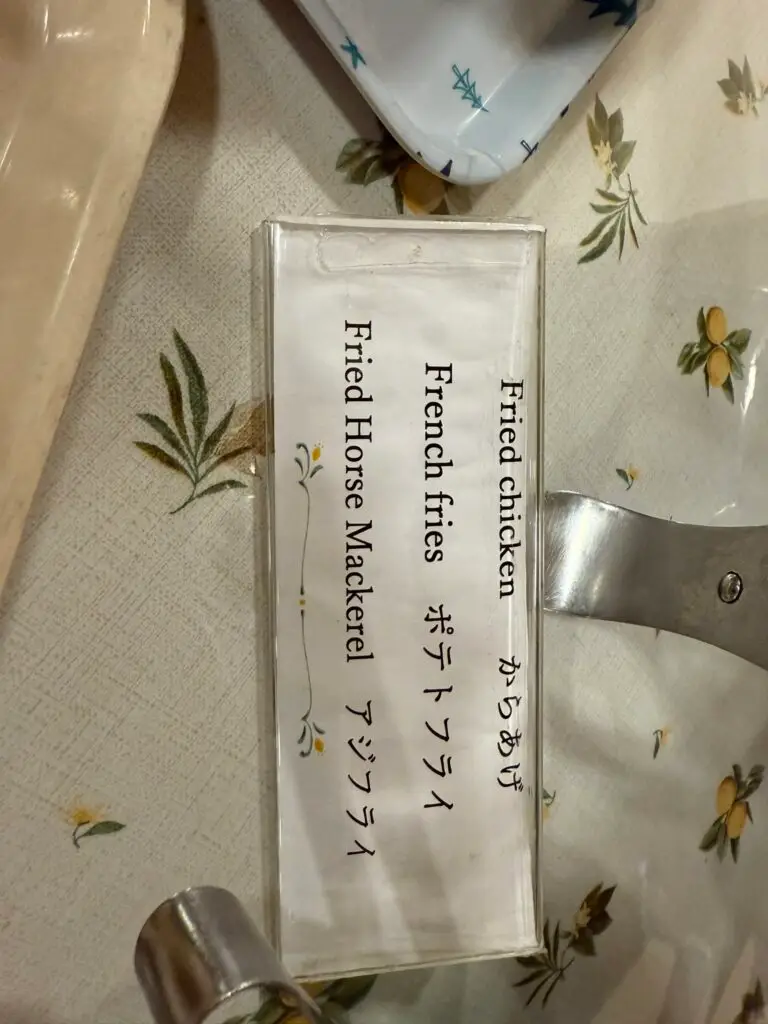
The hotel buffet selection sometimes had interesting translations.

Kawaguchi-ko

This is the view of Mt. Fuji that we had from the front of our hotel.

Kawaguchi-ko

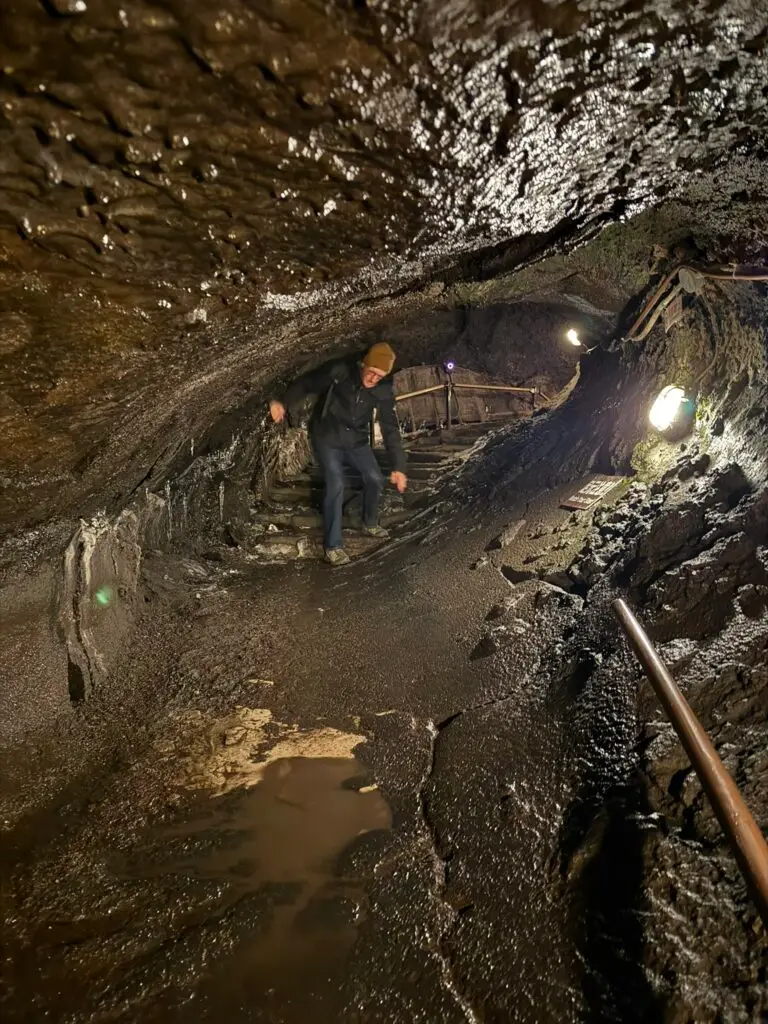
The area around Kawaguchi-ko is called the 5 lakes region, and there are 3 bus routes that can take you to visit the various attractions such as mountain hiking and lava caves

This is one of the several lava caves that are accessible to tourists.

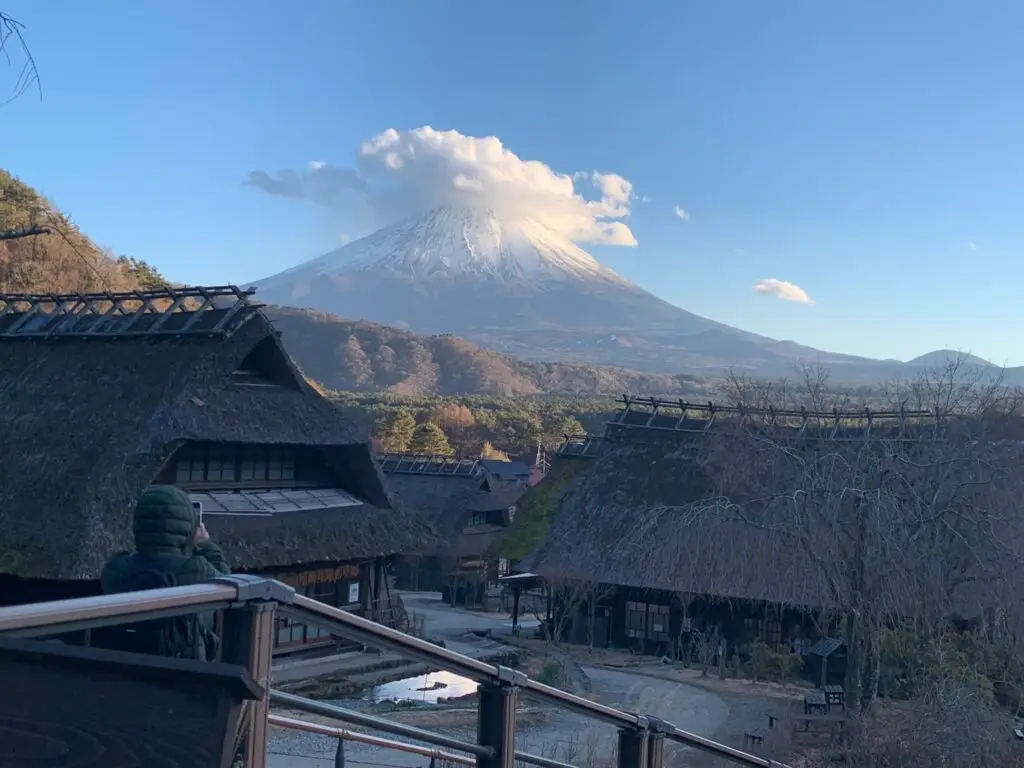
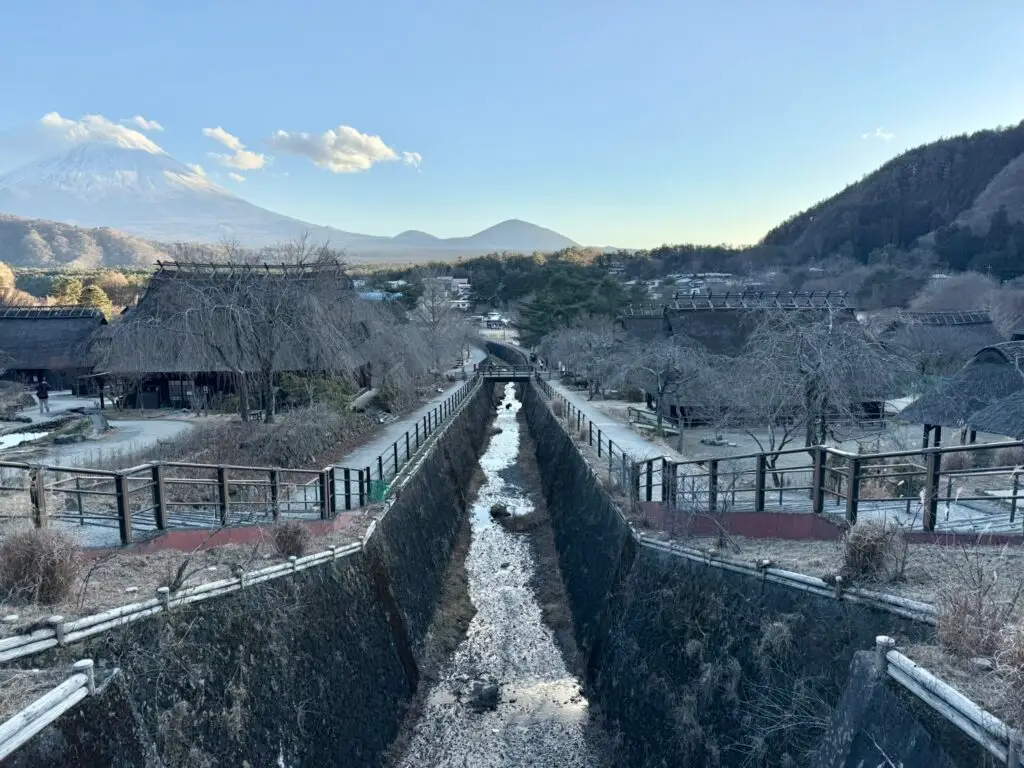
Sai-ko Iyashi-no-Sato Nenba

Nenba Village is on one of the bus routes, and stands on the shore of Saiko Lake.

Originally known as Ashiwada Village, it flourished as a center for the silkworm industry.  The thatched roof homes had distinctive second floor glass windows where silkworms were diligently raised for their silk.

Tragedy struck on September 25, 1966, when a devastating mudslide, triggered by the relentless rains of Typhoon No. 26, cascaded down the mountain, engulfing the entire village in a sea of mud.

The magnitude of the catastrophe prompted a massive rescue operation, with over 16,000 personnel from the Self-Defense Forces tirelessly searching for survivors until October 7th.

Despite their efforts, the toll was grim: 94 lives lost, with 13 souls never to be found, and Lake Saiko become an unexpected resting place for both human and animal victims.

Decades later, the villagers rallied to resurrect their once-thriving community.  In 2006, the transformation began and today, visitors can wander through approximately 20 meticulously reconstructed thatched-roof houses, each serving a unique purpose as souvenir shops, restaurants, sweet shops, craft exhibits, and museums. 

Nenba village

The reconstructed village has this huge drainage ditch through its center now, to channel any future mudslide safely away from the houses.

OSAKA

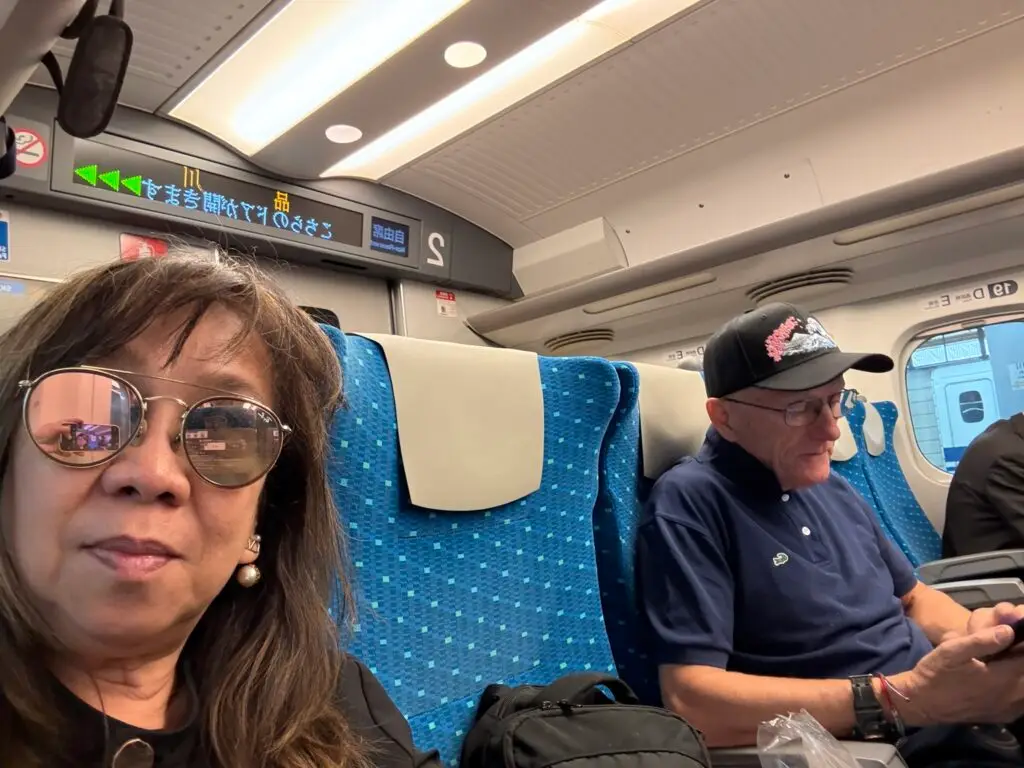
The next day we took the Shinkansen to Osaka.  When you buy the ticket you can have reserved or unreserved.  There are always two or three carriages for the unreserved.  Initially we were confused about what happened if we got unreserved but there was no space left, until it was explained that, if full, you just wait 10 minutes for the next one! 

Actually there was never a problem and there was always space on the unreserved. 

Shinkansen

Inside there are comfy seats with loads of leg room.  The train departs on time to the minute.

The ride itself is almost silent with just a very slight rocking sensation.  Unbelievable to look out of the window and see the countryside going past at 300km/hr!

Osaka-jo is Japan’s most visited castle.  The first castle was built in 1583 by Toyotomi Hideyoshi (1536 – 98), who was the warlord who unified a Japan that had been divided between constantly warring Samurai clans.  Only the stone walls that make up the moats, gates, and battlements are original, however.  The castle was destroyed by lightning centuries ago and the present castle is a 1931 replica.

Osaka Castle
Osaka Castle

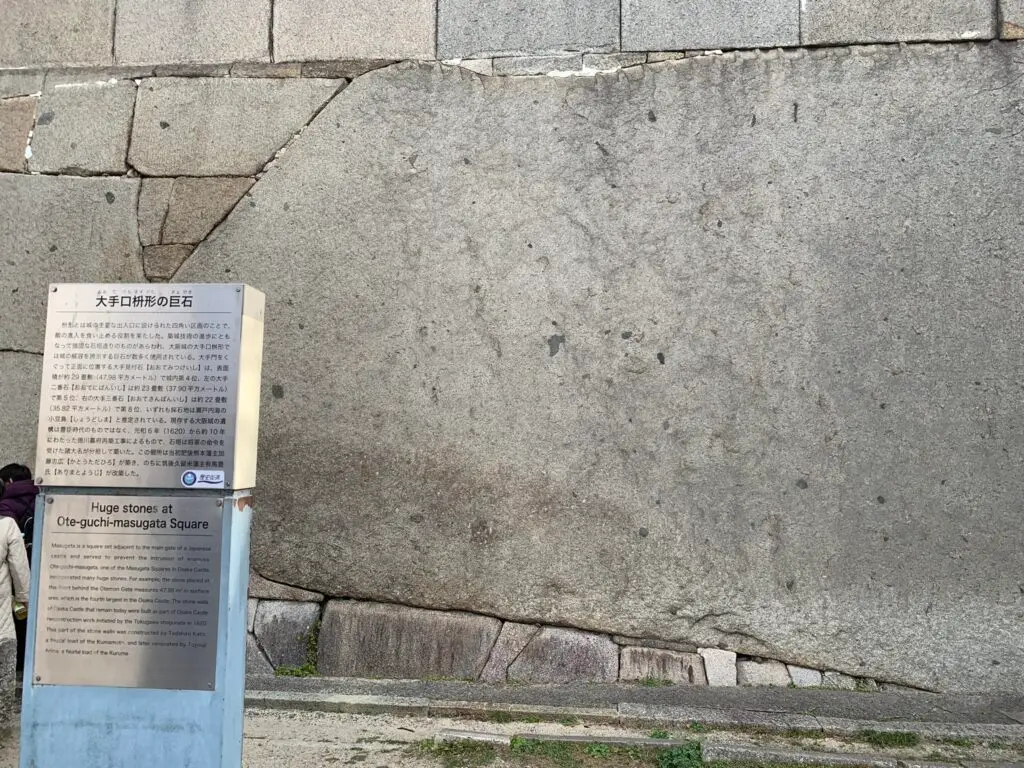
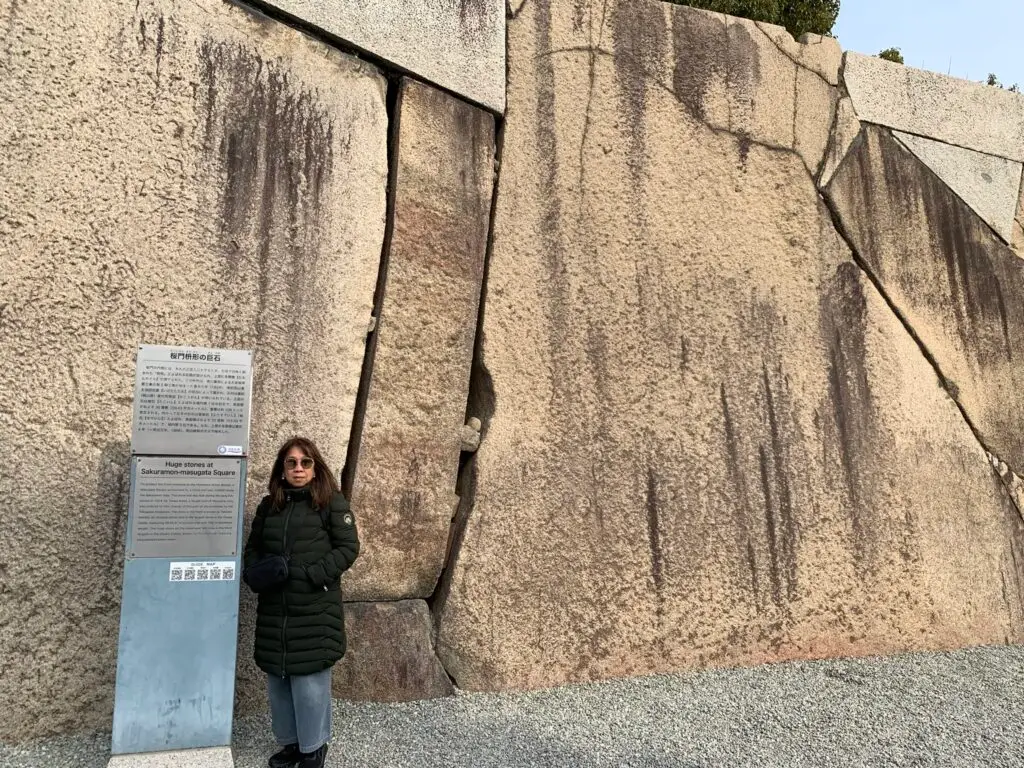
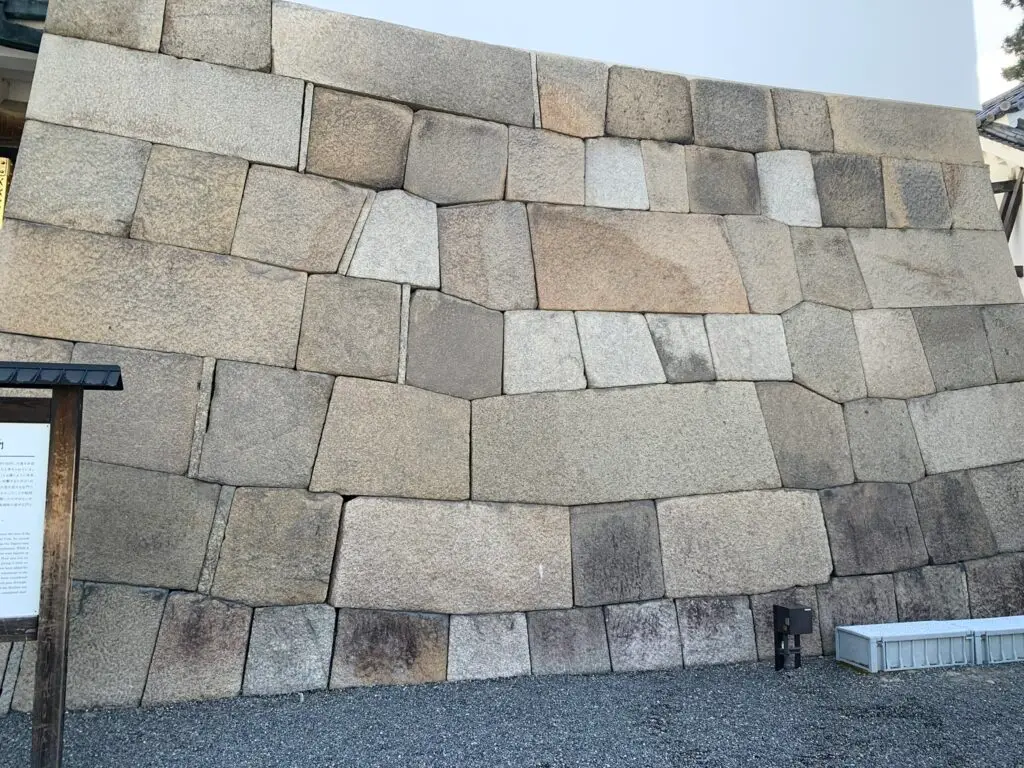
Osaka castle is famous for the huge stones that make up the gates and battlements – the beefiest stone slab is 11m wide.  Many of the stones are inscribed with the crests of the 64 daimyo (feudal lords) tasked with the castles construction in 1620.

Osaka Castle

A pair of time capsules created to preserve a snapshot of life in 1970 is buried adjacent to the castle.  The top capsule is buried at a depth of 10 meters and is scheduled to be opened every 100 years starting in year 2000.  The lower capsule is buried at a depth of 15 meters and is scheduled to be opened every 5000 years starting in year 6970.  Each capsule contains 2,098 carefully selected items representing everyday life, science, culture, and technology of 1970.

Osaka castle museum - Folding screen depicting the summer war of Osaka Castle

Inside the castle one can wander the eight floors of the castle museum right up to the top observation deck.  There are historical artefacts associated with Toyotomi Hideyoshi and the Sengoku era (age of the provincial wars) on display, but for me the most interesting was this folding screen illustrating the Summer War of Osaka.

Toyotomi Hideyoshi rose from a peasant background to become the most powerful daimyo (feudal lord) in Japan, and he built Osaka castle as the seat of power.  He had, however, a big problem in that after unifying Japan after 20 sieges and battles, he had failed to produce an heir, thus he named his nephew Toyotomi Hidetsugu as successor.  But then, at age 57, he did produce a son Hideyori.

Two years later,  he banned his nephew Hidetsugu who had had chosen earlier, on suspicion of plotting a rebellion.  Eventually Hidetsugu was forced to perform hara-kiri.

In order to cut off any possibility of further rebellion, Hideyoshi then executed (by beheading) more than 30 people, including the wife, mistresses, and children of Hidetsugu, on a dry riverbed call Sanjo Kawara in Kyoto.

Because Hideyori was only age 5 when Hideyoshi died, Hideyoshi attempted to protect his dynasty by appointing a council of 5 elders to govern Japan with the plan that this power sharing arrangement would prevent any of the 5 seizing overall authority until Hideyori could become old enough to take authority for himself.

This plan failed, however, because one of the 5 elders , Ieyasu, seized control for himself and abolished the council after defeating Ishida Mitsunari in the Battle of Sekigahara in 1600.  After this, Hideyori and his mother Yodo-dono remeined confined to the castle for several years. In addition, as a mechanism of control, it was agreed that in the year 1603 he would marry the daughter of Tokugawa Hidetada, Senhime, who was related to both clans.

Ieyasu, however,  sought to establish a powerful and stable regime under the rule of his own clan. Only the Toyotomi clan, led by Hideyori under the influence of Yodo-dono, remained an obstacle to that goal.

In November of 1614, because Tokugawa Ieyasu could see that Hideyori was building up forces by recruiting Ronin (a samurai who had no lord or master), he decided to not let Hideyori grow any stronger and led 164,000 men to Osaka in a siege known as the Winter War of Osaka.  The siege ended in peace negotiations when, on January 22, Ieyasu received a solemn oath from Hideyori and Yodo-dono that Hideyori would not rebel against Ieyasu or Hidetada and that he would consult any matter directly with him.

This peace treaty ended almost immediately when Hideyori started digging out the moat that had been filled in and started to gather more troops again.

Thus in April 1615 Ieyasu attacked again in what became known as the Summer War of Osaka.

The Summer War of Osaka was the last decisive battle between the Toyotomi and the Tokugawa families.  Tradition says that the Tokugawas mobilized a large army of 155,000 soldiers while the Toyotomis mobilized mobilised 55,000 soldiers.  The two sides fought intensely and a great number of soldiers died in battle.  The folding screen illustrating the summer War of Osaka was handed down generation by generation by the Kuroda family.  The screen illustrates the war minutely, depicting 5,071 people, 348 horses, 1,387 banners, 974 spears, and 119 bows.  Of the 5,071 people, 21 generals including Ieyasu,  Hidetada Tokugawa, and Yukimura Sanada can be identified.

After the fall of Osaka Castle in June 1615 Toyotomi Hideyori and his mother, Yodo-dono, committed seppuku. Hideyori’s  eight-year-old son was captured in Kyoto and beheaded.  Many of their loyal retainers, including Sanada Yukimura and Chōsokabe Morichika, were executed, and the heads of Toyotomi generals were displayed as trophies.

It is well documented that thousands of severed heads of fleeing victims of the Castle lined the road from Osaka to Kyoto after its downfall.
Osaka Castle
Osaka Castle with Gozabune boat
Osaka Castle

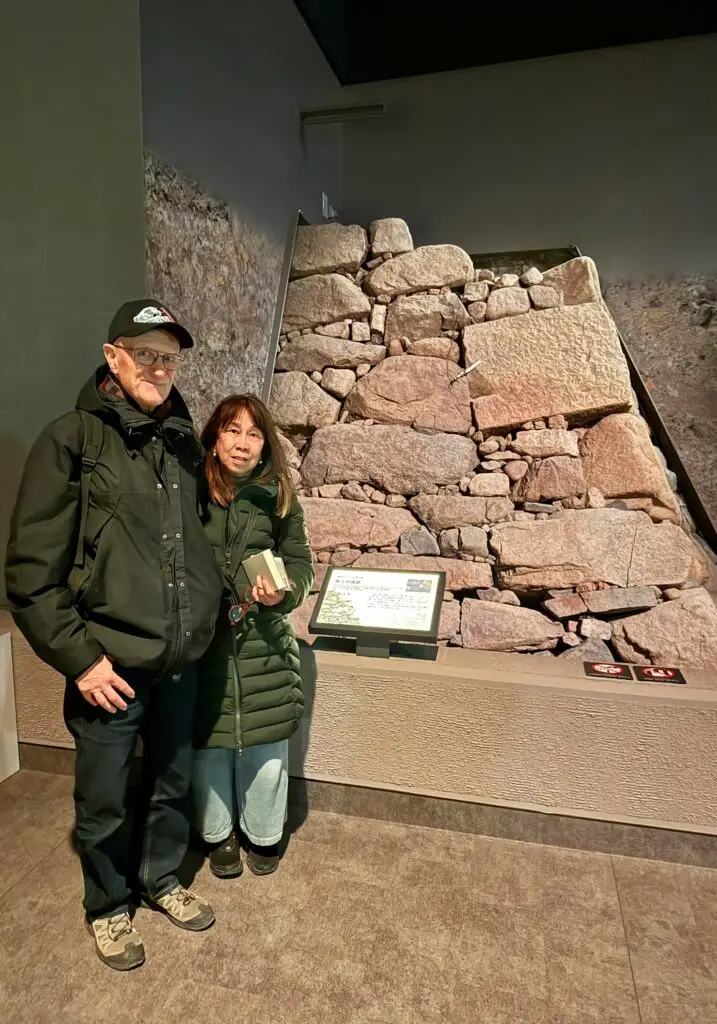
After Osaka castle fell the Tokugawa government rebuilt the castle (which had been destroyed by fire), by first erasing all traces of the old castle underneath an incredible amount of earth as if to erase all authority of the Toyotomi family.  The stone walls visible today are from when it was rebuilt at that time and the walls from the Toyotomi period cannot be seen above ground.

An excavation from 1984 revealed the original stone walls from the Toyotomi period, and today visitors can go underground and see them.  Traces of the raging fires of the Summer War of Osaka are still visible as scorch marks on some of the stones.

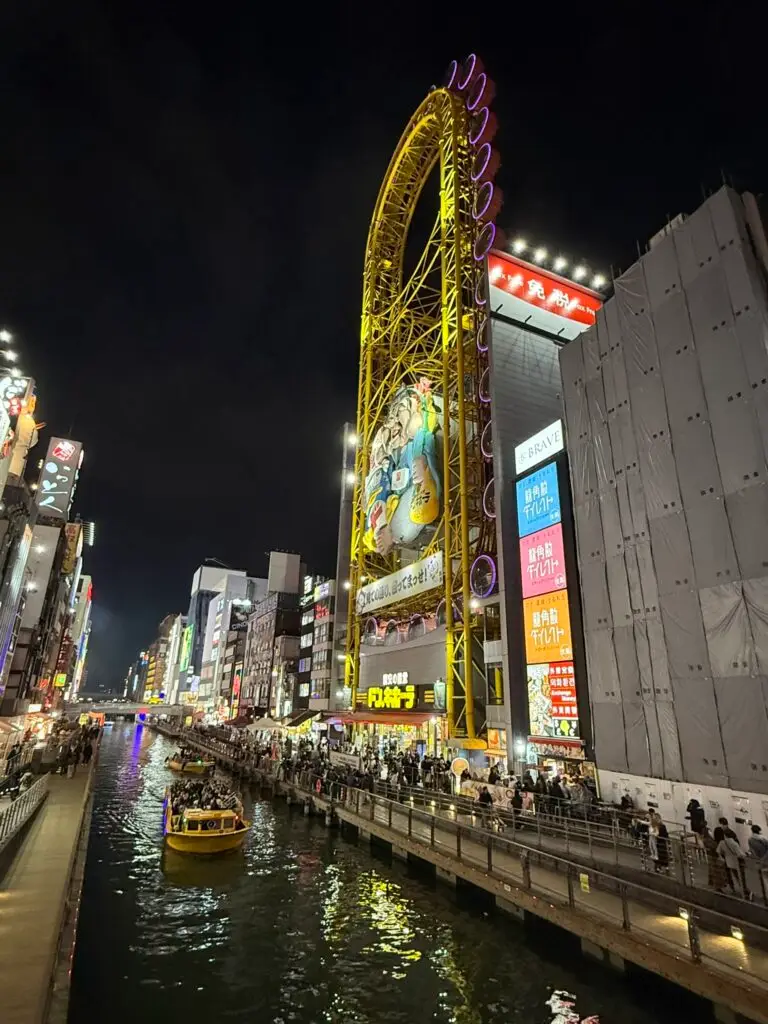
Dotombori canal

Dotombori canal is an obligatory visit while in Osaka.  This 400 year old bori (canal) is in an entertainment district known for its many fabulous food signs.

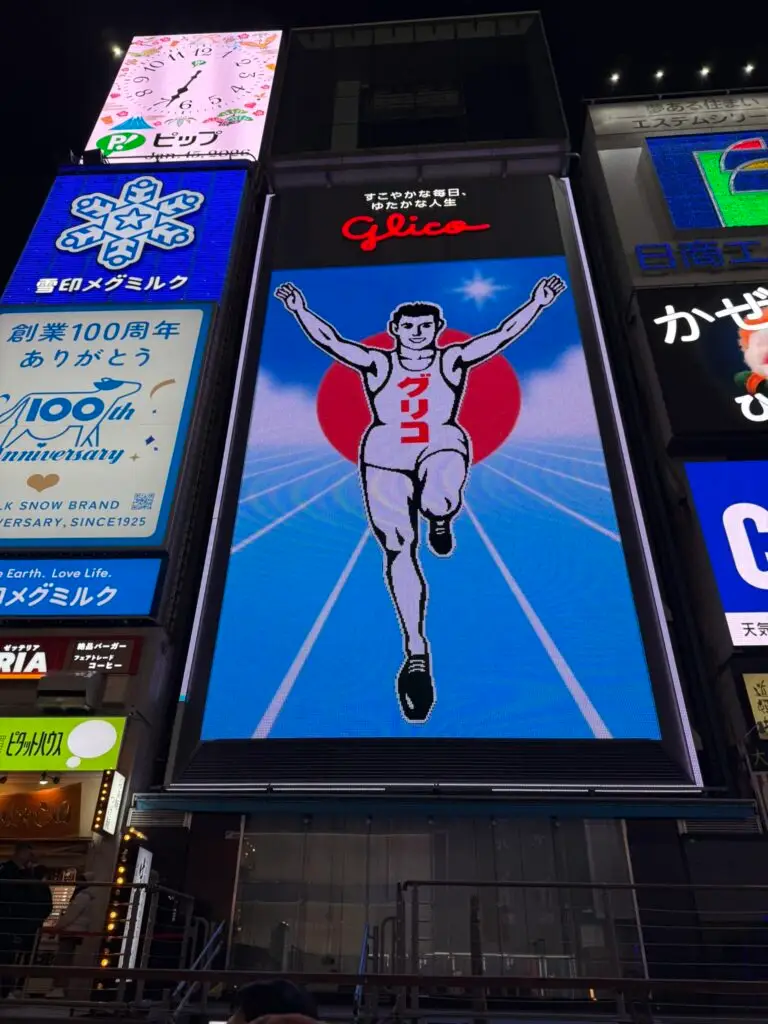
Dotombori - the famous Glico running man

Nara

We took the train out to Nara for a day trip from Osaka to see the famous Nara deer.  There are about 1200 or so of these silka deer which just wander around freely in the park and you see them almost as soon as you exit from the station. 

The deer are sacred because one of the deities enshrined in the Kasuga-taisha shrine in the park is said to have ridden to Nara upon a sacred white deer.  Deer crackers for feeding are sold to the tourists from vendors in the park.

Nara - Todai-ji temple

The Todai-ji temple in the park is home to the famous Daibutsu (Great Buddha) – which sits just over 16 meters high and consists of 437 tonnes of bronze and 130kg of gold.  It was unveiled by Emperor Shomu in year 752 exactly 200 years after Buddhism first came to Japan.

These children were performing a singing concert in the temple while we were there.

Nara - Todai-ji temple

This is one of the pillars behind the Daibutsu.  It has a 50cm hole in it (the size of one of Daibutsu’s nostrils) and it is said that if you can crawl through it you are assured of enlightenment.

Nara - Kasuga Taisha shrine

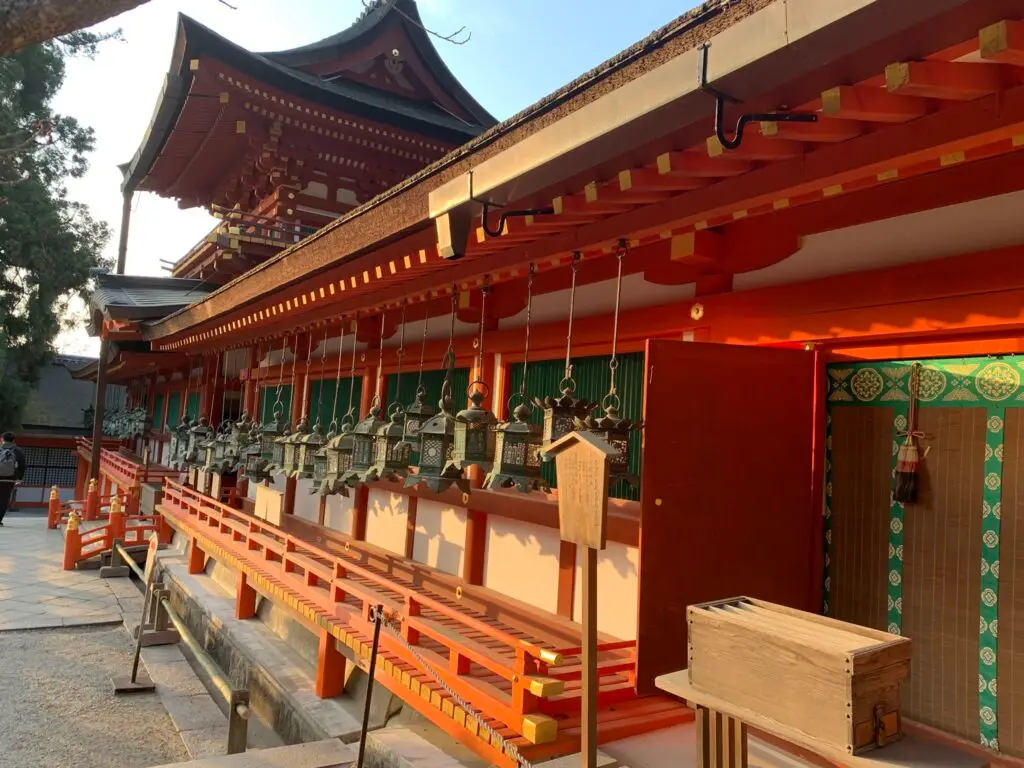
The Kasuga-taisha is Nara’s most important shrine and a natural sanctuary on the edge of protected primeval forest.  It was established in 768 to watch over the new capital.

An avenue of stone lanterns marks the approach , while hundreds of bronze lanterns dangle from bright vermilion halls.  These lanterns are lit twice a year for the Mantoro.

Kyoto

Kennin-ji Temple

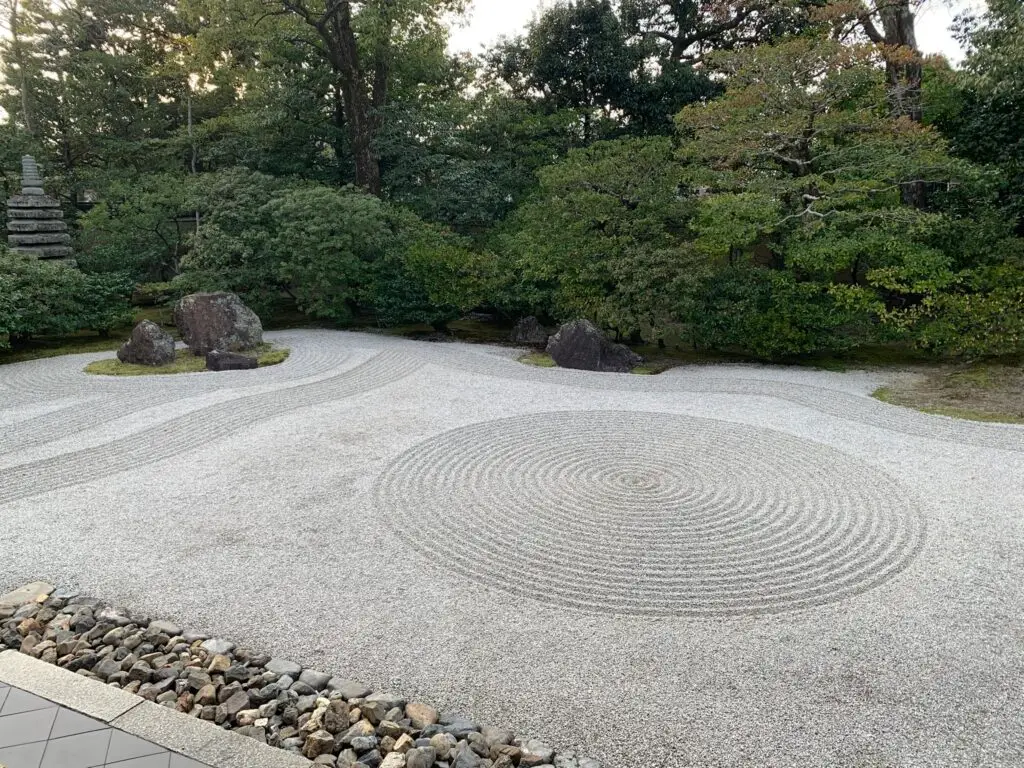
This is one of the several Zen gardens of the temple.

Kennin-ji Temple

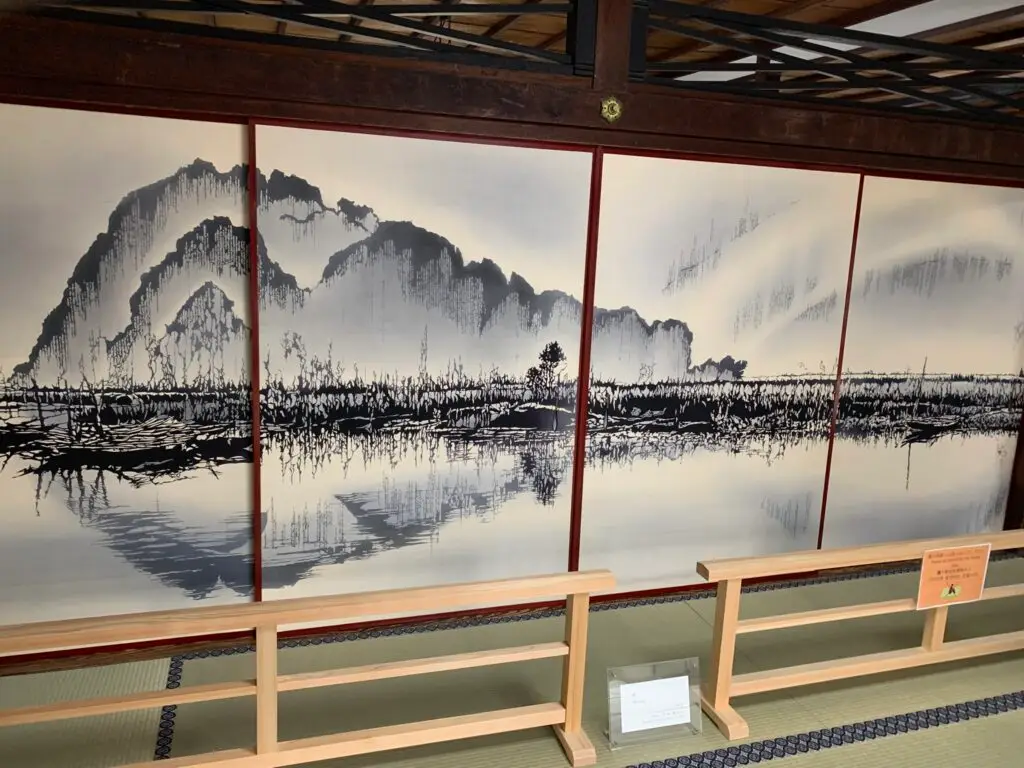
This painting is on the ceiling of one of the temple rooms and and was installed in 2002 to mark the 800 year anniversary of Kennin-ji’s founding.  It measures 11.4m by 15.7m and is drawn with the finest quality ink on thick traditional Japanese paper.  It took the artist just under two years to complete.

Kennin-ji Temple
Kennin-ji Temple

Kennin-ji is the oldest Zen temple in Kyoto.  The Zen sect is one of the main branches of Japanese Buddhism which was founded 2,500 years ago in India by Shakyamuni Buddha and teaches that the inherent suffering of life can be transcended through equanimity, wisdom, and compassion.  The Zen sect dates back to sixth-century China and seeks the realization of this ideal through a strict training system stressing work and meditation. 

The temple was founded in 1202 by the priest Yousai (1141-1215), who was ordained at the age of fourteen and entered the major monastic center on Mt. Hiei to study under the Tendai tradition. 

Kyoto - Gion

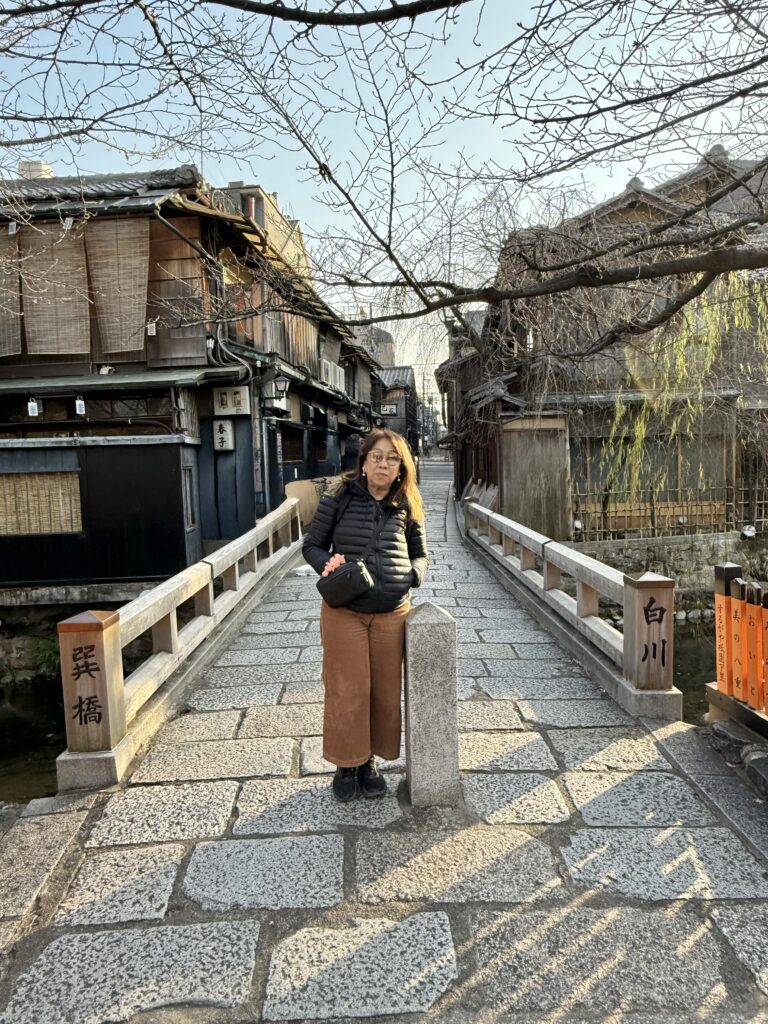
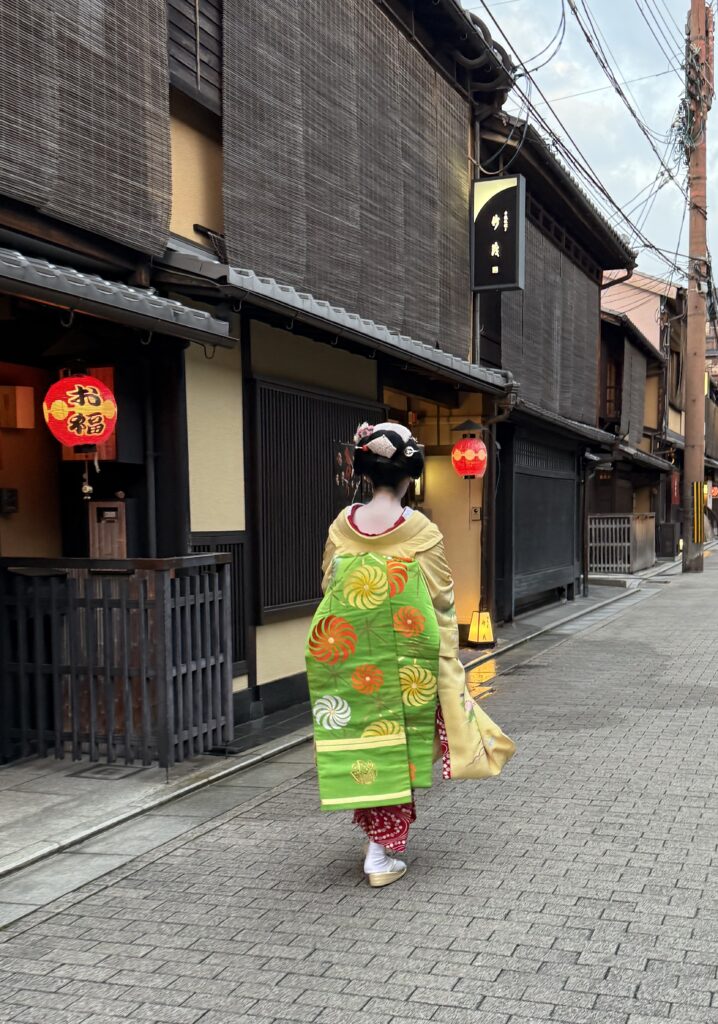
This is one of the entrances to the Gion which is one of the 5 Geisha districts of Kyoto.  There are only about 100 geiko and 100 maiko now in the whole of Kyoto.

Kyoto - Gion

We were lucky to catch this fleeting glimpse.  Normally you would only see Geisha’s outside in the evening whilst hurrying to an appointment.

Kinkaku-ji the golden temple

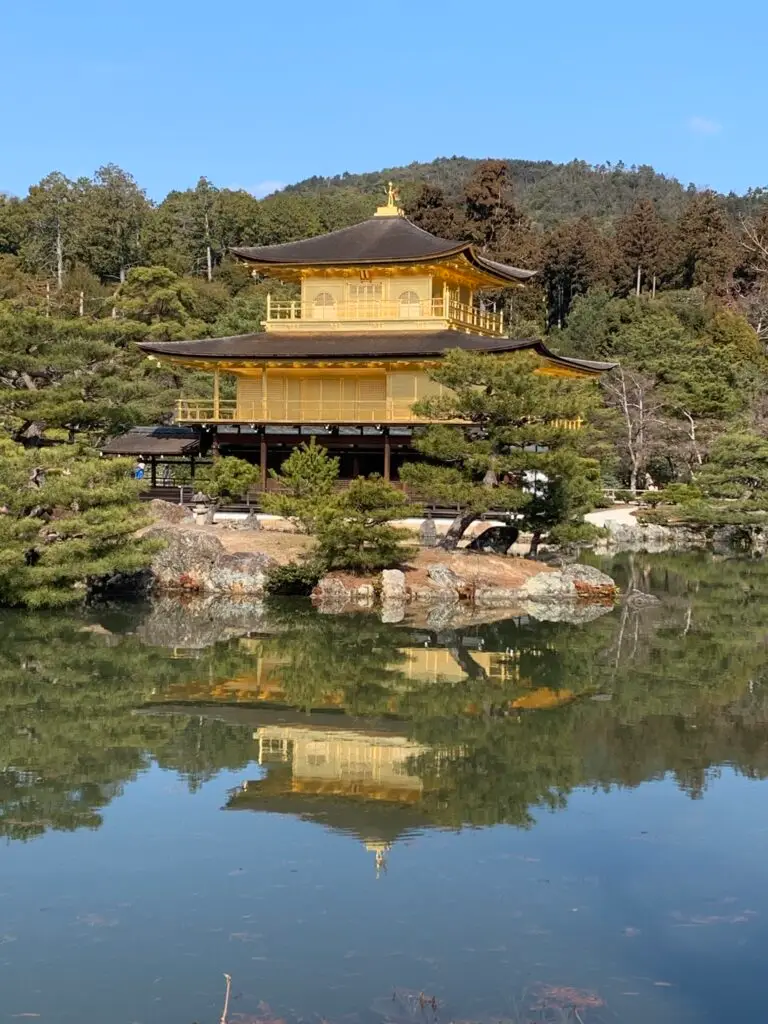
Kyoto’s famed golden temple is one of Japan’s best known sites.  The main hall is covered in gold leaf and topped with a bronze phoenix.

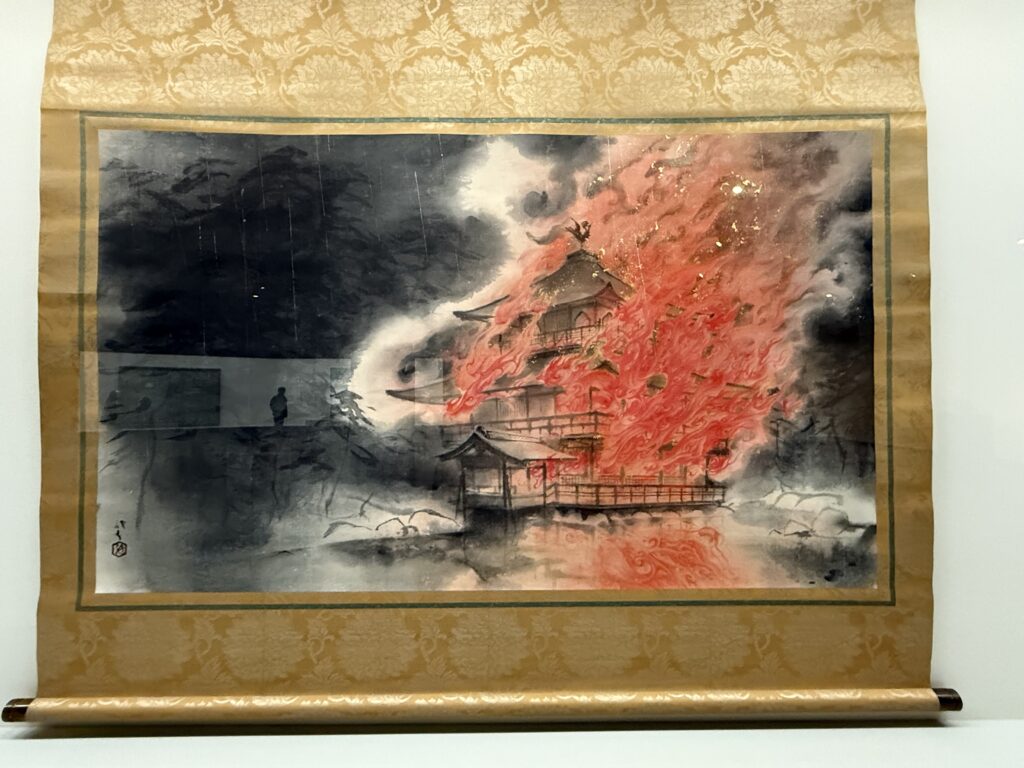
The original 1937 building was burnt to the ground in 1950 by a young monk who felt he needed to consummate his obsession with the temple.  In 1955 a full reconstruction was completed, following the original design except with the gold leaf extended to the lower floors.

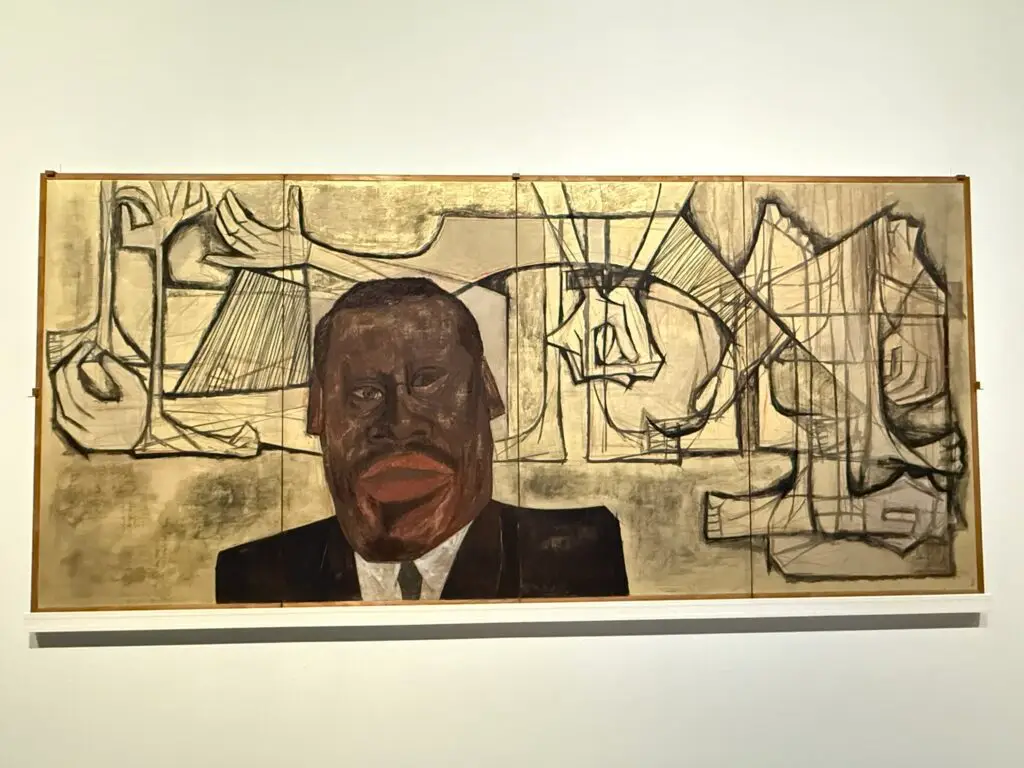
Museum of modern art Tokyo

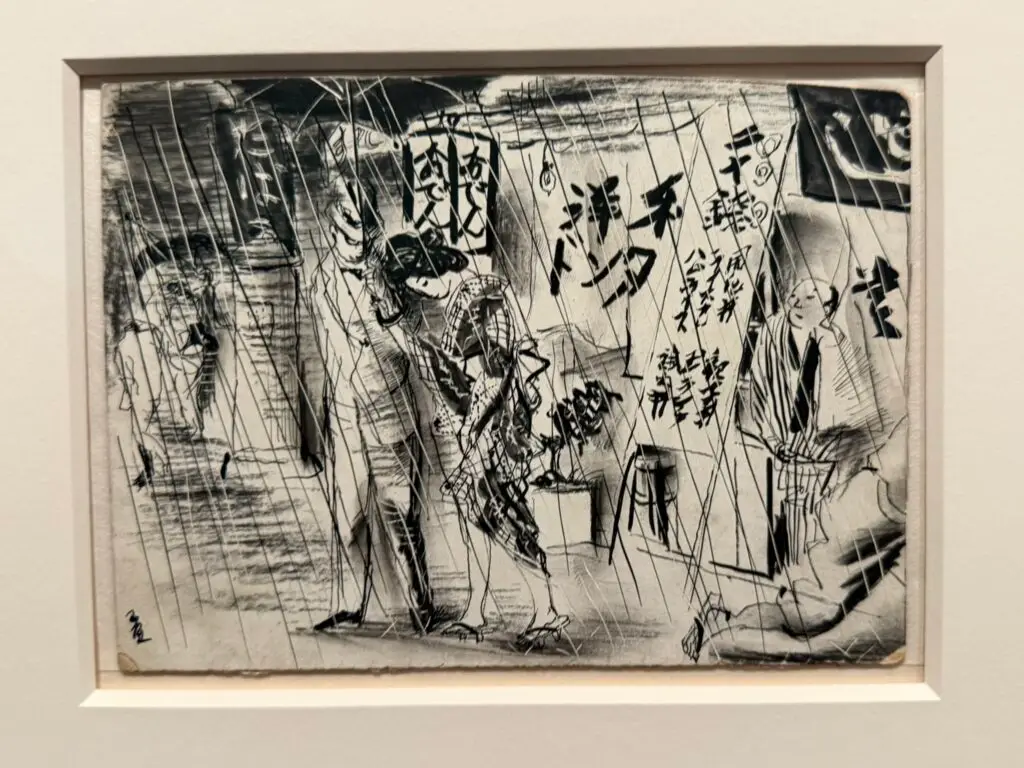
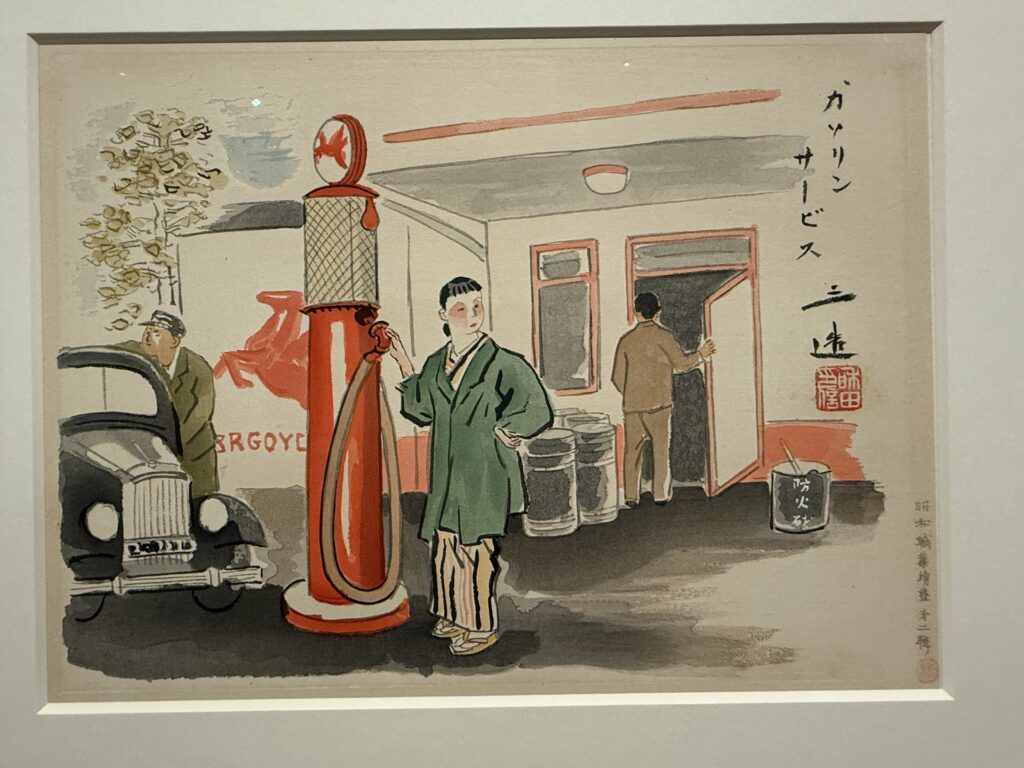
This painting we saw in the museum of modern art illustrates the burning down of the golden temple.

Ryoan-ji temple

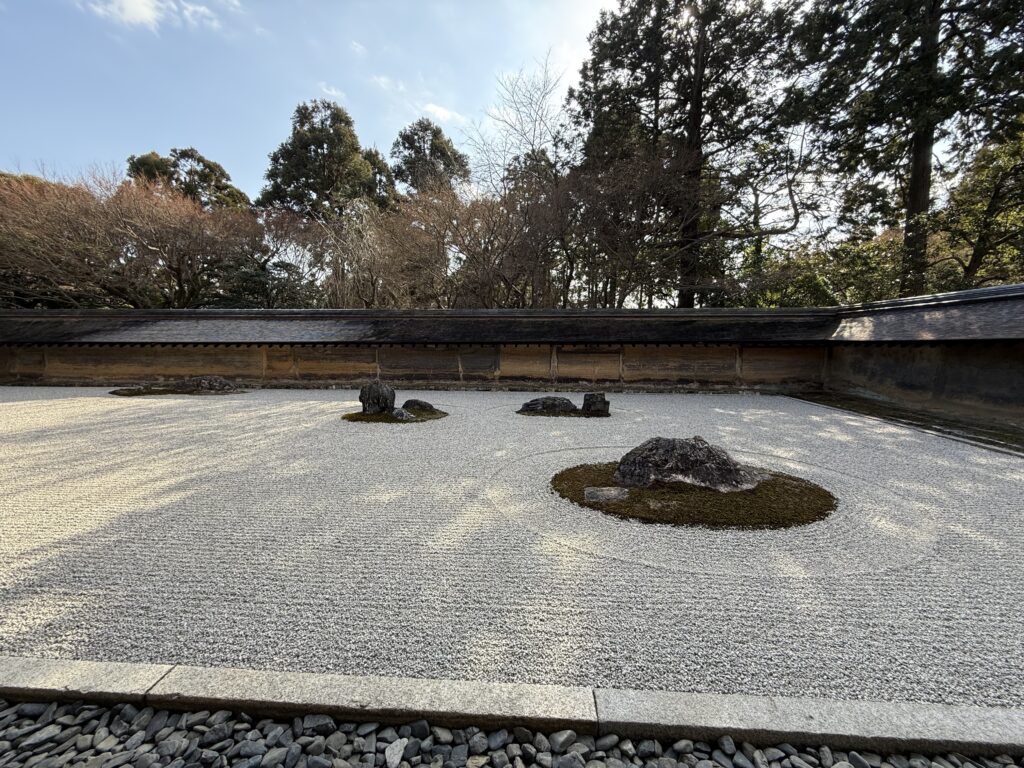
The Ryoan-ji temple is close to the golden pavilion, and is the home of Japan’s most famous Zen garden.  The garden measures 25m by 10m and is composed of just 15 rocks and white gravel with walls made of clay boiled in oil.

It is internationally famous and was said to have been created at around 1500 by the highly respected Zen monk Tokuho Zenketsu. 

Ryoan-ji temple
Arashiyama Bamboo forest

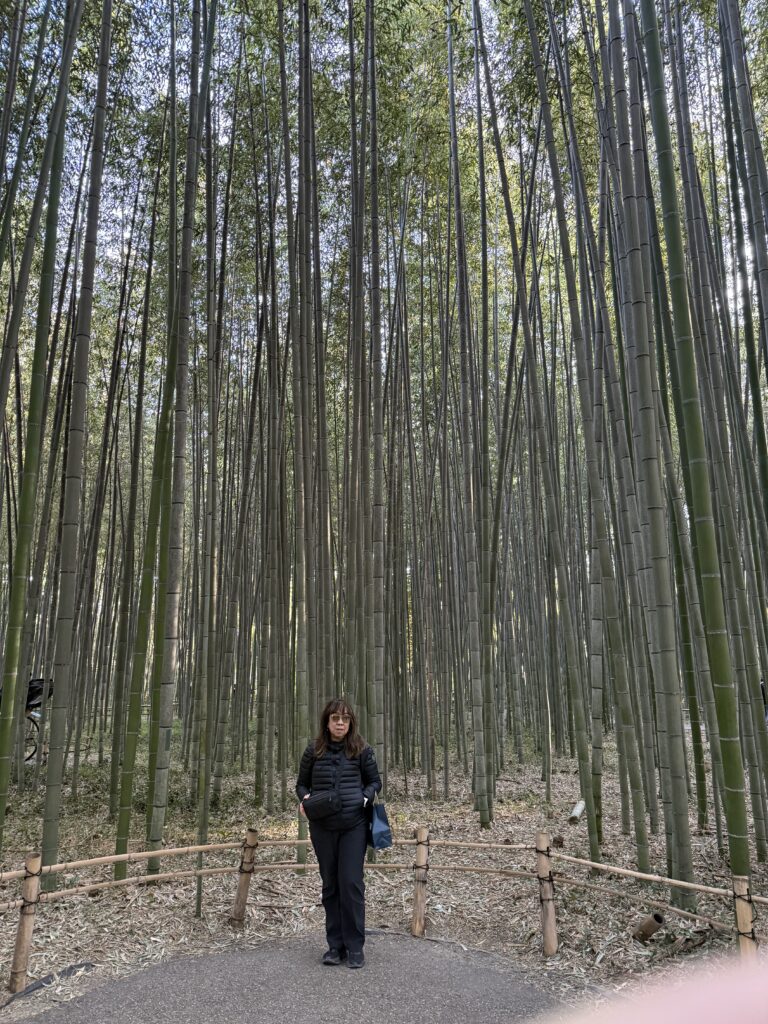
This bamboo forest contains paths to wander around in and is one of Japan’s most photographed spots.

Kyoto - Okochi Sanso estate

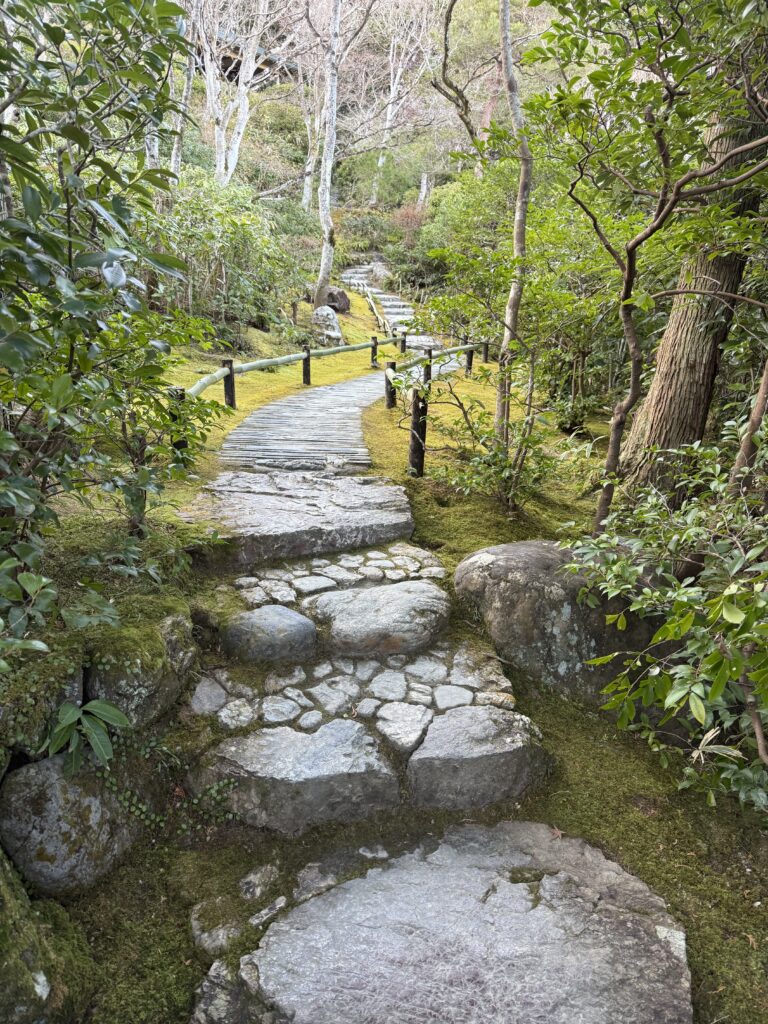
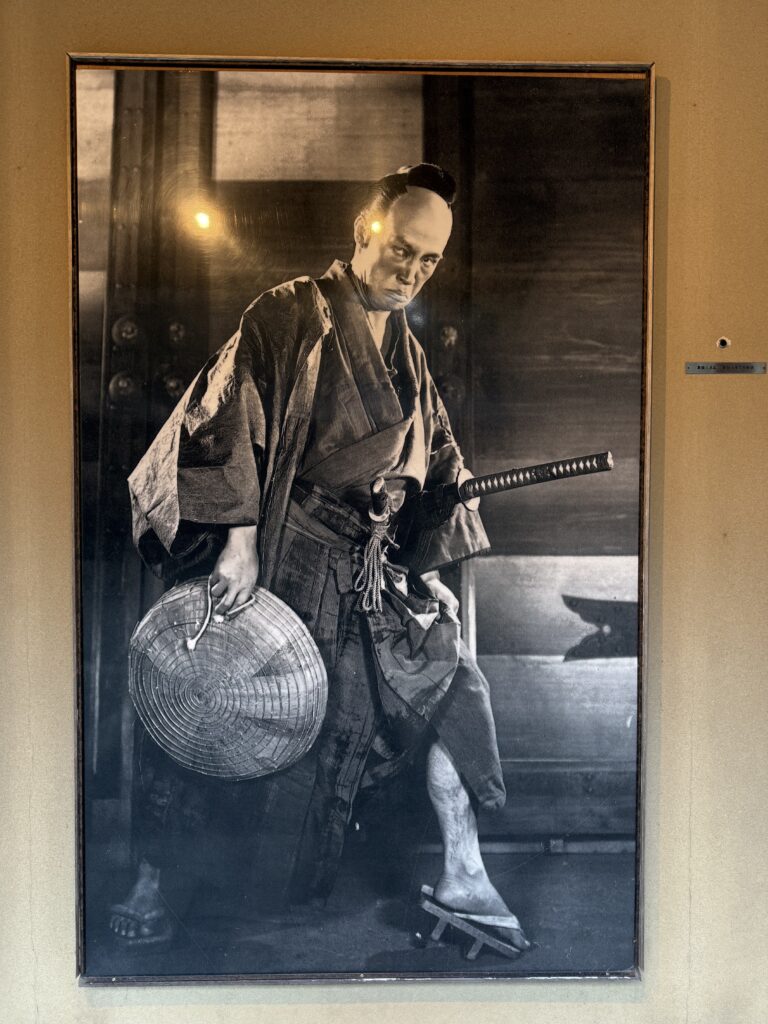
The Okoshi Sanso garden is connected to Arashiyama via a 30 minute walkway through the bamboo forest, and was the private villa of the famous silent-film era actor Okochi Denjiro (1898-1962).

Okochi was a deep admirer of Zen philosophy and he constructed this unique garden villa on the south side of Mount Ogura over a 30 year period.

Kyoto - Sen-bon-torii

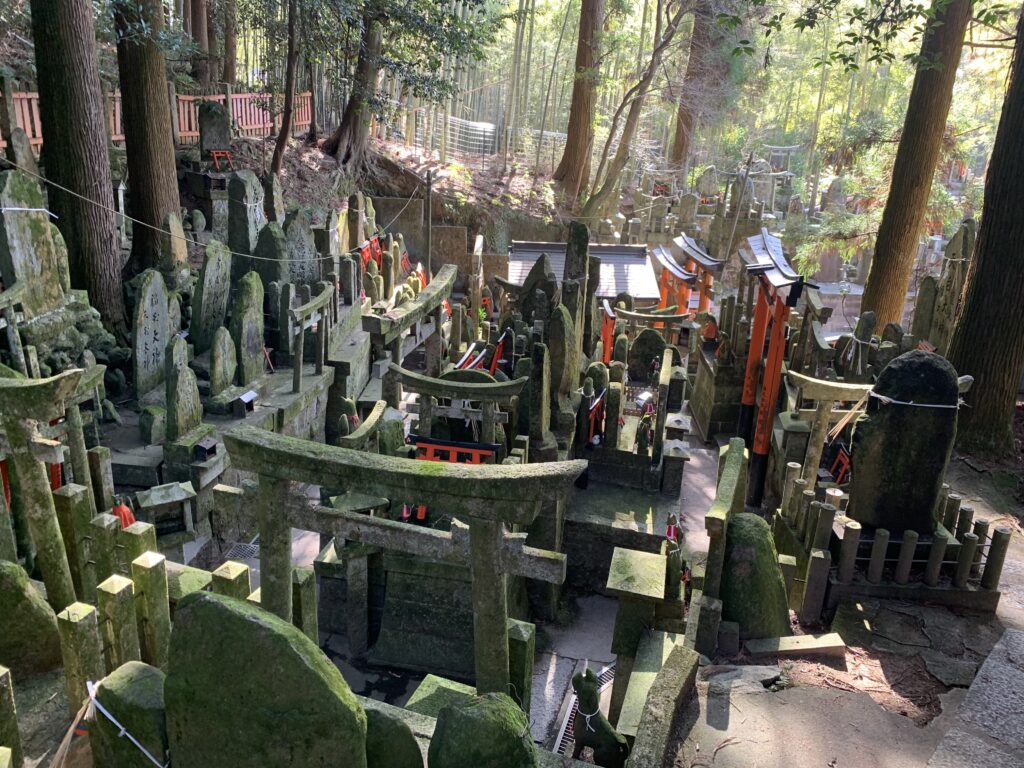
Sen-bon-torii means 1000 torii (shrine gates).  The 4km loop pathway is punctuated with hundreds of sub-shrines and fox statues – the fox is considered the messenger of inari , the god of rice, and the key in the fox’s mouth is the key to the granary.

Kyoto - Mt Inari

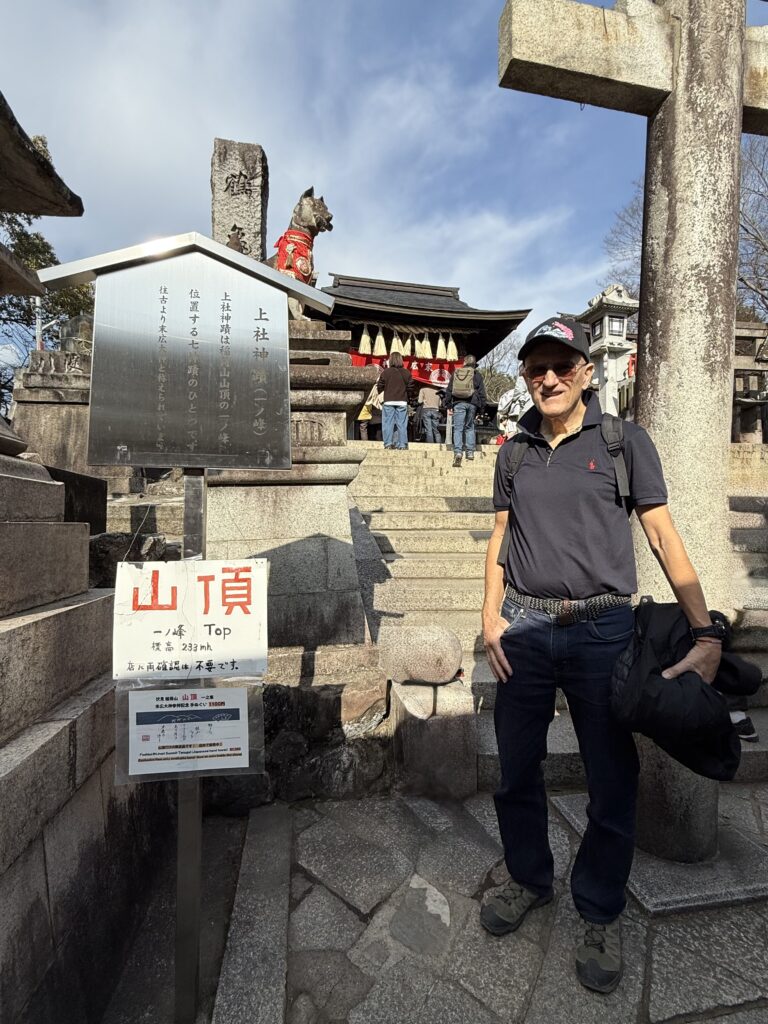
We left the Sen-bon torii to do the hike up Mt. Inari – which took a couple of hours.  This shrine garden was in a village that we passed on the way.

Mt. Inari - summit.
Kyoto Kiyomizu-dera Buddhist temple

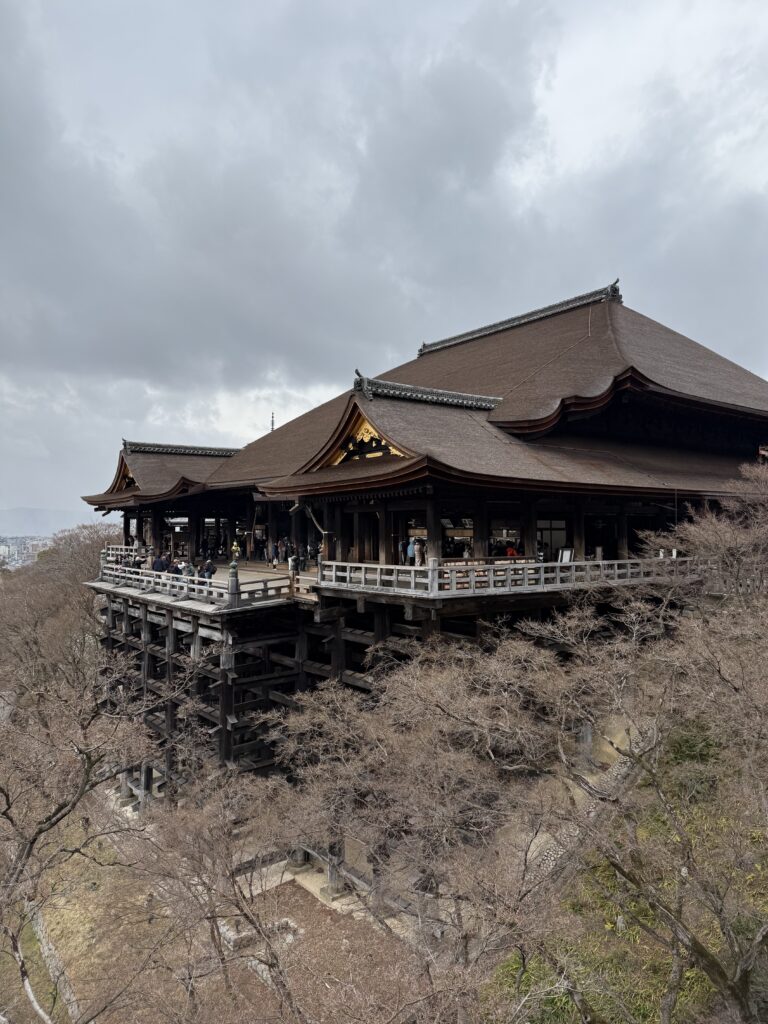
One of Kyoto’s most popular temples and part of the Hosso school of Buddhism, this temple was first built in 798.  The present buildings are a reconstruction dating from 1633.

The temple is known for its 200 sq m veranda (or stage) made of cyprus which is supported on 18 zelkova wood pillars dating back some 400 years and offers soaring city views.

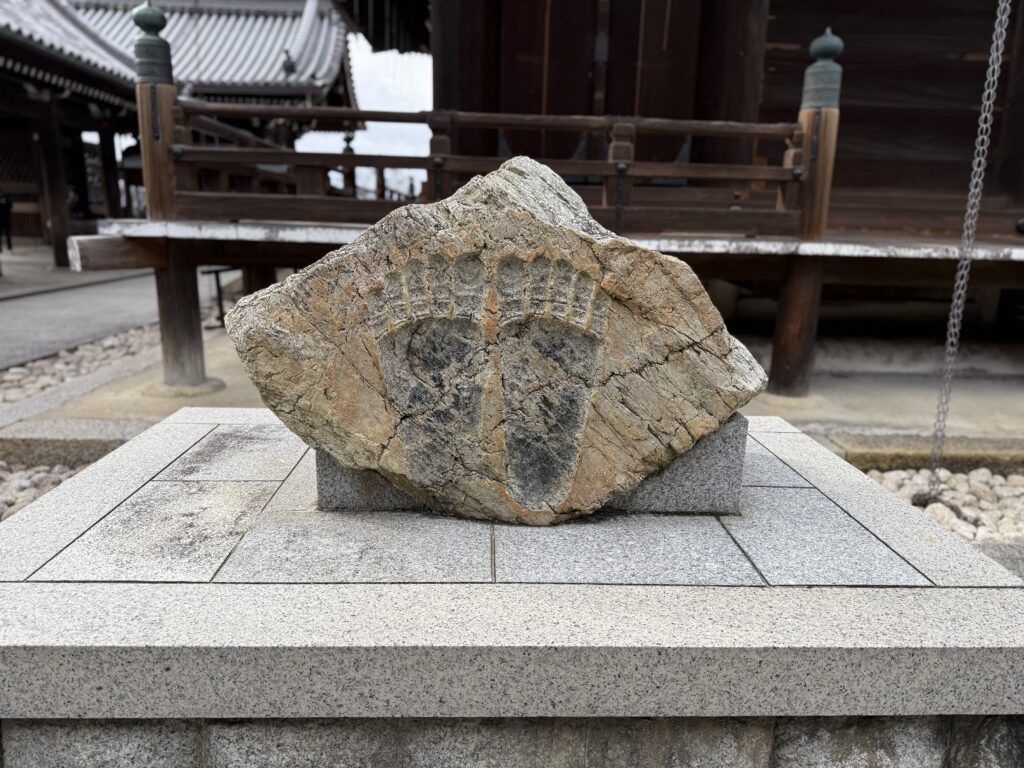
Kyoto Kiyomizu-dera temple footprint of the buddha
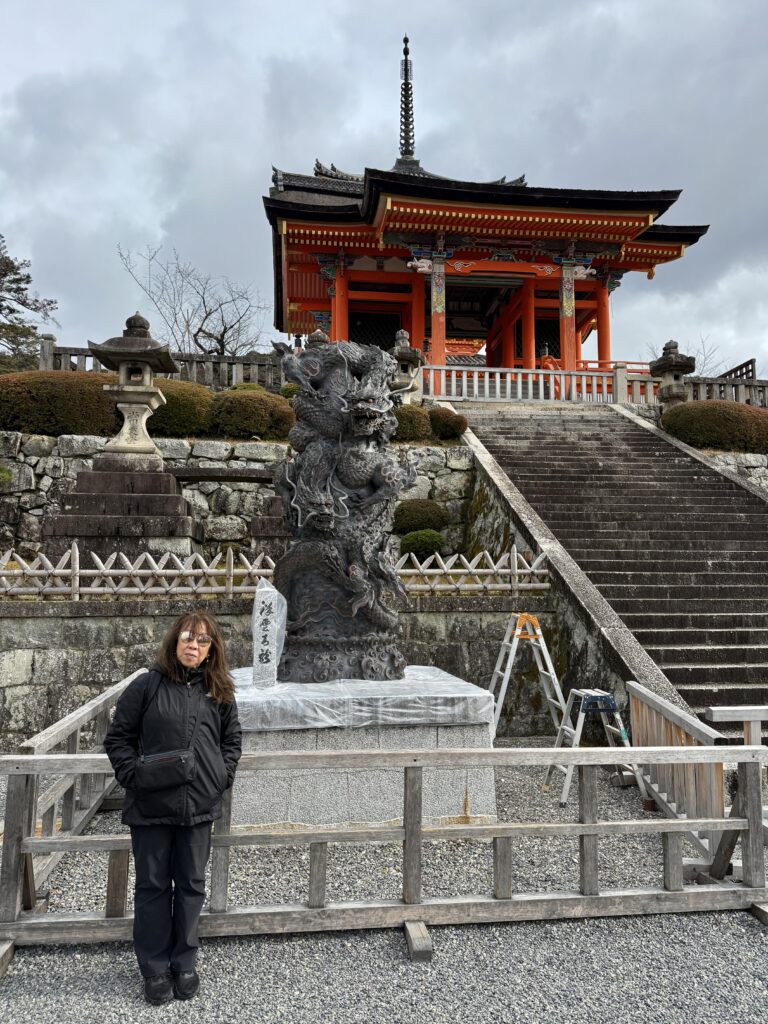
Kyoto Kiyomizu-dera temple
Kyoto Ponto-cho Geisha district

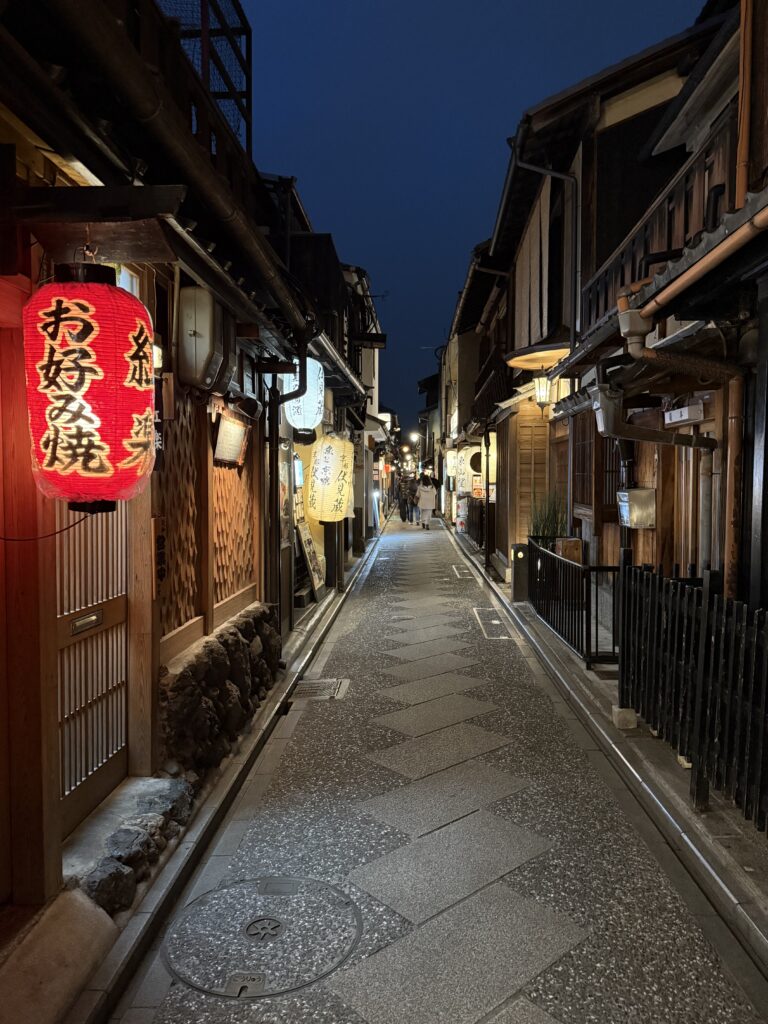
The Ponto-cho is a narrow pedestrian only street of elite restaurants and bars – many by invitation only.  It is one of the Geisha districts.

Kyoto Ponto-cho

Occasionally one might catch a glimpse of a geiko (as the locals call geisha) or a maiko (apprentice geisha) making their way between appointments.

Kyoto Nijo-jo castle

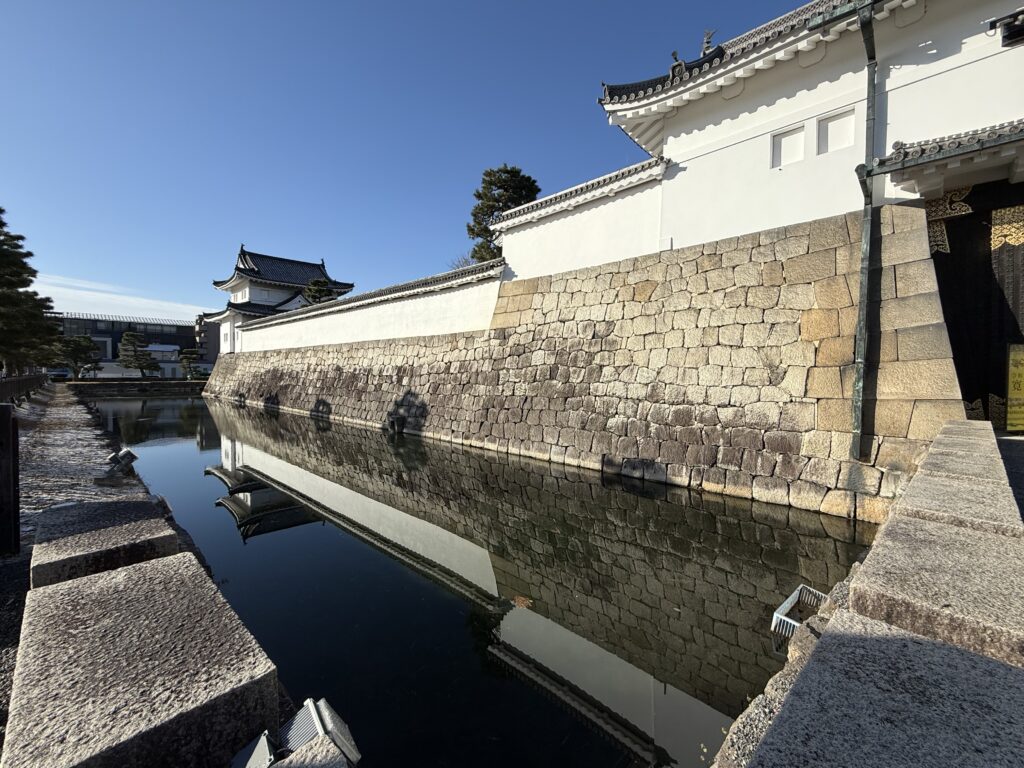
Built after Tokugawa Ieyasu’s victory at the Battle of Sekigahara in 1600, the castle was constructed to assert Tokugawa dominance over the Imperial Court.  The castle was completed in 1603.

In 1603 Tokugawa Ieyasu was appointed Seii-Taishogun (or ‘Shogun’ – roughly equivalent to commander-in-chief), by the Emperor.  After he received his appointment, Ieyasu came to Nijo-jo Castle to announce this appointment to the feudal lords.

The government that Ieyasu subsequently established lasted for 260 years, and was one of the longest periods of stability and prosperity in Japanese history – known as the Edo period.

In 1614, Tokugawa Ieyasu departed from and returned to the castle in triumph from the siege of Osaka castle, which ended the line of the Toyotomi family which ruled Japan before the Tokugawas, thus cementing the position of the Tokugawas as the political rulers of Japan.

Kyoto Nijo-jo castle

At the end of the 18th century, the arrival of overseas delegations demanding the opening of Japanese ports forced the 15th and final Shogun to sign treaties and bring an end to 200 years of isolation from the outside world.

In order to get approval for these treaties from the Imperial court, the Shogun summoned senior vassals from 40 domains to the castle on October 13 1867 to solicit their opinions.  On the following day the Shogun announced his intention to resign and return his political authority to the imperial court.  In spite of some resisitance, Edo castle was handed over to the new imperial government without bloodshed in the spring of 1868 marking the beginning of the modernization of Japan.

This act, known as the Meiji Restoration (Meiji being the name of the new emperor), effectively ended over 260 years of samurai rule and marked the disbandment of the shogunate system.  Following this, Nijo Castle transitioned from a military stronghold to an imperial villa, and in 1939, it was donated to the city of Kyoto and opened to the public as a UNESCO World Heritage Site. Today, it stands as a powerful testament to the rise and fall of the samurai class.

Nijo-jo castle

Hiroshima

Hiroshima - map of the peace memorial park
Hiroshima - peace memorial park

Hiroshima was selected for the atomic bomb drop because  it had the headquarters of the 2nd Army, which commanded the defence of Southern Japan.  It also was a major port and key communications center and contained a troop assembly area, military supplies storage areas, and industrial targets.  In addition, because it had not been heavily bombed compared to other major cities, the effects of the bomb could be determined. 

There may have been as many as 140,000 direct and indirect victims.

The bomb was aimed at the ‘T’ bridge as a visible landmark on the intersection of the Motoyasugawa and Honkawa rivers, and in the event it was just a few hundred meters off and this plaque marks the hypocenter.

The peace memorial park now occupies the area of land between the two rivers next to the bridge, which was Hiroshima’s busiest downtown commercial and residential district before the blast.  The park was built by layering soil on top of the ground that had been scorched by the atomic blast.

The park was created on 1 April 1954 and is now visited by more than a million people a year.

Hiroshima peace memorial museum

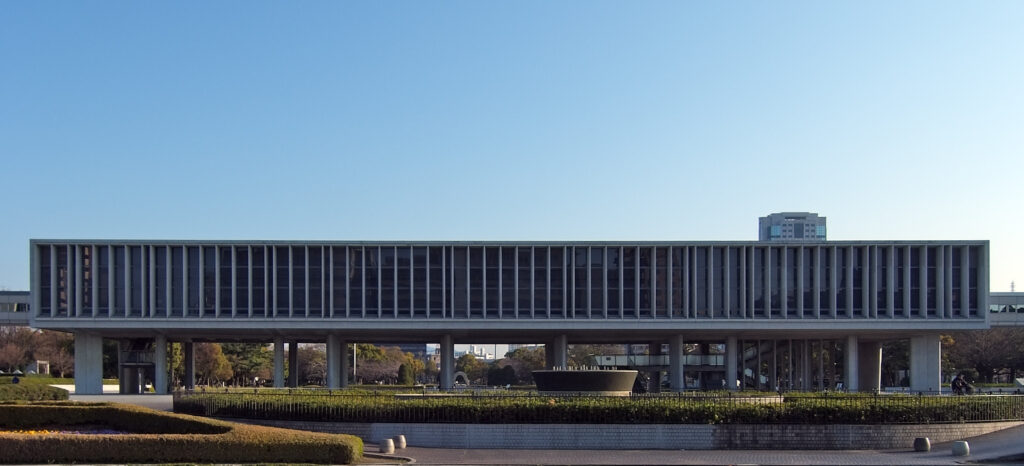
The peace memorial museum in the park was established in August 1955.

It collects and displays photos, belongings left by the victims, and other materials that convey the horror of that event.  Other exhibits describe Hiroshima before and after the bombings as well as describing the current status of the nuclear age.

Hiroshima peace memorial museum

This exhibit in the museum displays a watch stopped at the time of the atomic bombing.

Hiroshima peace memorial park

Known as the ‘Phoenix tree’ – this is a chinese parasol tree that was exposed to the atomic bomb radiation at a distance of about 1,300 meters from the hypocenter.  The trunk was largely hollowed out by the bombing, however next spring new buds began to sprout giving hope to the people.

Hiroshima peace memorial park

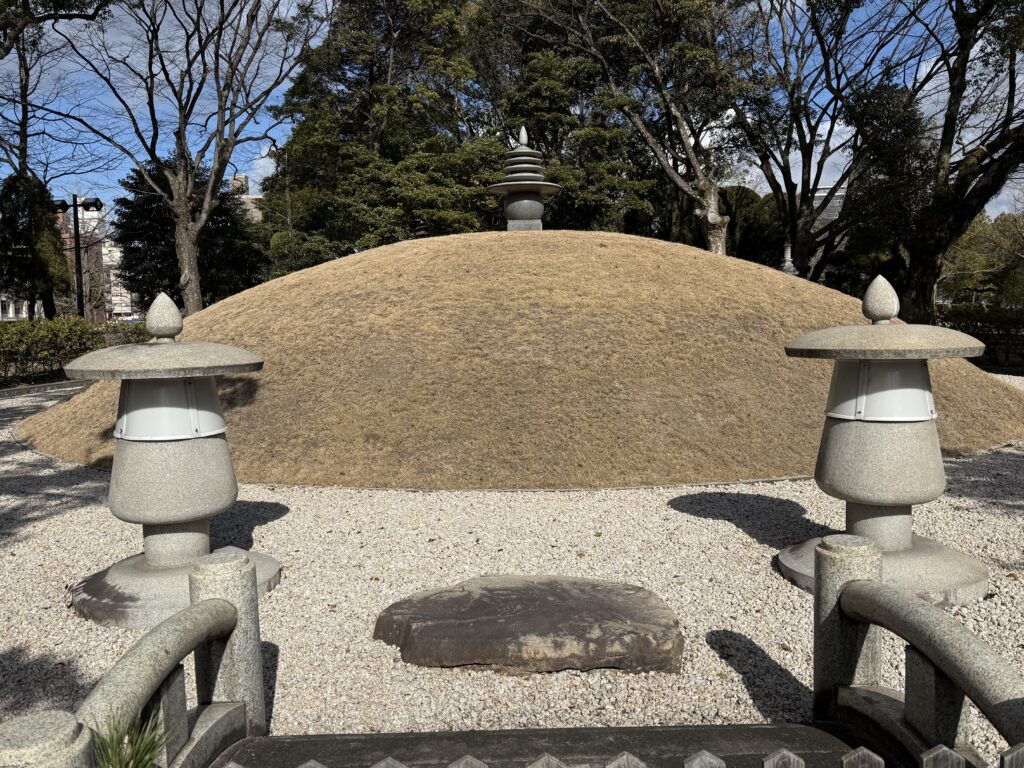
This is the most sacred part of the park – known as the atomic bomb memorial mound.  It was built for unknown victims or those whose remains were unclaimed due to such reasons as all members of their family had perished.

The vault underneath the mound contains the ashes of roughly 70,000 victims.

Hiroshima peace memorial park

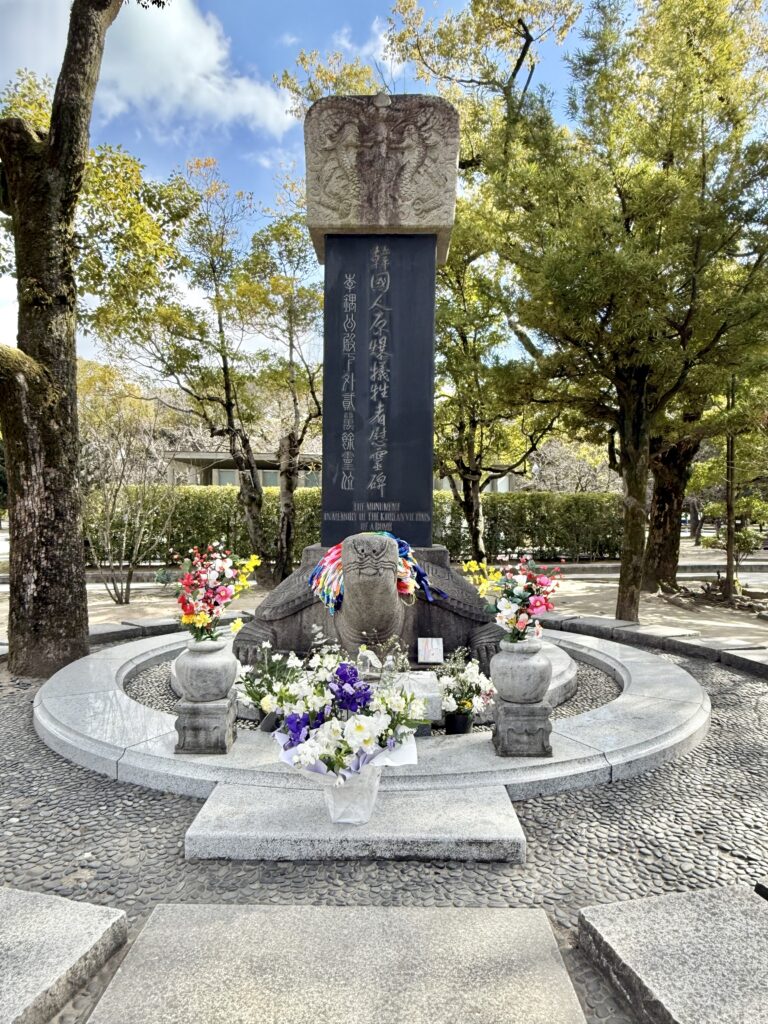
This monument was built in 1970 out of stones made in Korea to commemorate Korean victims of the atomic bombing.

It is said that there were tens of thousands of people from the Korean peninsula who suffered the atomic bombing.

Hiroshima peace memorial park

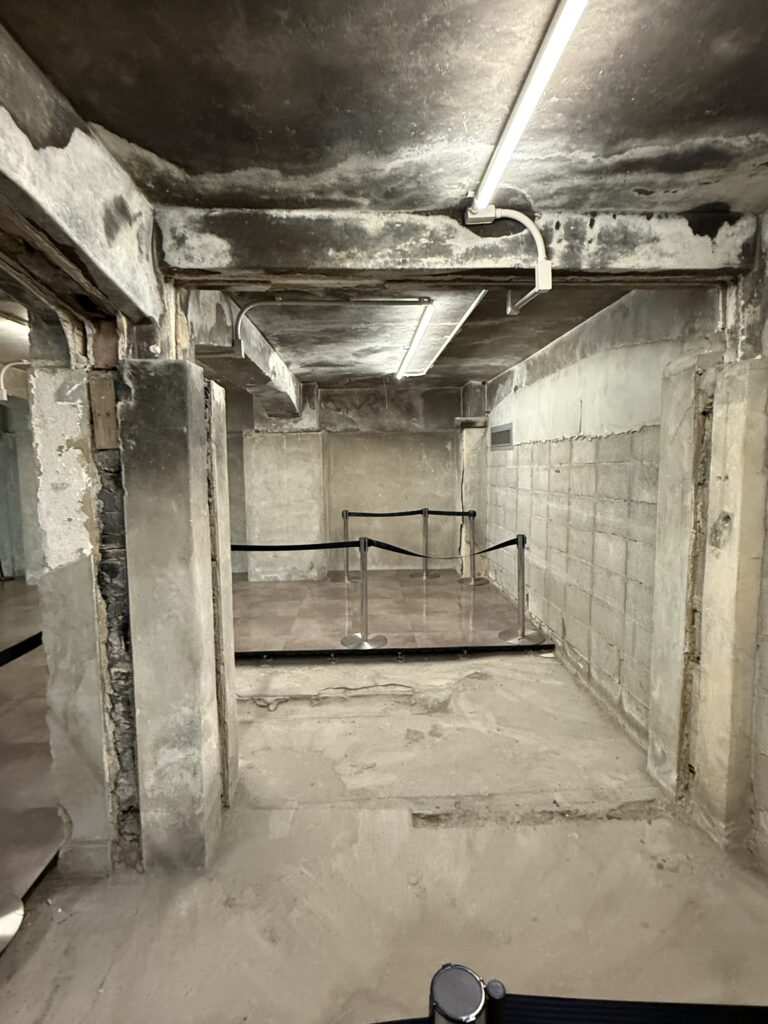
This is the basement of what is now preserved as the rest house but at the time of the bombing was the office for the Hiroshima prefecture fuel rationing union.

Among the 37 people in the building, 36 were killed in the bombing, with the exception of Eizo Nomura – who happened to be in this basement at that time.

Hiroshima peace memorial park

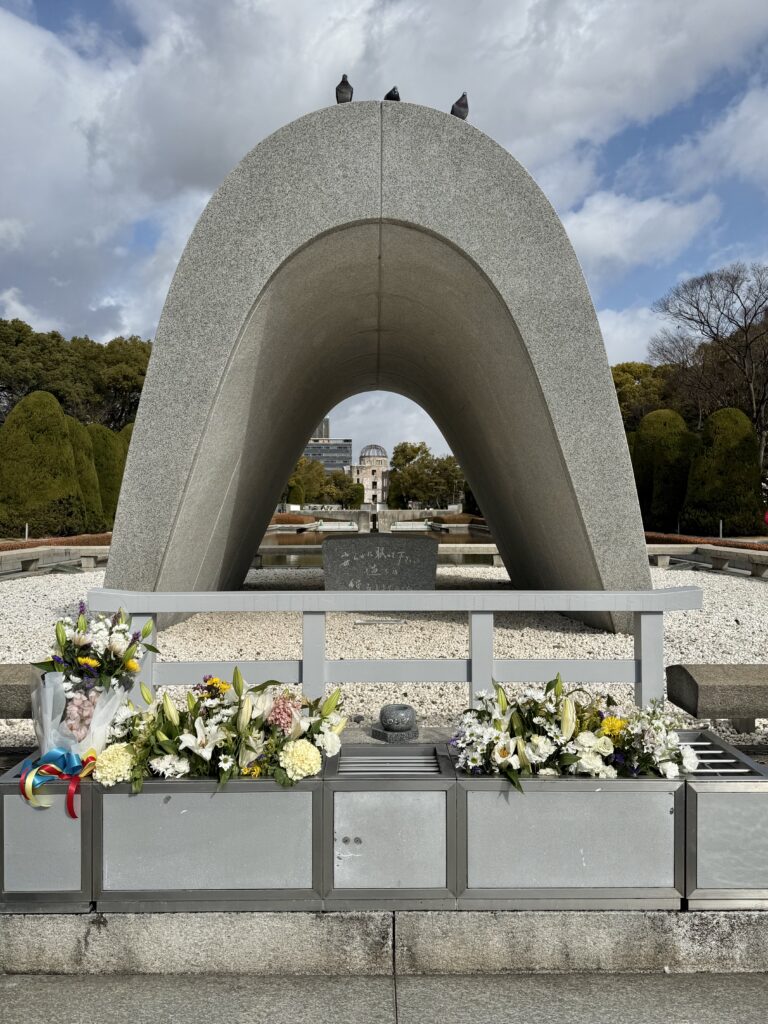
This is the cenotaph built in 1952 by the City of Hiroshima as a symbol of hope to rebuild the city as a city of peace.

The stone chest in the center holds the registry of the names of the victims and each year the Peace Memorial Ceremony is held in front of the cenotaph.

The memorial is aligned to frame the peace flame and the A-bomb dome.  The flame has burned continuously since it was lit in 1964 and will remain lit until all nuclear bombs on the planet are destroyed and the planet is free from the threat of nuclear annihilation.

Hiroshima peace memorial park

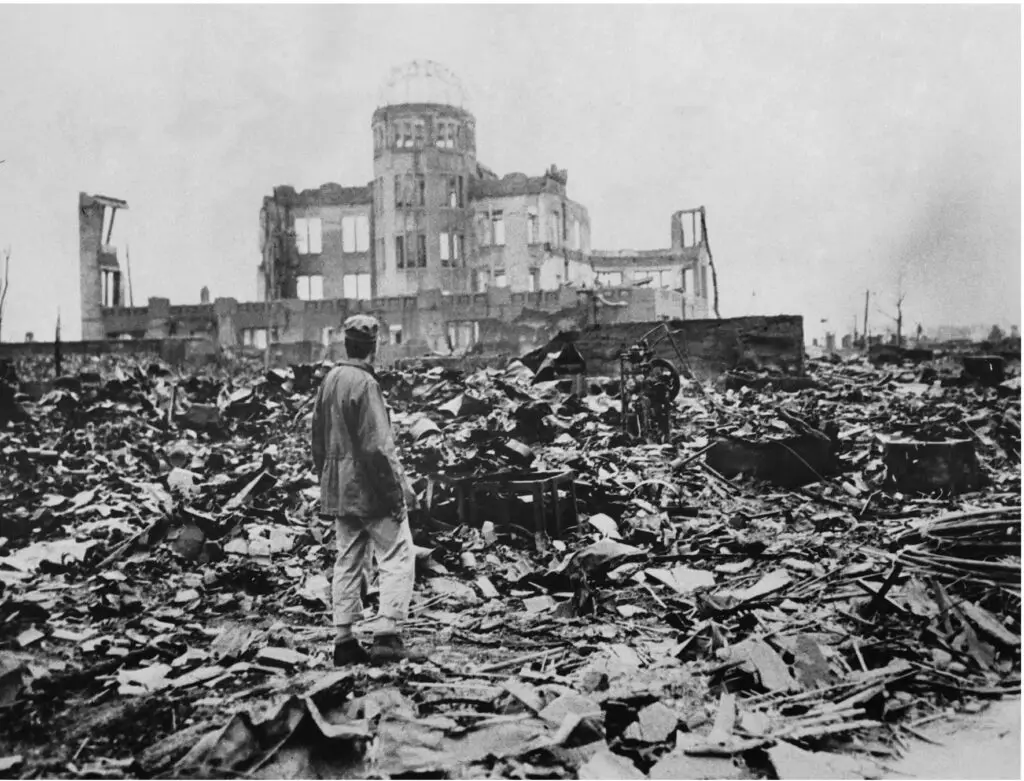
The A-Bomb Dome is the skeletal ruins of the former Hiroshima Prefectural Industrial Promotion Hall. It is the building closest to the hypocenter of the nuclear bomb that remained at least partially standing.   It was left as it was after the bombing in memory of the casualties.
Archive picture of the A-bomb dome taken soon after the event
Hiroshima peace memorial park

This is Children’s Peace Monument, with a figure of Sadako Sasaki at the top of the statue.  It was unveiled on 5 May 1958, the Japanese Children’s Day holiday. 

Aged two when the bomb fell, Sadako developed leukaemia nine years later.  This is when she decided to fold 1000 paper cranes.  In Japan, the crane is the symbol of longevity and happiness, and Sadaku believed that if she achieved that target she would recover.  She died on October 25 1955 before reaching her goal, but her classmates folded the rest. 

A nationwide spate of paper-crane folding continues to this day, and thousands of origami cranes from all over the world have been offered in memory of Sadako which can be seen in the glass cases around the monument.

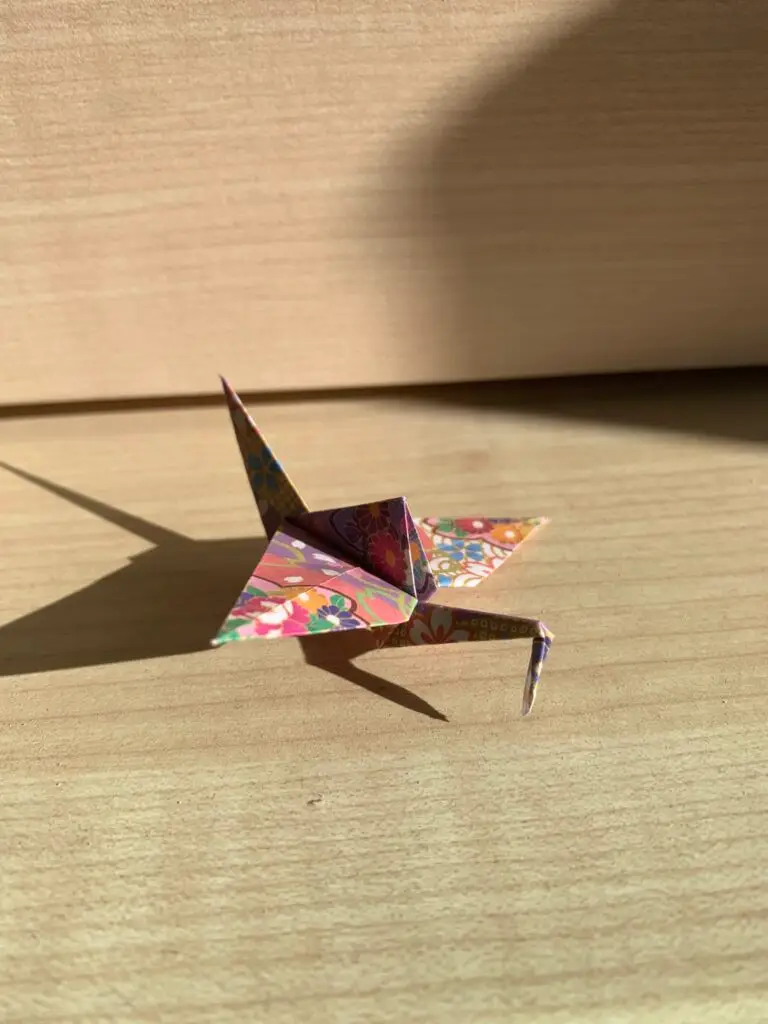
Origami paper crane

These paper cranes are often placed on the hotel bed as a greeting for the visitor.

Hiroshima peace memorial park

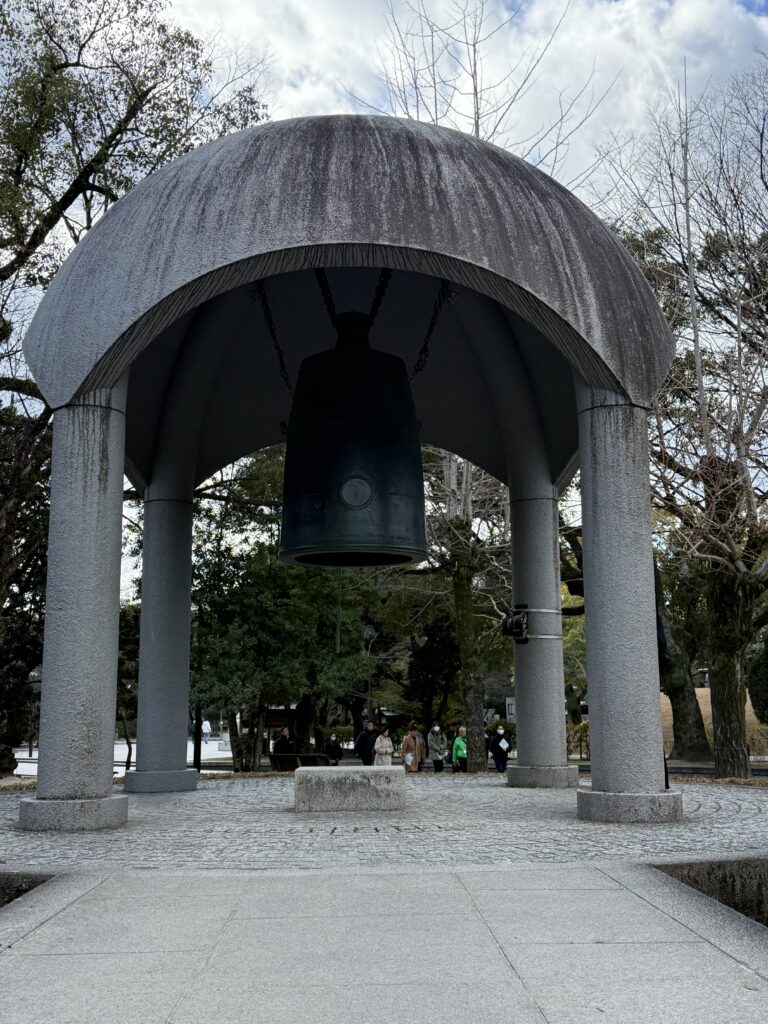
Visitors are encouraged to ring the bell for world peace and the loud and melodious tolling of this bell rings out regularly throughout the Peace Park.

The surface of the bell is a map of the world, and the inscriptions on the bell are in Greek, Japanese, and Sanskrit.   It is translated as “Know yourself.”

Miyajima

We took the hour long passenger ferry ride from the peace memorial park to Miyajima Island, which has the reputation of being one of the most scenic spots in Japan with the Itsukushima shrine and Mt Misen primeval forest.

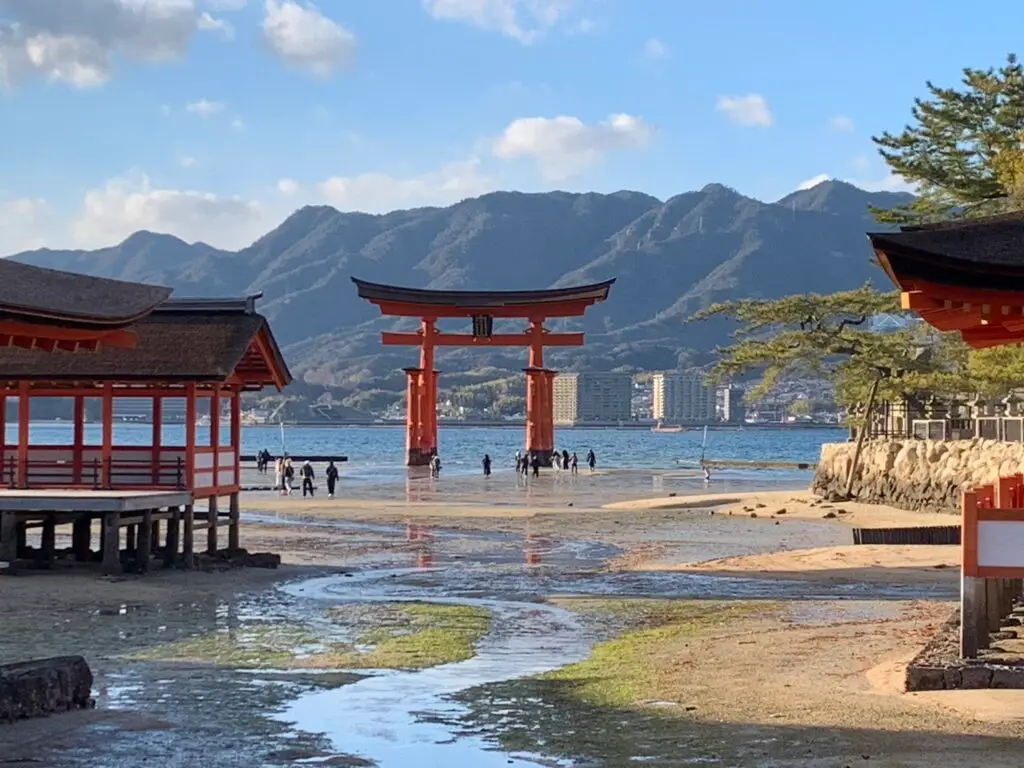
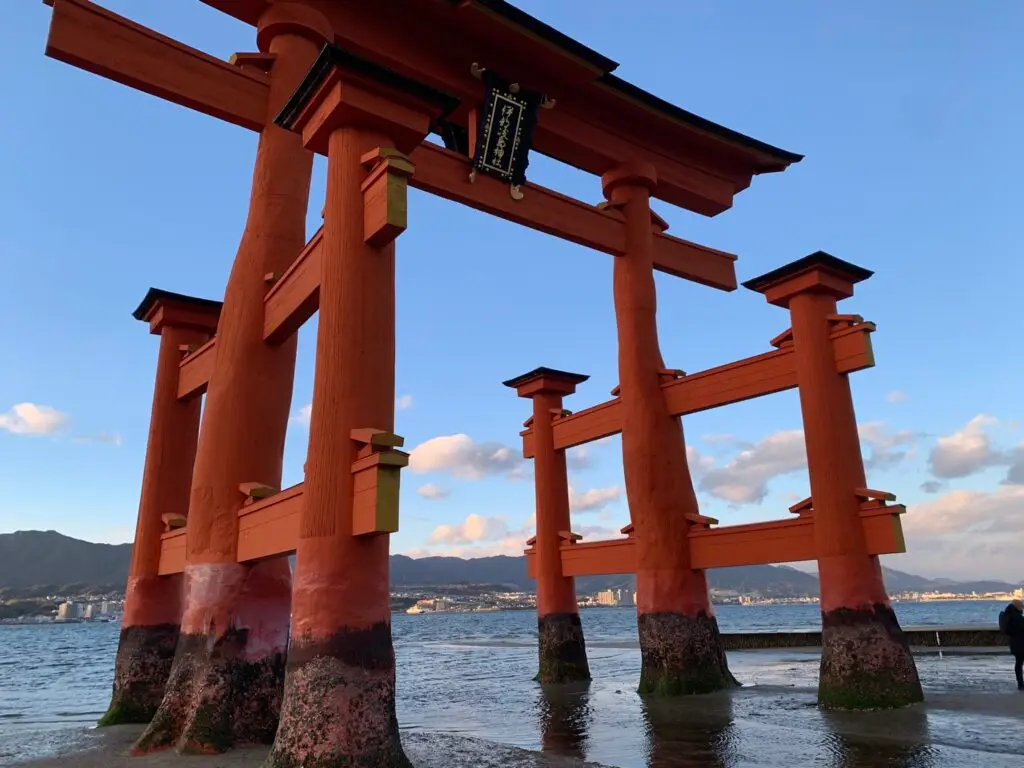
As you can see, at low tide it is possible to walk up to the famous O-torii gate of the Itsukushima shrine.

Itsukushima shrine
Miyajima

The O-torii gate is one of the biggest in Japan at a height of 16 meters.  The gate with its vermilion colour is considered to keep evil spirits away.

Miyajima

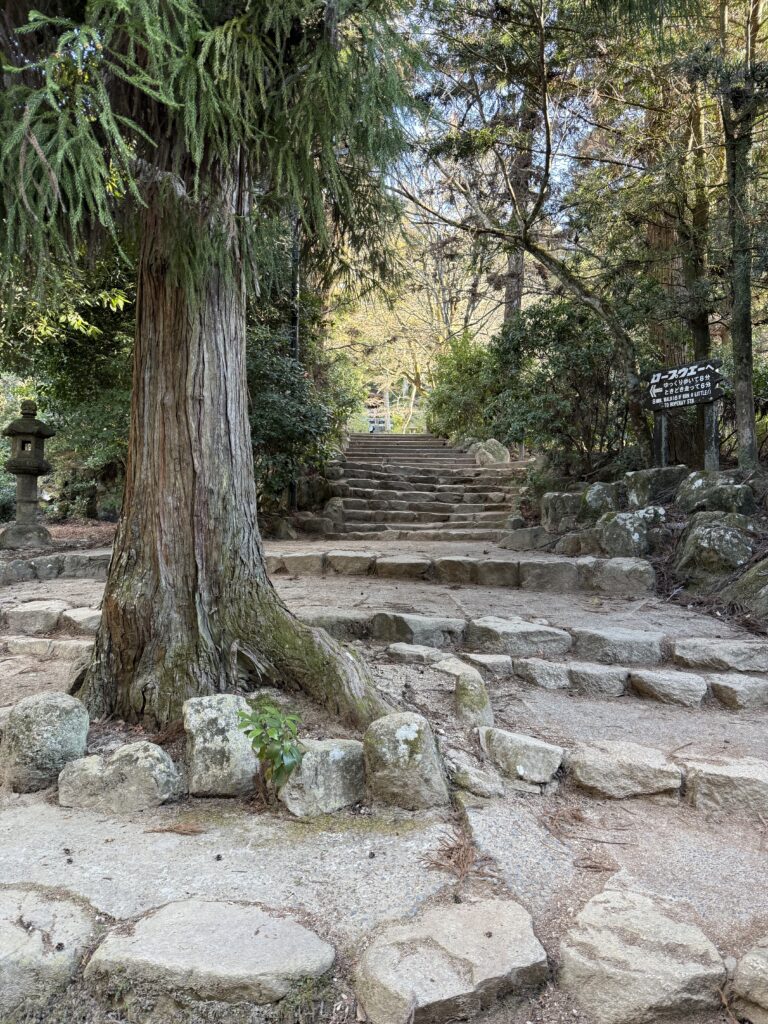
The sacred Mt. Misen is Miyajima’s highest mountain at 530m.  The surrounding primeval forest is a national monument, a special protection area, and a world heritage site.

Unfortunately the cable car up to the summit was closed for maintenance and we did not have time to do the walk.

Hiroshima-jo castle
Hiroshima-jo castle

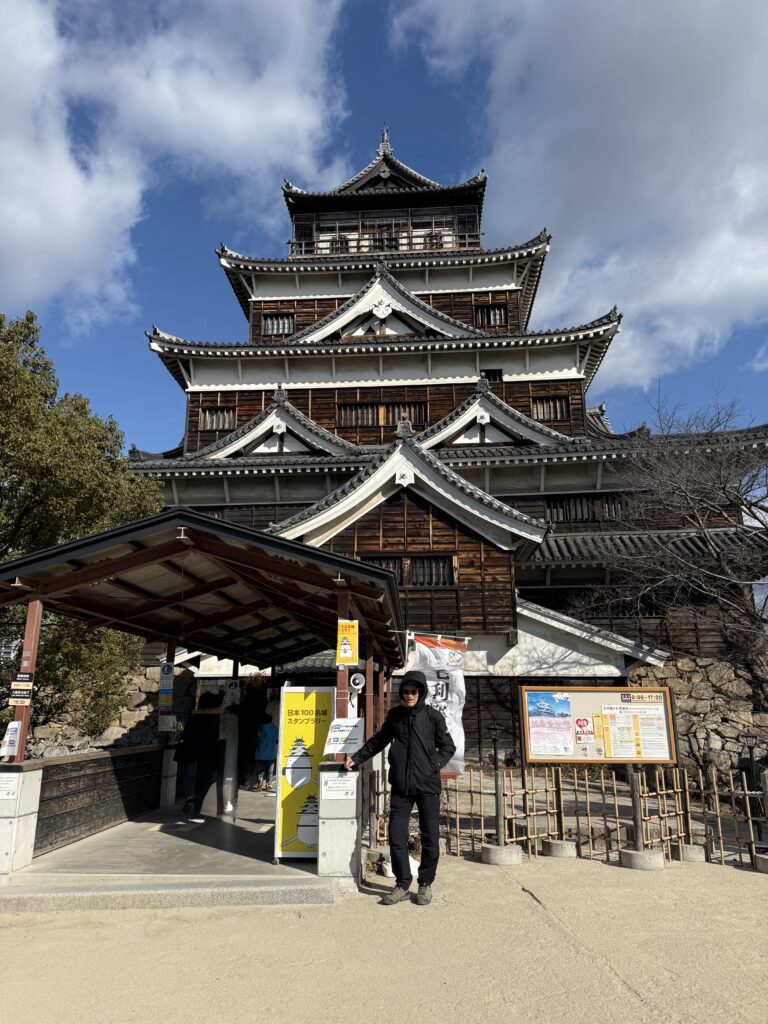
The castle was originally established by Mori Terumoto in 1589, who was one of Toyotomi Hideyoshi’s council of ‘five elders’.  

After the atomic bomb of 1945, all that was left of the sprawling castle compound were the stone walls and moat. 

A replica of the main tower – seen here – was completed in 1958, which now houses a museum of historical items.

Hiroshima-jo castle

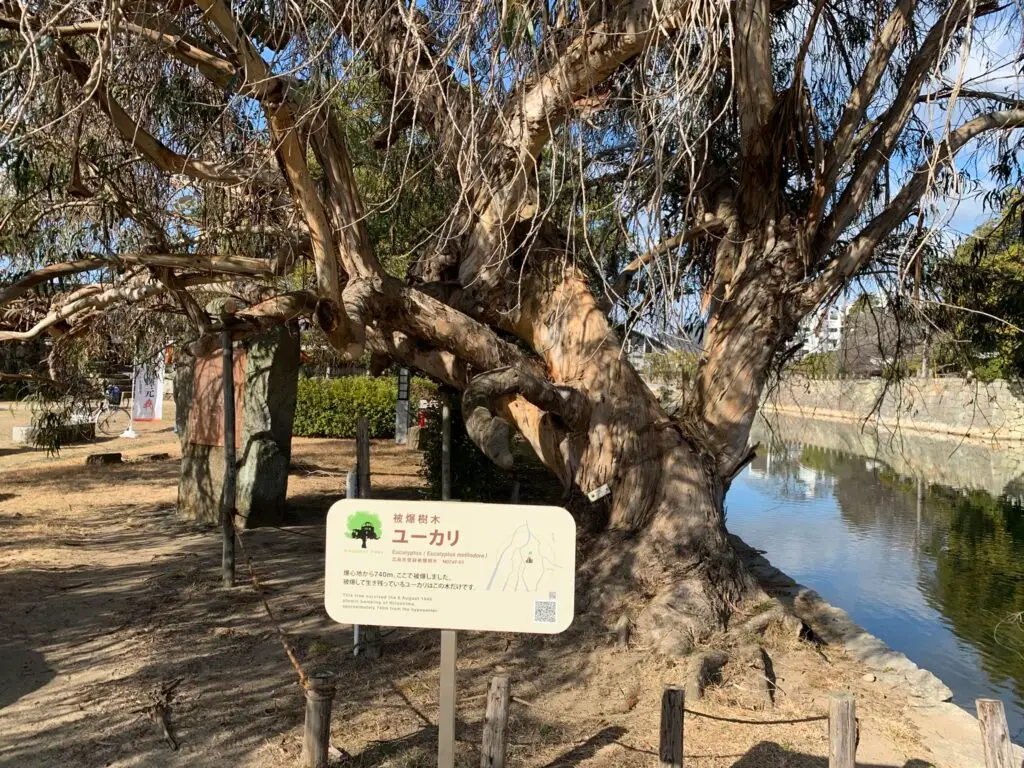
This famous Eucalyptus tree is in the castle grounds survived the 6 August 1945 atomic bomb just 740m from the hypocenter.

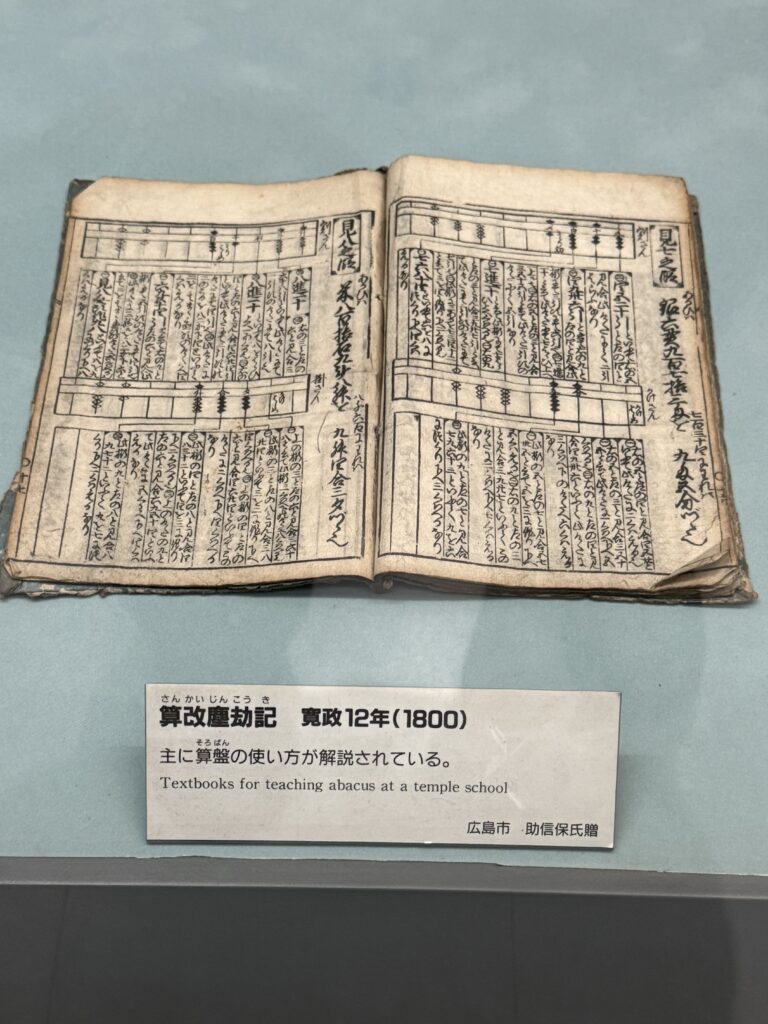
Horoshima-jo castle museum exhibit - textbook for teaching abacus at the temple school
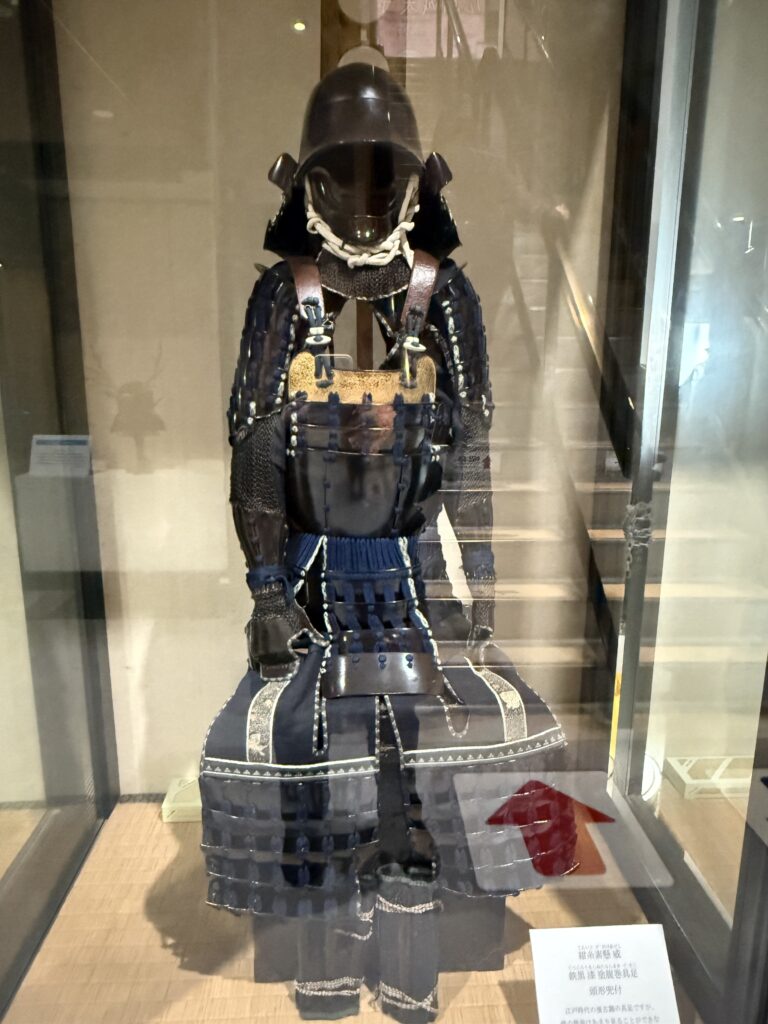
Hiroshima-jo museum - suit of armour
Hiroshima-jo museum exhibit

A litter like this one was used in the film ‘Shogun’

Beppu

We took the Shinkansen from Kyoto to Kokura and then a regional train onwards to Beppu.

We wanted to visit Beppu as one of the county’s top onsen towns.  Several of the hotels in our trip had onsens – which are provided free of charge and are segregated one for men and one for women.  The water is heated to 40 degrees!

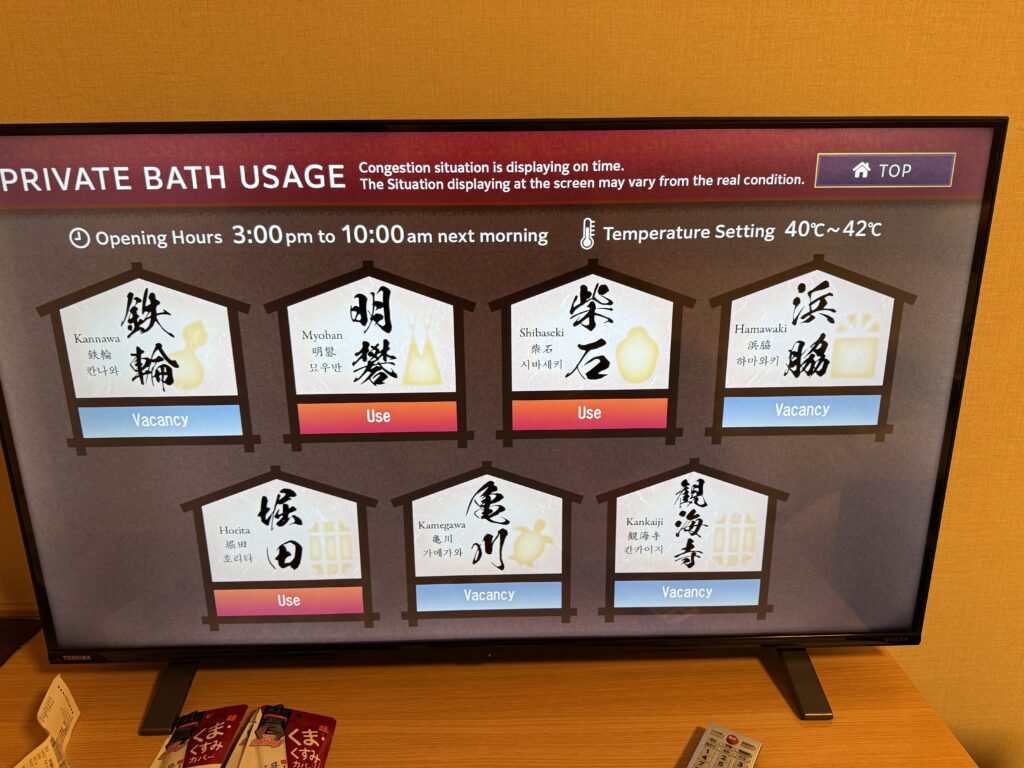
Beppu is special as an onsen town because the water does not need heating as it comes already hot straight out of volcanic vents.  Our hotel in Beppu even had seven private onsen baths for private booking – thus possible for a couple to share or a family for example.

This display showed the booking status of the private onsens
One of the private onsens

There were also much larger onsens for communal (sex segregated) use.  Photography in the communal onsen is of course strictly prohibited.

Beppu

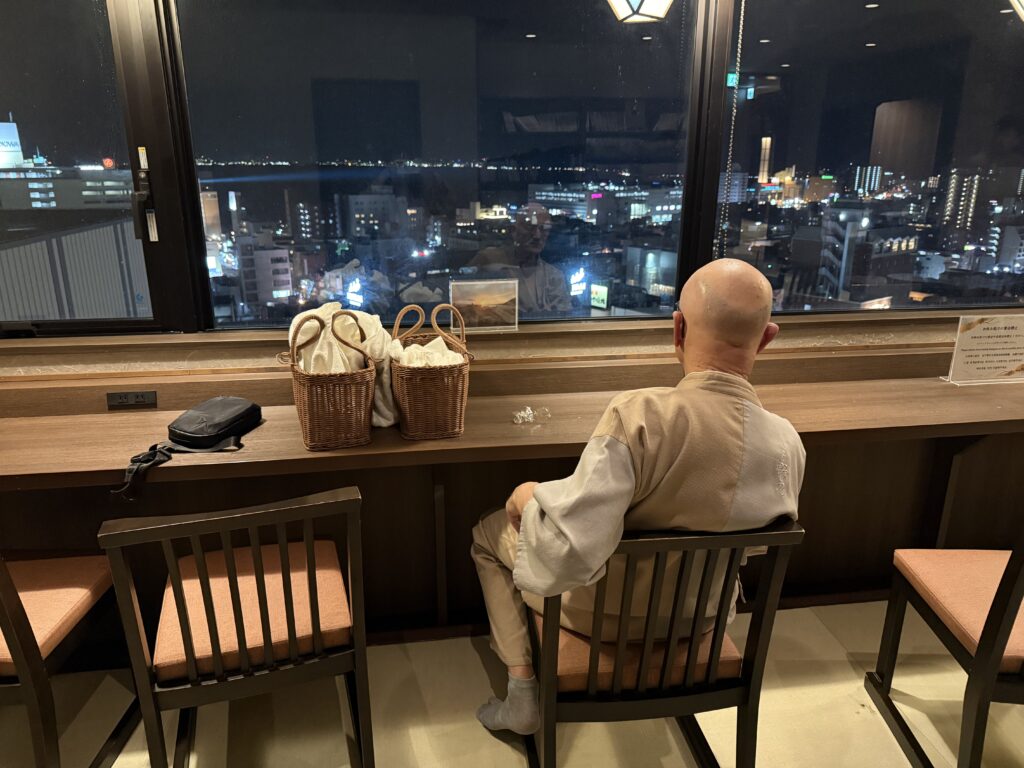
There was a space to relax after your onsen where you could cool down again (neccessary even after a cold shower!).

Free ice creams and snacks available to help yourself!

Beppu

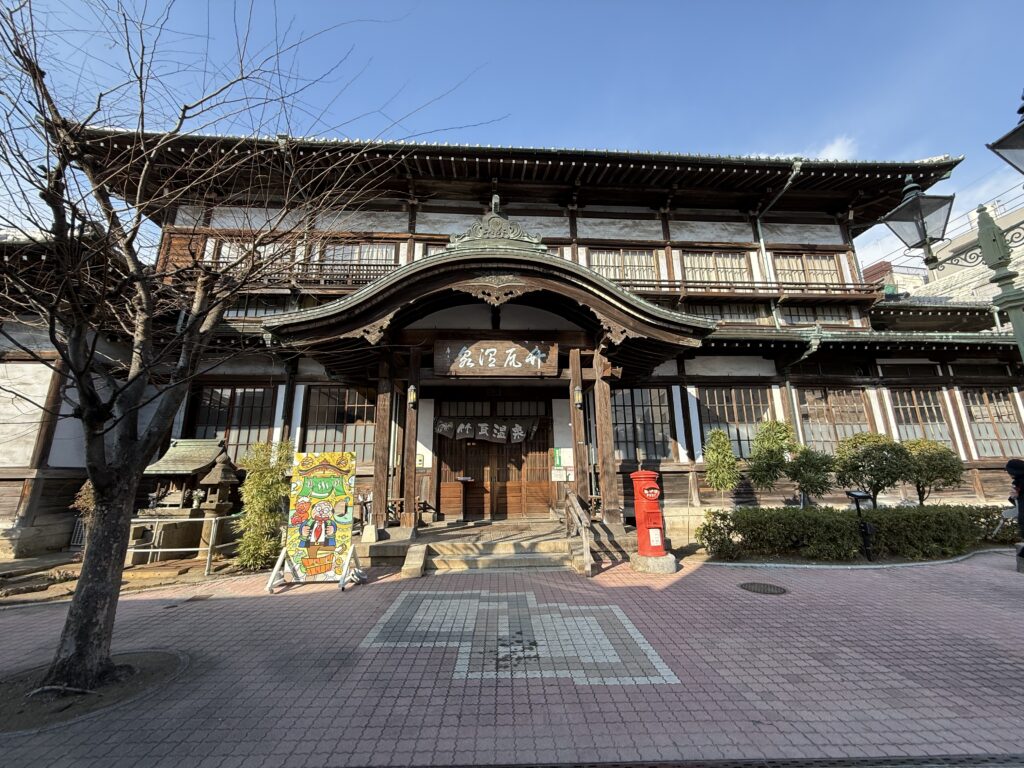
This is the famous Takegawara Onsen in Beppu, where you can experience the original authentic Japanese Onsen.  Known also for its sandbath, where you lie in a coffin size depression and have hot dark volcanic sand heaped over you.

A popular attraction in Beppu is the Beppu Jigoku or the ‘Hells of Beppu’ which are seven volcanic springs which you can visit by walking to each one individually.  Each spring is different, for instance one spring consists of just boiling mud.   The springs are definately not for bathing as the temperature is 99.1 degrees, although some of the springs have footbaths for the tourists where the water is firstly cooled down via a series of ramps.  They also use the hot water to breed crocodiles and tropical fish – they currently have about 80 crocodiles.

This particular spring is a geyser that gushes hot water at 30 to 40 minute intervals lasting about 6 to 10 minutes.  The fumarolic temperature is 105 degrees.

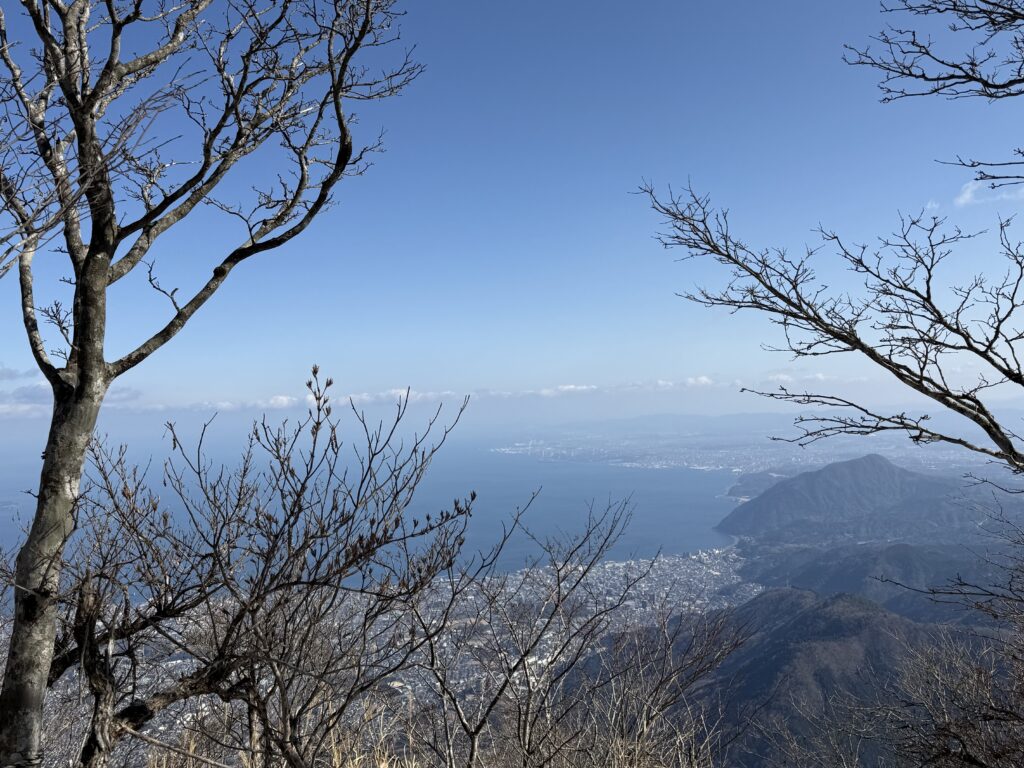
The other main attraction in Beppu is the cable car ride up Mt Tsurumi.  There is a 15 minute walk from the top cable car station to the summit at 1375 meters.

View from Mt. Tsurumi summit looking back at Beppu.

Fukuoka

After a few days in Beppu, we travelled on to Fukuoka by train.

Fukuoka was the final destination on our trip.  We stayed here for a couple of days before flying out from Fukuoka airport.

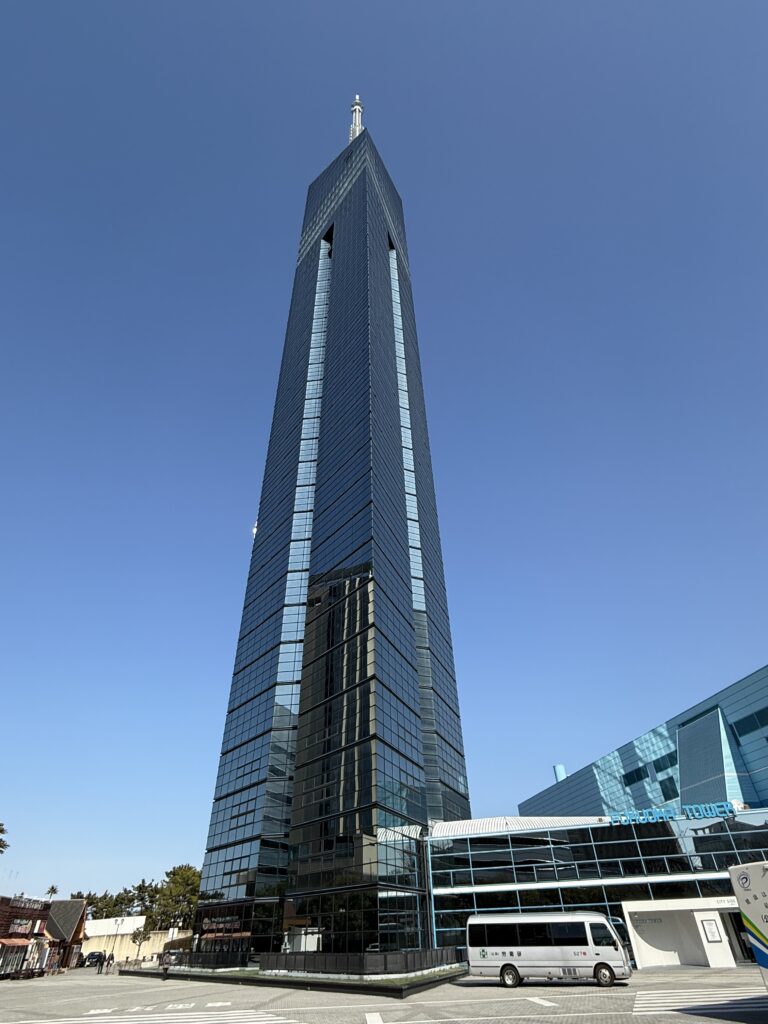
Fukuoka tower

The Fukuoka tower is 234 meters high with a viewing deck at 123 meters.

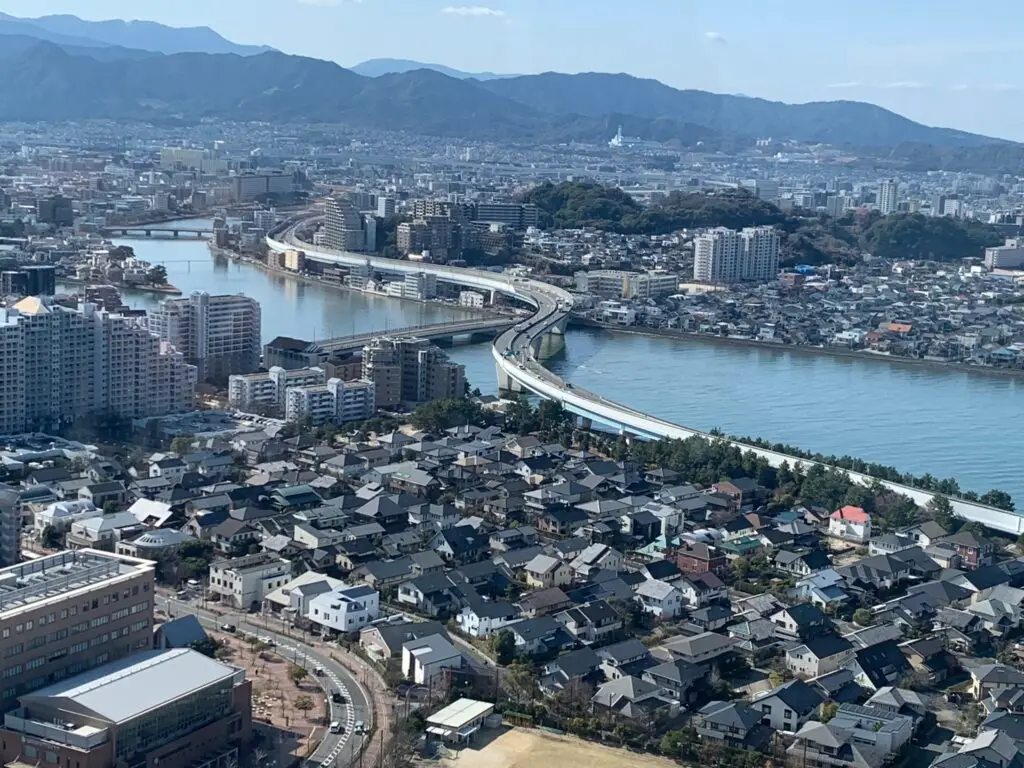
Fukuoka

From the top there is a 360 degree view of Fukuoka.

Fukuoka Tower

Fukuoka tower is on the seaside with a beach.  South Korea is only about 200km away to the north-west across the Tsushima Strait from here.  This proximity explains why South Korea has so often been a target for Japanese invasion ever since the 1600’s.

We visited the Fukuoka Marine World.

‘Ghost’ jellyfish at the Marine World

Leave a Comment

Your email address will not be published. Required fields are marked *