The flight from London was ten and a half hours. On the return, the entire flight was during daylight, and I was able to see Lake Baikal, which took 45 minutes to cross, as well as the frozen tundra of northern Russia.
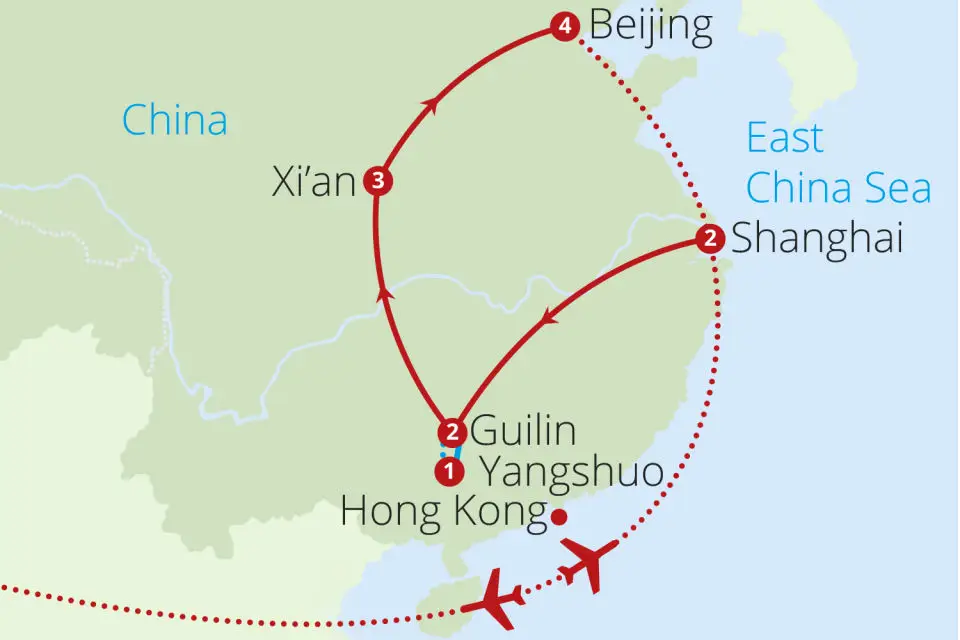
This was an organised14 day tour with Mercury Holidays. It started at Shanghai and finished at Beijing with 3 internal flights.
Shanghai
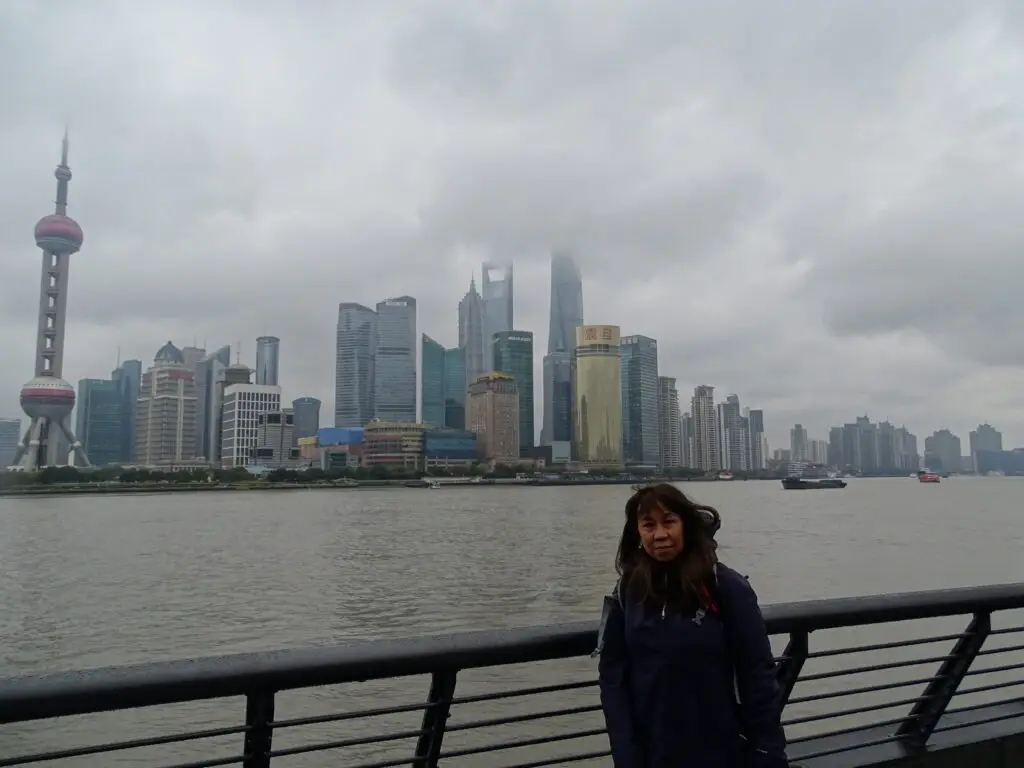
The Bund
This view is from the Bund across the Huangpu river to the Pudong district. This 556 sq km modern metropolis is all the more remarkable because it was transformed in just 13 years from farmland since the early 1990's
A very popular activity is taking a riverboat cruise to view the night lights of Lujiazui.
This area is the most highly developed part of Pudong and possibly the most successful example of Deng Xiaoping’s program of special economic zones introduced in the 1970s to encourage foreign investment.
Nanjing Road shopping center
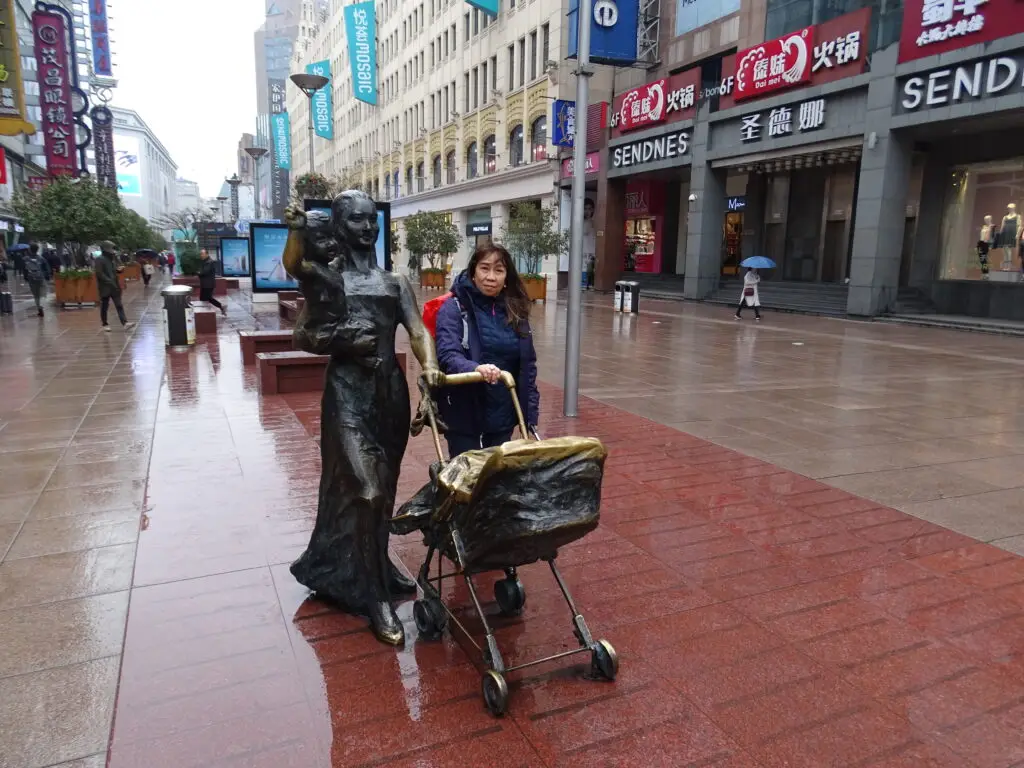
Nanjing Road
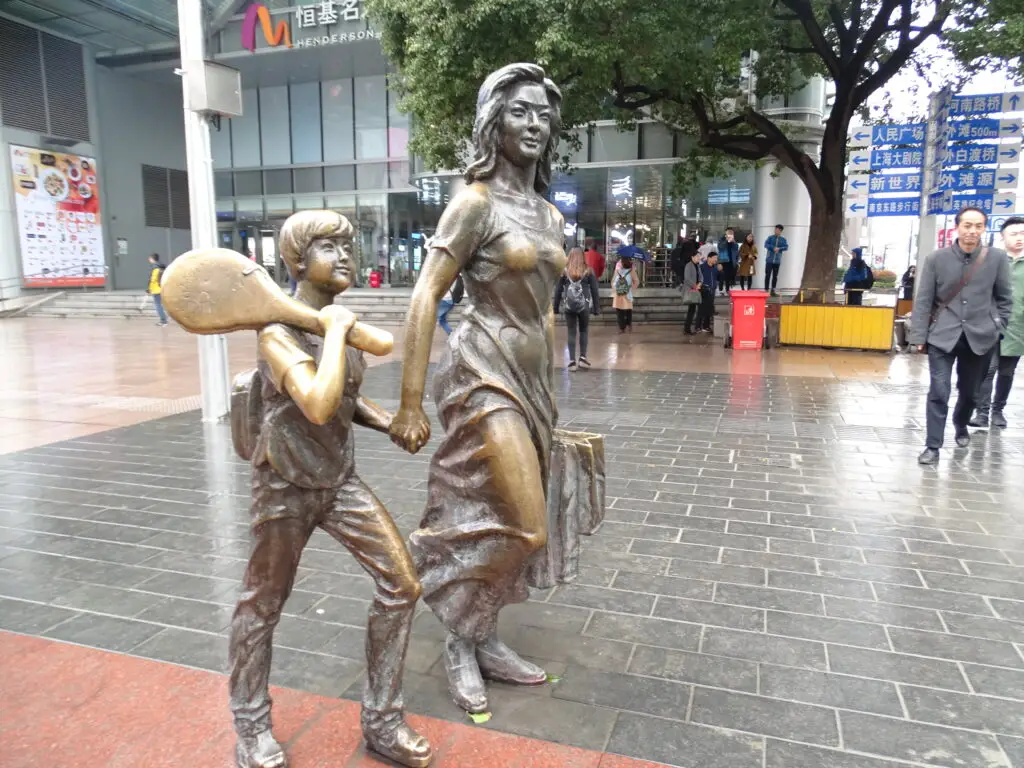
Nanjing Road
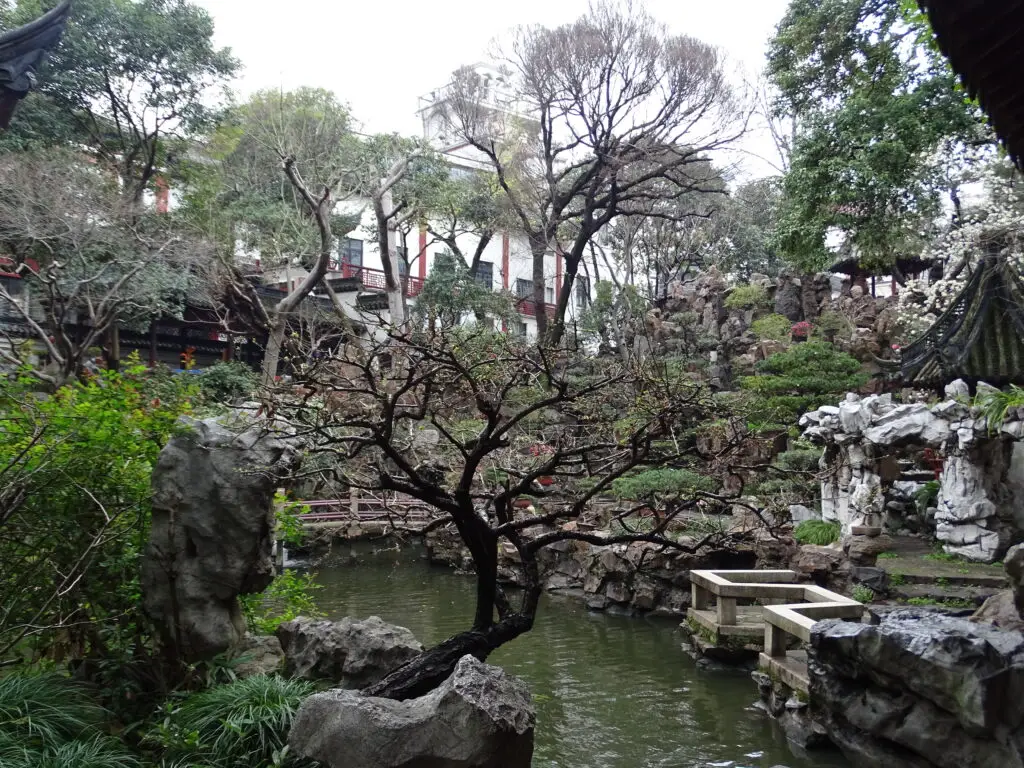
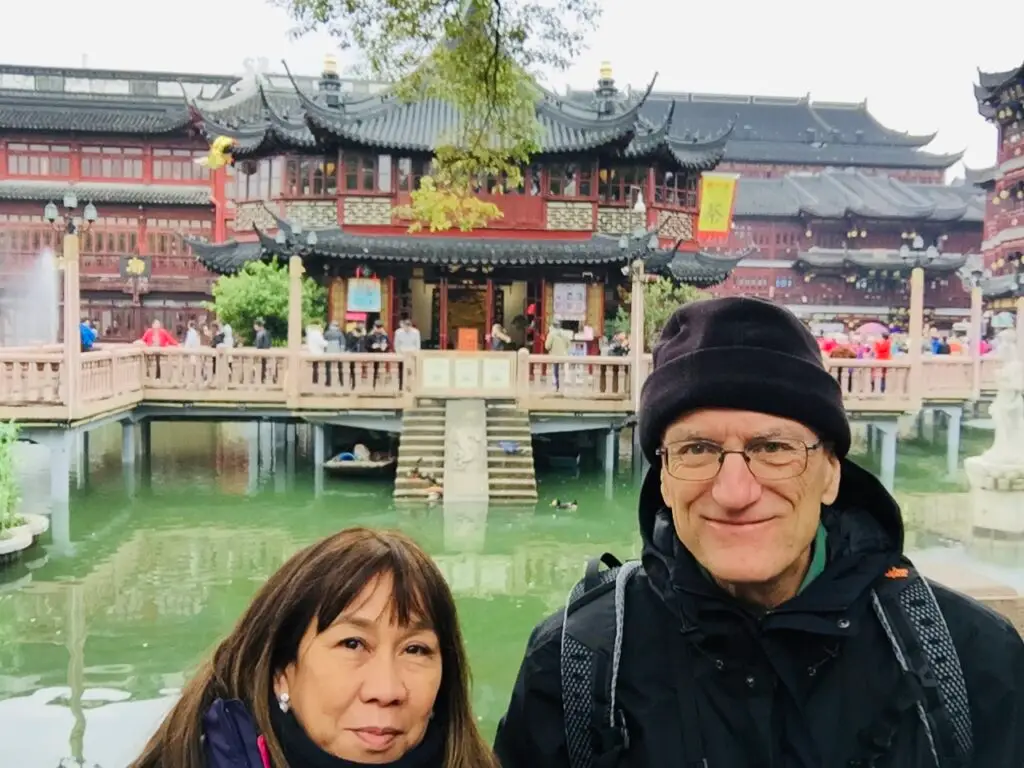
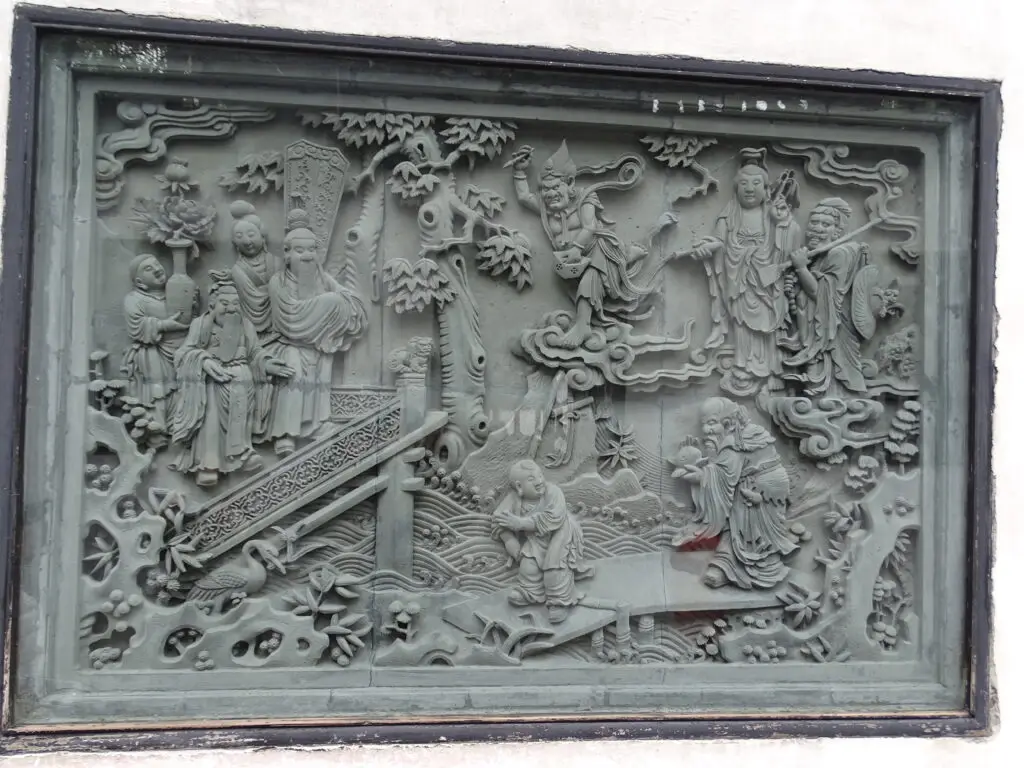
The Yuyuan Gardens were founded by the Pan family (Ming Dynasty officials). It took 18 years from 1559-77 to create.
Yuyuan Gardens
Yuyuan Gardens
Yuyuan Gardens
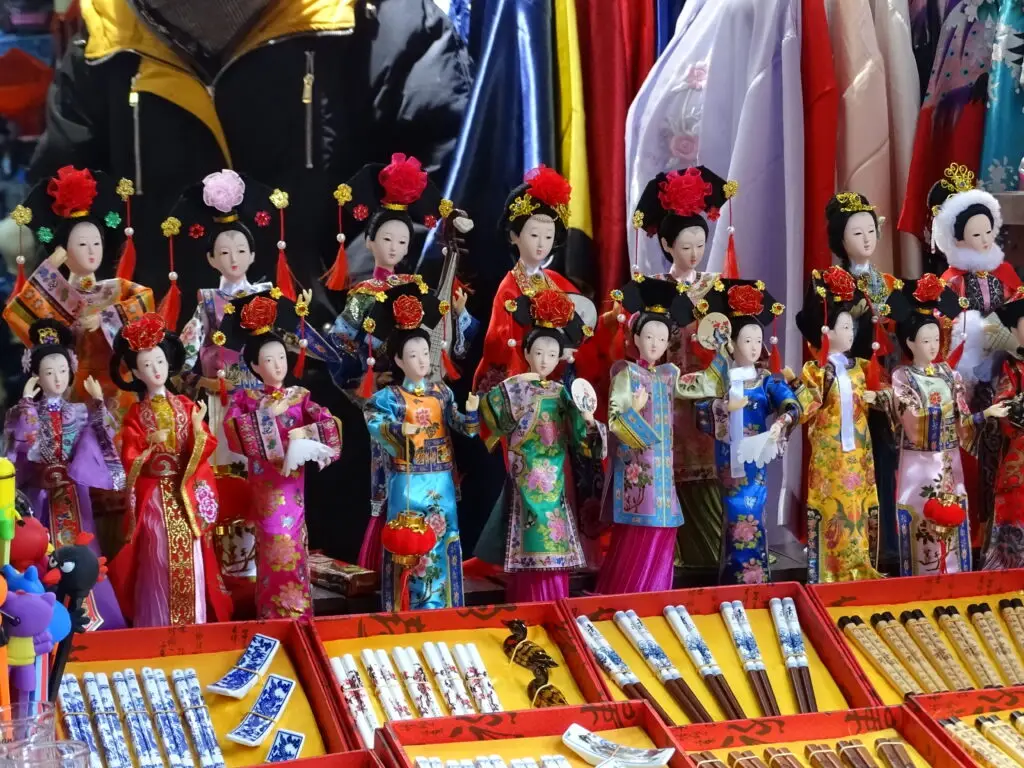
There is a bazaar adjacent to the gardens
Bazaar
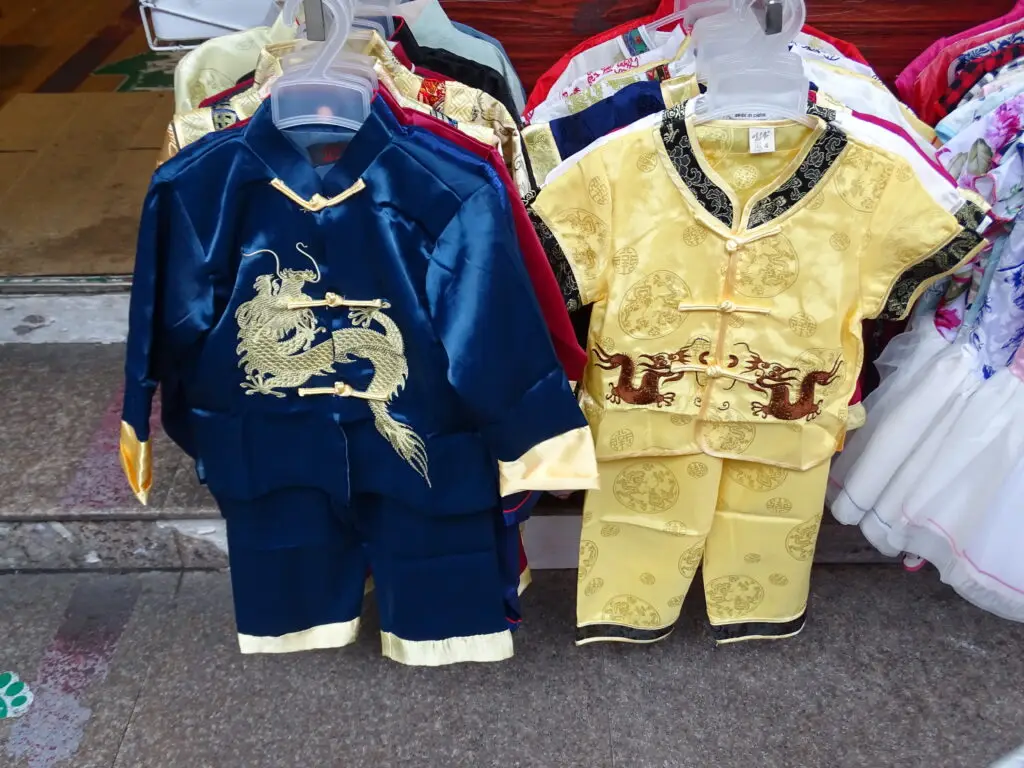
Baby outfits in the bazaar
Shanghai Museum
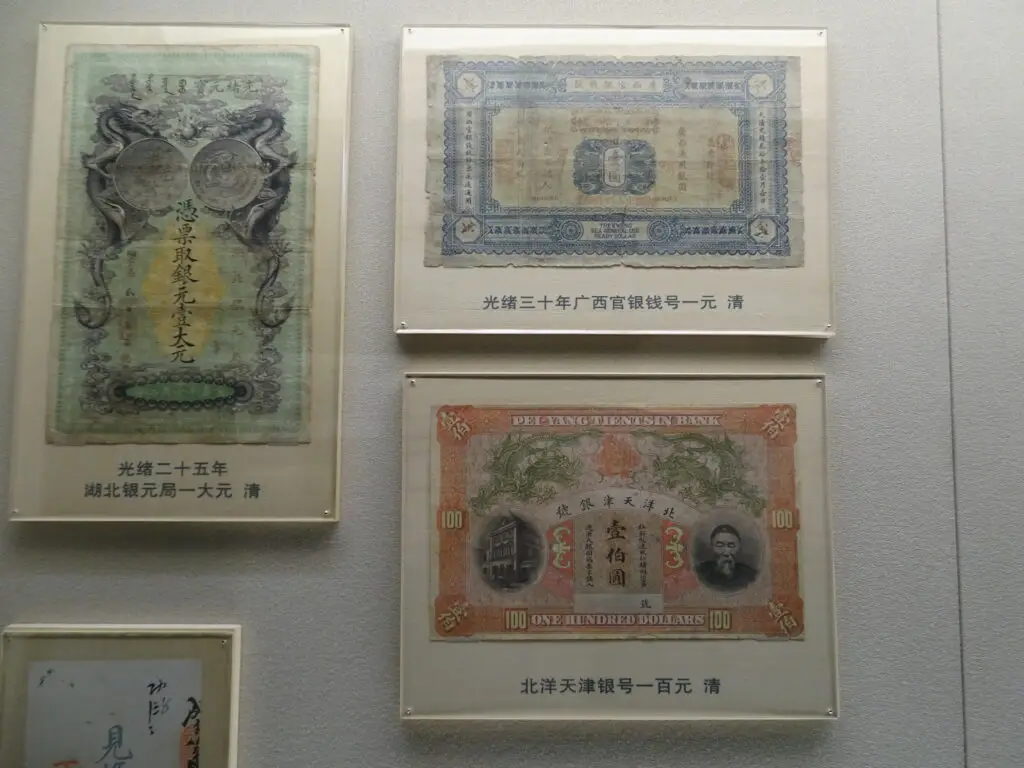
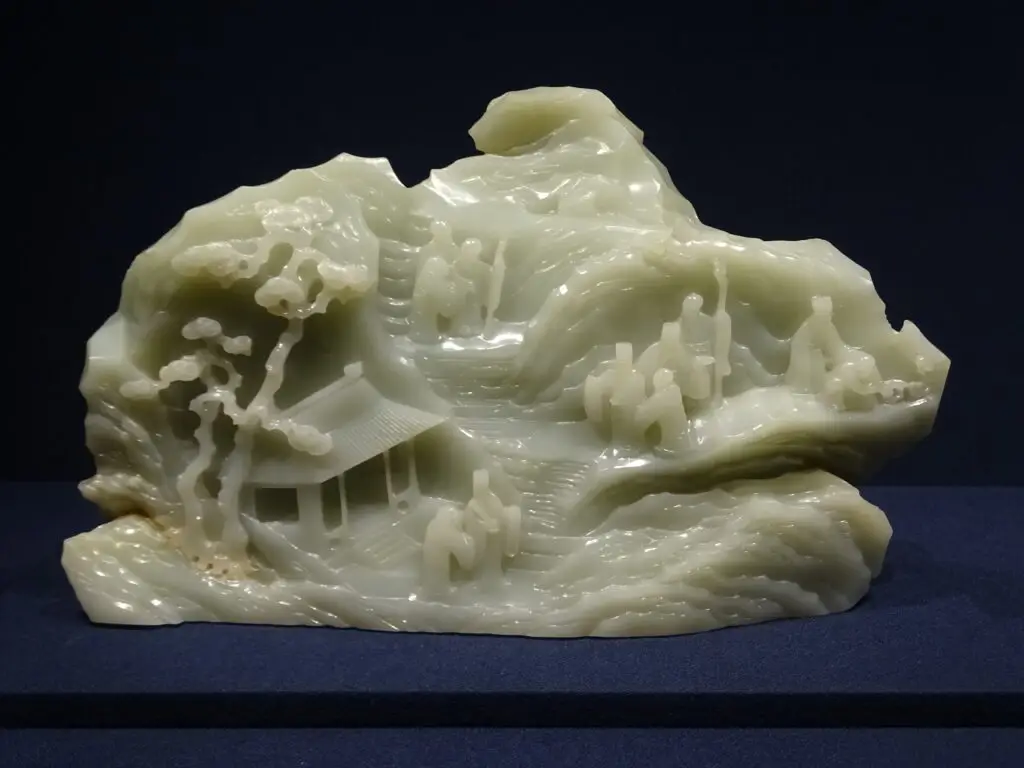
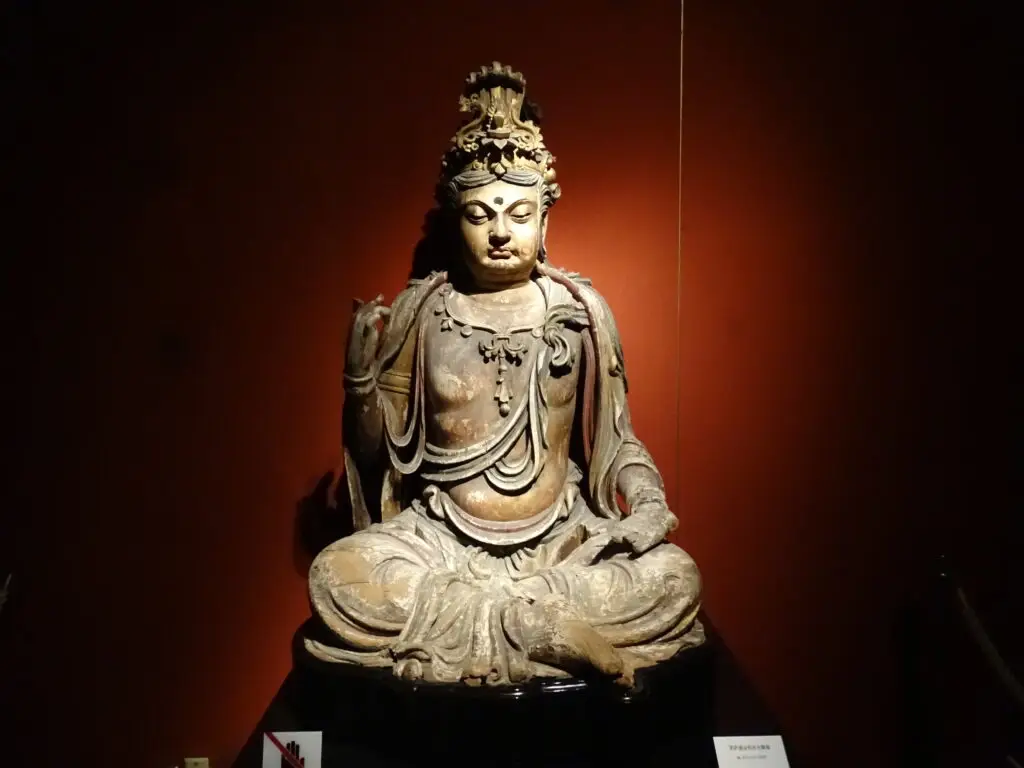
This free museum is home to one of the most impressive collections in the country for ancient bronzes, sculptures, ceramics, calligraphy, painting, jade, furniture, coins and much more
Shanghai Museum
Shanghai Museum
Shanghai Museum
Shanghai Museum
Shanghai Museum
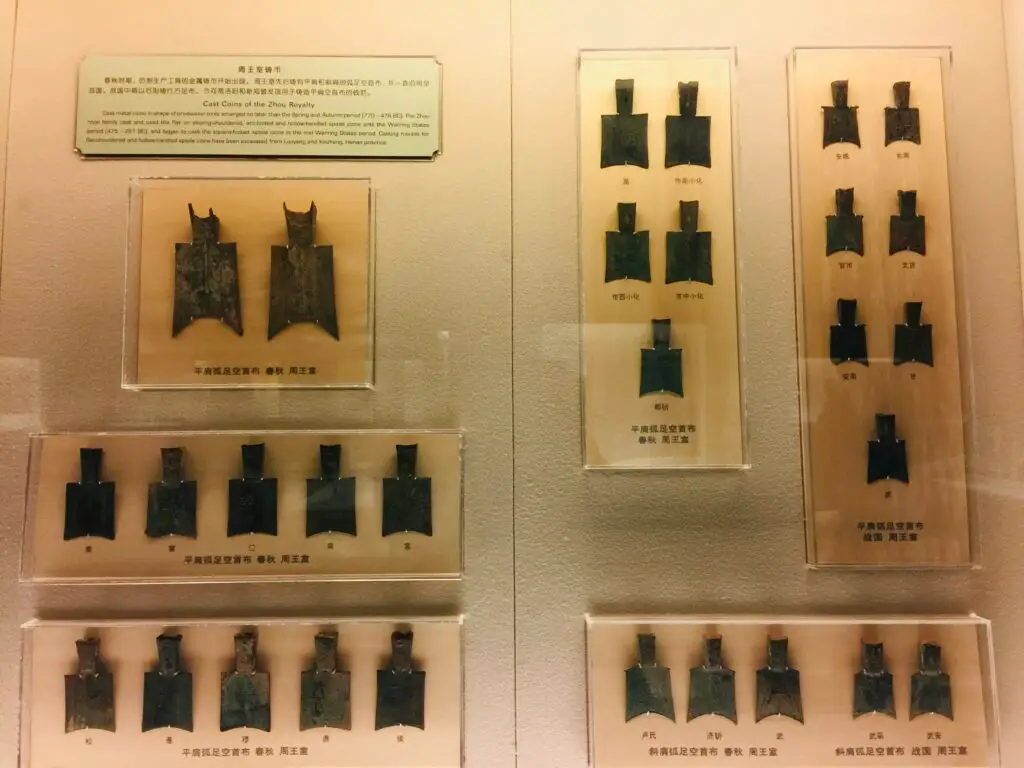
Coins from Zhou royalty
We traveled 30 km west of Shanghai by bus to visit Zhujiajiao.
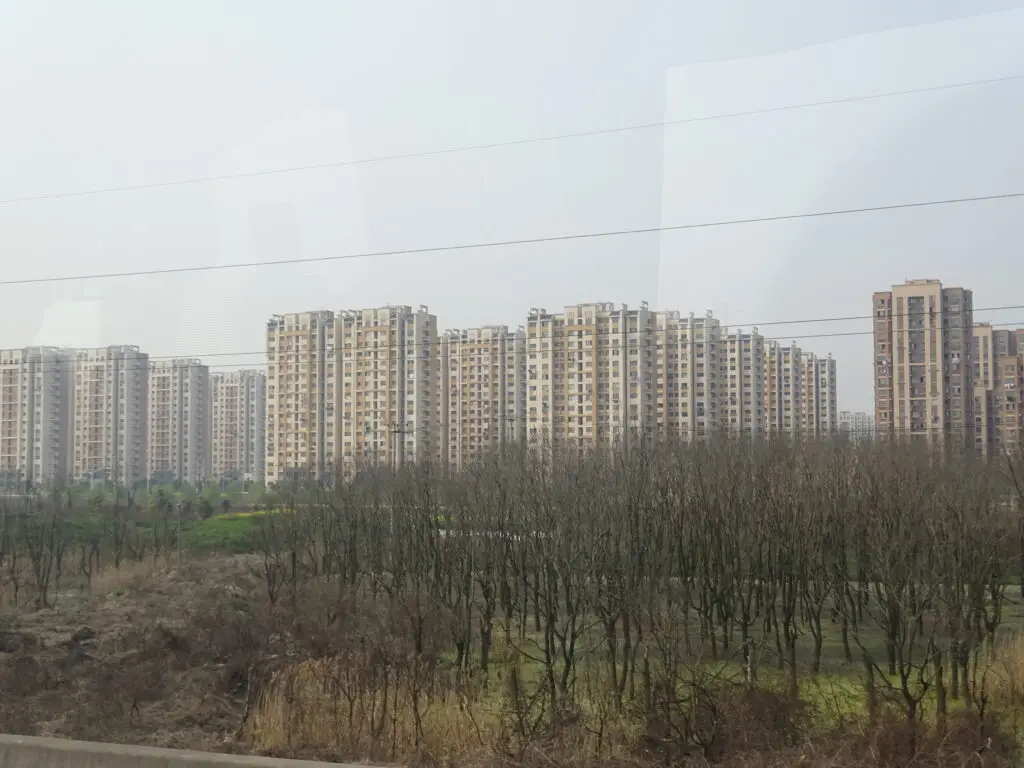
Along the route, we passed a commuter town with skyscraper apartment blocks. This is how China addresses its housing problem for its large population, and we encountered many more of these developments while approaching major cities from the airport.
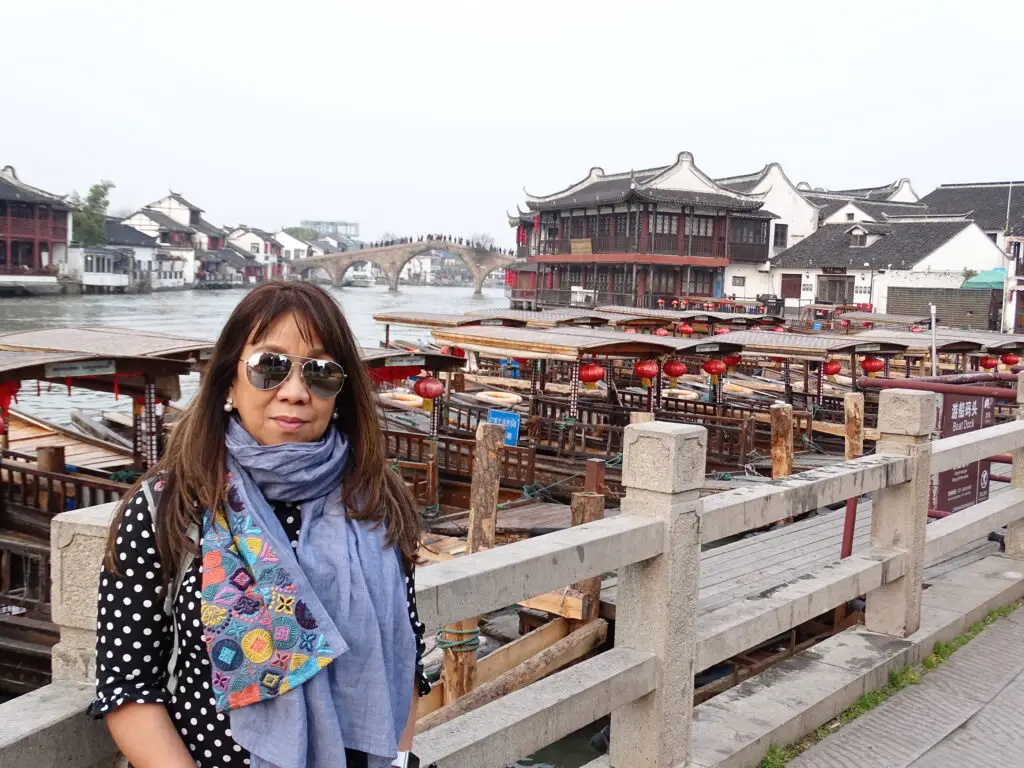
Zhujiaojiao
The historic town of Zhujiajiao is a charming tableau of Ming and Qing dynasty alleys and bridges that can be walked around in a couple of hours.
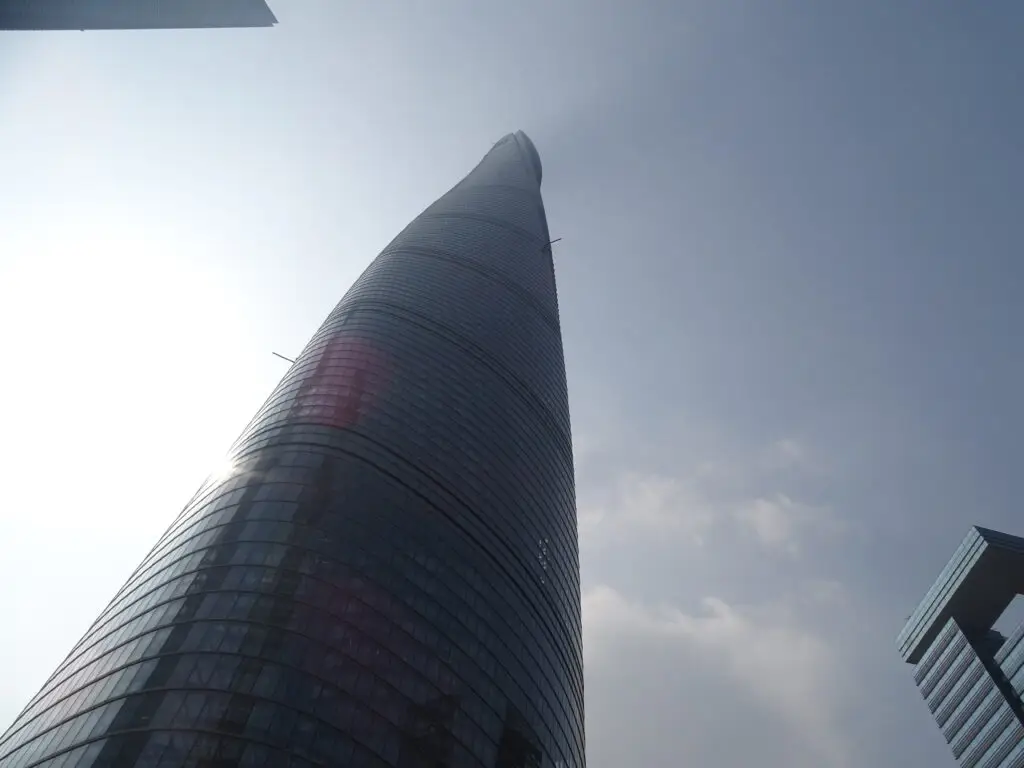
We visited the Pudong area which is where the famous Shanghai tower is. This skyscraper is 546m high and, although the Burj Khalifa in Dubai beats it for height at 828m, this one holds the world record for the longest single lift ride all the way to the top.
We had been particularly looking forward to going up the tower but, incredibly, no-one else in the group wanted to go and so the tour leader had to cancel the visit!
However myself and Richard asked to be dropped off on the way back from Zhujiaijaio so that we could visit it just on our own and it turned out to be well worth while – except for negotiating a taxi ride back to the hotel afterwards without a single word of chinese! You go up to the top observation deck in a single lift ride and this is the view.
This is a video of the floor indicator screen taken inside the lift going back down. The lift is high speed and travels at a maximum of 20m/sec.
Guilin
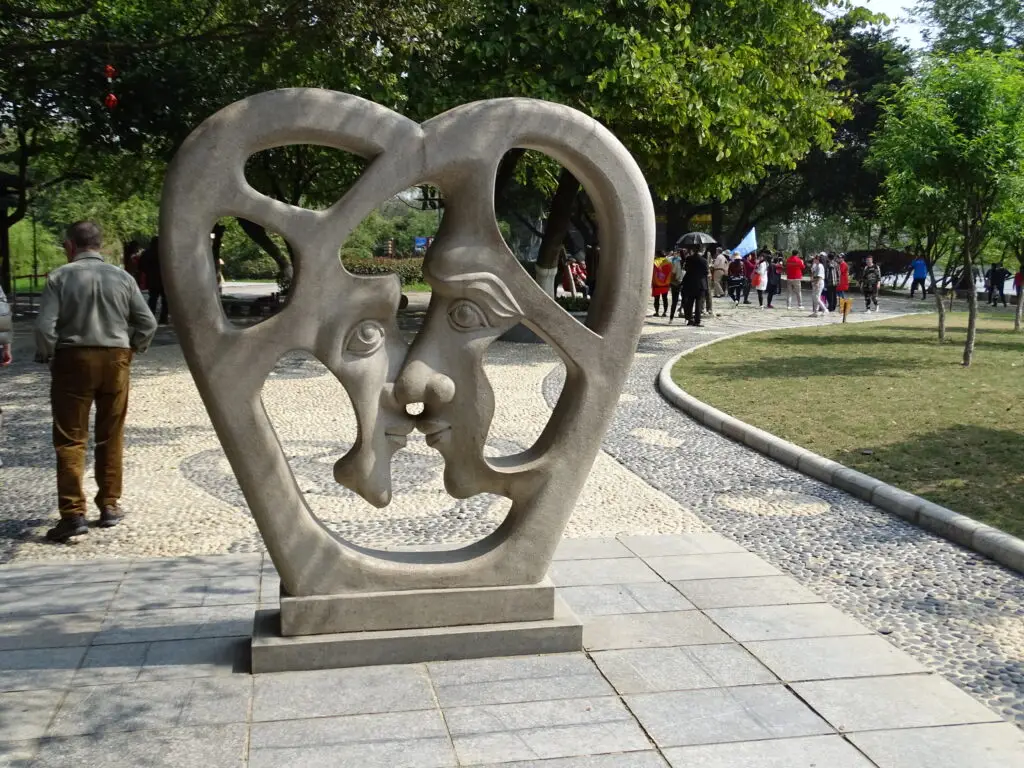
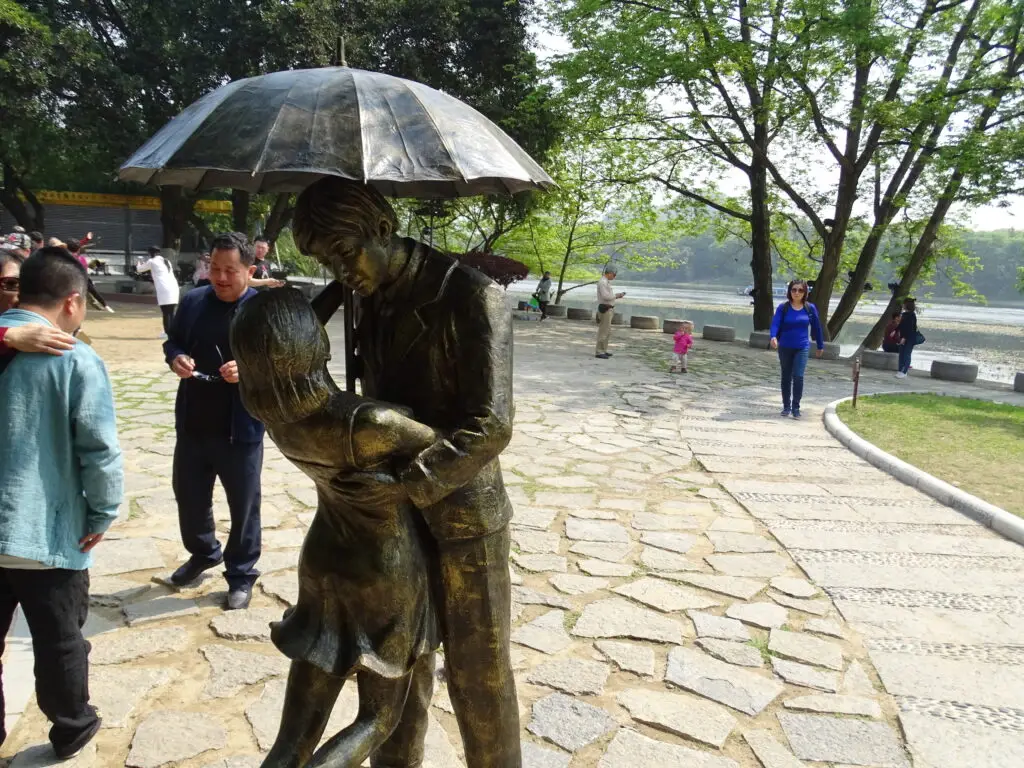
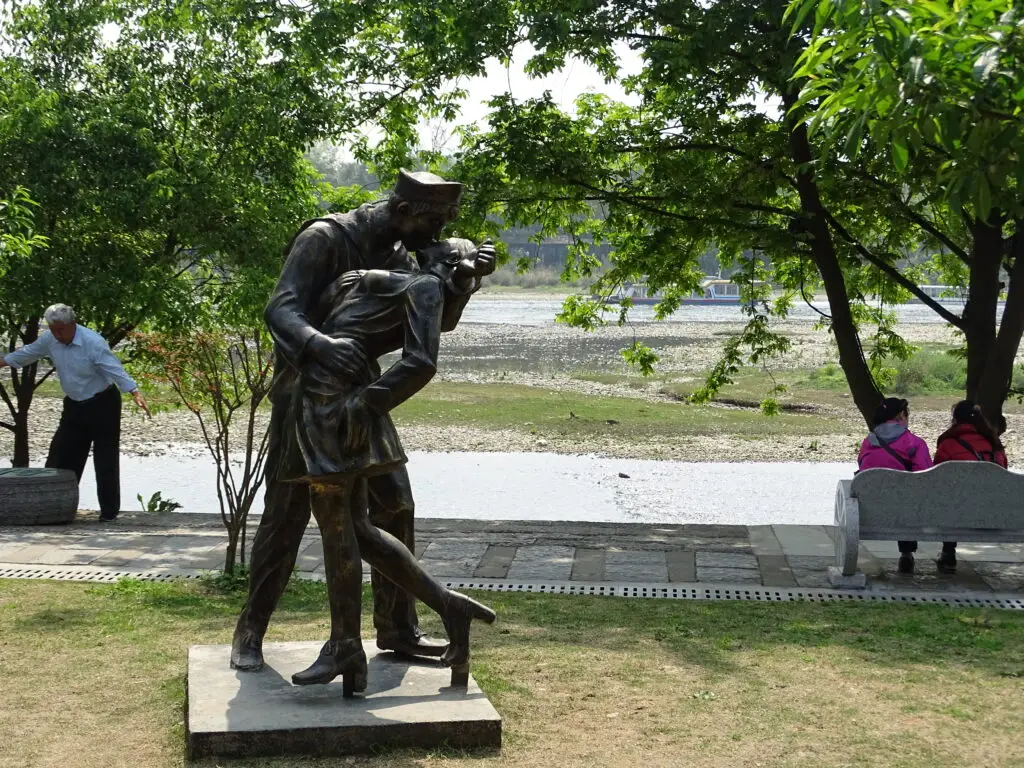
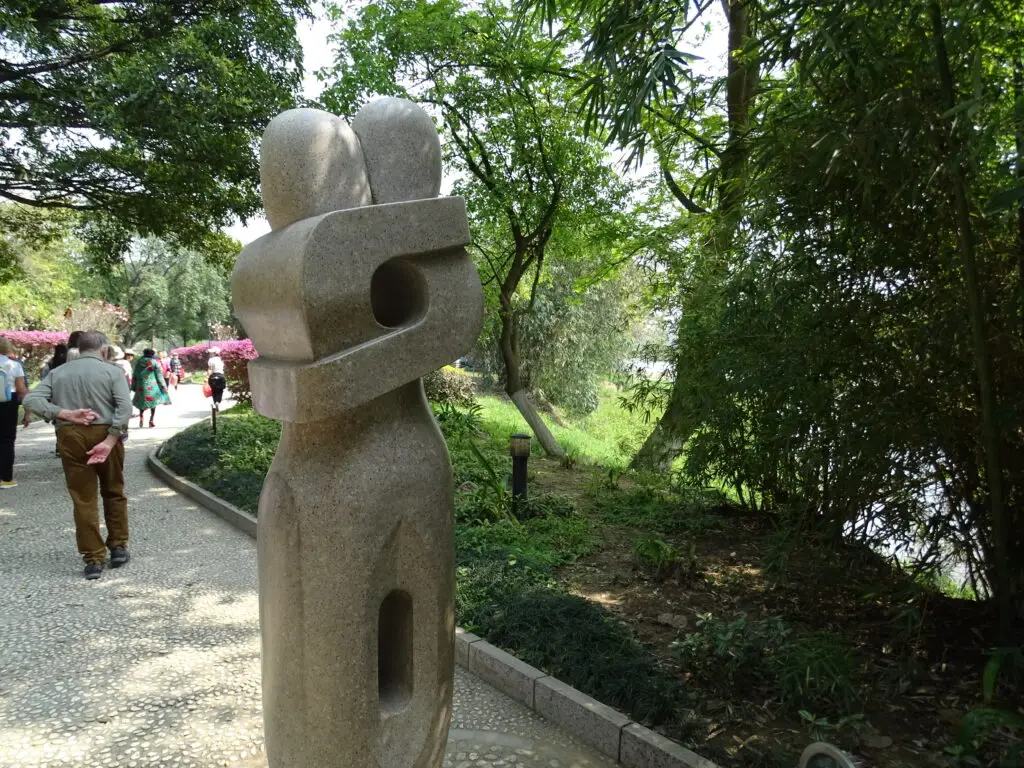
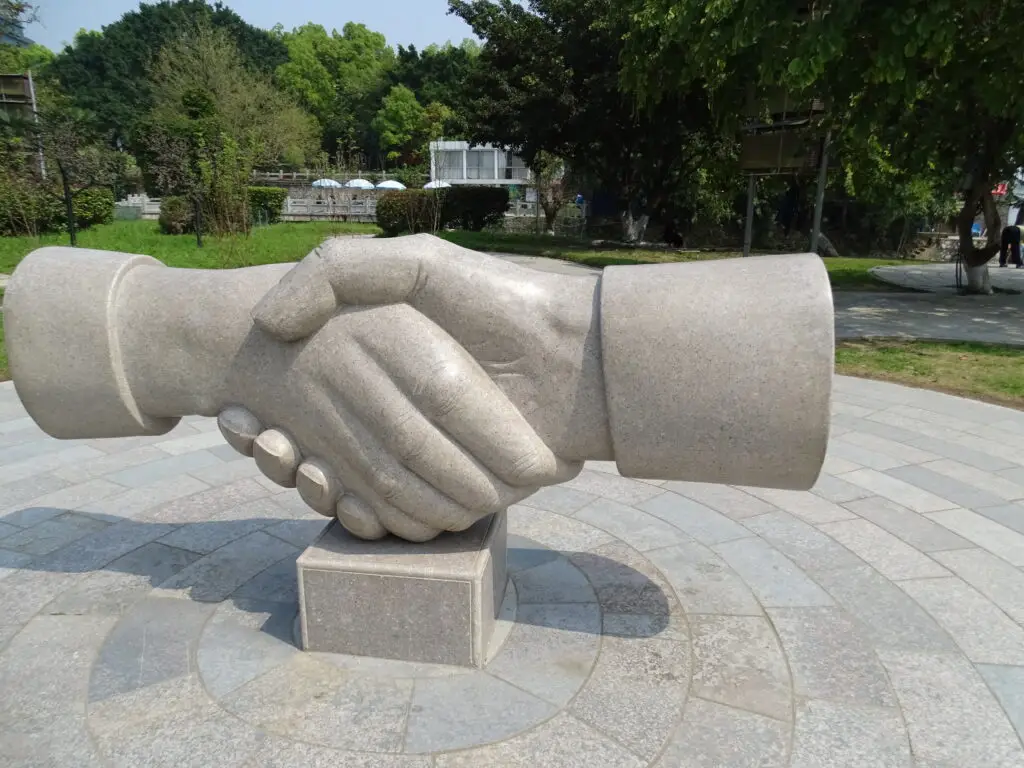
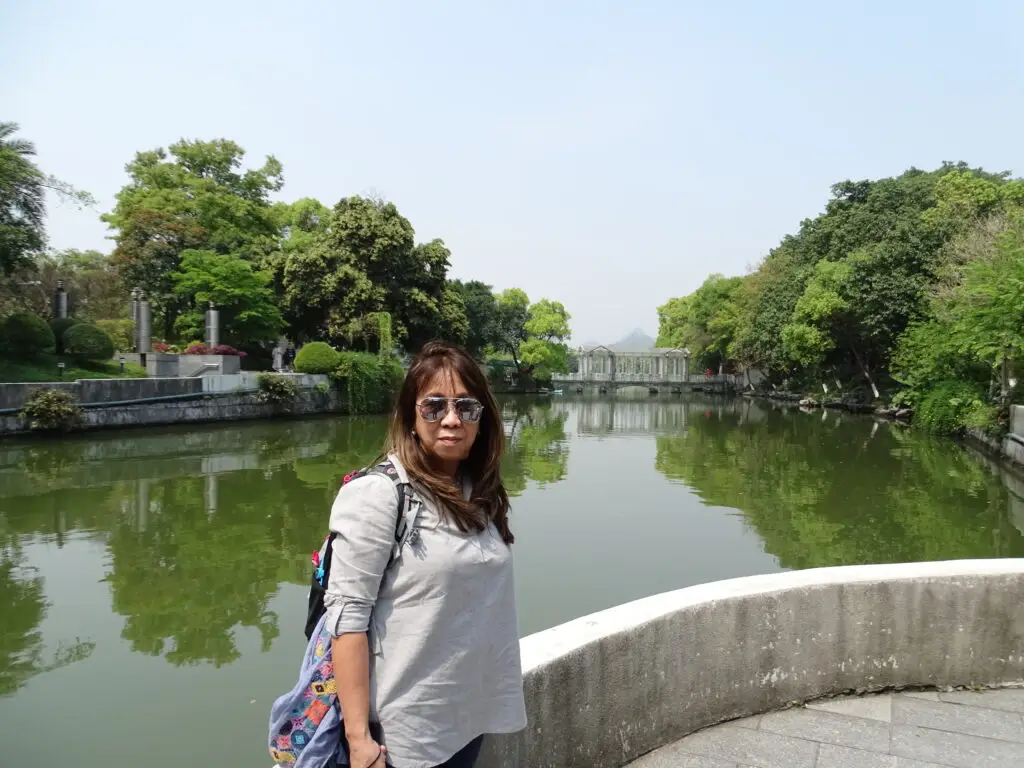
Guilin has Elephant Hill park where you can wander around admiring the lakes and statues, which mostly seemed to have a romantic theme.
Guilin
Guilin
Guilin
Guilin
Guilin
Sun and Moon Twin Pagodas in Guilin park.
Guilin
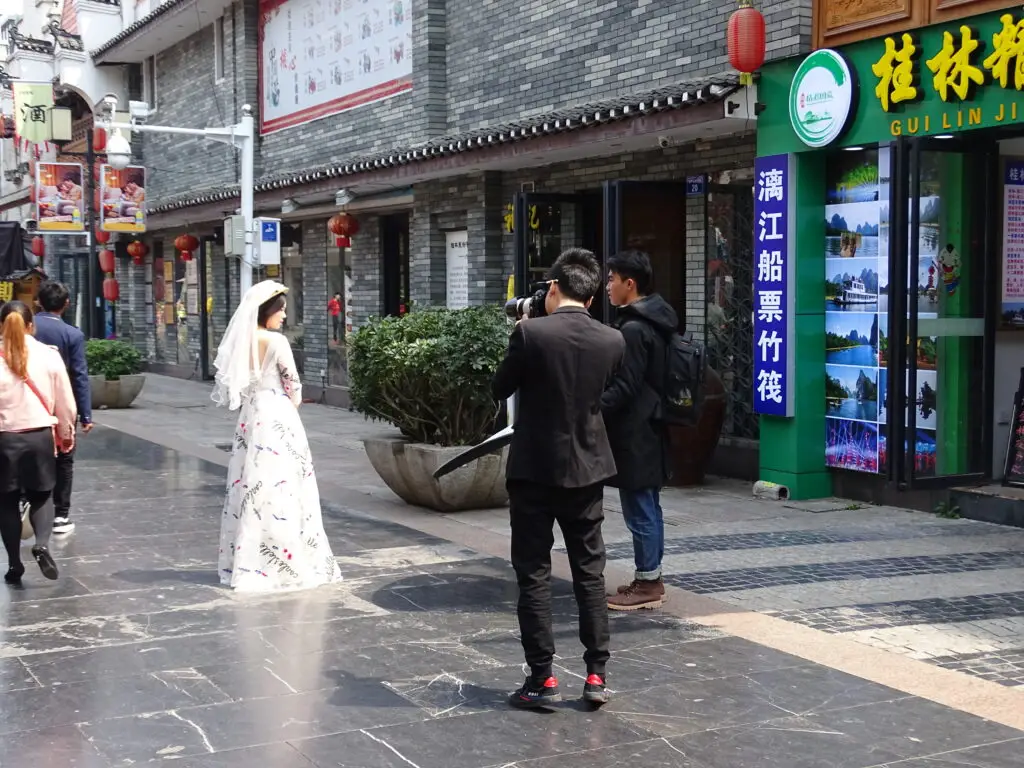
Guilin high street
This is the view across Guilin from a viewing platform on one of the hills that you can climb by stairs. Guilin is known for these limestone peaks which dot the city.
Guilin to Yangshuo
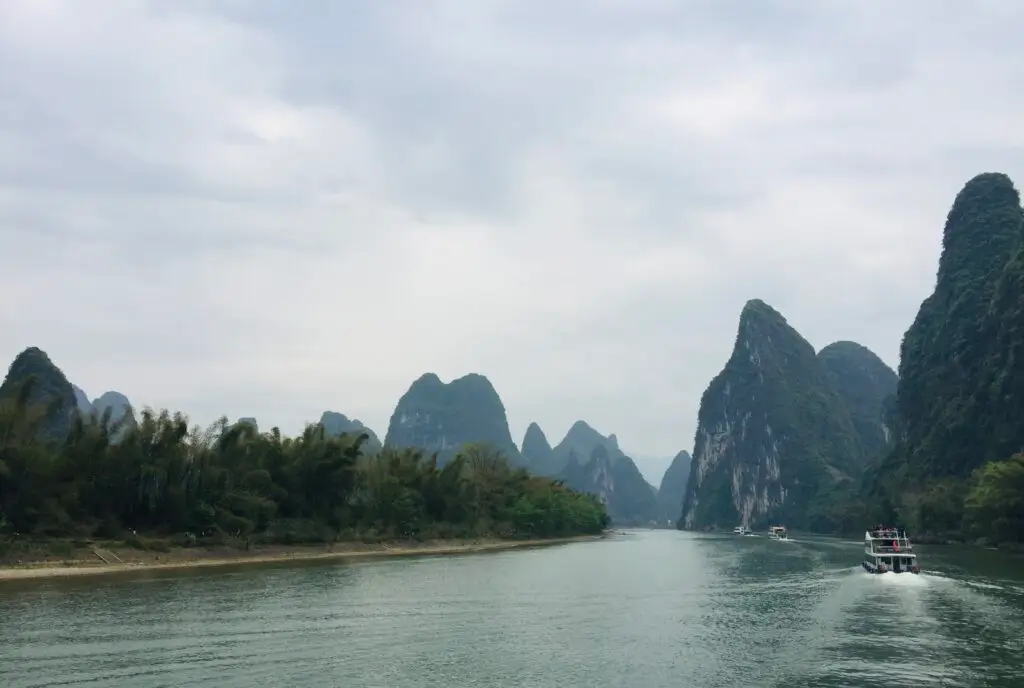
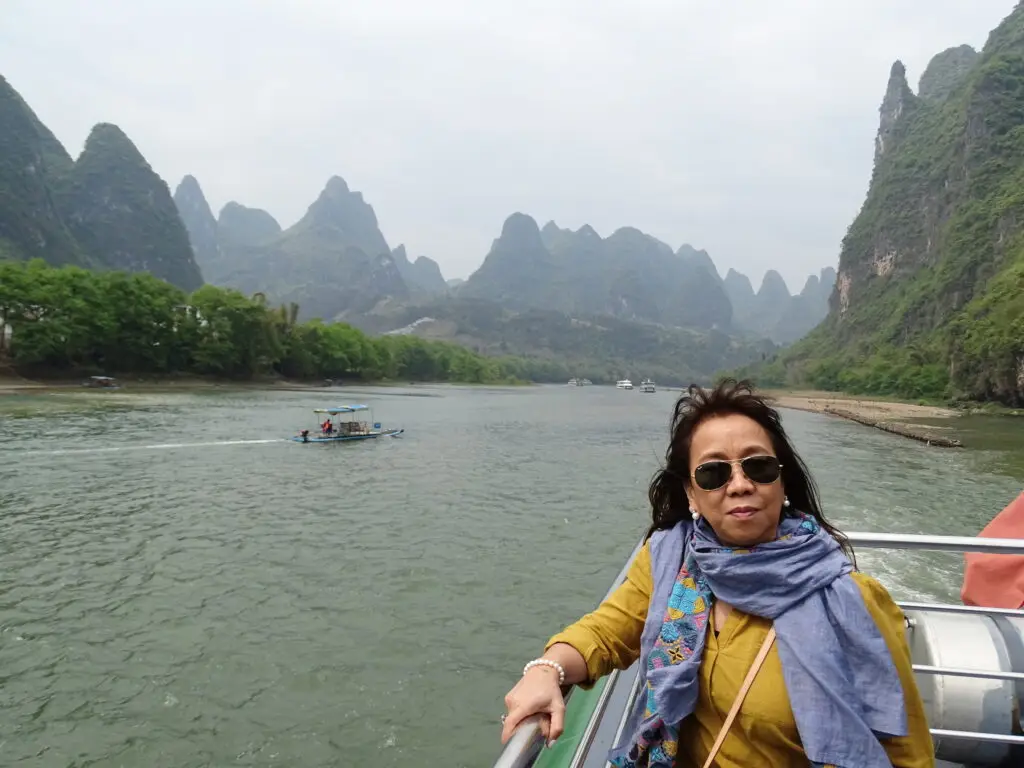
The main purpose of going to Guilin was to board the river boat cruise down the Li river to Yagshuo.
The countryside in this region with its limestone peaks offers great exploration opportunities by foot or bike and has inspired generations of Chinese painters.
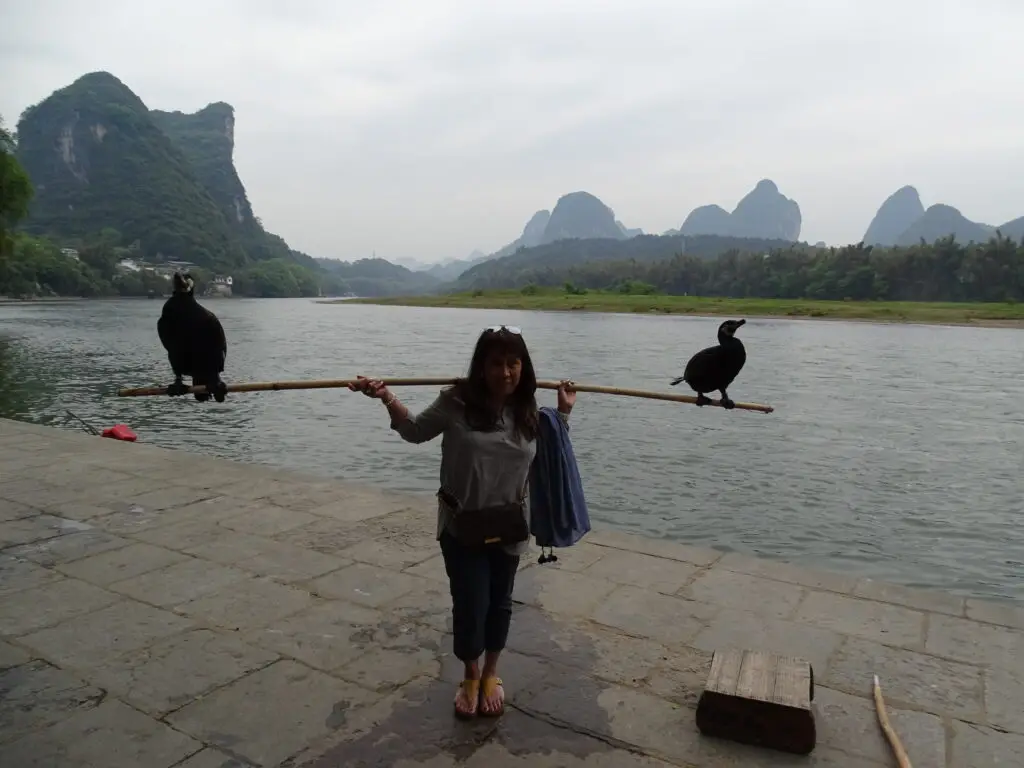
Li River
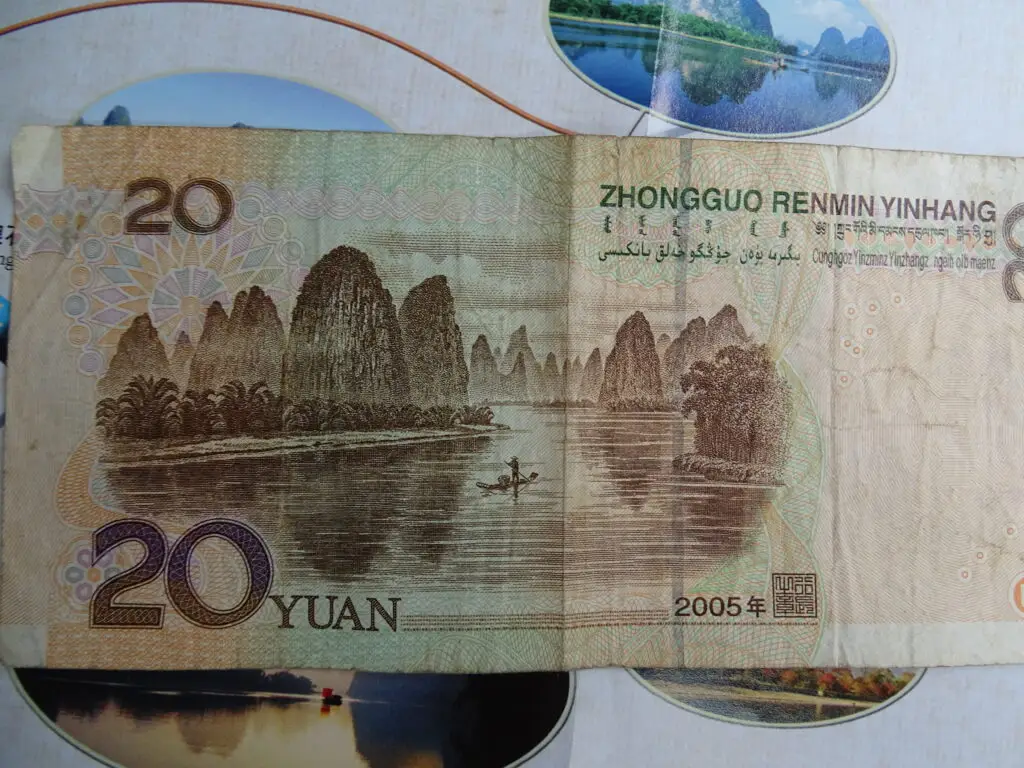
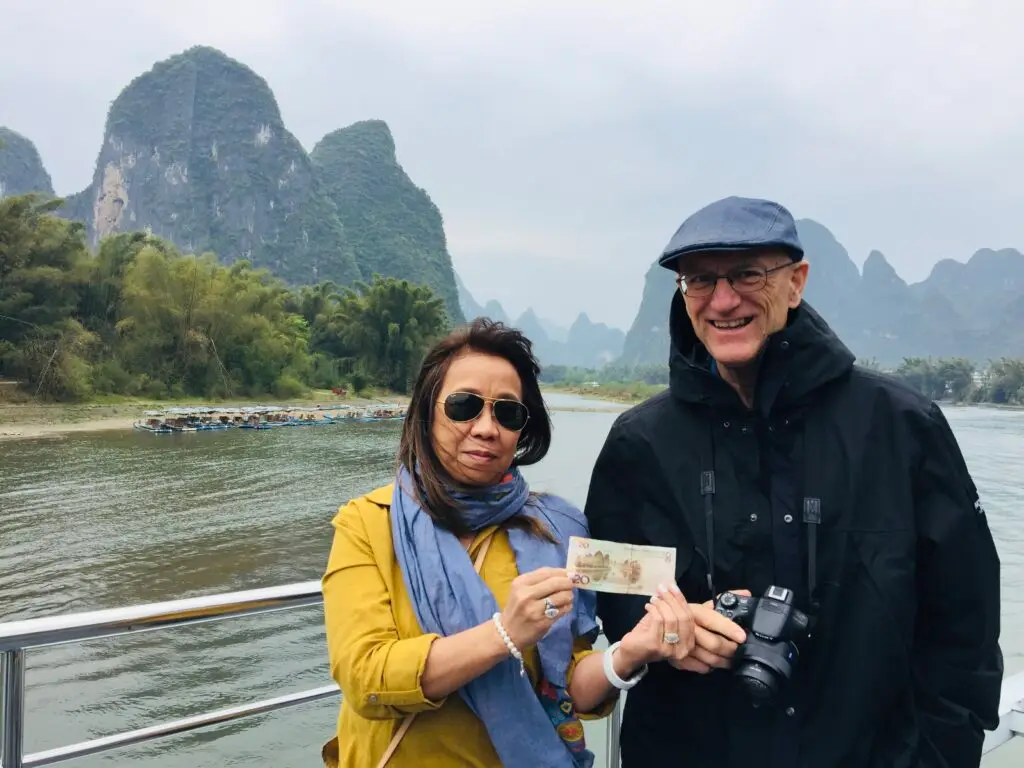
Li river scene on the 20 yuan note
The scenery is so famous that it has been depicted on the back of the 20 yuan note
Yangshuo
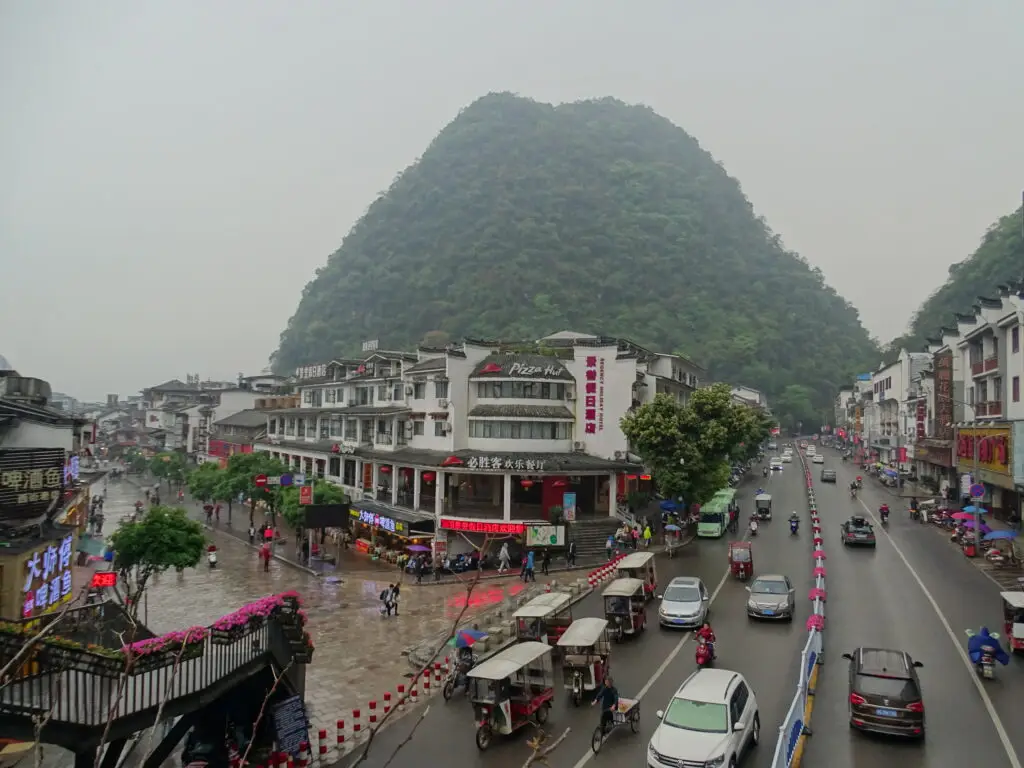
Yangshuo, which was once a peaceful settlement, is now a thriving tourist hotspot full of bars and souvenir shops and touts. This was the view from our hotel room.
Yangshuo
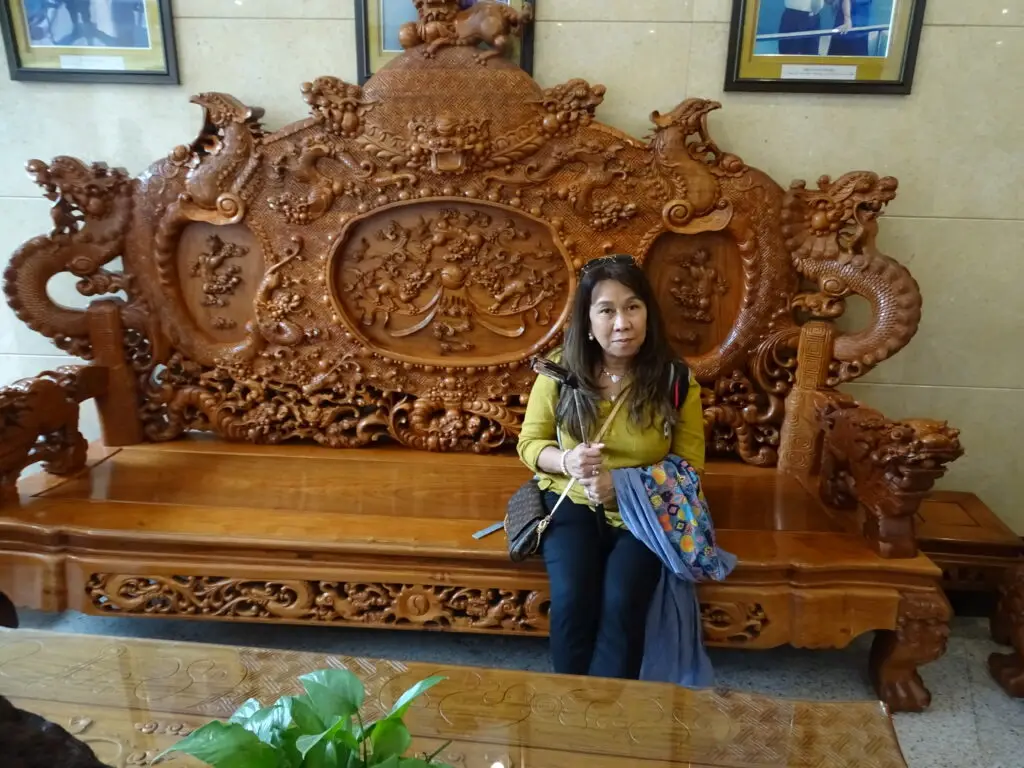
The hotel lobby had this fantastic wood carved seat.
Every day just at daybreak there was a communal dance session held in the main square. This is actually typical of all towns and cities across China. Can you imagine this in England?
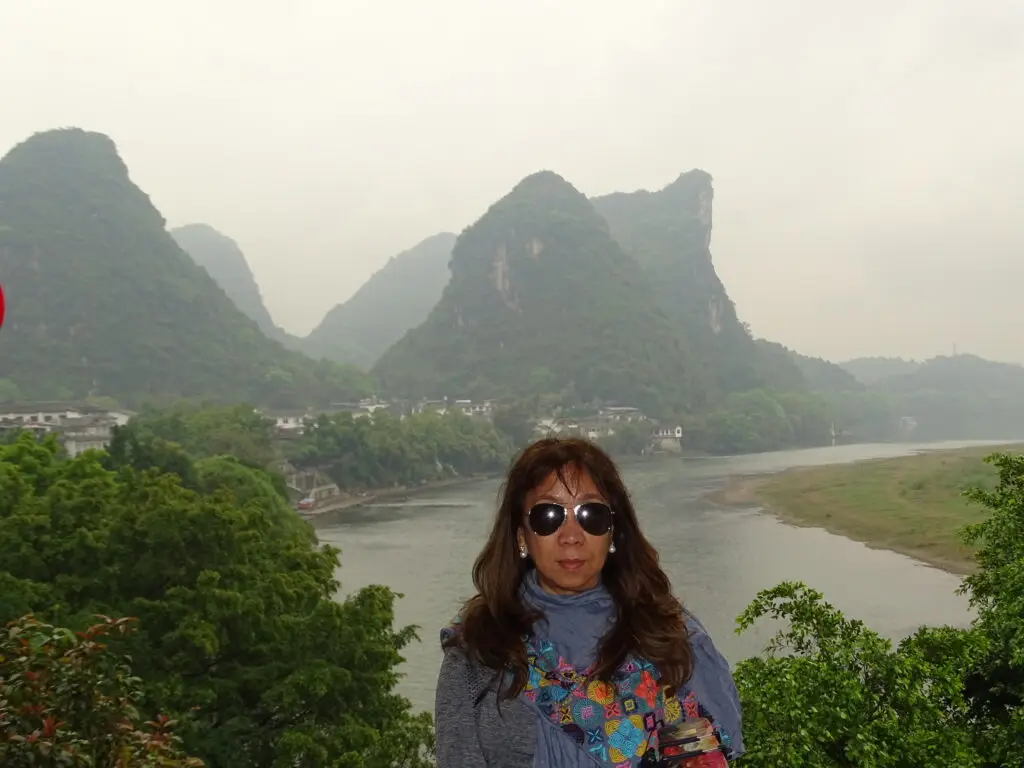
Yangshuo. View back to town from the riverside walk
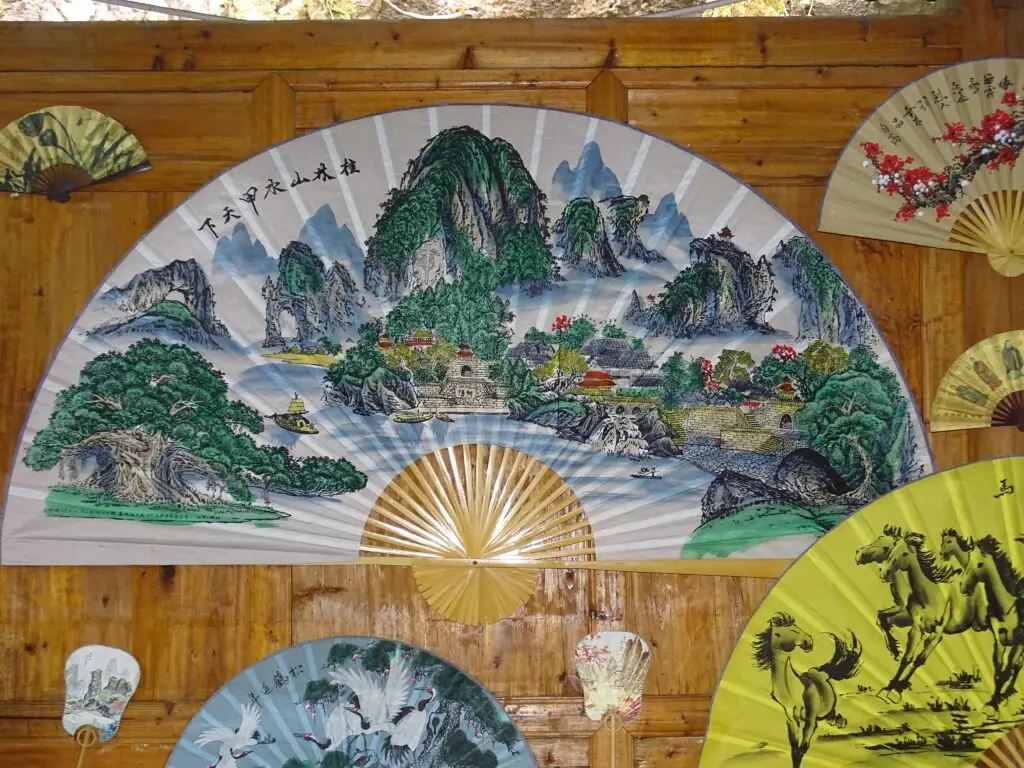
Yangshuo souvenir shop
Yangshuo souvenir shop
Yangshuo souvenir shop
Xian
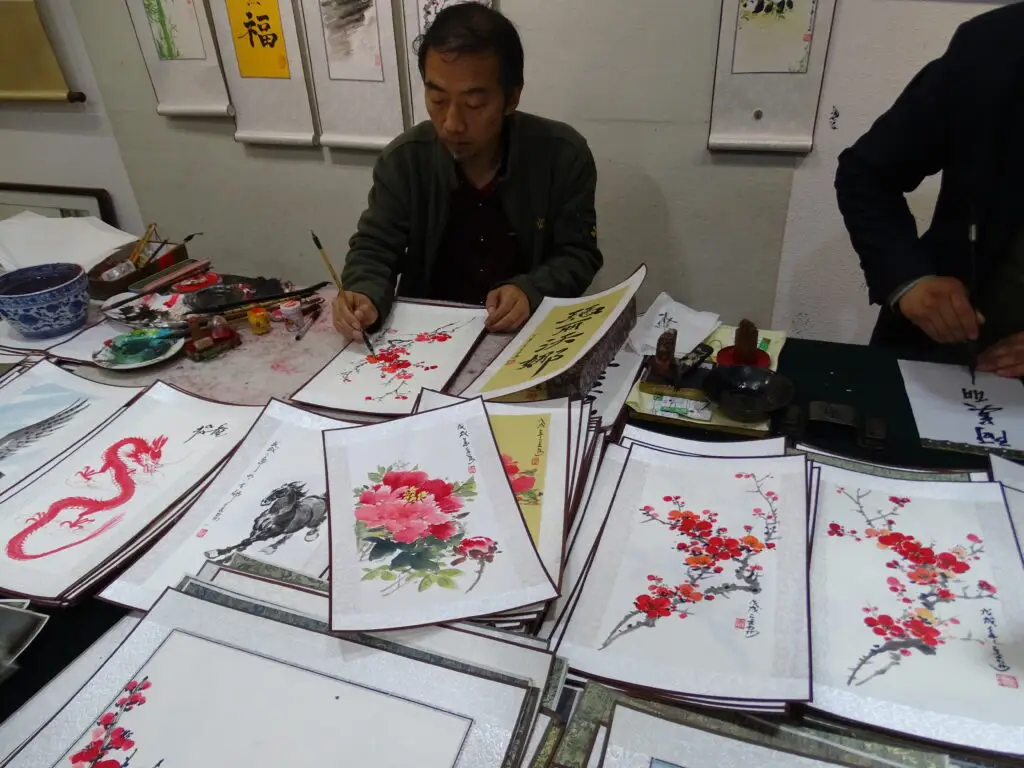
We visited this artisan workshop where they produced exquisite paintings and calligraphy for sale
This is the Small Wild Goose Pagoda. It was built in 707AD (Tang Dynasty) and is an example of Buddhist architecture built during the heyday of the Silk Road. A cultural organisation called the Buddhist Sutra Translation Institute was established here which attracted monks from different countries to translate Buddhist texts.
This fountain and light show area is reputably the biggest in the world and is a permanent display every night. It is in the North Square of the big wild goose pagoda.
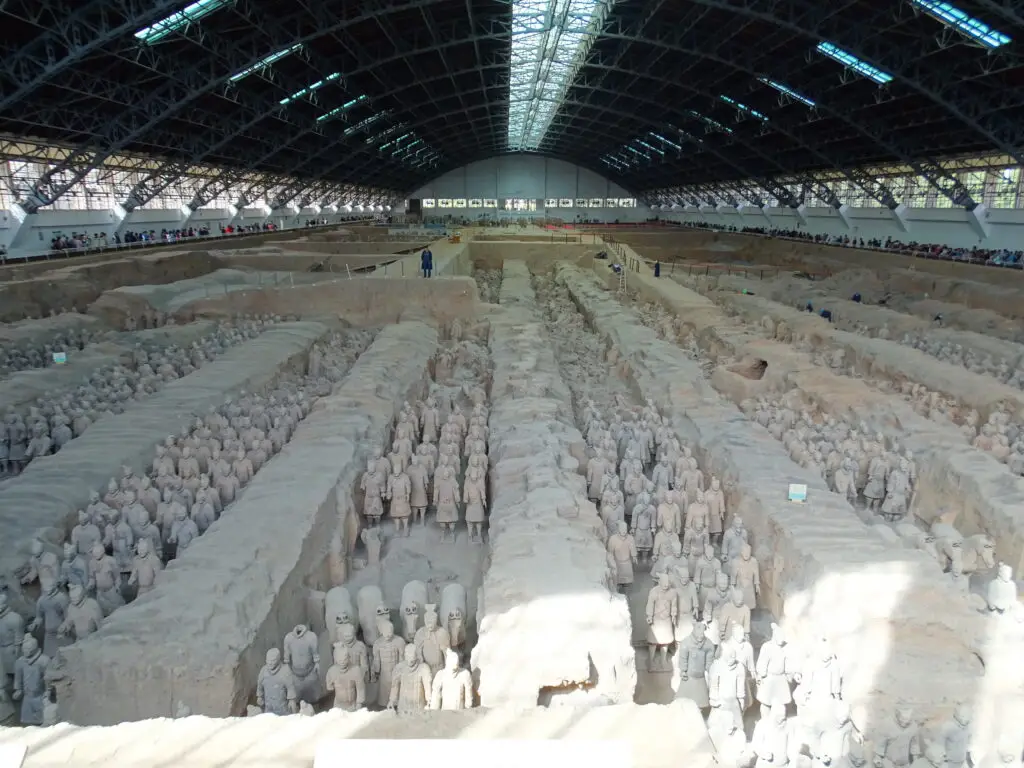
Probably the main visit in Xian is the terracotta army
The flat farmland around Xian is strewn with early imperial tombs, many of which have yet to be excavated.
The terracotta army, however, is not just Xian’s premier site, but one of the most famous archaeological finds in the world. This life-size subterranean army has silently stood guard over the soul of China’s first unifier for more than two millenia, before it was discovered in 1974 by peasants drilling a well and who uncovered this underground vault which eventually yielded thousands of terracotta soldiers and horses in battle formation.
Most archaeologists believe that Qin Shi Huang expected his rule to continue in death as it had in life and so the army would be there to support him in the after life. There are 3 pits on display, the biggest of which, pit 1, contains 6000 warriors of which 2000 are on display.
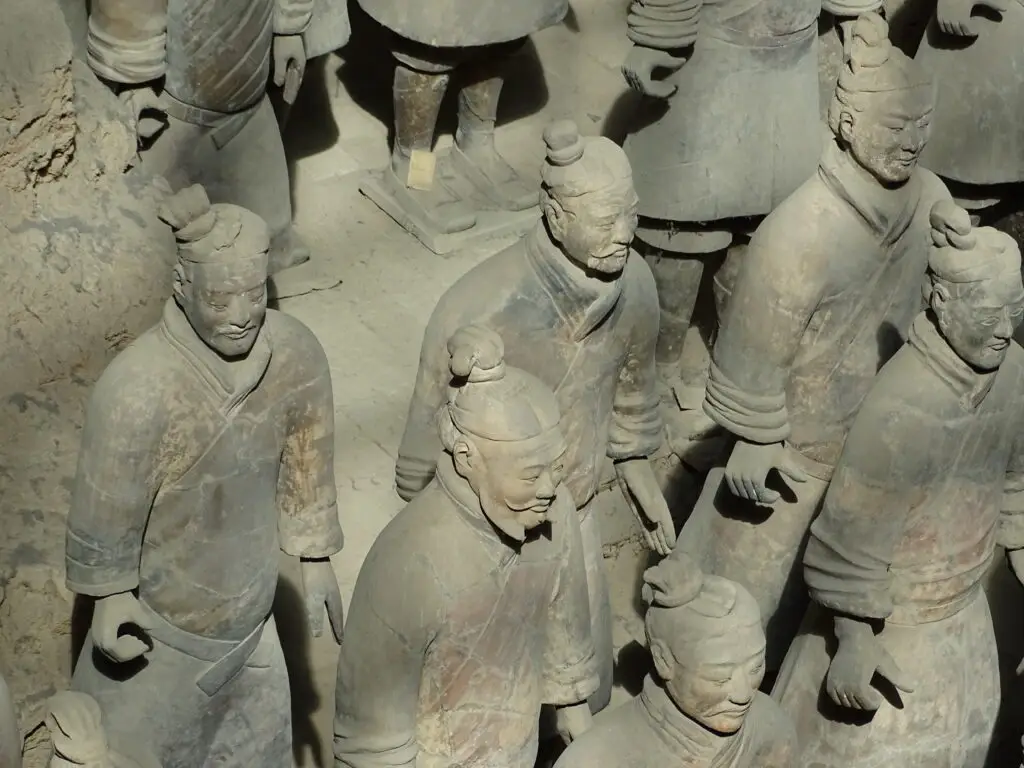
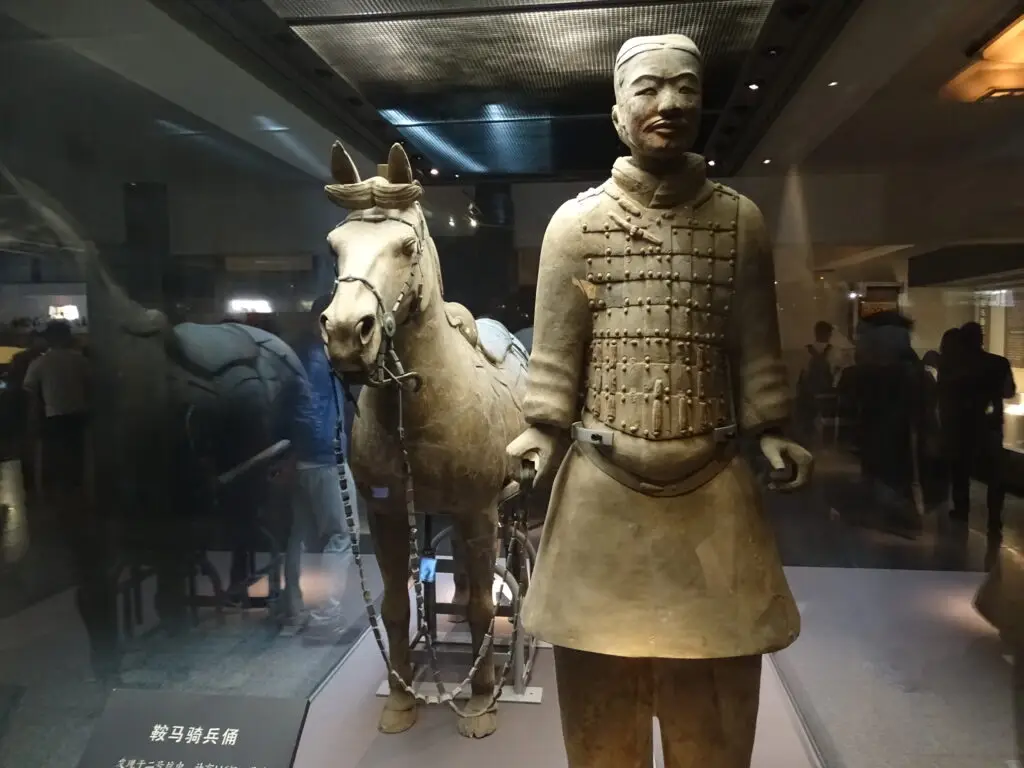
The level of detail is remakable for the fact that no two soldiers faces are alike.
The soldiers and horses are all facing east, ready to do battle.
Some of the figures such as this cavalryman and his horse, can be examined up close revealing the extraordinary level of detail: the expressions, hairstyles and armour are all unique.
This is one of a pair of bronze chariots and horses un-earthed just 20m west of the tomb of Qin Shi Huang
This sword that was unearthed is still as good as new thanks to chrome-plating!
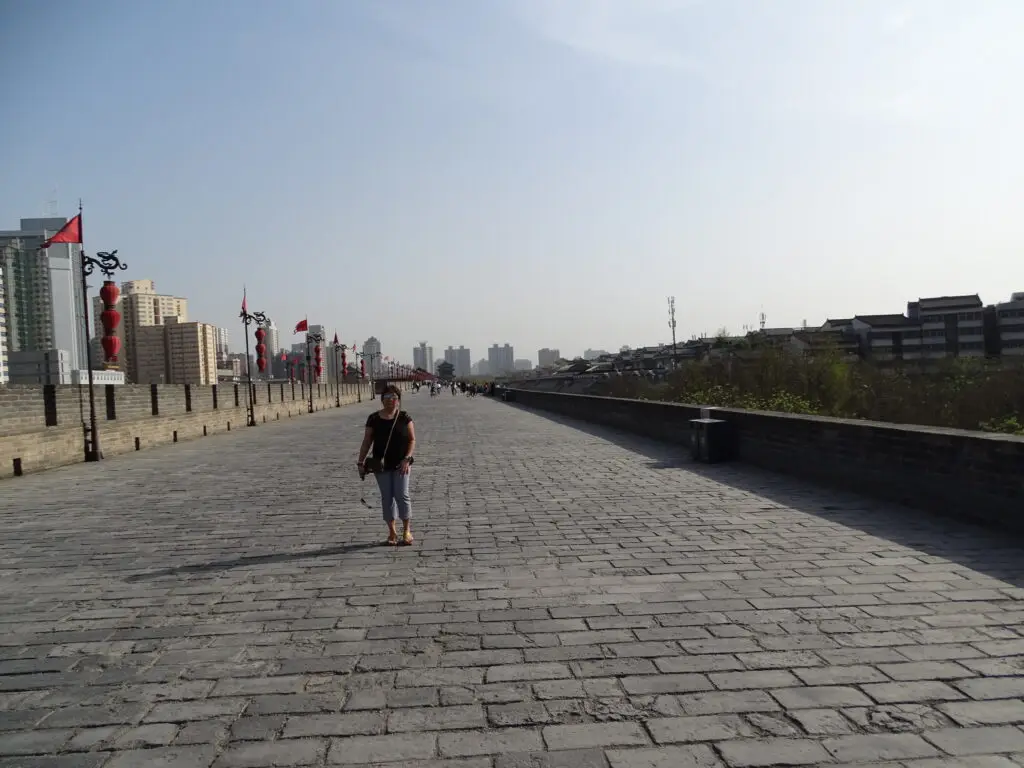
The Xian city walls are still intact. Built in 1370 during the Ming dynasty they are 12m high and surrounded by a dry moat and form a rectangle 14km in perimeter. As you can see there is plenty of space to walk along the top or even go around on a hired bicycle.
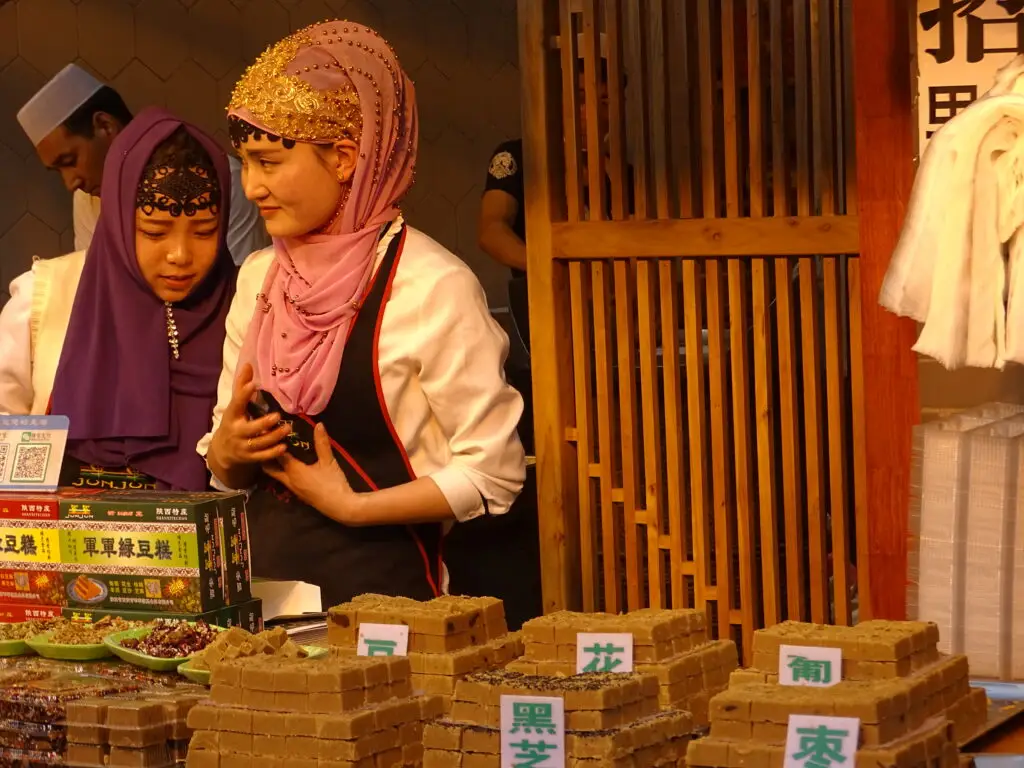
There is a muslim quarter marketplace in Xian. By law, the Muslim women are not allowed to wear the veil.
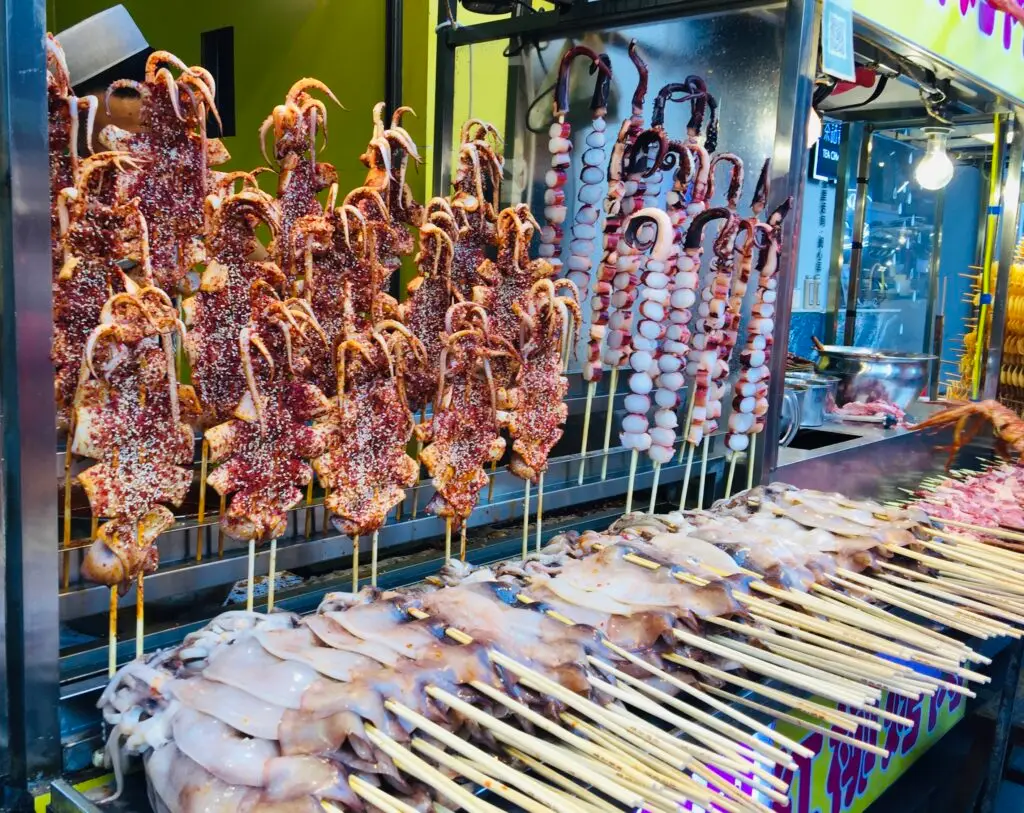
I did not fancy trying any of these!
This statue was in the Muslim quarter
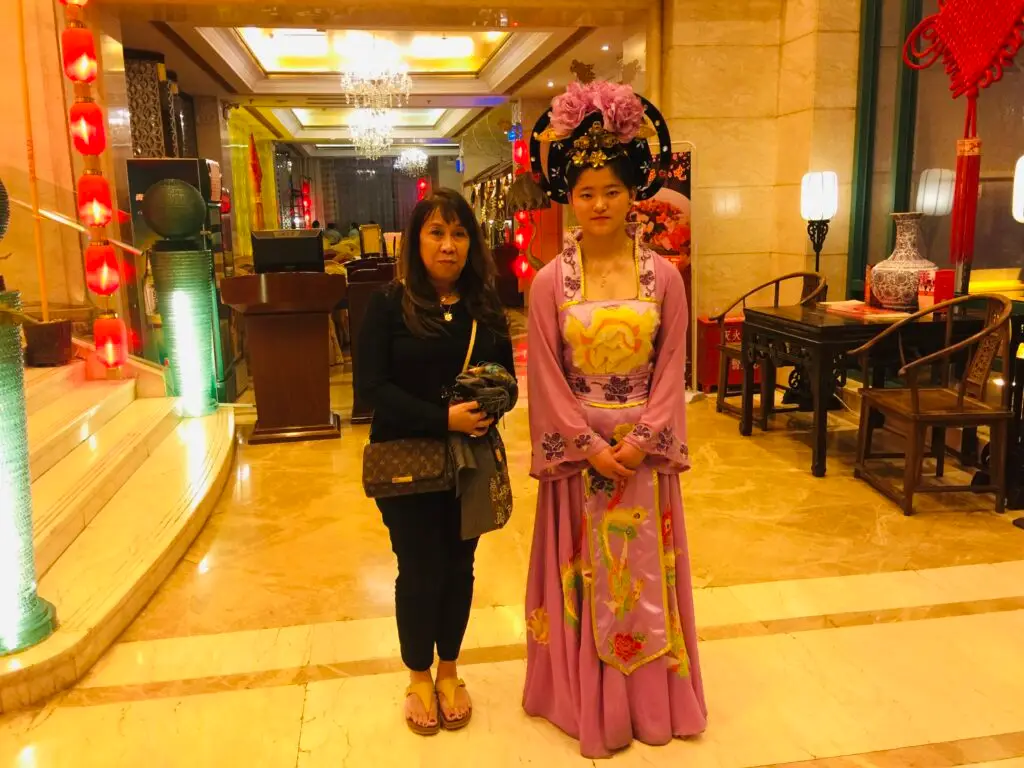
Tang Dynasty show
In the evening we went to a Tang Dynasty show
Beijing
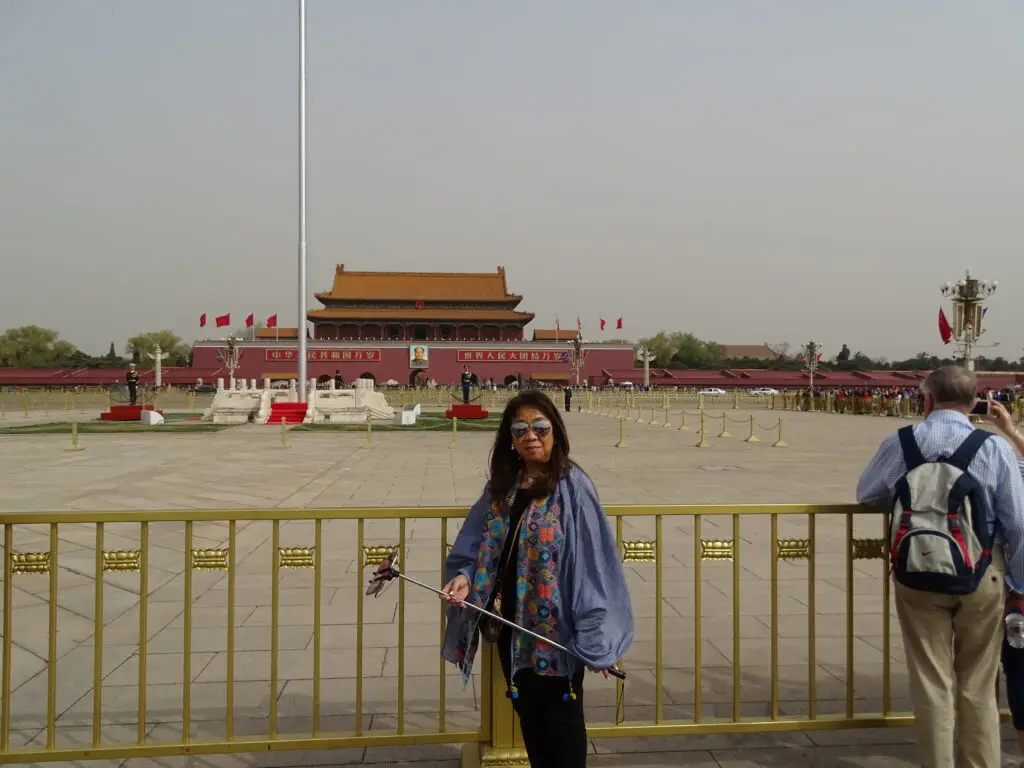
Tianamen Square
Tianamen square is one of China’s most infamous political landmarks and the world’s largest public square (440,000 square meters).
It is the symbolic center of the Chinese universe and houses the Forbidden City – the largest palace complex in the world.
There are lots of security cameras and a very visible police presence in the square.
The Chairman Mao Memorial Hall is a Mausoleum containing Mao Zedong's embalmed corpse on public display. It was constructed soon after Mao died in 1976 and is in the middle of Tianamen square.
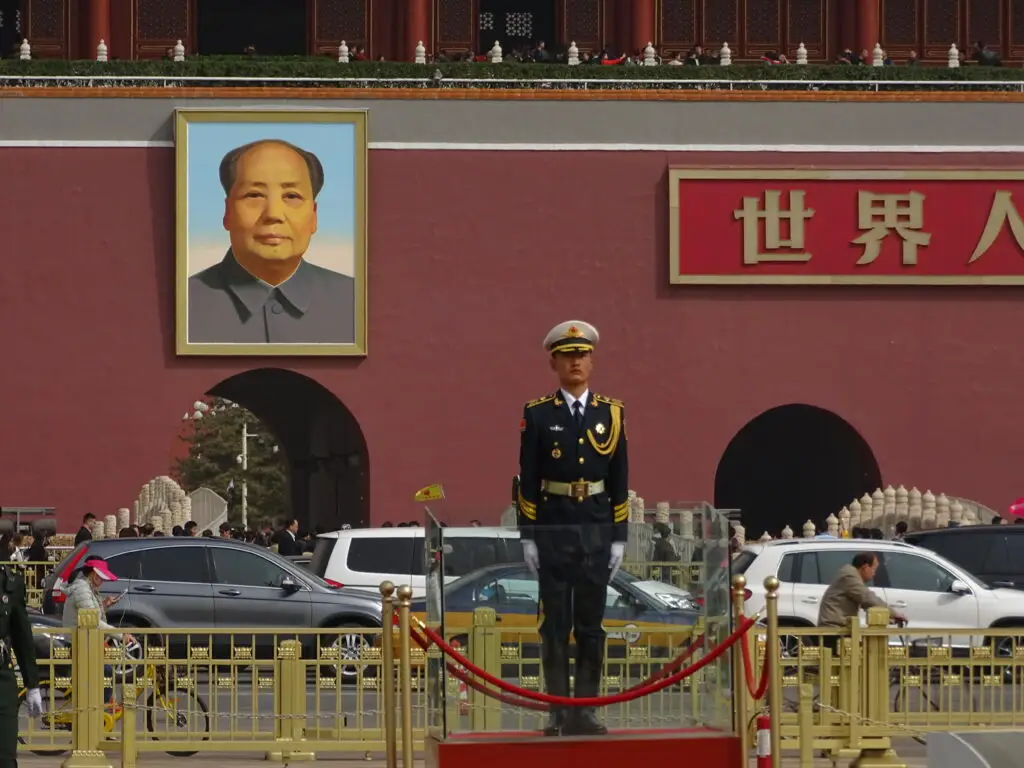
The gate of Heavenly peace, north of Tianamen square, was formerly the largest of the four gates of the Imperial City Wall and was where Mao proclaimed the peoples republic of China in Oct. 1949.
There is a giant framed portrait of Mao over the gate. The Guard in front of the gate remained perfectly still for several minutes while we were there.
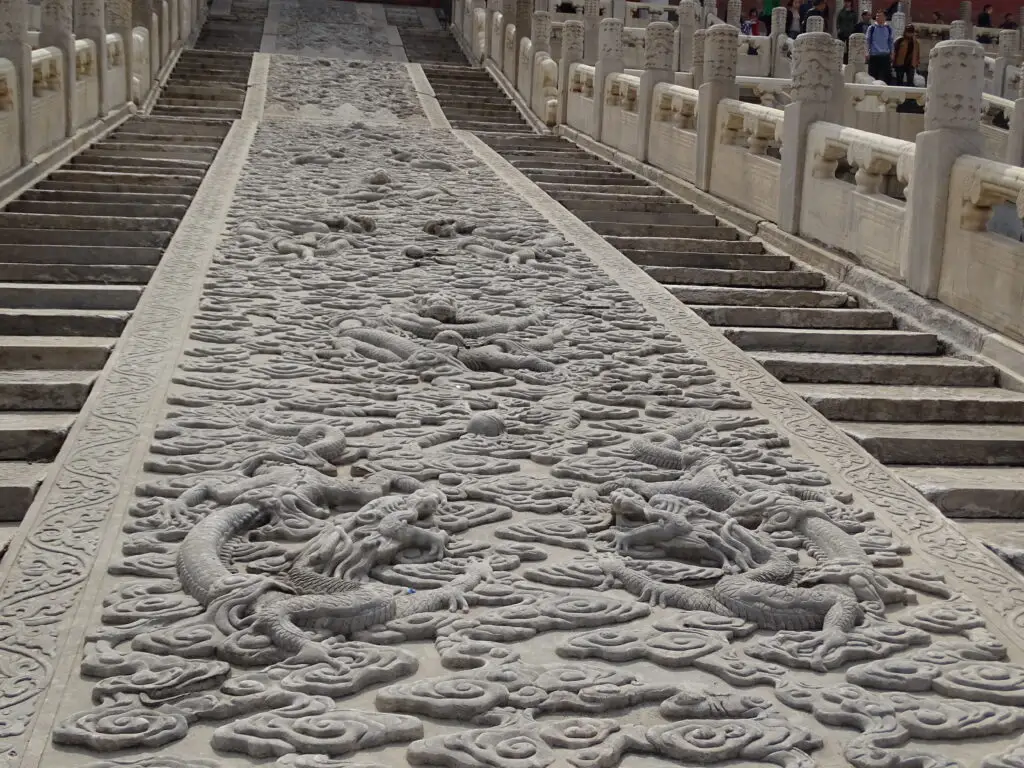
The forbidden city is to the north of Tianamen square and only about half is open to the public with the rest off limits. This is the entrance to the hall of supreme harmony inside the forbidden city.
This shows the stairway to the hall of supreme harmony in more detail.
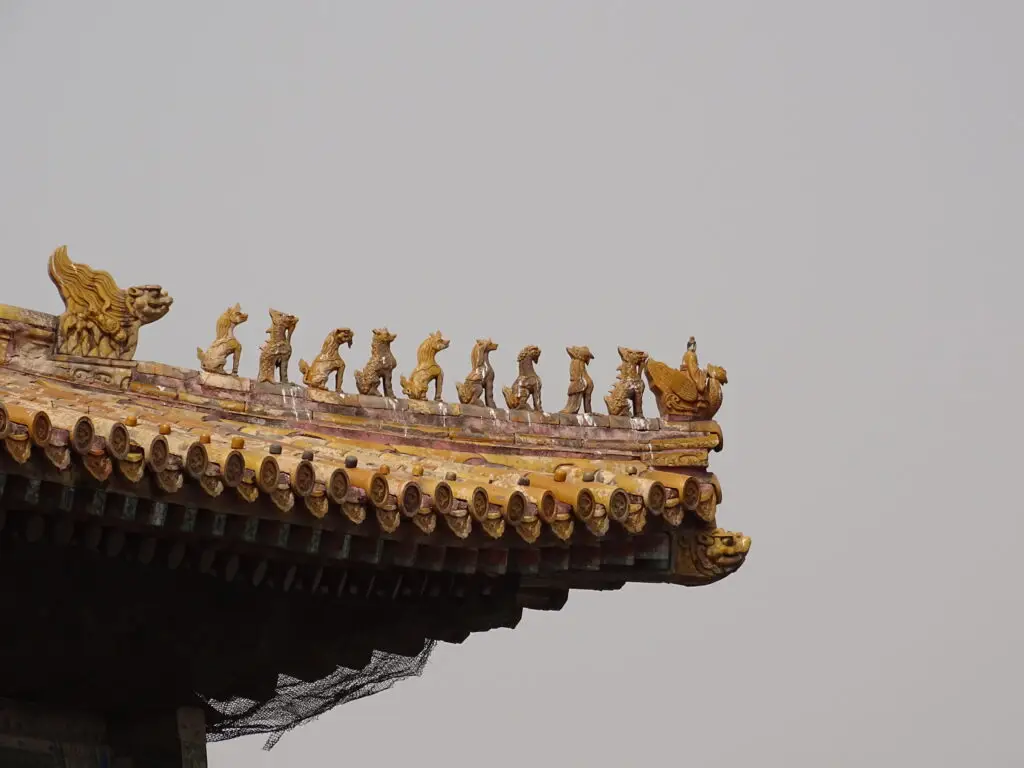
Many of the roofs have these so-called roof guardians.The imperial dragon is at the tail of the procession, which is led by a figure riding a phoenix followed by a number of mythical beasts. The more beasts, the more important the building.
Pairs of lions guard the important buildings. The male has a paw placed on the globe (representing the emperors power over the world), and the female on the right hand side has her paw on a baby lion (representing the emperors fertility).
This picture shows the roof guardians on every roof edge.
The national stadium (or 'bird's nest) is in the olympic park built for the 2008 olympic games. It was designed by Swiss architecture firm Herzog and Meuron in consultancy with artist Ai Wei Wei.
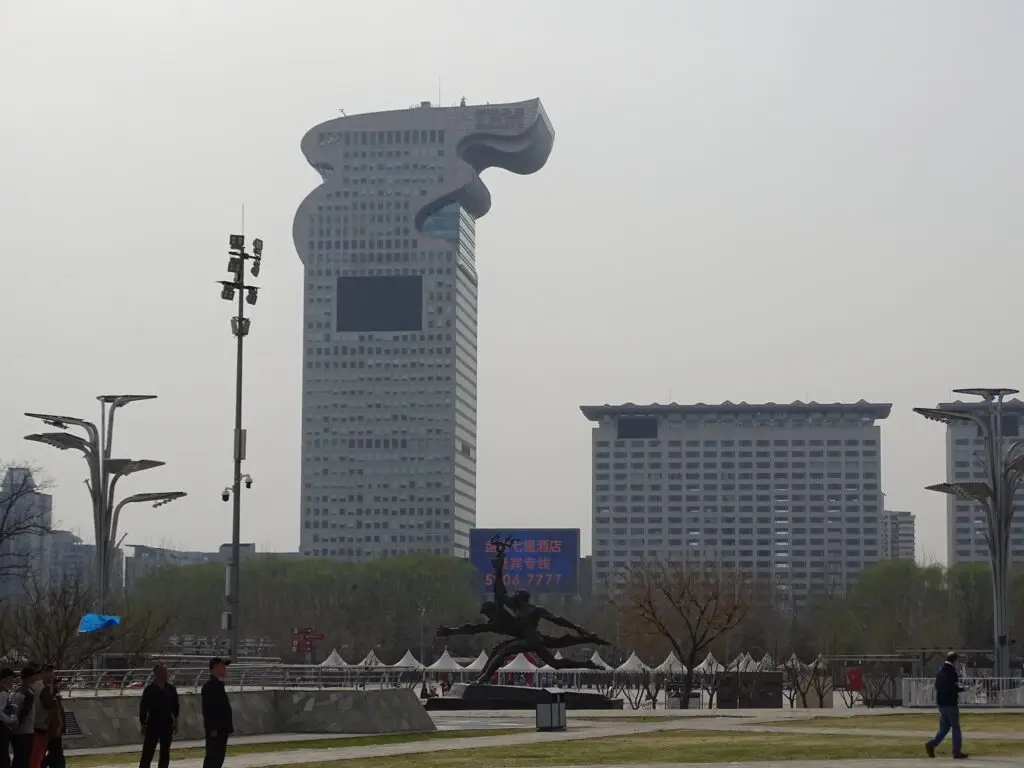
These are some of the other buildings in the olympic park.
The Great Wall
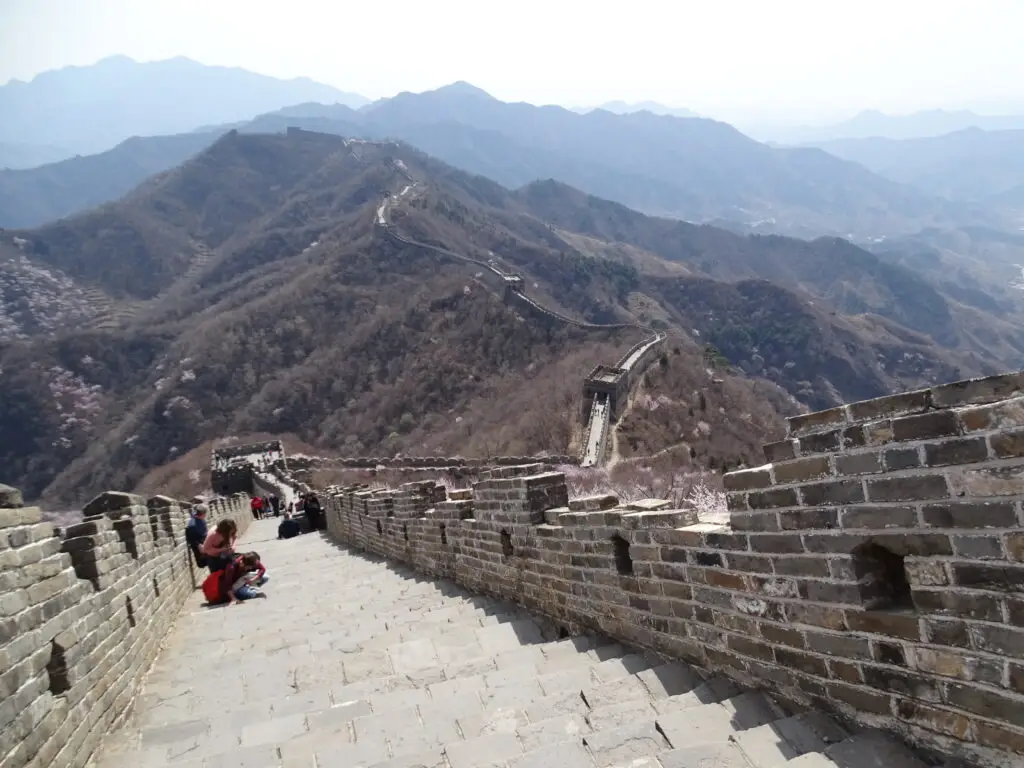
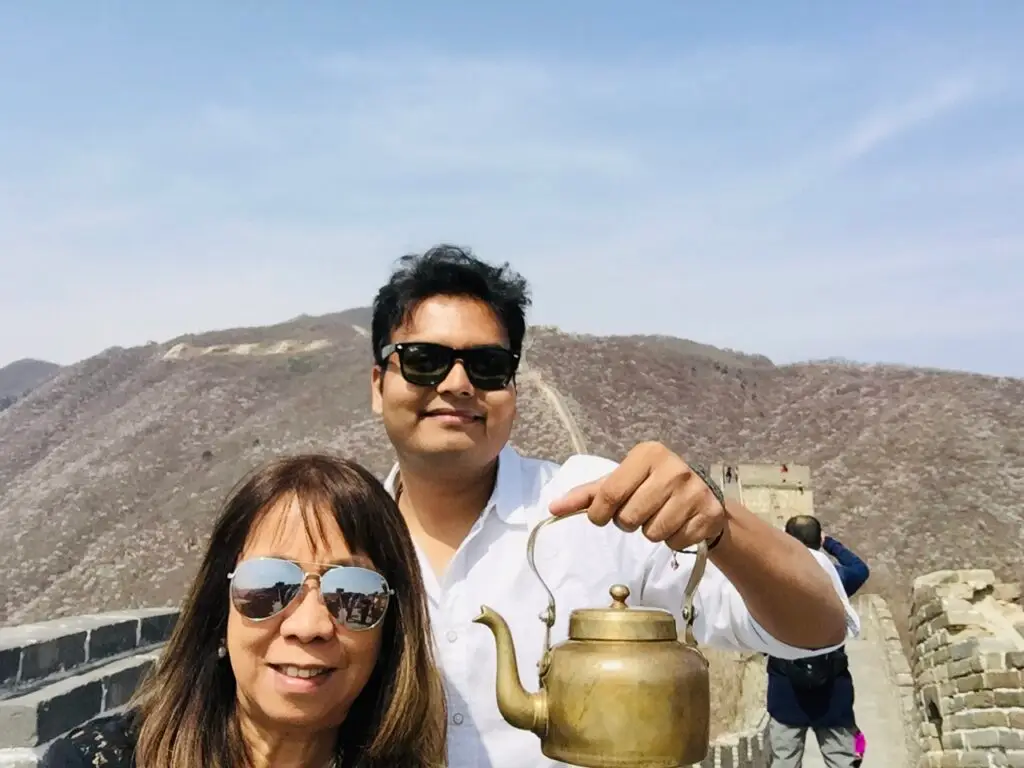
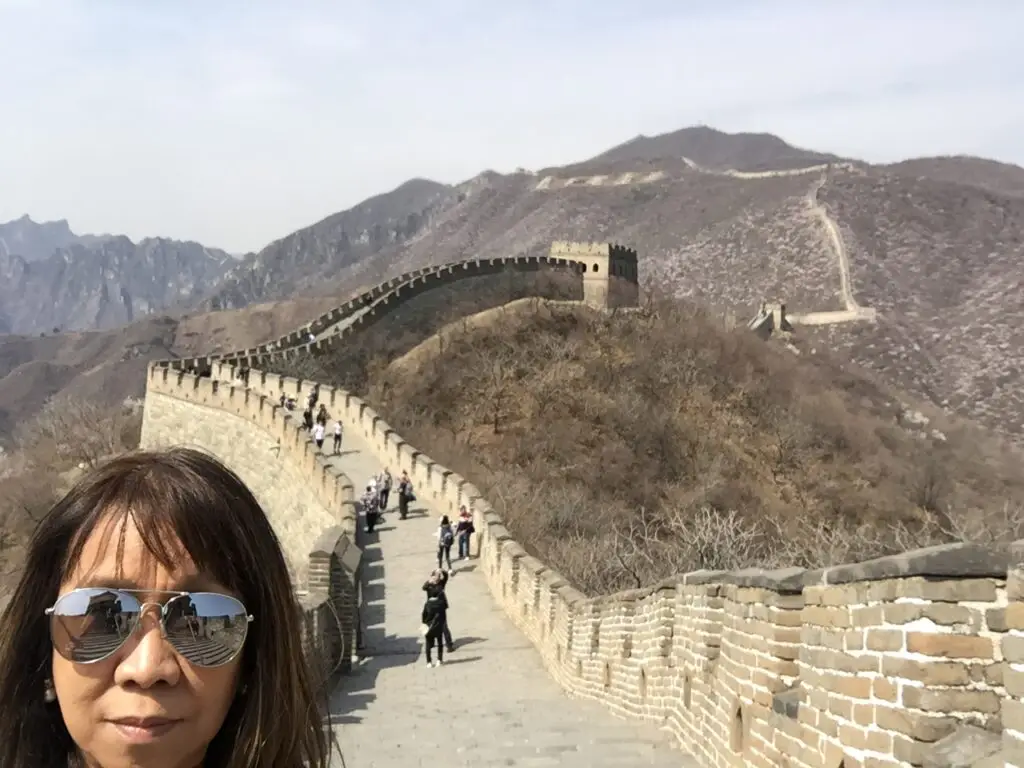
The Mutianyiu section of the great wall is a 90 minute coach ride from Beijing to the north. This section was built in 1404 and renovation was started in 1983 and then opened to visitors in 1988.
The final incarnation of the wall was during the Ming dynasty (1368 – 1644) when two to three million people toiled on it to great human cost.
During this period it was home to around one million soldiers housed in the many guard houses built along its length. The wall was never one continuous structure however, and when Genghis Khan took Beijing in 1215 he just rode through the inevitable gaps.
I met this guy from India who travels the world on his own with a kettle
Back in Beijing, we saw this show in the evening from the Chinese Suining Acrobatic Team
Most impressive was this display of motorcycling inside a ball cage. No less than 8 all at the same time!.
Our tour guide said that every once in a while there is a big crash and they all spend 6 months in hospital before starting again.
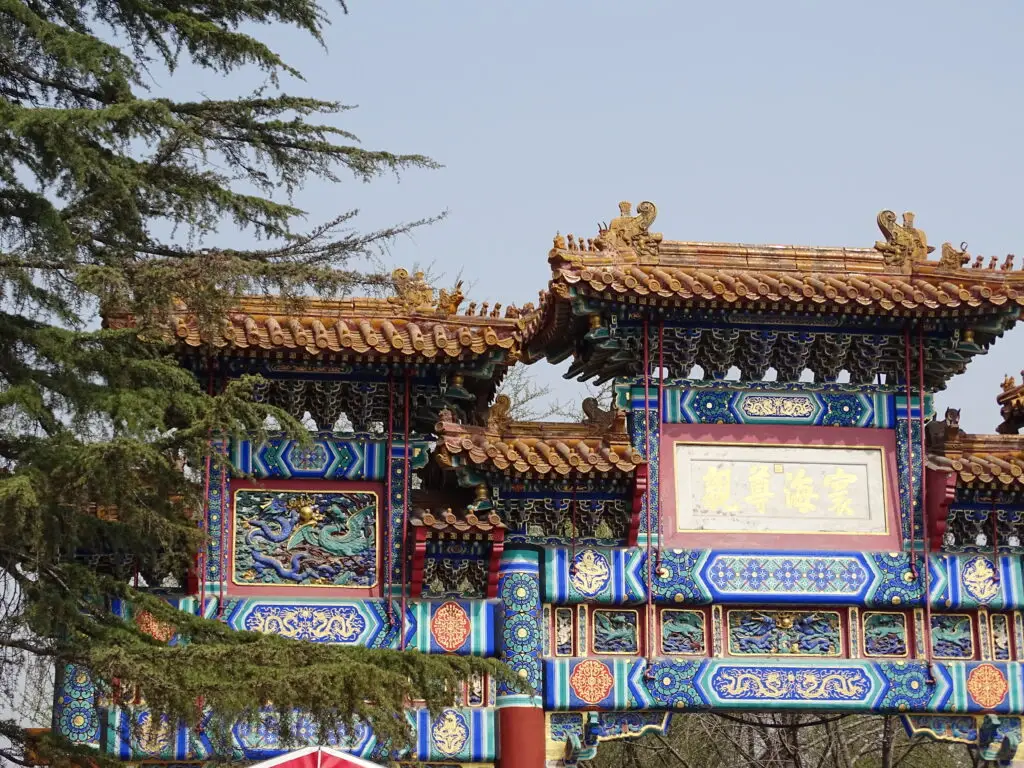
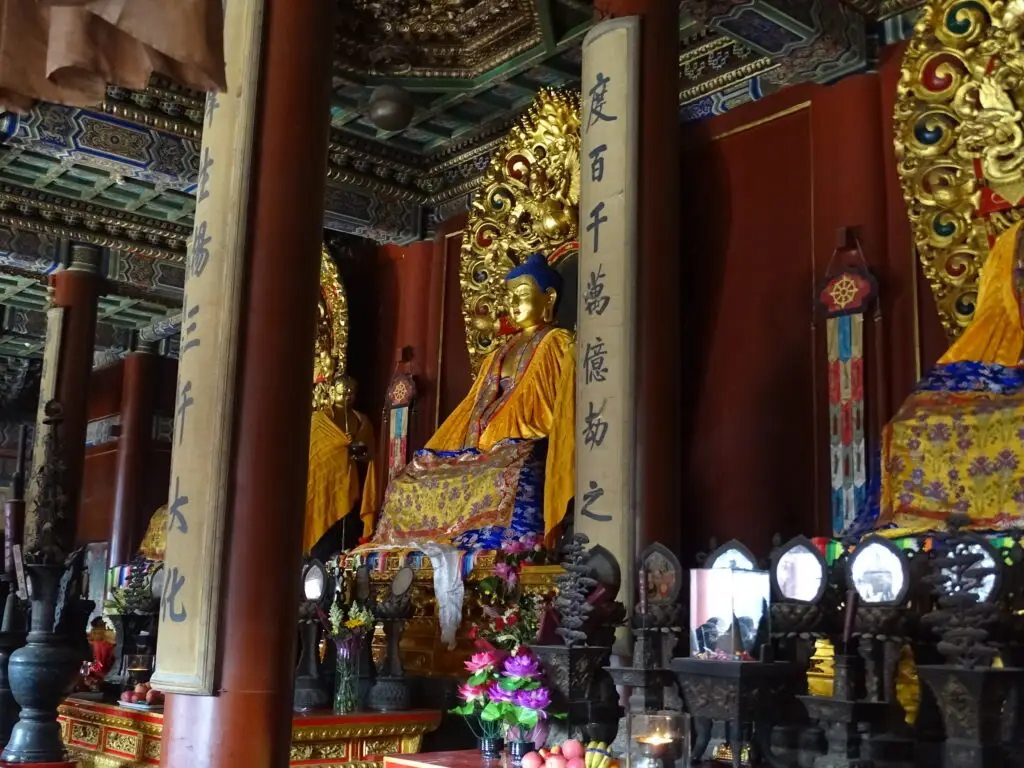
The Lama temple in Beijing is the most renowned Tibetan Buddhist temple outside Tibet.
The temple was converted to a lamasery in 1744 and houses three enormous Buddha statues.
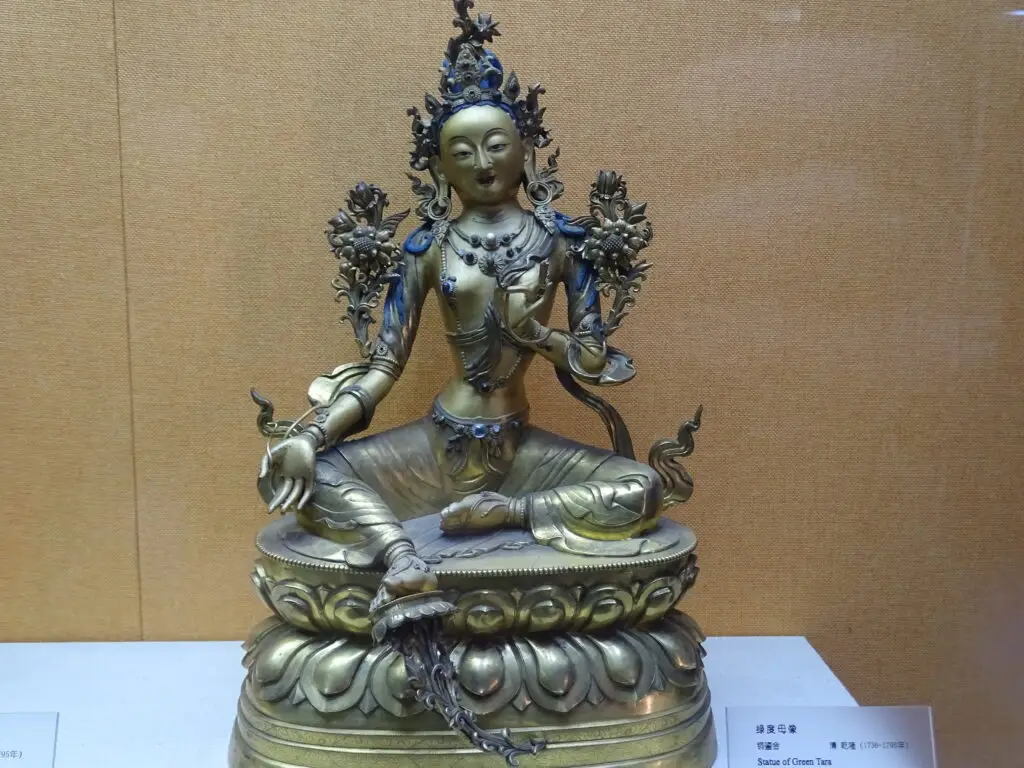
Tara is the most beloved of all the female enlightened beings in the Tibetan Buddhist pantheon. The essence of awakened love and compassion, she is known as “the mother of all the buddhas” and “she who ferries beings across the ocean of samsara.”
The Temple of Heaven Park is a 267-hectare park containing several of these temple halls. The bases are square symbolising Earth and the hall is round symbolising Heaven.
We went to this Chinese Opera on the final night. What can I say?