After our Kilimanjaro trek, we did a two day Safari: one day at each of the national parks of Tarangire and Ngorongoro.
Map of Kilimanjaro, Tarangire, and Ngorongoro national parks.
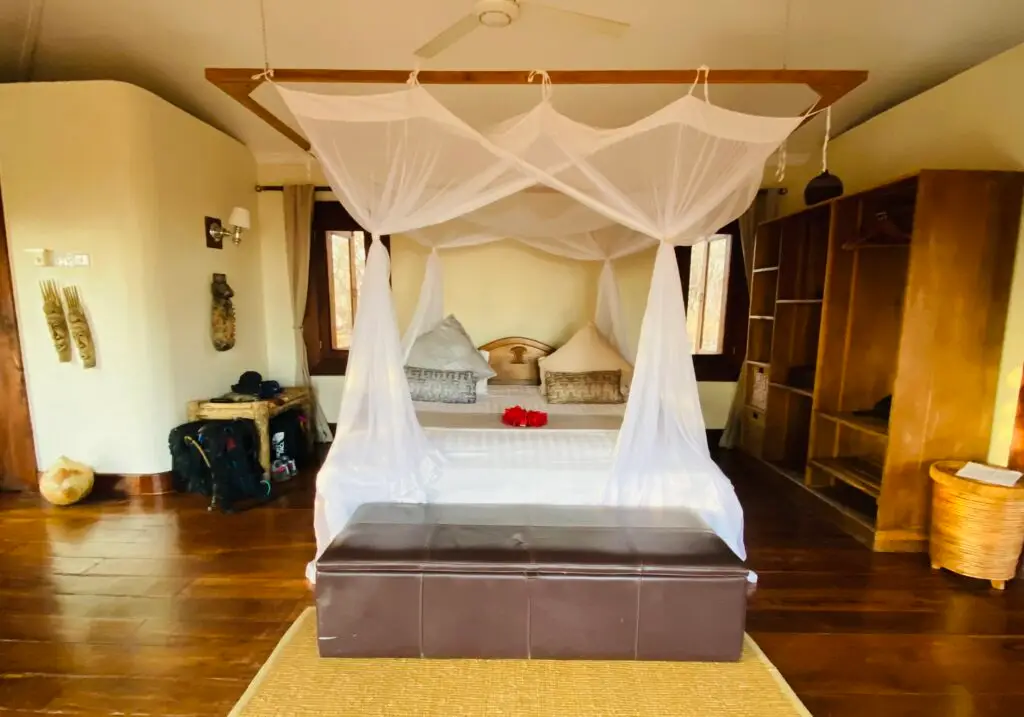
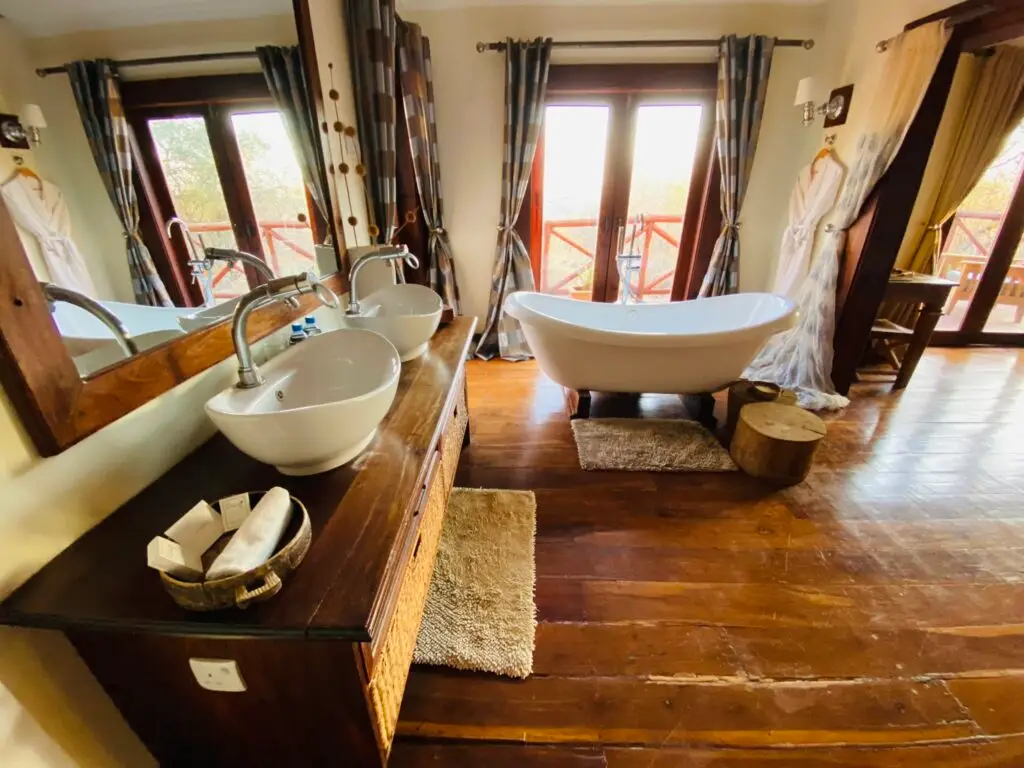
Ngare Sero Mountain lodge
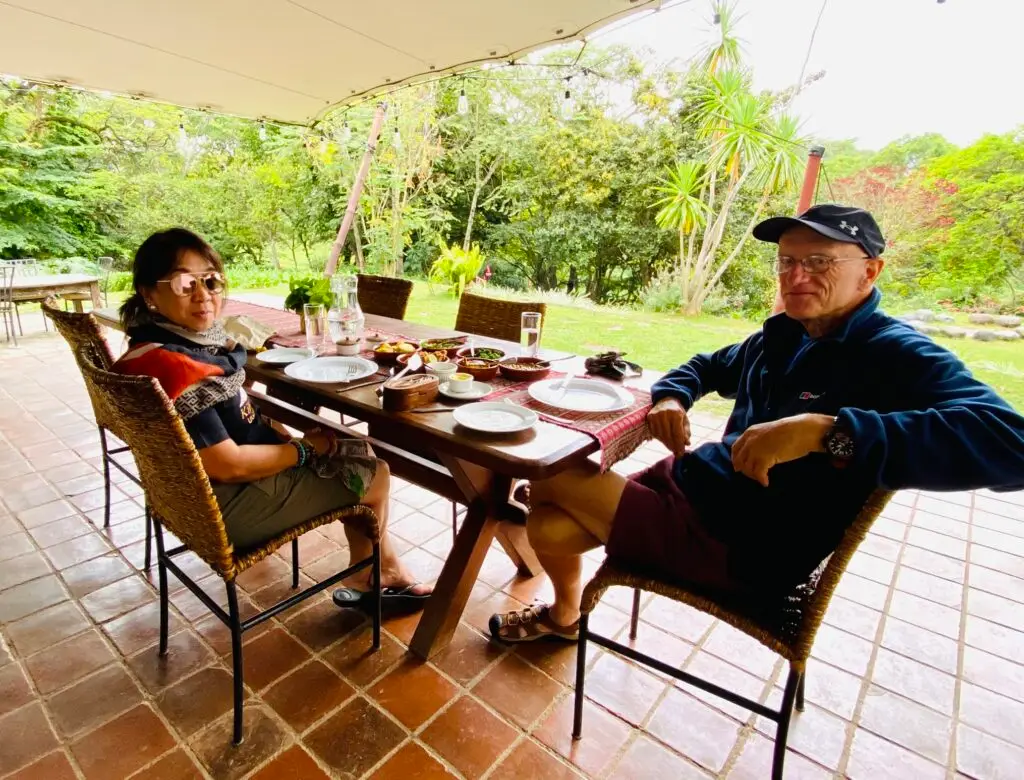
To start our Safari we were taken to the Ngare Sero Mountain Lodge for one night to be close to the Tarangire national park.
The lodge is on the slopes of Mount Meru just outside Arusha and was once a German colonial farmhouse built in the early 20th century from the times that Tanzania was a German colony. After losing the first world war, however, the German East Africa experiment was ended and for many years the farmhouse and its estate was abandoned and lost while it was reclaimed by the jungle.
The lodge was rediscovered by accident by the British much later on when Tanzania became a British colony. There was little more than foundations remaining but it was acquired by Mike and Gisella Leach who rebuilt it and opened it to guests in 1973 and it has remained in their family ever since.
The grounds contain a beautiful lake and 'Deo' (a lodge employee) was so happy to spend almost half a day rowing us around the lake and showing us the plants and wildlife.
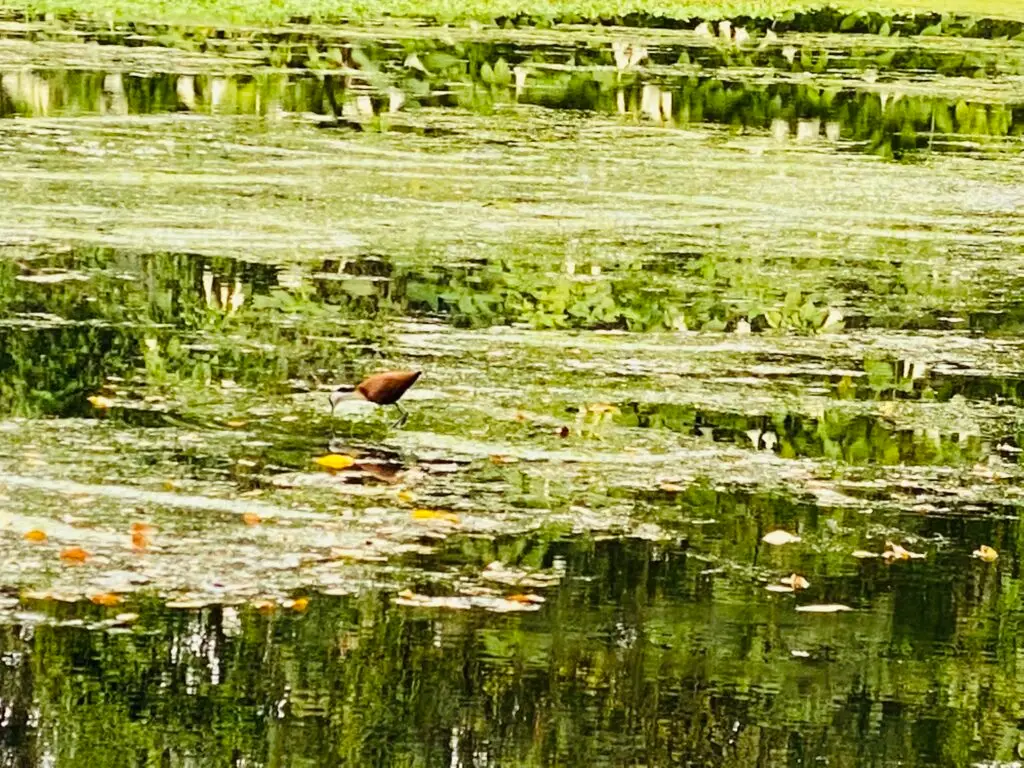
This is called the 'Jesus' bird because it walks on water.
The trees around the lake had these Colobus or ''black and white' monkeys. We also saw these on the slopes of Mt Kilimanjaro. The monkeys do not bother people because they are not fed.
Tarangire National Park
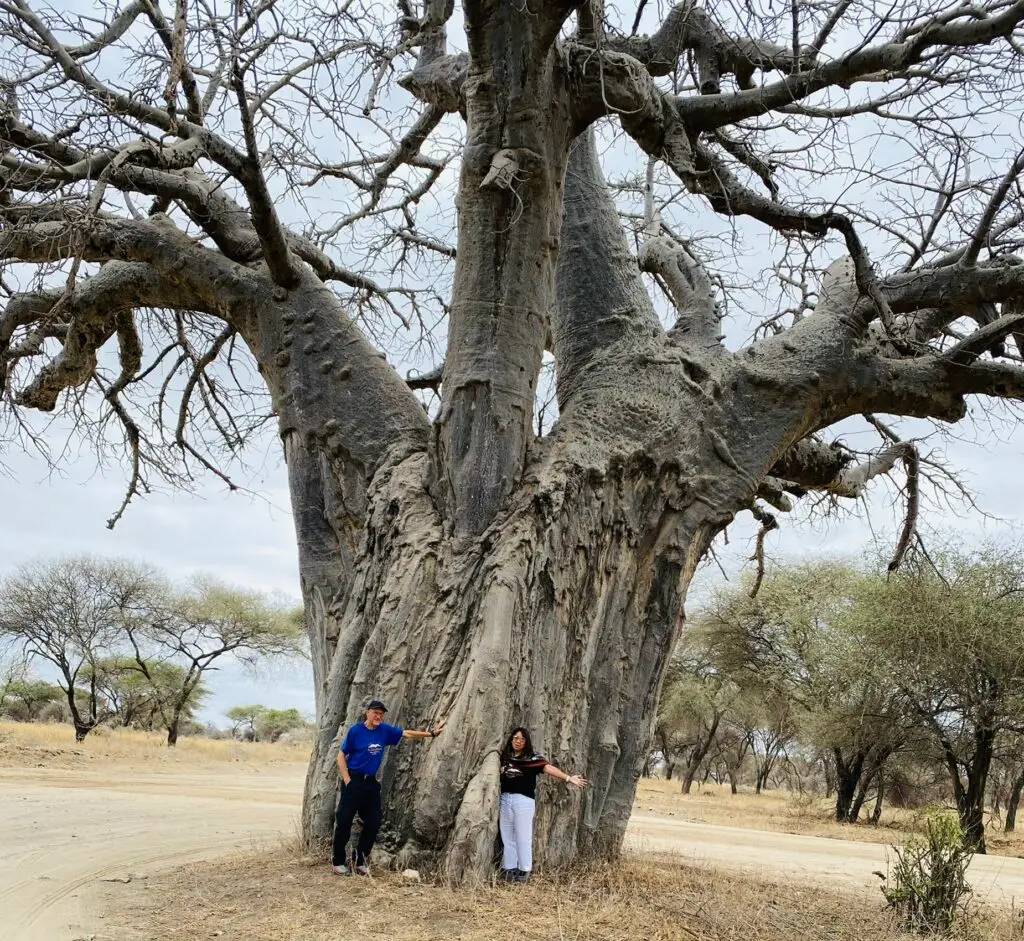
The Baobab is one of the most distinctive trees found in the national parks. It is known for its ability to store water and a large one can store over 100,000 liters. The oldest Baobabs have been dated at over 2000 years - and tend to have hollowed out cores.
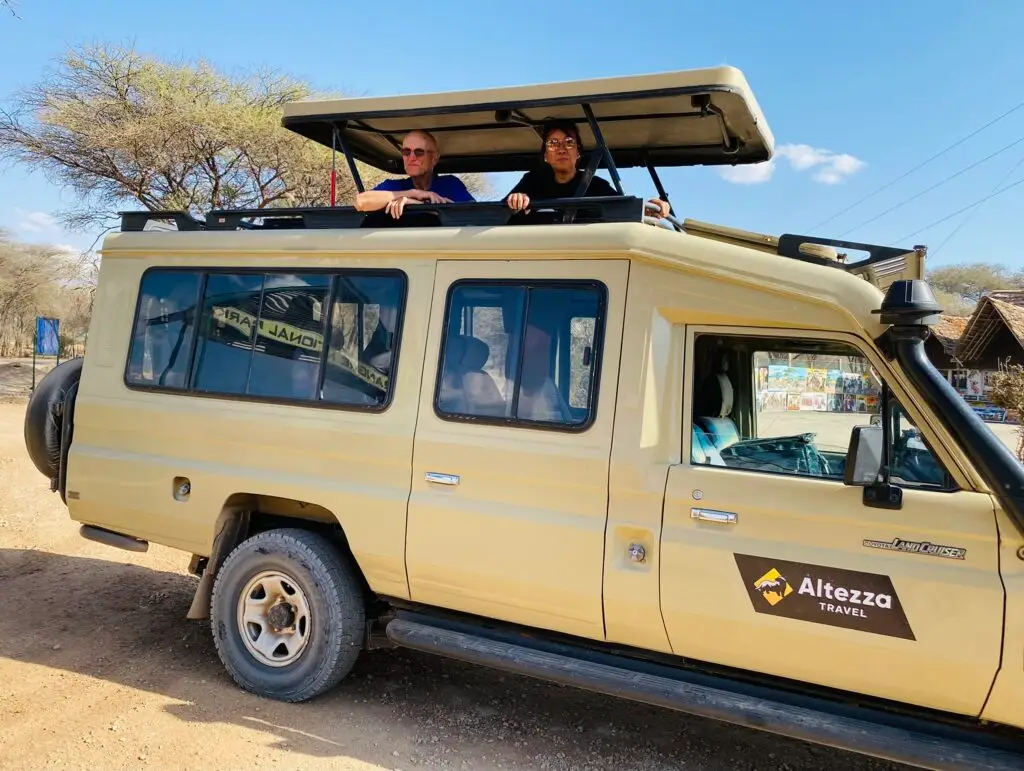
Inside the national park you are driven around by the guide in a Toyota land cruiser. It is strictly prohibited to leave the vehicle unless at one of the designated picnic spots.
We saw lots of Zebra
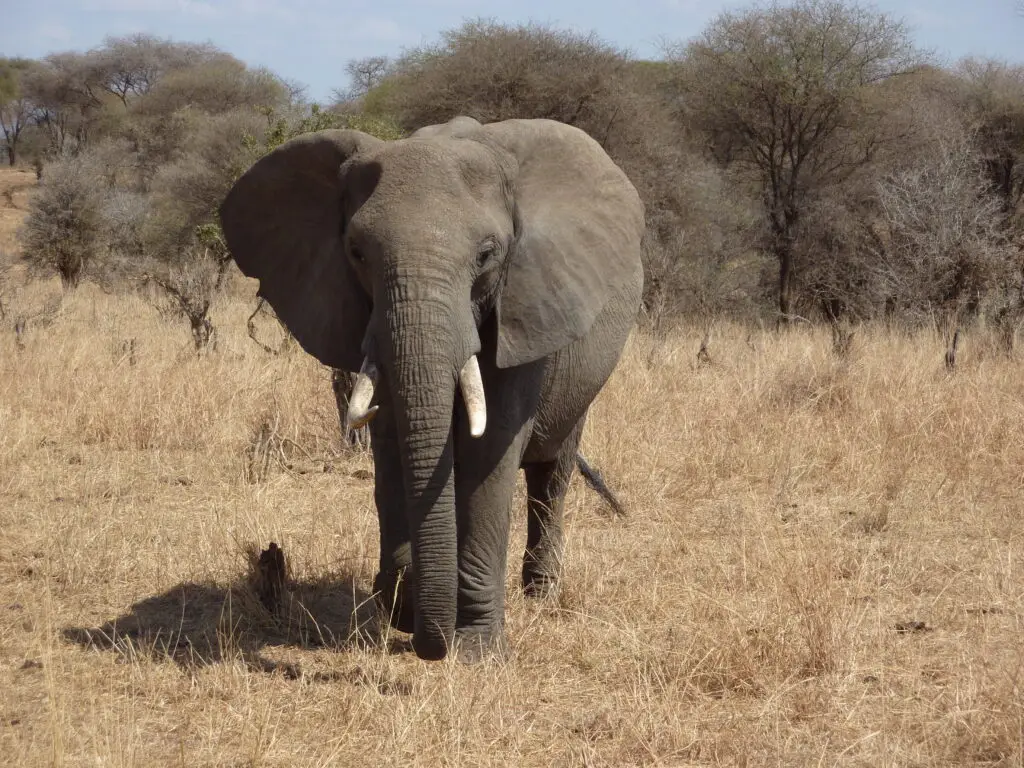
....elephants
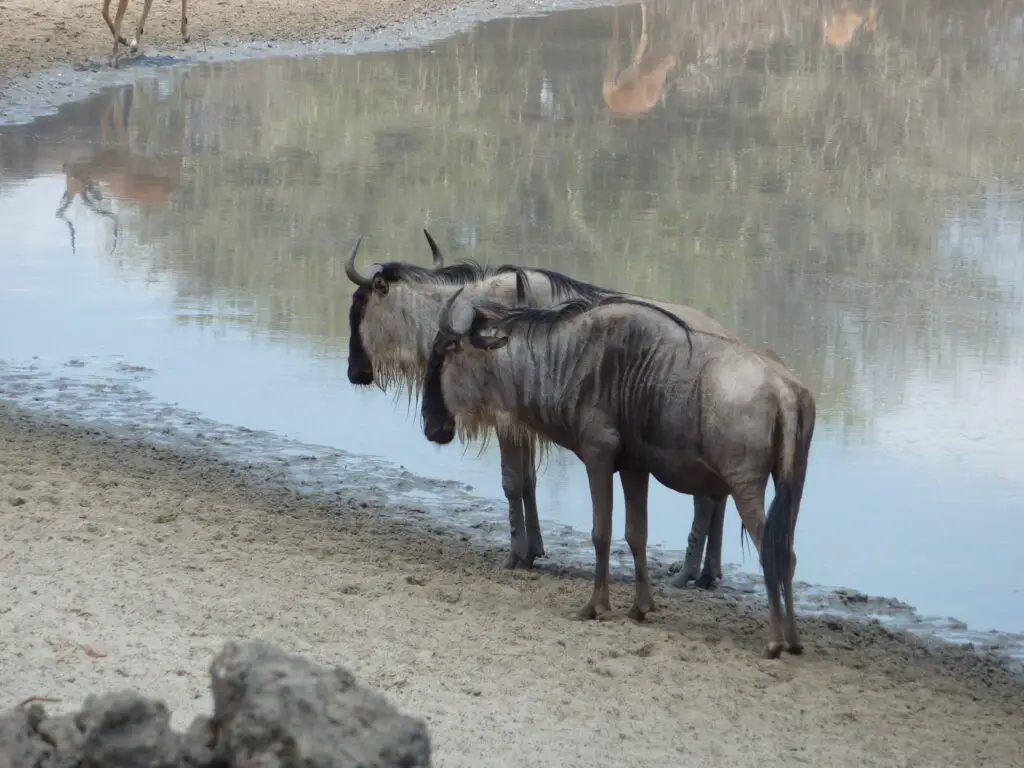
...Wildebeest
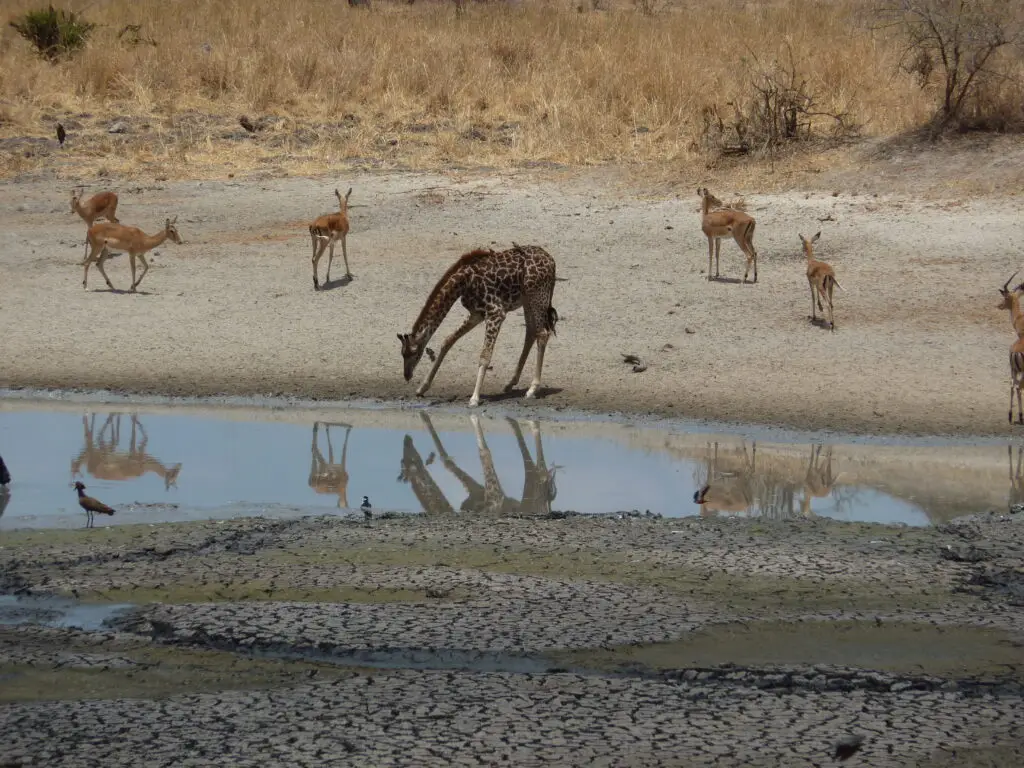
Giraffes and Impala
The sighting that everyone wants to bag is the lion. They are not easy to spot, however, because they spend the day mostly resting from the heat in the shade of trees where they are perfectly camouflaged.
The Escarpment Luxury Lodge
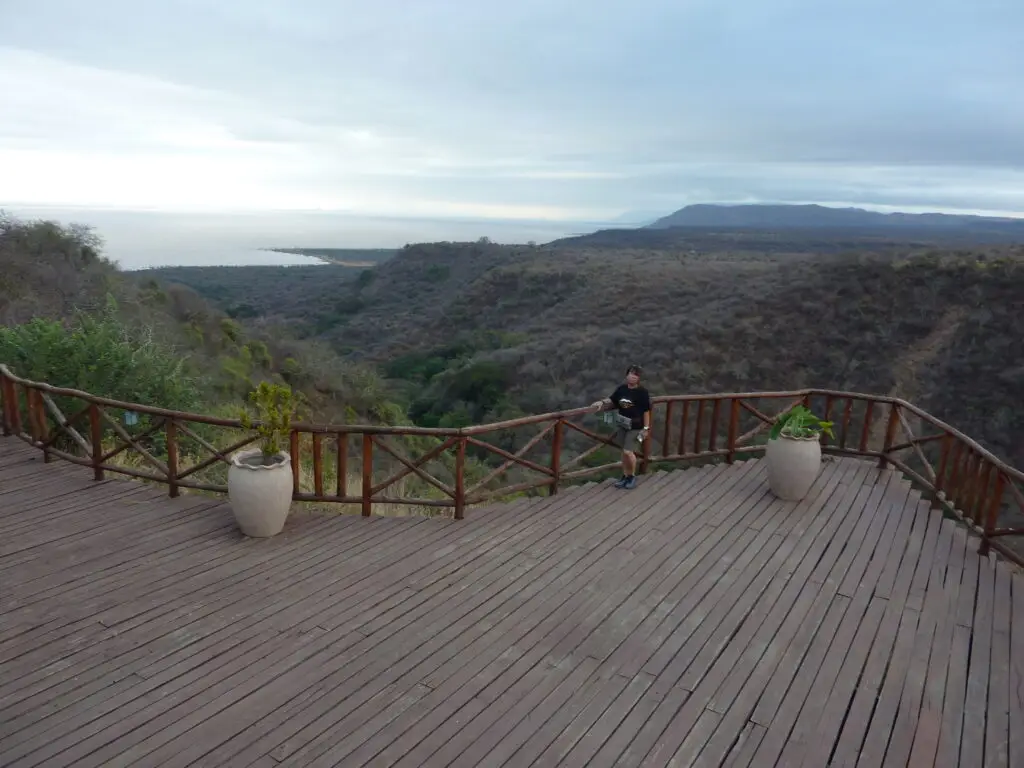
We stayed overnight at this luxury lodge before the next visit to Ngorongoro.
This was the view from the swimming pool deck of the lodge over lake Manyara
Ngorongoro National Park
Ngorongoro crater
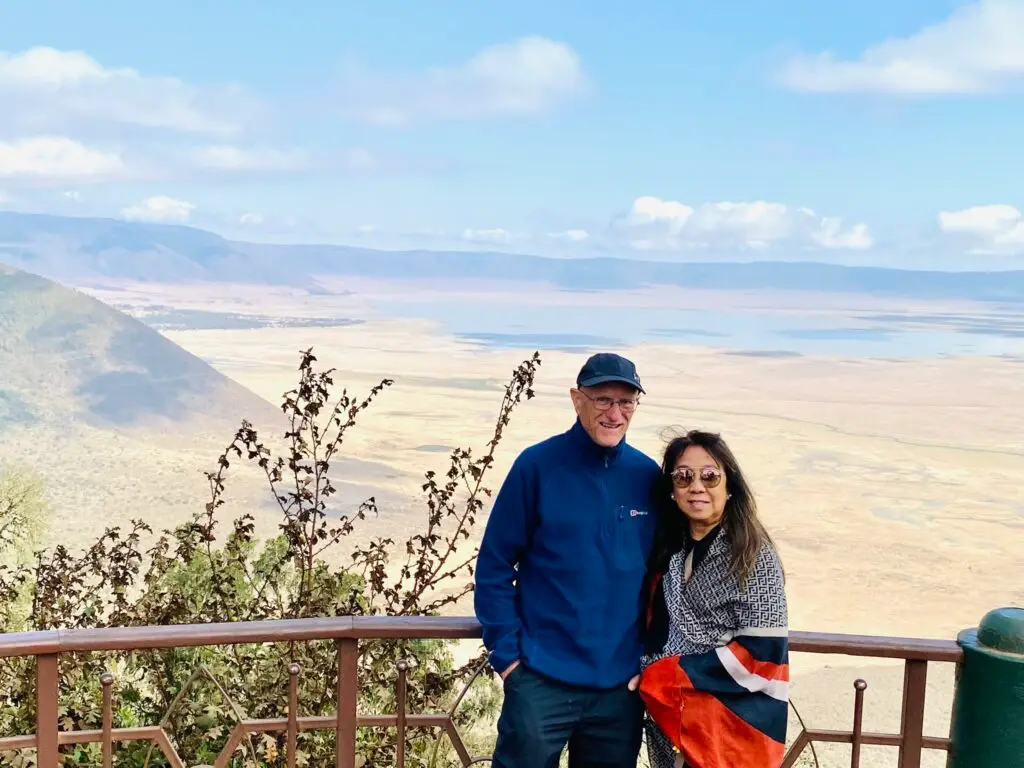
Ngorongoro is the worlds largest intact volcanic caldera. It is about 3 million years old and the walls are up to 610 meters high and 19 km across from one side to the other. To get to the crater you need to follow a long track which climbs up the side followed by a long descent down to the bottom again. At the highest point there is this lookout.
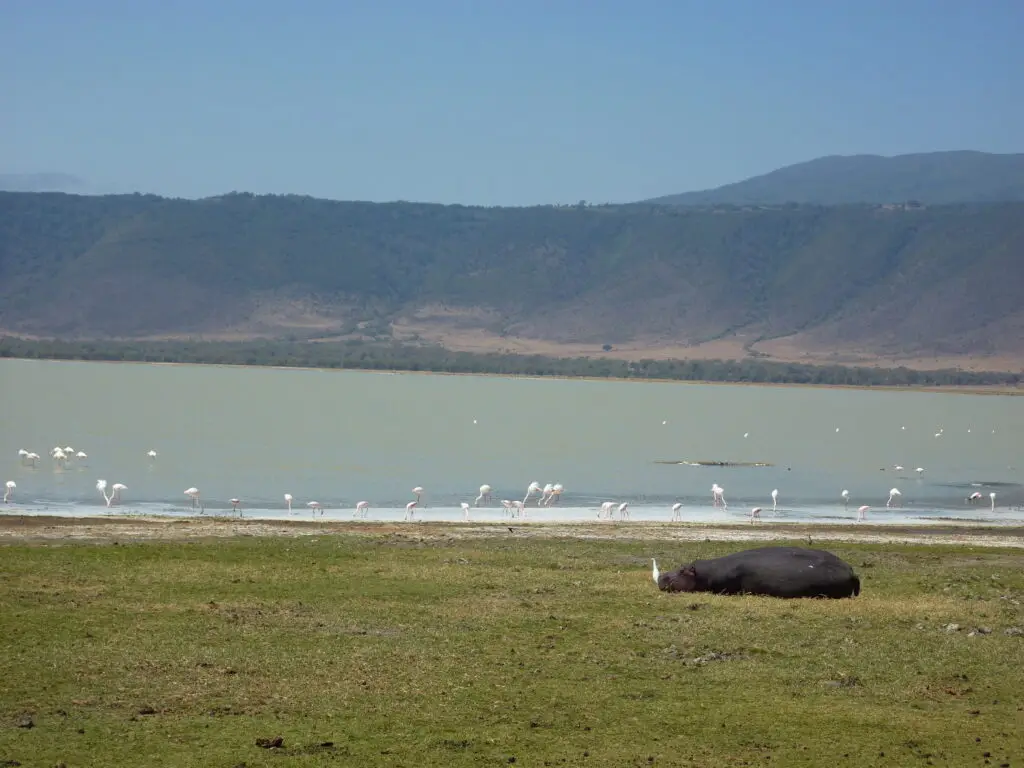
There is a lake inside the crater fed by springs with flamingos and hippos. Behind the lake you can see the crater wall.
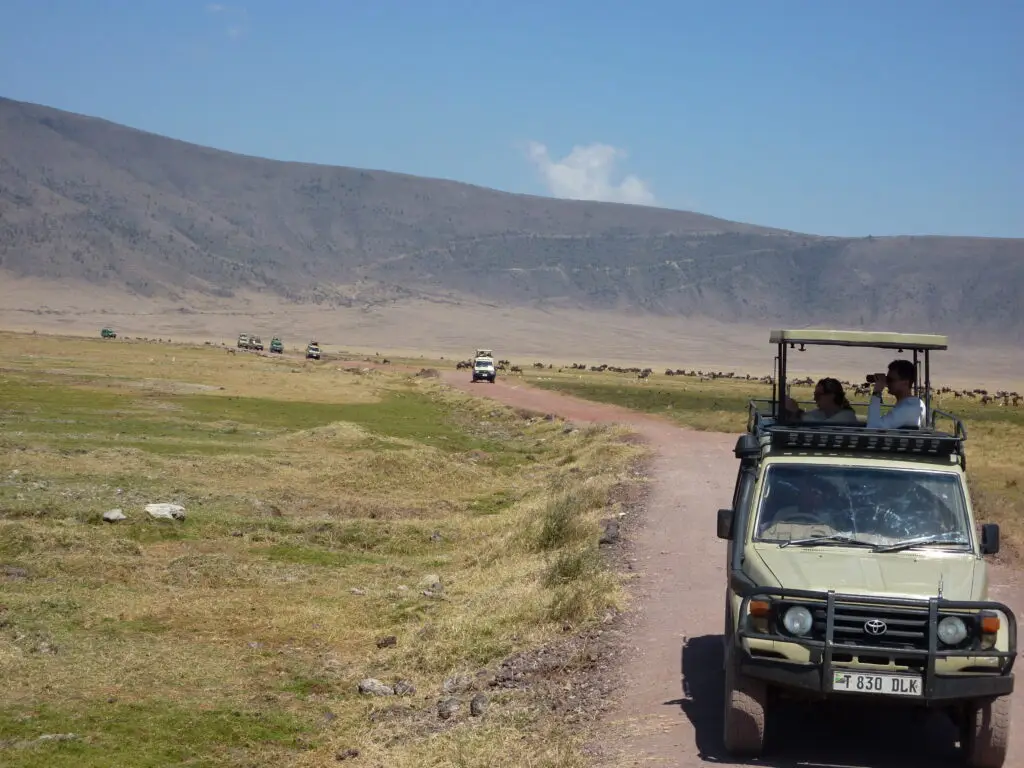
The Toyota Land Cruiser is the vehicle of choice for Safaris. There were lots of other groups there but we were lucky to have a whole vehicle to ourselves. The driver who was also the guide was very good at picking out animals which we had not even noticed.
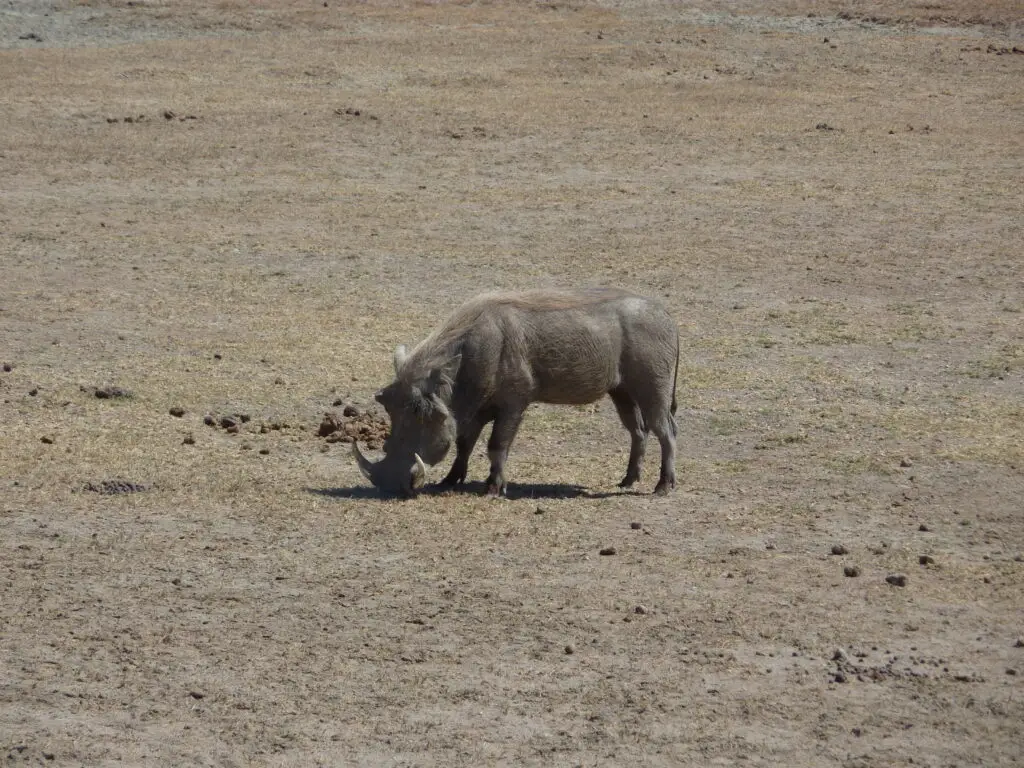
Warthog
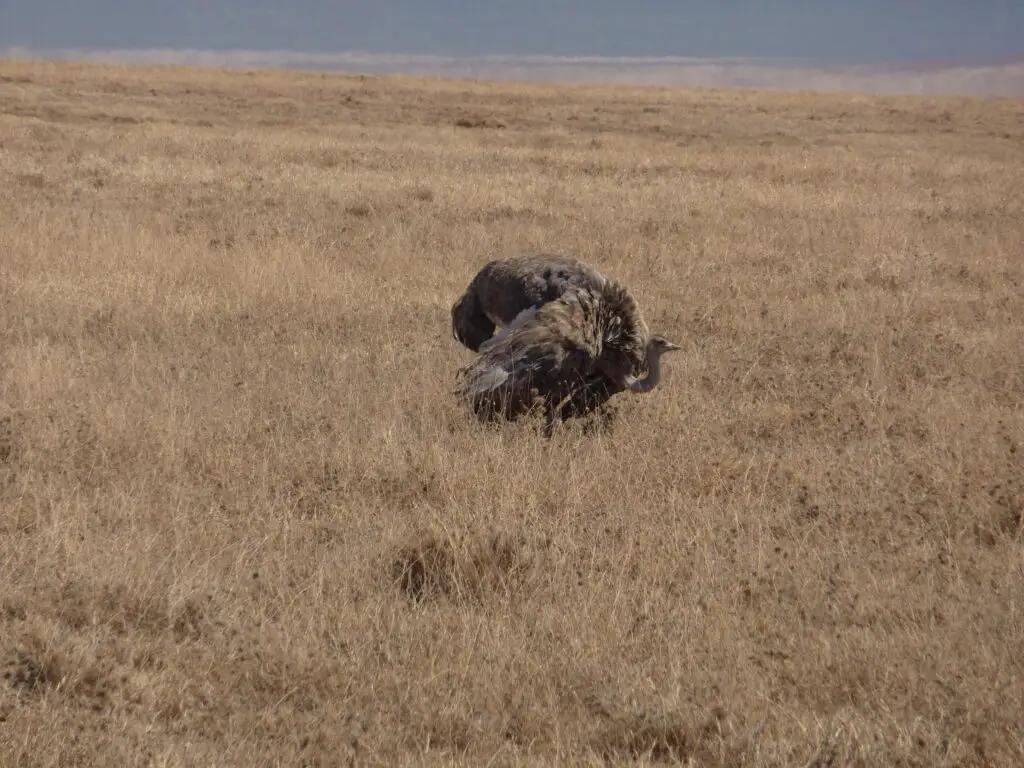
Ostrich
Wildebeest
Government craft shop
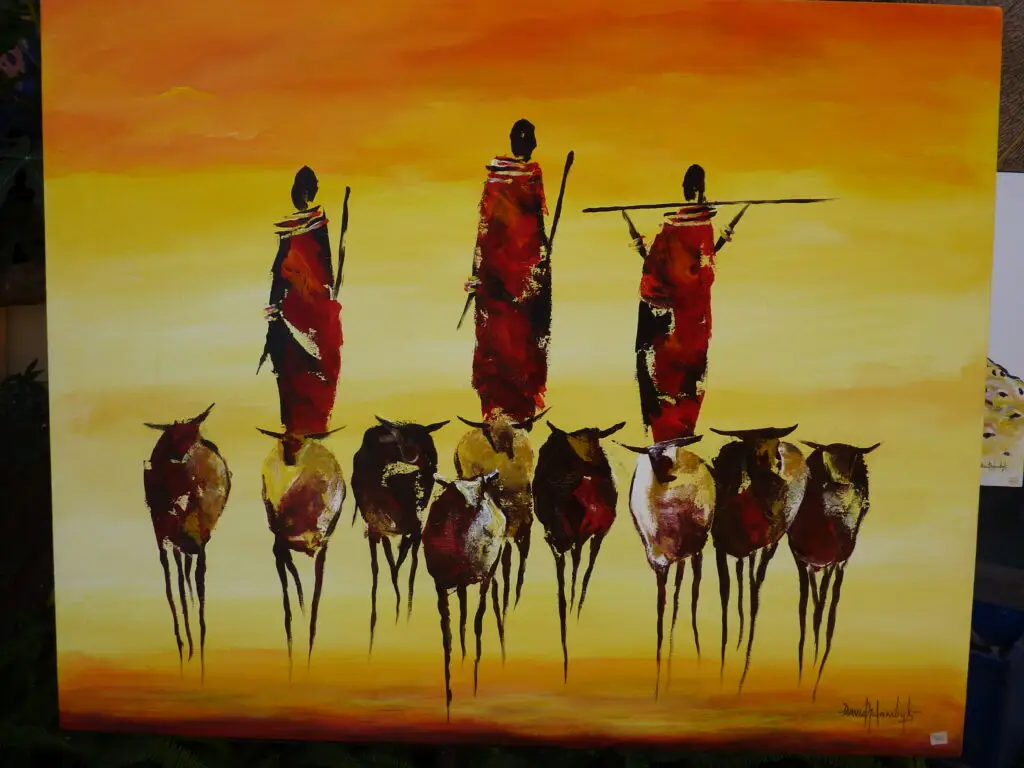
At the craft shop on the road back you can see amazing carvings and paintings.
The local people are called the Masai and you see them walking along the side of the highway mostly. They wear coloured shawls according to their tribe and wear sandals on their feet made from recycled car tyres and always carrying a stick.
They appear to be untouched by the modern world and live almost entirely off of the milk blood and meat of their goats and cattle. You can see the isolated huts they live in spread out on the side of the highway sited to be near their livestock.
These ones were employed by the lodge we stayed in to sweep the paths and unload luggage. They also did this welcome dance just for us when we arrived at the lodge.