Turkey – April/May 2023

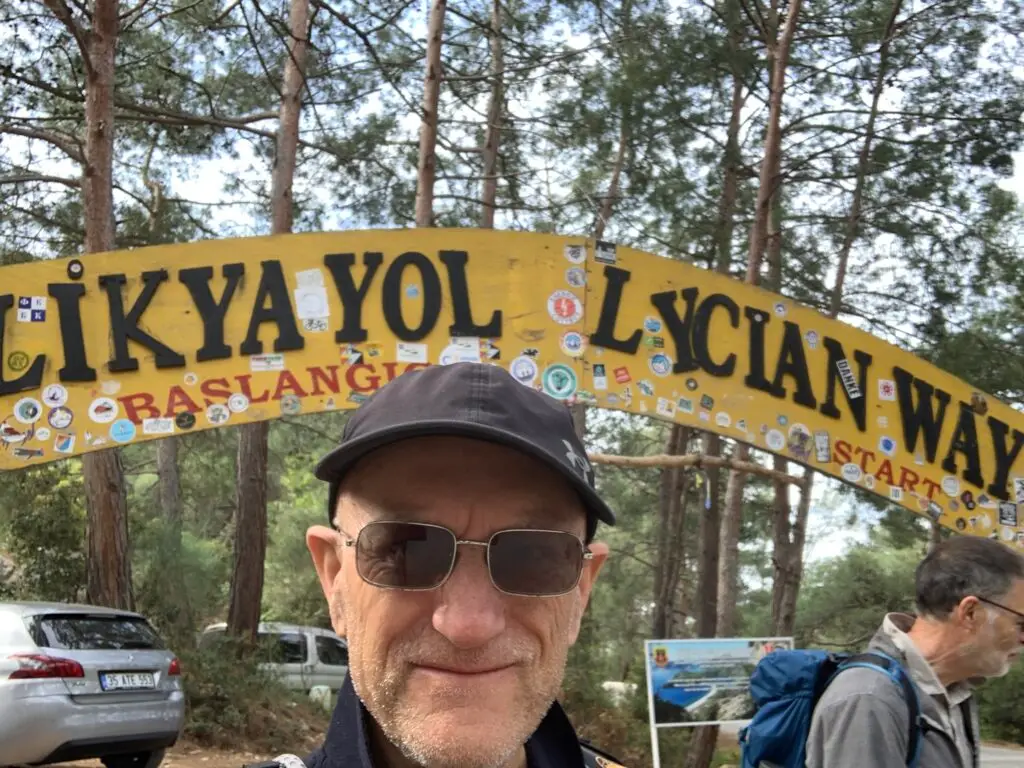
Start of the Lycian Way, Turkey

This trip was in three parts: an organised group tour with Amber Travel to do the western section of the Lycian way;  then 4 days on our own in Cappodocia; and then 4 days on our own in Istanbul.

Lycian Way

The Lycian way is one of the top ten treks in the world for the spectacular scenery. 

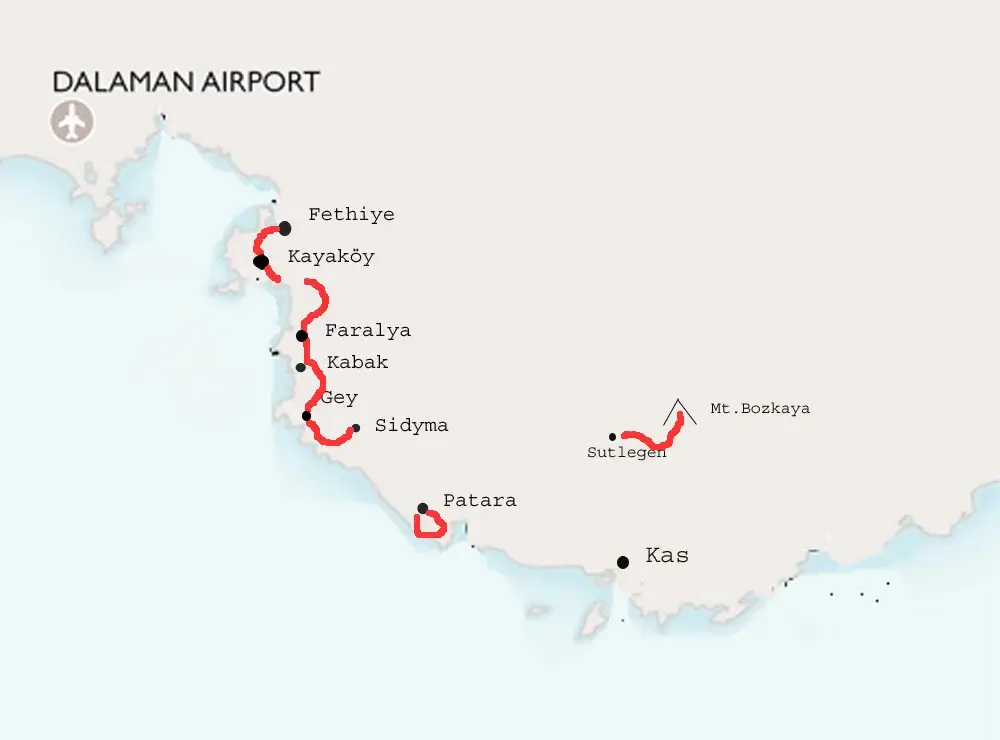
The western section is much more rugged than the eastern section.  We met at Fethiye on the Aegean coast and trekked to Kas over 8 days staying at hotels and lodges with van support.

Just above the town after the climb out of Fethiye you go past the remains of the ancient crusader castle of the Knights of St John and then the ancient Greek rock hewn Amyntas tomb.

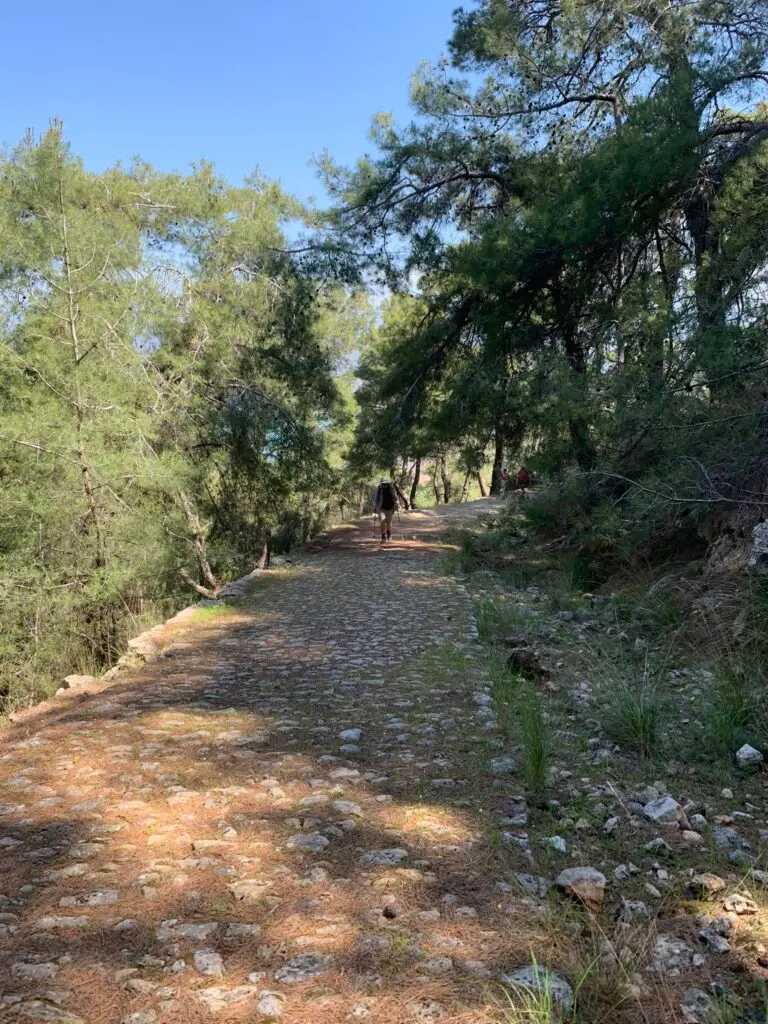
The trek soon joins the ancient cobbled road to Kayakoy

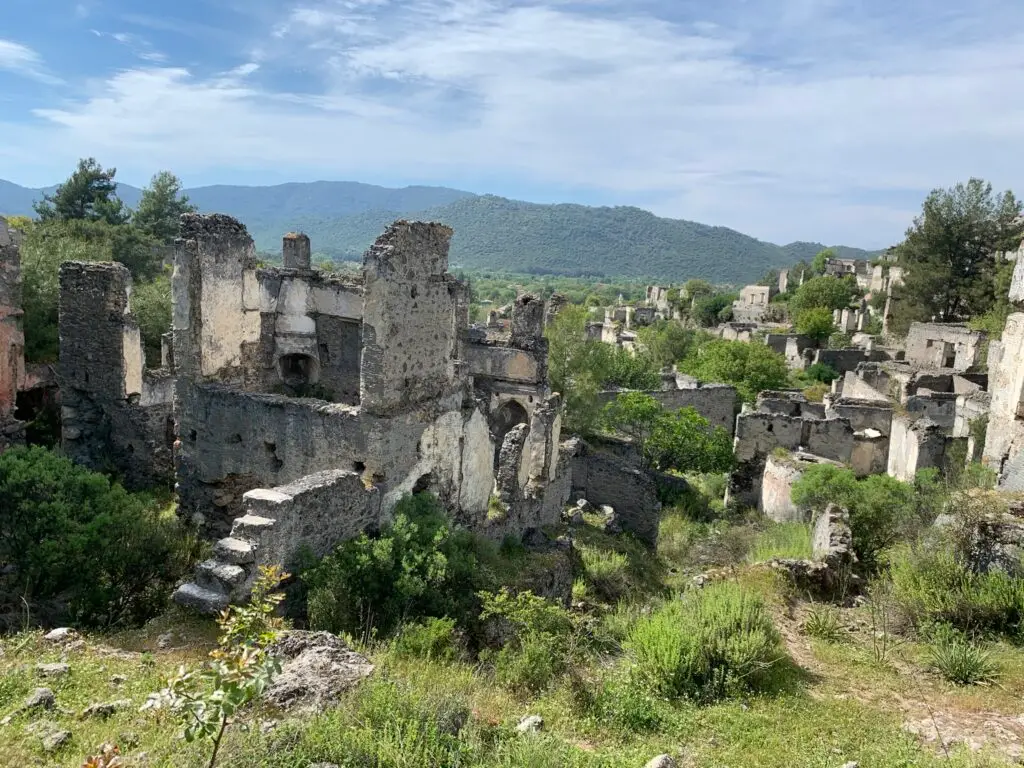
Kayaköy is an abandoned “ghost town” with a somewhat tragic history.

After the First World War, because Turkey and Greece were on opposite sides, in 1923-24 there was an ‘exchange of minorities’ where Greeks living in Turkey were exchanged with Turks living in Greece.  However, there were many more Greeks than Turks so the exchange was uneven. This meant that about 6,000 Greeks, who had been living in Kayaköy for centuries, were uprooted to a completely alien environment where they had to start their lives again from scratch.

Kayaköy is now an open-air museum.

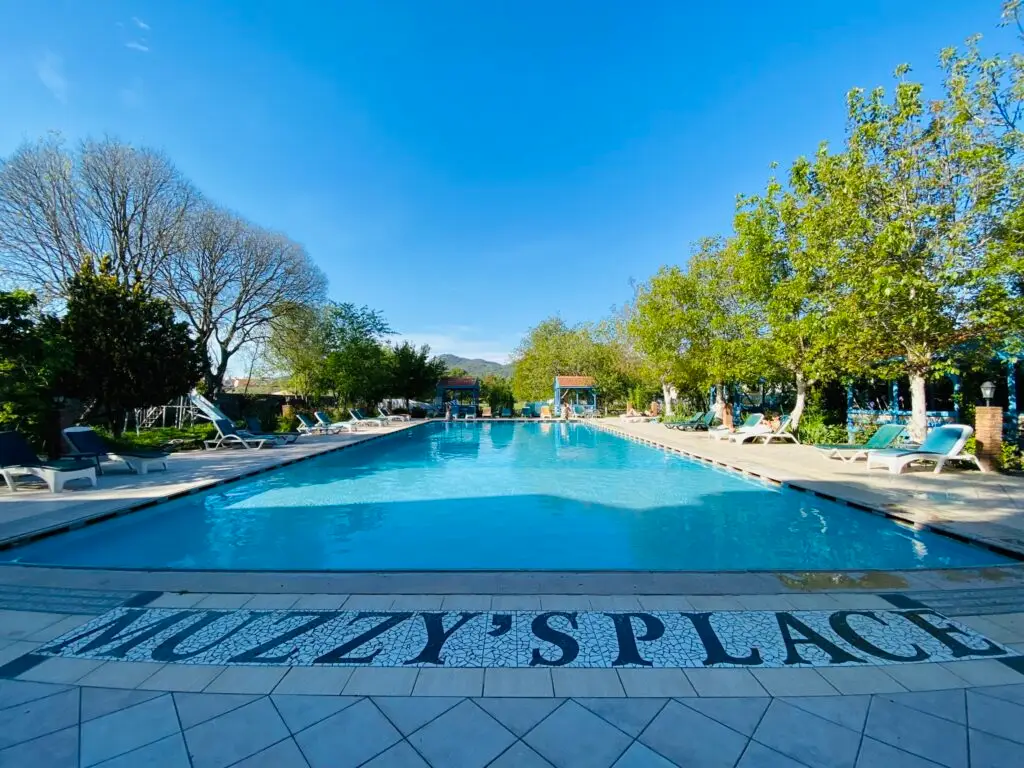
We stayed at Muzzy's place in Kayakoy new town opposite the ruins.  The hotel had a nice swimming pool and open air restaurant serving Gozleme (turkish pancakes cooked in an oven).

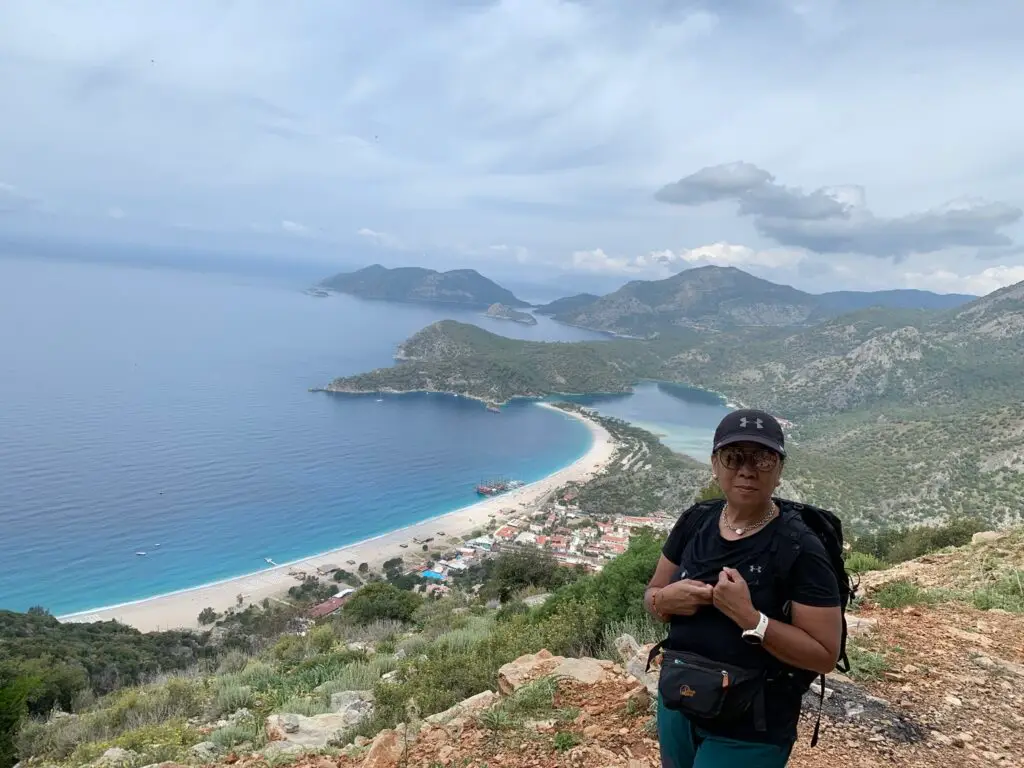
Day 3 of the trek took us to a magnificent view of Oludeniz lagoon.

Day 4 was a fairly tough 11km day with lots of climbing and uneven ground.  At a certain point we crossed this seemingly impassable valley.

The path followed directly below this cliff face

On a clear day sometimes even the island of Rhodes is visible.

We saw several of these tortoises on the path.

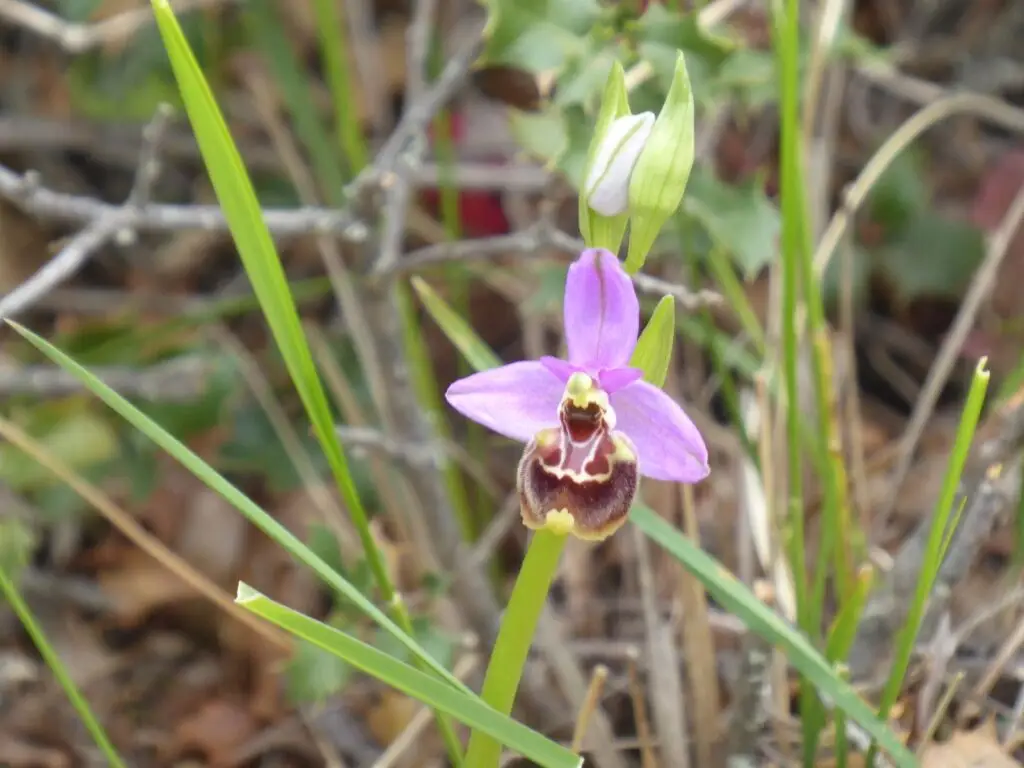
We saw a few of these rare bee orchids.  The flower is in the shape of a bee in order to attract other bees.

We stayed in this simple trekkers lodge in the village of Gey.

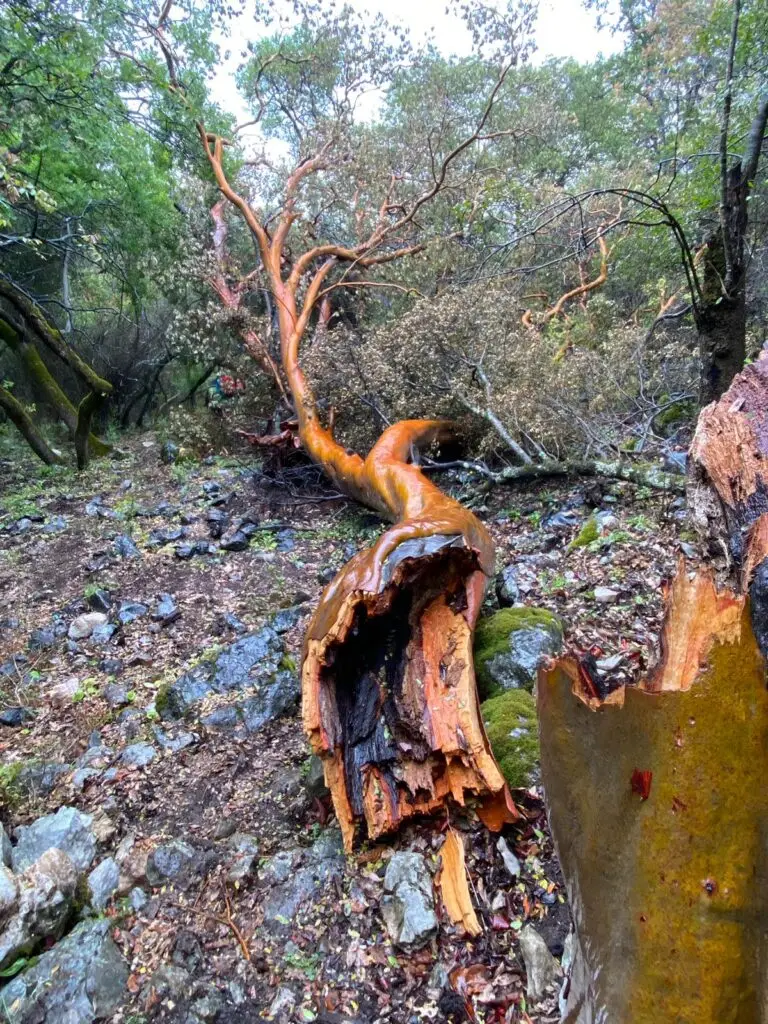
The next day took us down a steep but very lush valley complete with the striking red skinned Arbutus trees.

We stopped at this inn for lunch where they made us ‘Gozleme’ turkish pancakes.

Sidyma
Sidyma
Sidyma

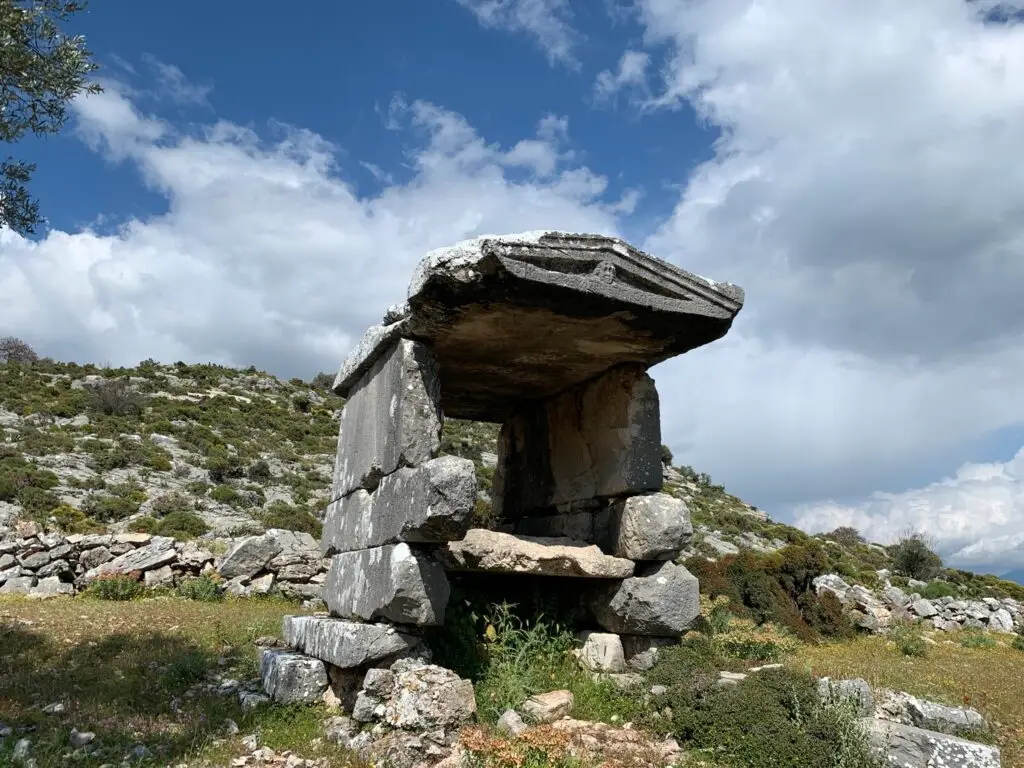
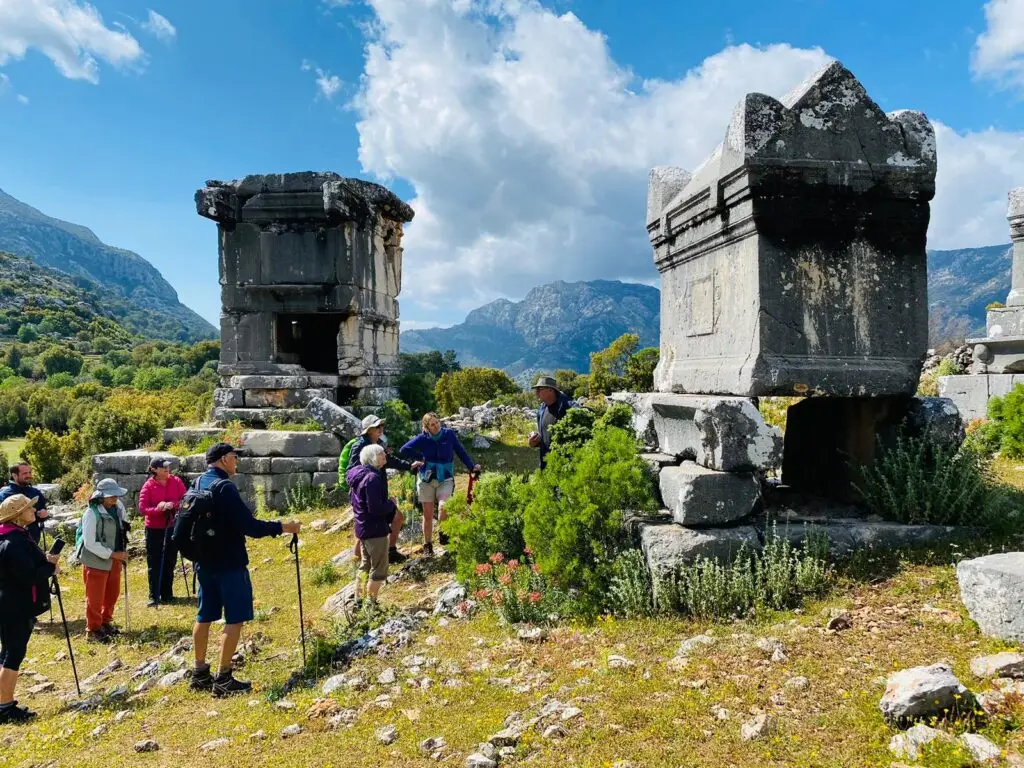
We proceeded to the ancient site of Sidyma, sharing space with the village of Dodurga, which had many of these ruins of old tombs.

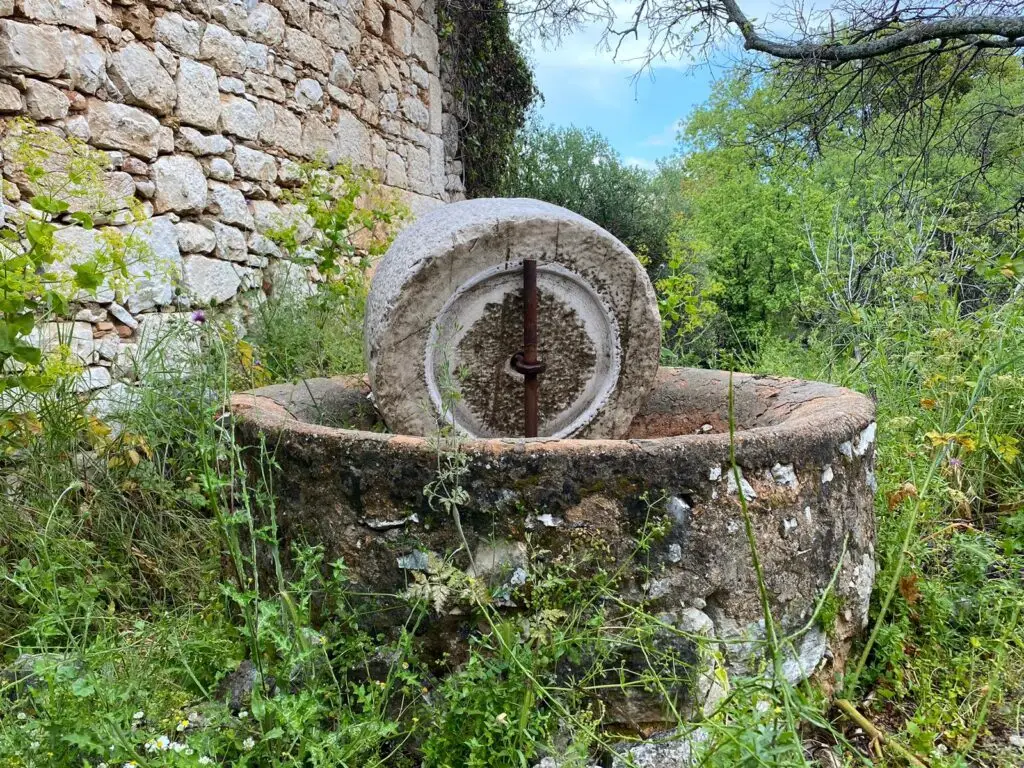
This ancient millstone was how they ground wheat.  A bar sticking out of the other side of the millstone was tied to a donkey who went round in a circle.

Patara

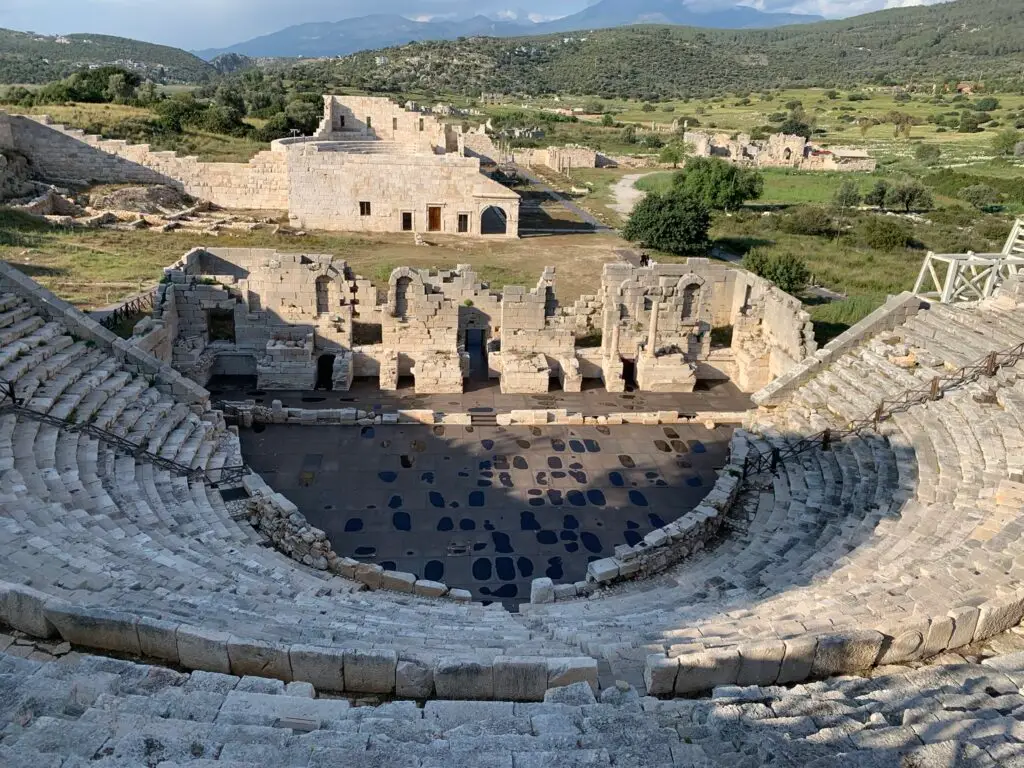
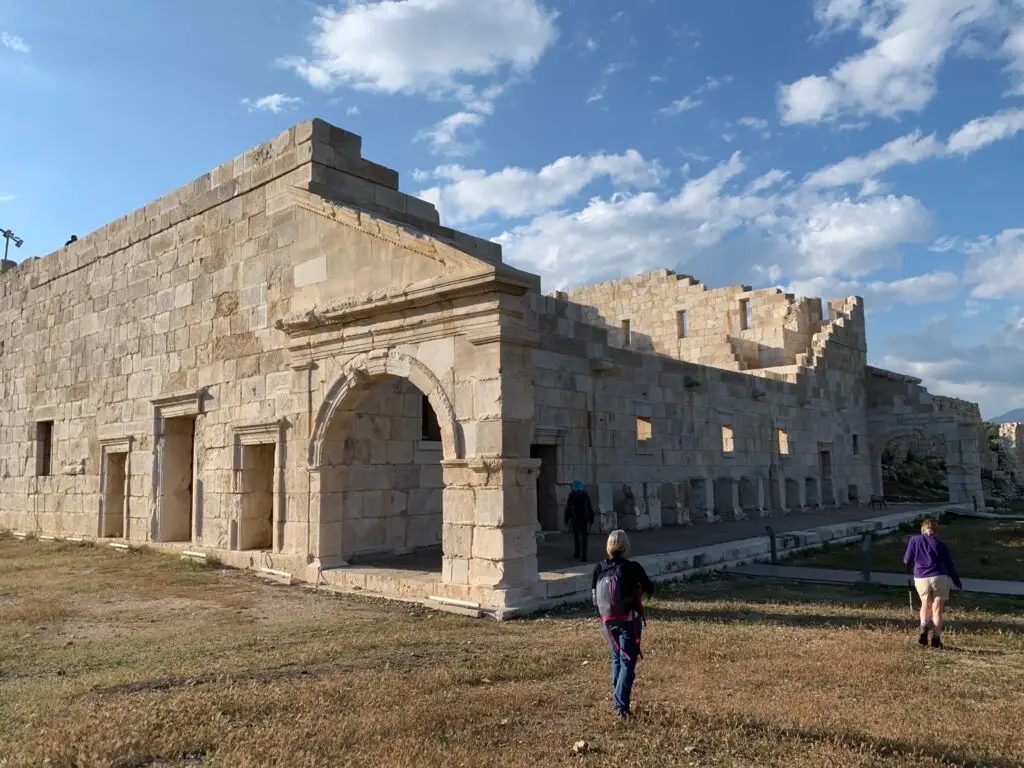
Later on the same day we visited the ancient city of Patara, the metropolis of Lycia. Many of the buildings were well preserved by virtue of being under the sand dunes.  The city was eventually abandoned because silt from the nearby river was brought down by the tide and blocked up the harbour.

Patara
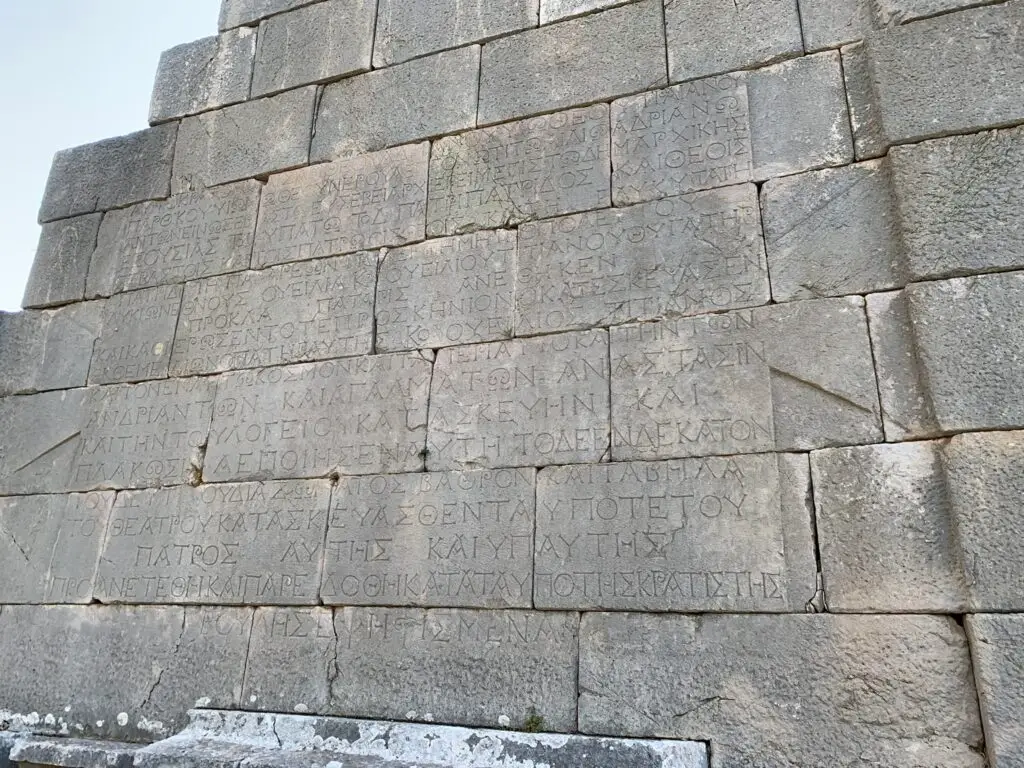
This shows that, although the spoken language at the time was latin, the written language was greek.
Patara
Patara
This exquisite stone carving was done by one of the ancient stone masons who wanted later civilisations to witness his skill
Patara
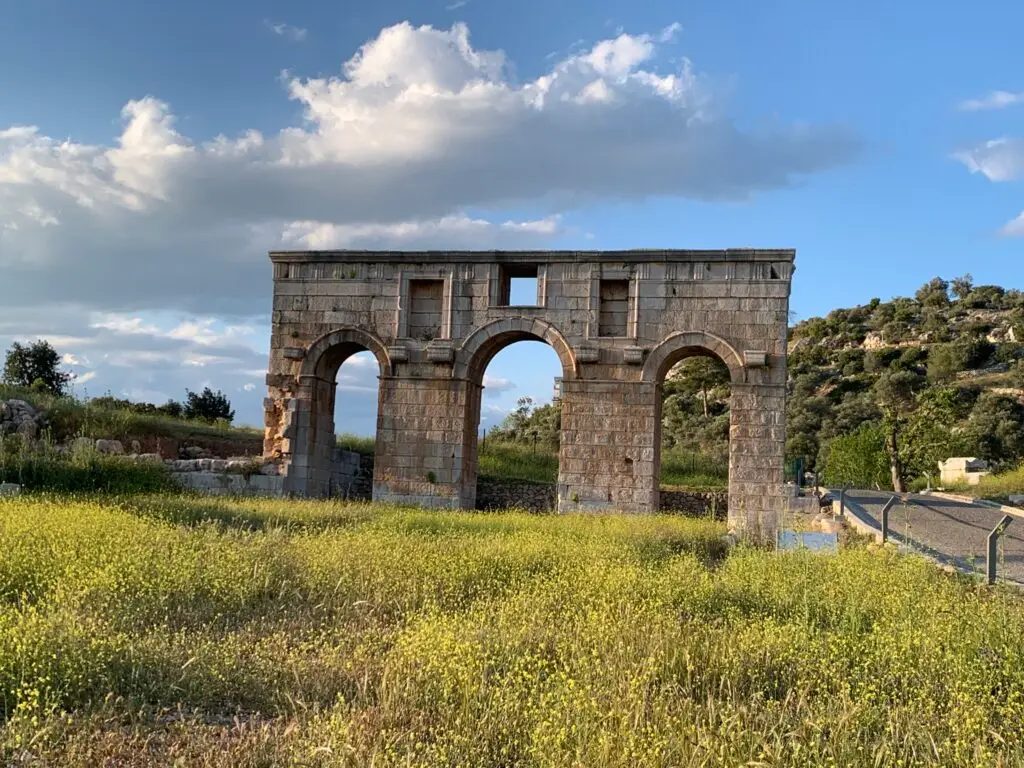
The main gateway to the ancient city. The middle entrance was for horses and chariots.

Steve (one of our group) did this sketch of the entrance gate

The next day we visited the fascinating Roman engineering masterpiece of Delikkemer aqueduct, a reverse syphon system.

Delikkemer aqueduct
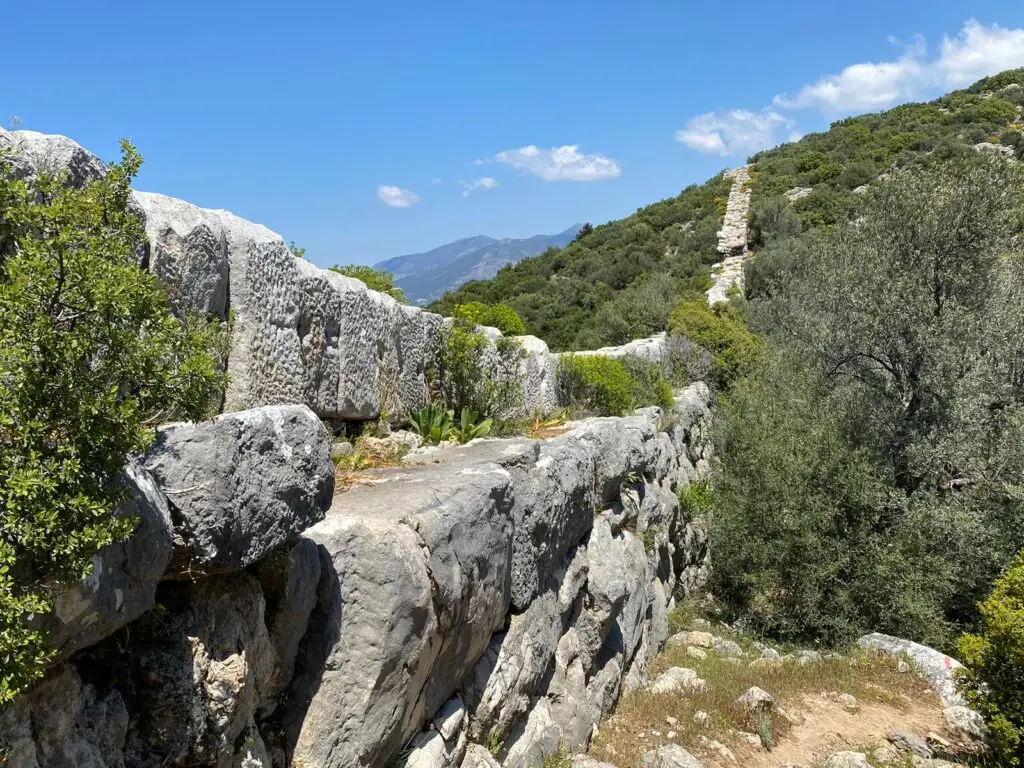
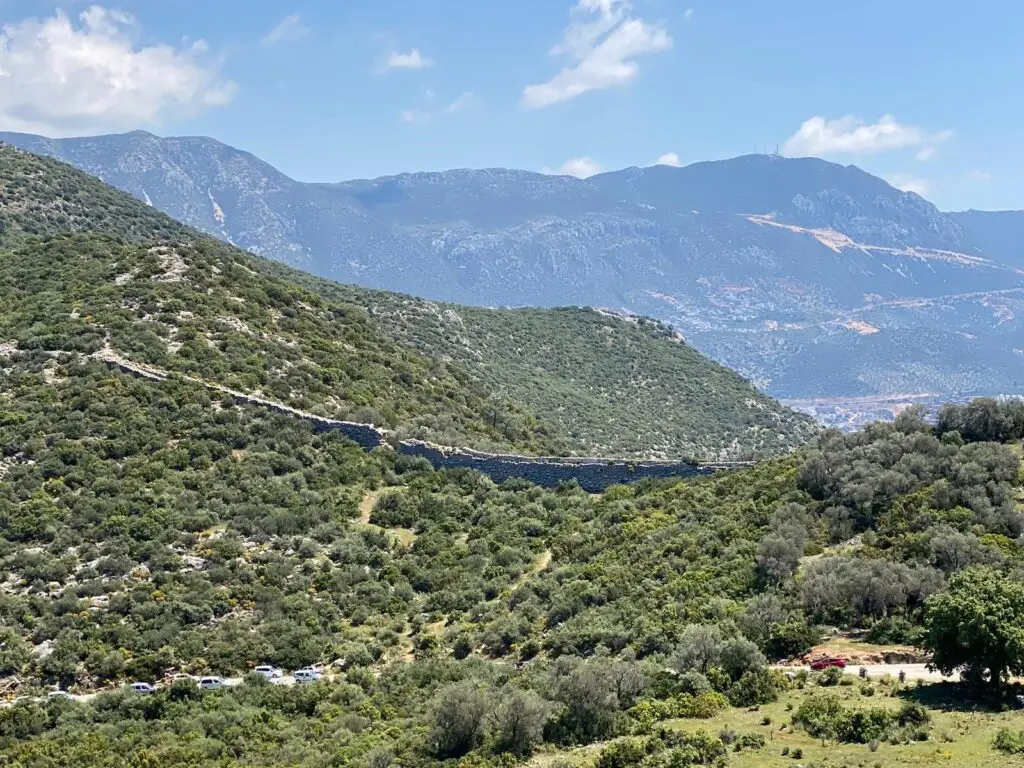
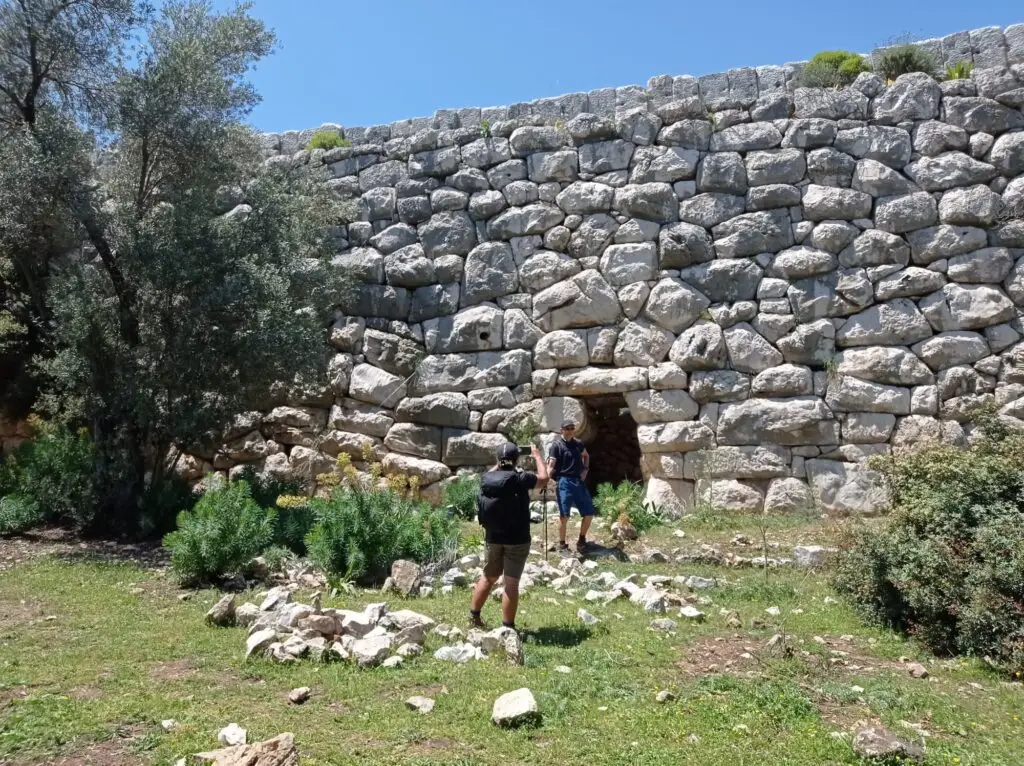
The Romans had the problem of getting water from the spring (on the left) all the way to Patara but they did not want to invest the enormous resources of bridging this valley with an aqueduct. They solved this problem by building a pipe made of stone carried on the top of this stone wall. The pipe was made so completely water tight that gravity from the downward section pulled the water up the pipe on the uphill section as in a syphon.
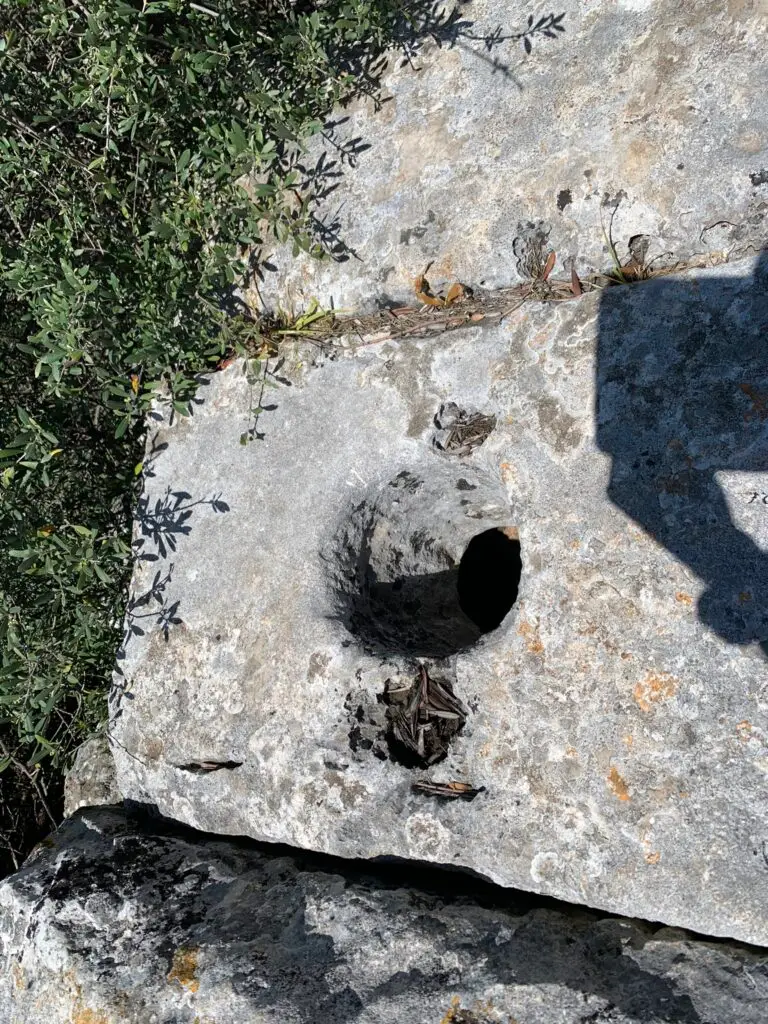
The square stone blocks on the top of the wall were hollowed out to form a pipe when the blocks were cemented together.
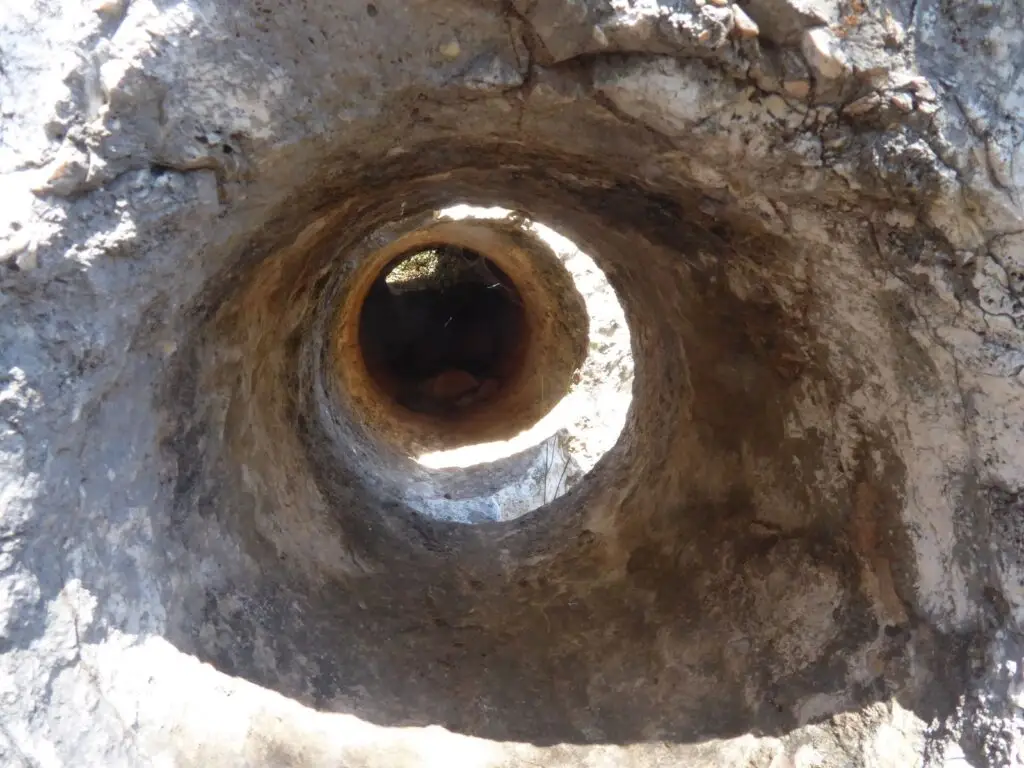
To solve the problem of an airlock in the pipe, certain blocks had plugholes bored into the top which could be opened to vent the airlock and then sealed again afterwards. In case of blockage there were also 'half blocks' which could be taken out to access the pipe at certain points along its length.
So that the wall did not cut access to one side from the other, doorways were made at certain points.
The final day was a trek up to the 2050M summit of Mt. Bozkaya through the Lebanese cedar forests. Unfortunately there was no view on account of the fog!
After coming back down the van transferred us to our final destination to our hotel at Kas on the coast.

Cappadocia

We stayed for 4 nights at Goreme which is an hours taxi drive from Cappadocia airport.

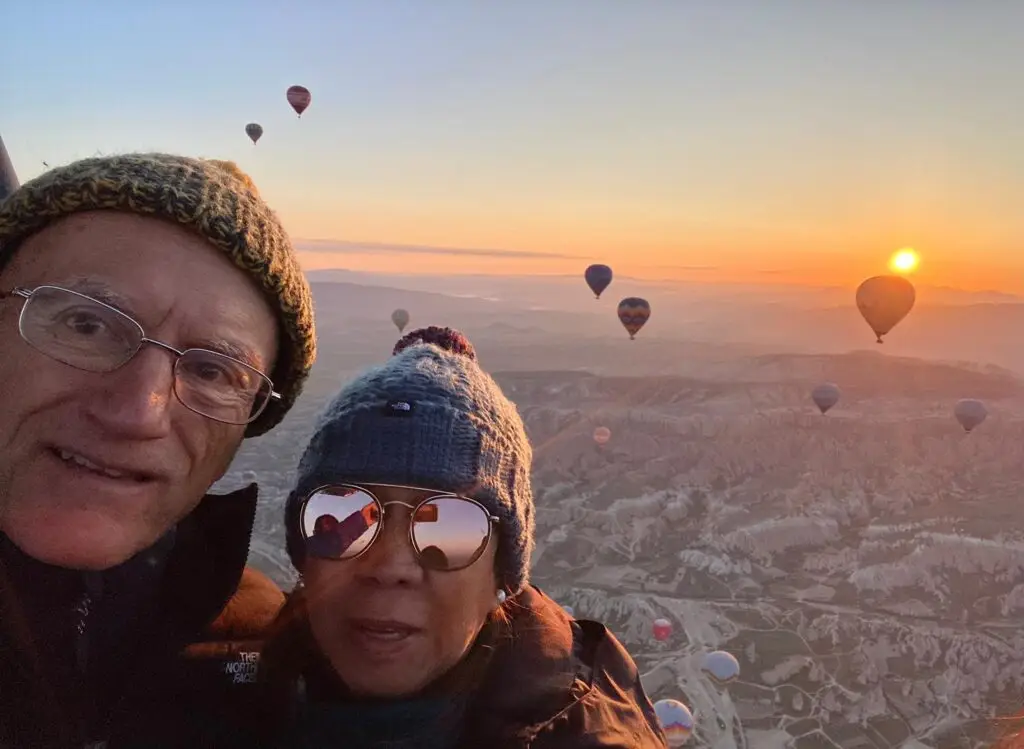
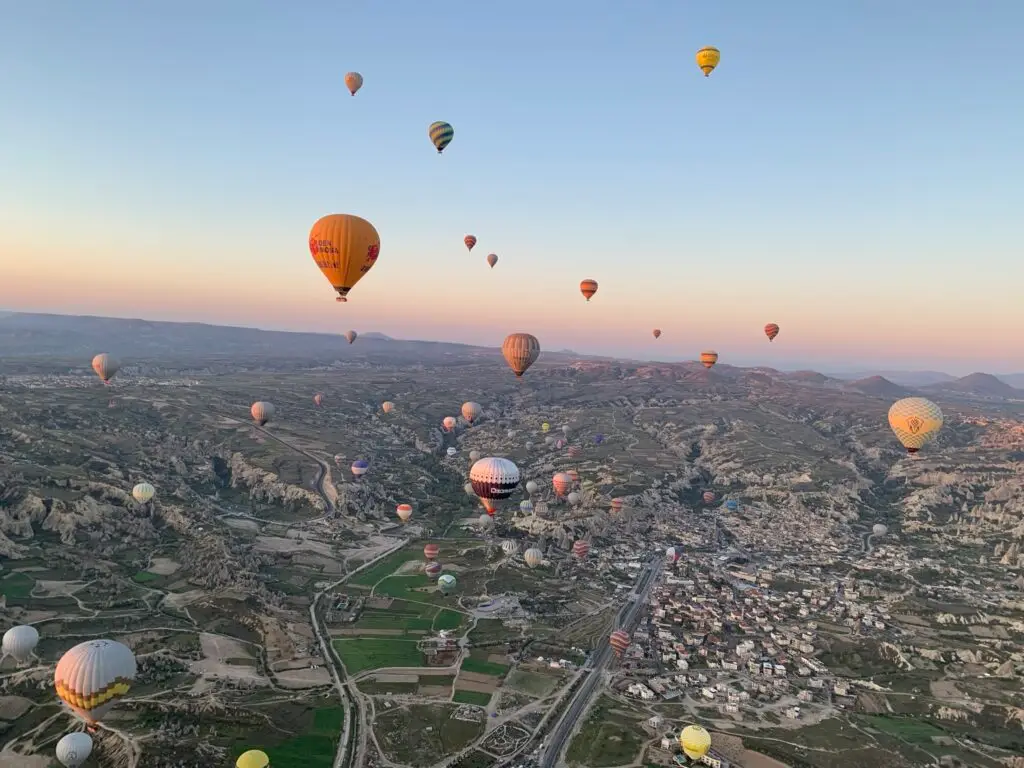
We were lucky to get our balloon flight the very next day due to the perfect weather conditions. They pick you up at 4.30am from the hotel and you get to see the sunrise.
On the best days they will launch 150 balloons and have 2000 people in the air. It started back in the 60's when a couple hired a private balloon flight for their honeymoon and it all grew from there.
We went 900 meters in altitude.
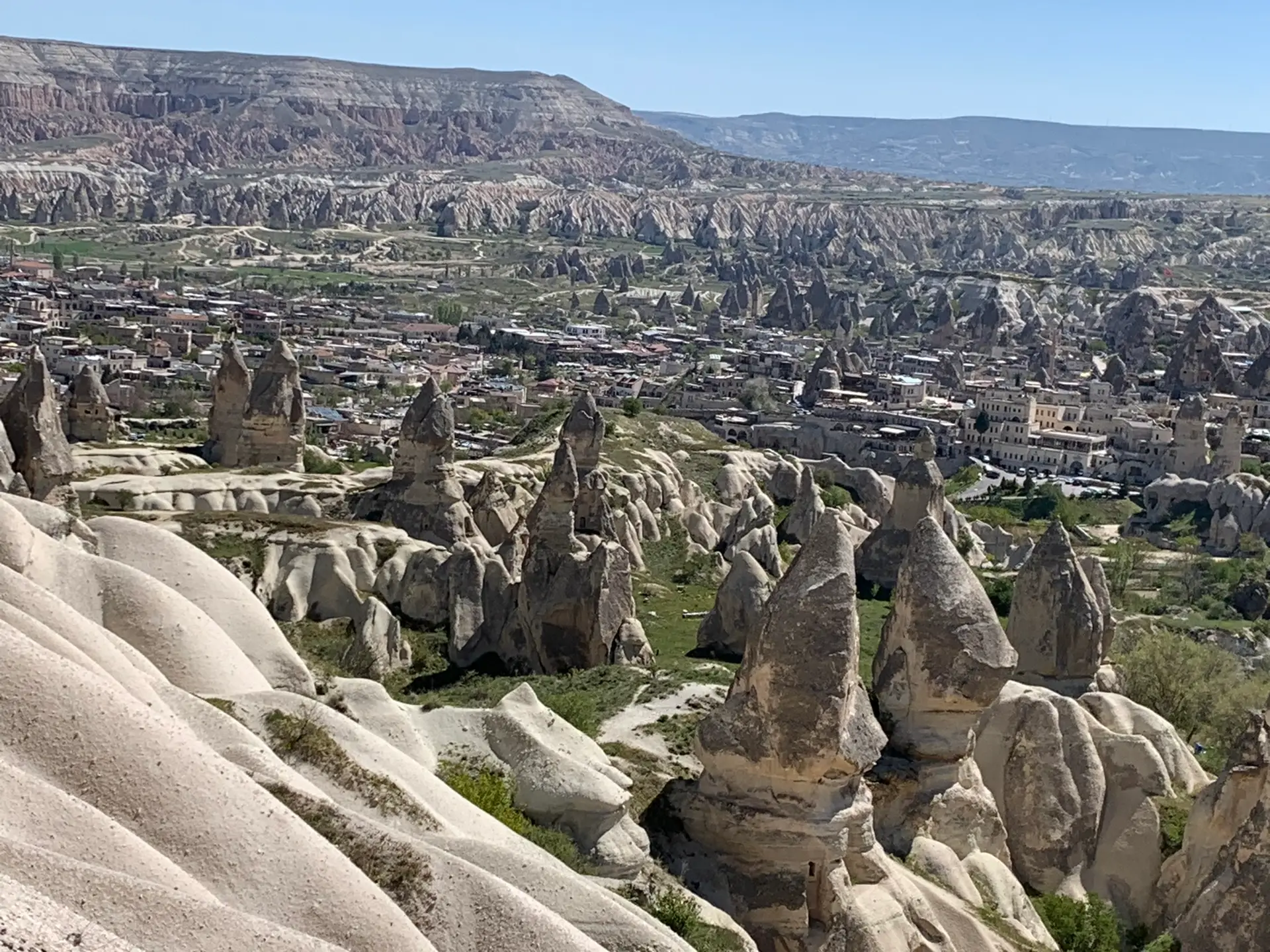
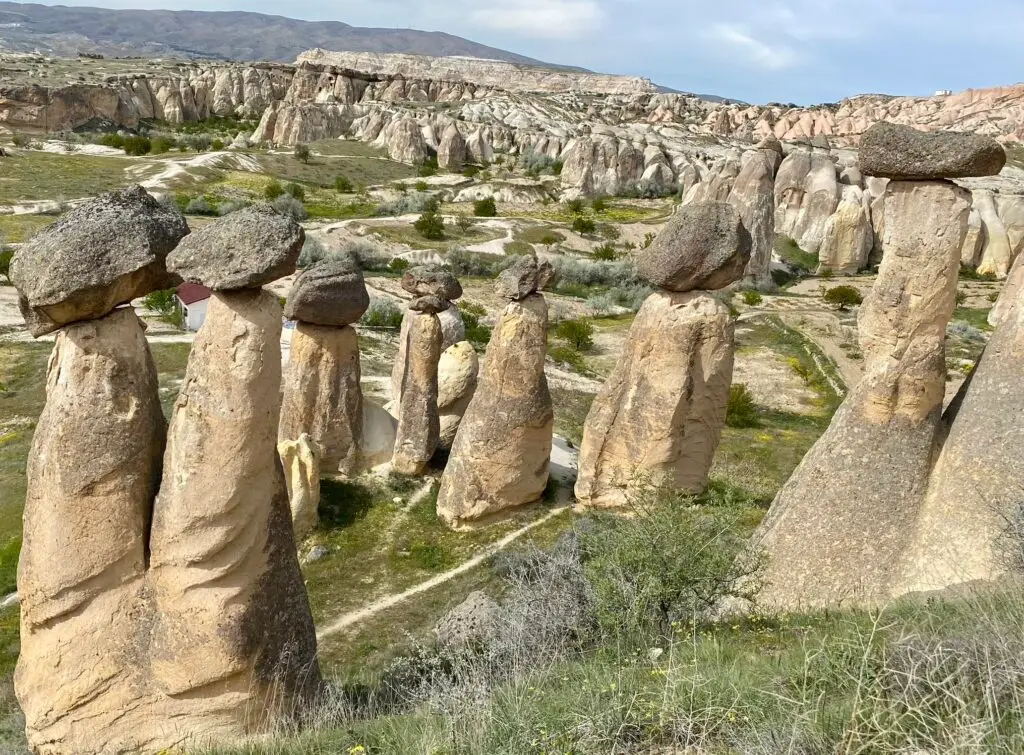
View from the roof of our hotel in Goreme. These rock towers are a feature of the whole area in and around the town and many have been dug out as can be seen here to make houses or even 'cave hotels'.
These houses cut into the rock in pigeon valley were to house pigeons which were important at the time to use the droppings as fertiliser and the eggshells for fixing pigment for painting frescoes in their churches.
Pigeon valley
Some more views of pigeon valley.
A view back to Goreme from the panorama view point
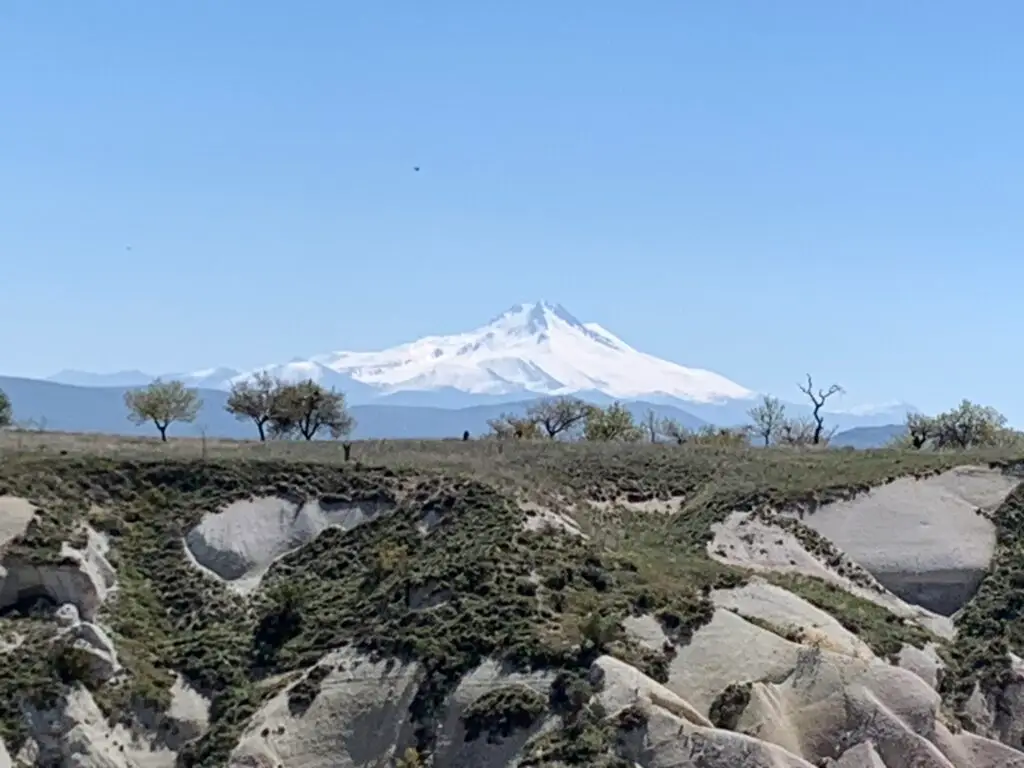
The 3917m mountain 'Erciyes' dominates the Cappadocia landscape.
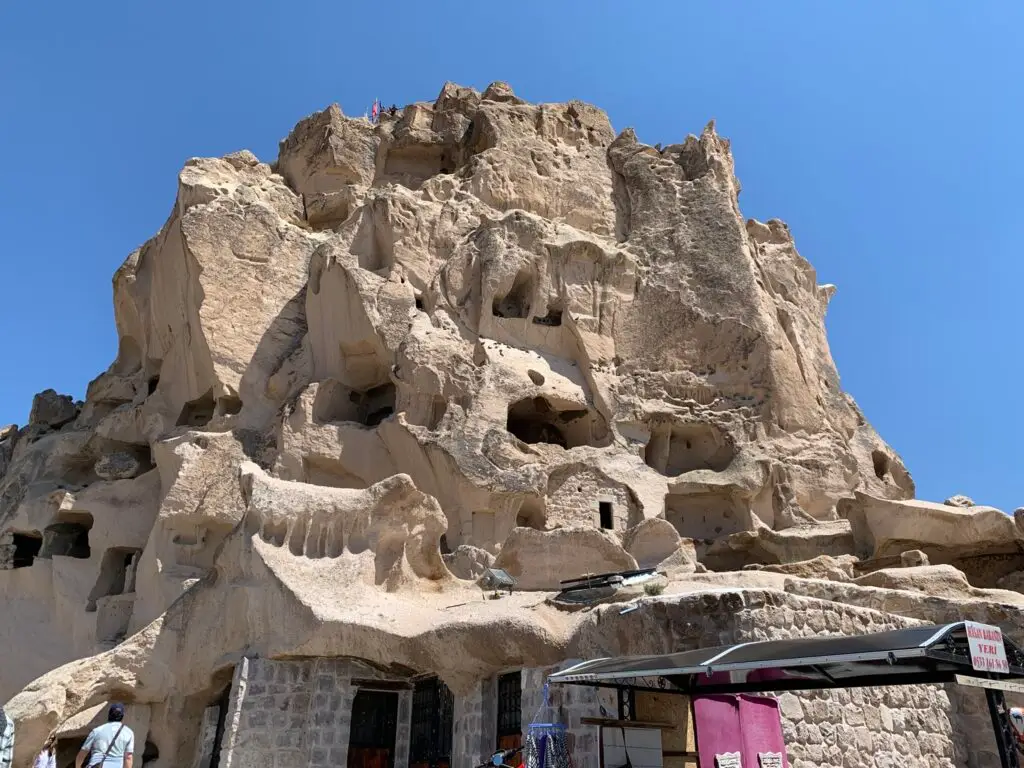
The castle of Uchisar is at the end of Pigeon Valley
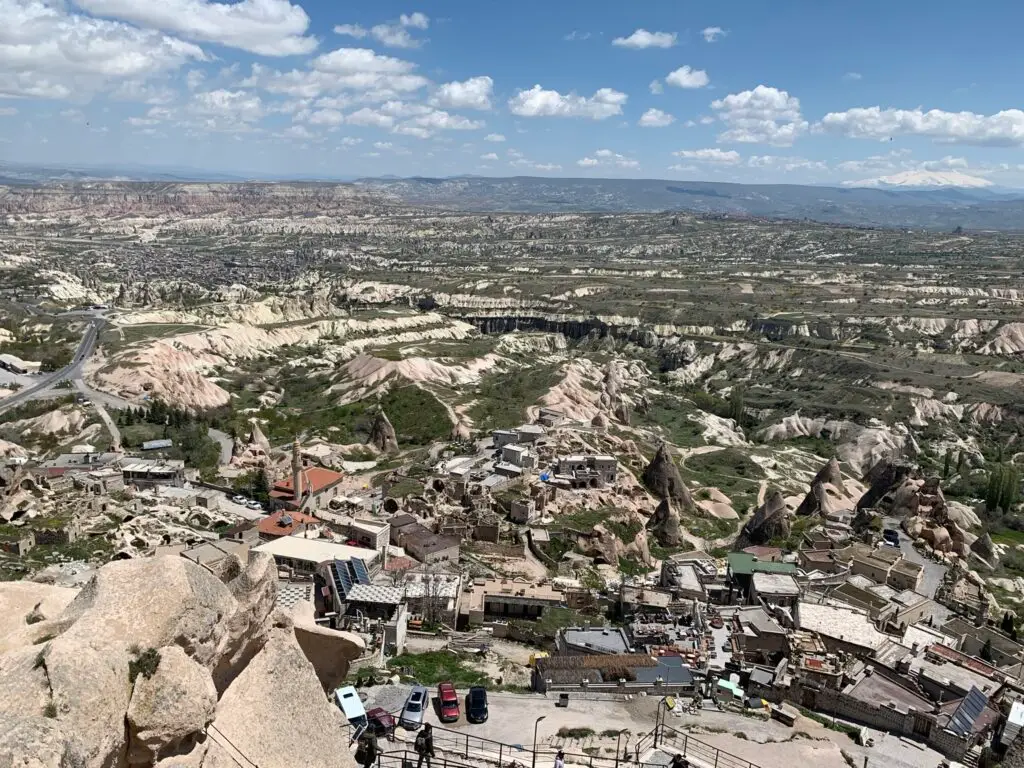
The castle can be climbed on a series of stairs. This is the view from the top.
Love Valley
We returned to Goreme on a different route via Love Valley
Selime
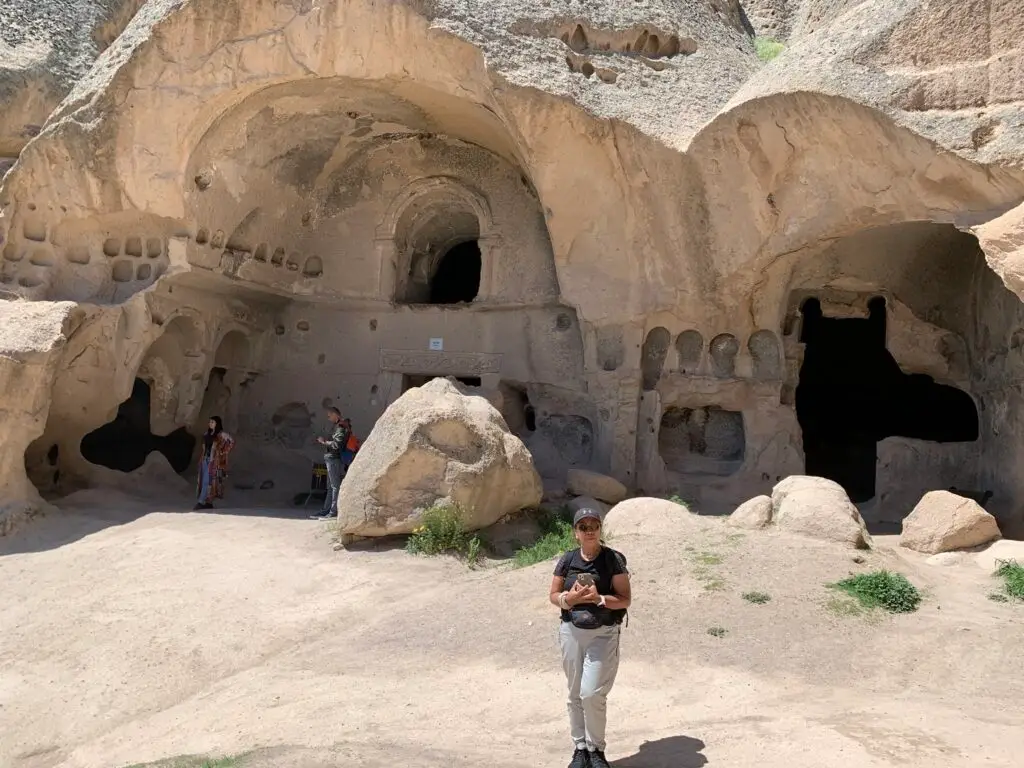
We went on a bus tour to Selime monastery, which is a fortress-monastery cut out of the rock of the cliff face and dating from the 8th century with frescoes dating from the 10th century. Many of the leading clergymen were educated here.
Selime monastery
Selime monastery

The Cathedral-sized church in Selime Monastery contains these columns and arches cut directly from the underground tuff rock. Unfortunately, the frescoes are barely visible under years of soot from when the Turks used the room for cooking.

Derinkuyu
Derinkuyu
Derinkuyu

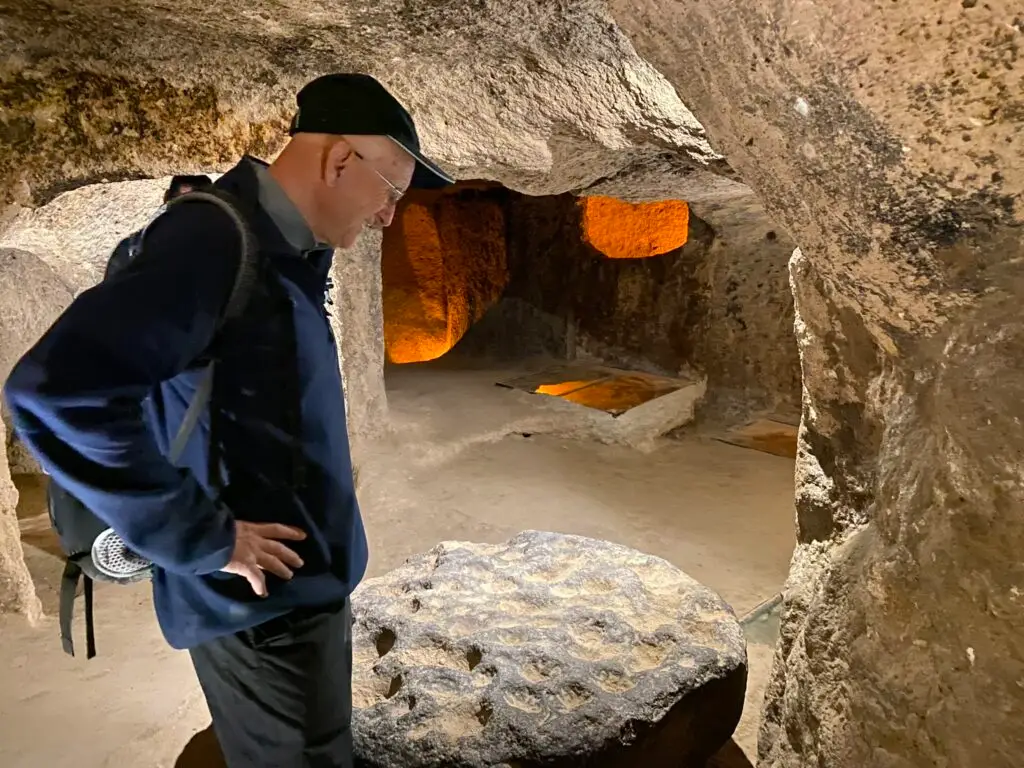
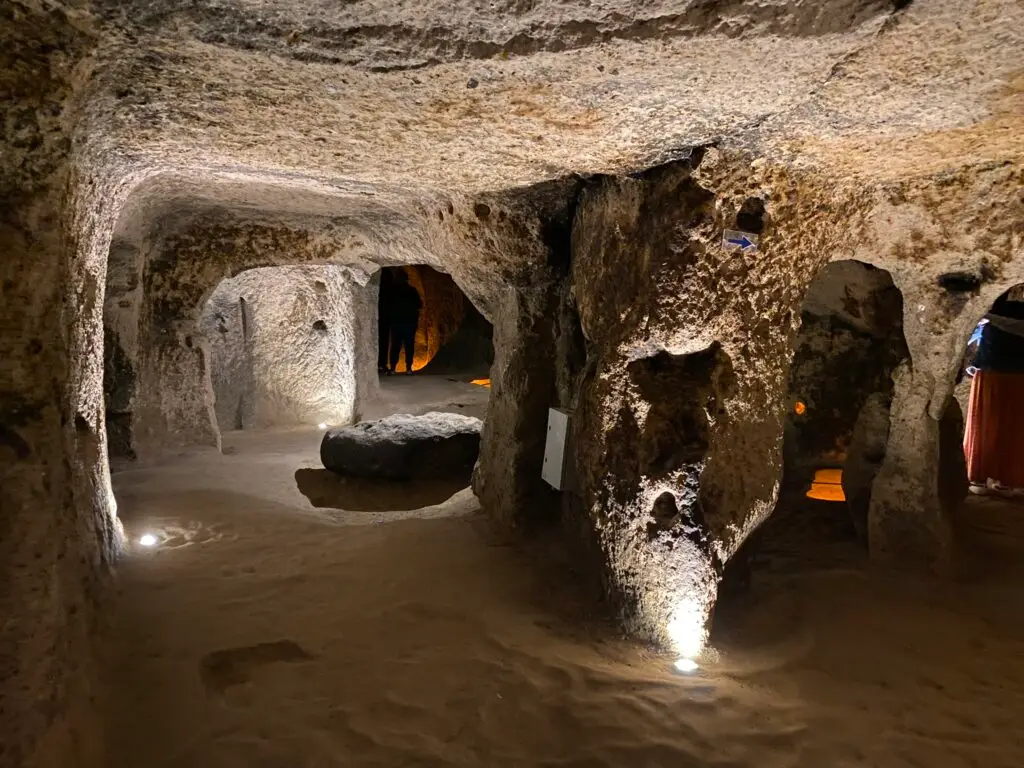
We explored the underground city of Derinkuyu. This is one of 37 such cities discovered in the region, thought to have housed up to 5,000 inhabitants across seven levels. These cities were built by the Hittites and were first mentioned by the Greek historian Xenophon in the 4th century BCE.

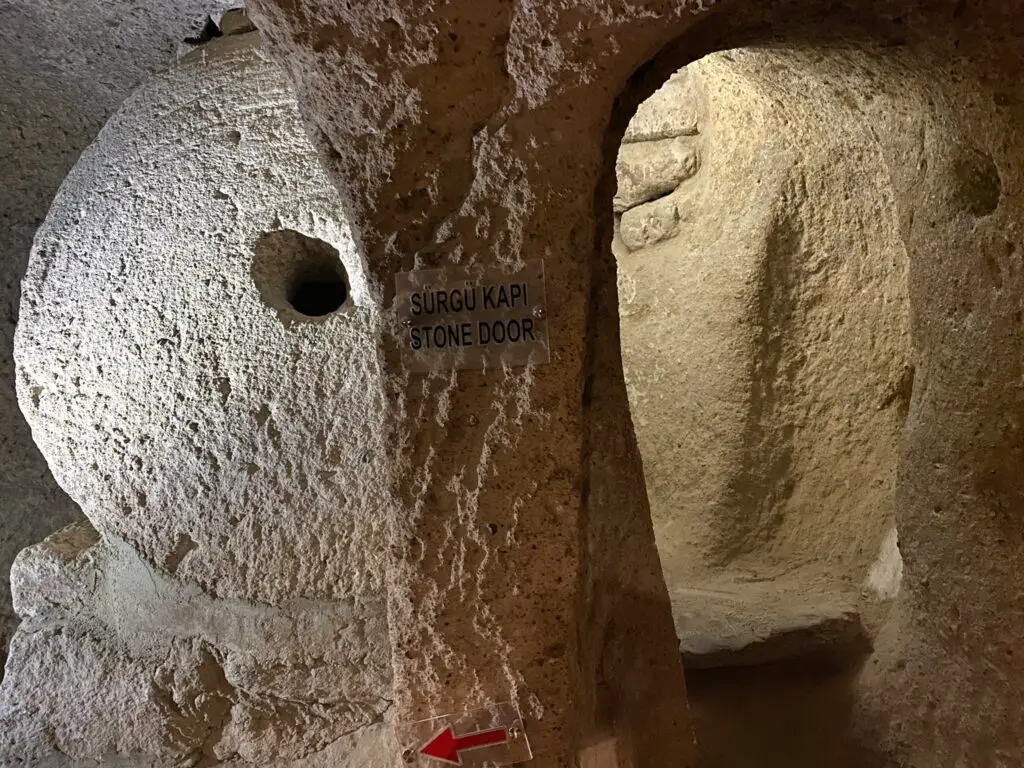
Only the top two levels are open to the public, and the visit is a very claustrophobic experience. It’s difficult to imagine people living down there, hiding from attackers for three weeks in total seclusion! They had wells, kitchens, and ventilation shafts, all carved out of solid rock. Some doorways could be blocked by huge stone discs, with holes in the middle used for looking out and firing arrows at attackers.

Goreme open air museum
Goreme open air museum is a 20 minute walk out of the town.
It is a cluster of Byzantine artistry with rock-cut churches, chapels and monasteries and is a World Heritage site.
Goreme open air museum
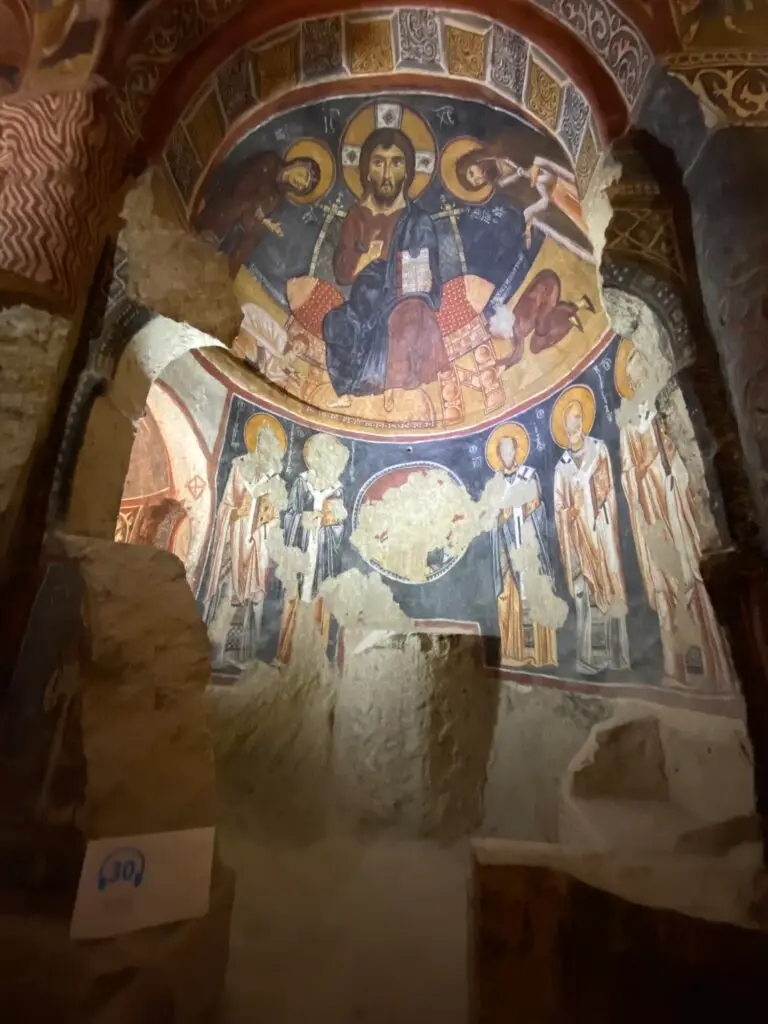
The site was first thought to be a Byzantine monastic settlement that housed some 20 monks, then a pilgramage site from the 17th century.
There are about 8 churches and chapels in the site, all carved out of the rock. They also had other buildings like this rock-cut refectory where the monks would sit on stone seats and eat off a stone table!
Cavusin
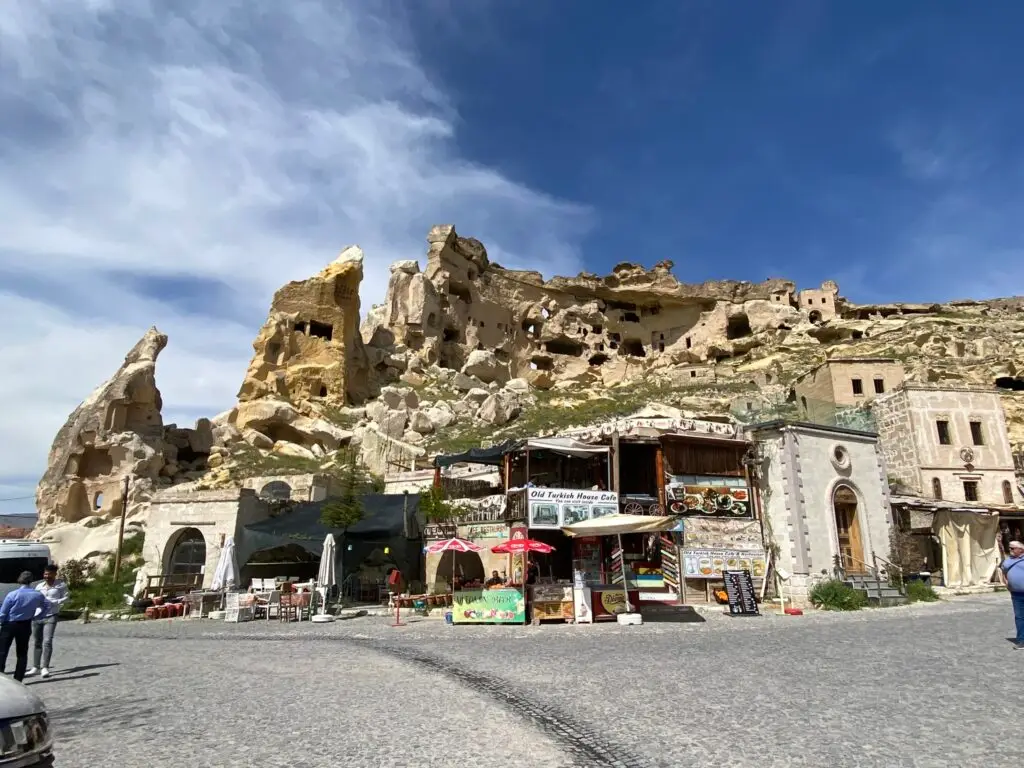
The town of Cavusin, just outside Goreme, is dominated by a cliff containing abandoned stone houses and even a church.
It is an easy climb up to the top of the cliff, and on the other side can be seen these remarkable stone towers.

Istanbul

Topkapi Palace

The sultan lead a sequestered lifestyle and he and his family rarely left the palace grounds. The sultan would not even meet visitors, as this would be done by the grand vizier, who would then brief the sultan afterwards in a seperate part of the court.  During its heyday, royal wives and children, concubines, eunuchs, and servants were among the 4000 people living within Topkapi’s walls.

Up until 1603, the Ottoman Sultans avoided the problem of  succession by the ingenious practice of fratricide, which means just simply killing off all of your rival prince brothers.  In England, by contrast, we had the tedious war of the roses which was a succession struggle between the houses of Lancaster and York. 

The practice of fratricide was perfectly legal and meant that as soon as the sultan died, the princes were plunged into a race for the throne – each motivated by the knowledge that, if he lost, whichever of his brothers won would probably eliminate him.  Of course, the crown prince could never shed the blood of his brothers, so he had them strangled instead.  When Mehmed III was crowned, he called his nineteen brothers into the throne room.  They had nothing to fear, he told them, for he had only brought them there to be circumcised. In the next room, the assassins were waiting.  One by one, the princes trouped in.  One by one, they were throttled with a silken bowstring.  The youngest was only eleven.  Finally Mehmed had the assassins in turn strangled – although this time not with a silk bowstring but just an ordinary one.

After the death of Mehmed III, in 1603, the Ottoman rulers shifted from fratricide to confinement.  Perhaps this is because Mehmed’s slaughter of his nineteen brothers had crossed a line, or perhaps it was because his successor, Ahmed, was only thirteen, too young to have any heirs of his own.  In the Harem, you can see the high windows of the confinement room, which was called Kafes, and it was a sort of gilded prison where the princes were confined to from the aged of seven.  Because they were locked away for life it meant that the ruler could feel safe that his potential rivals could never gather followers, incite rebellion, or lead a coup.
Topkapi palace - harem
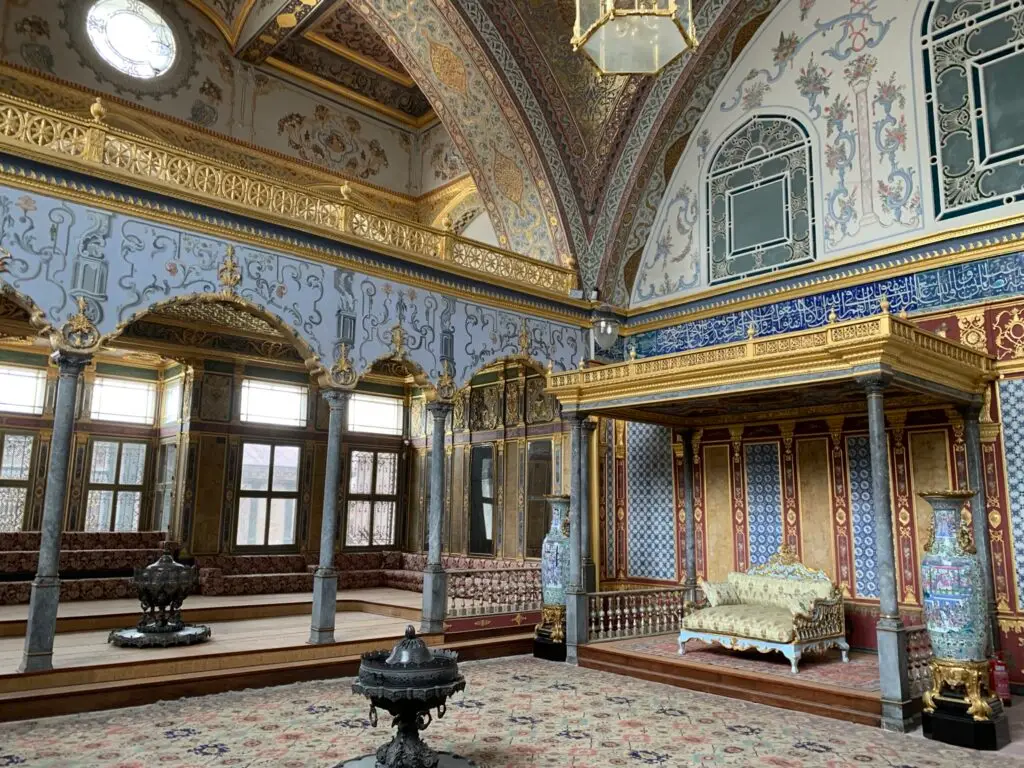
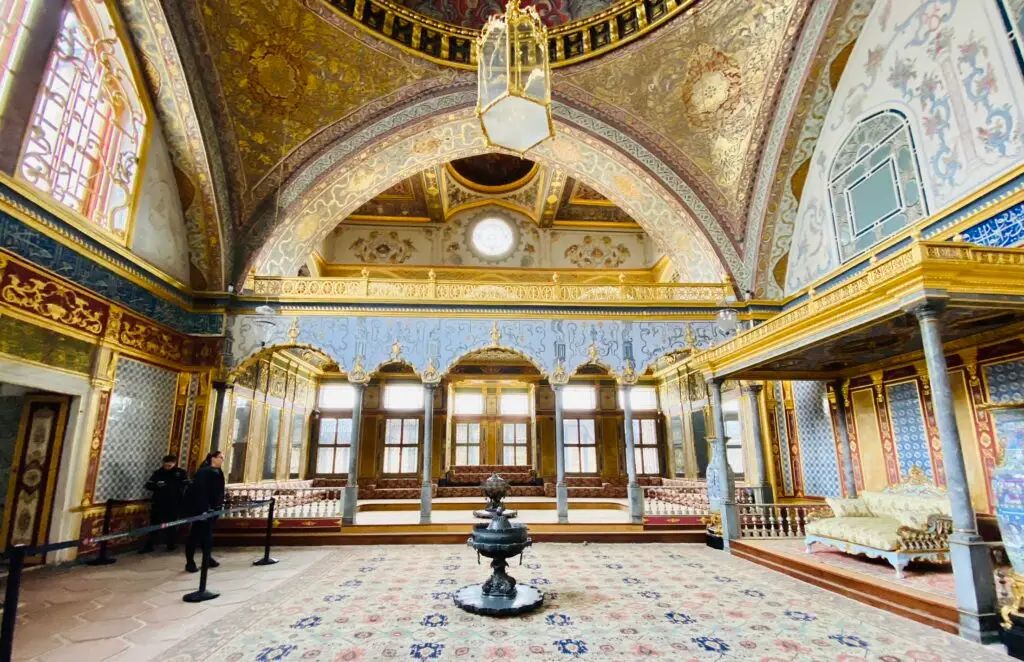
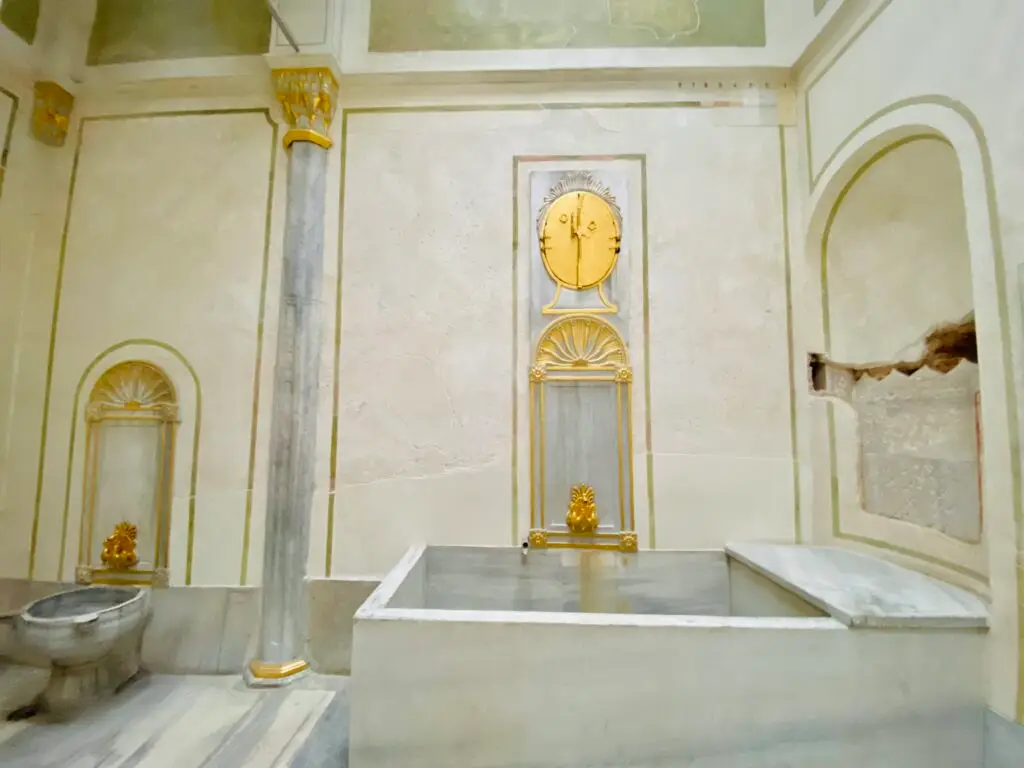
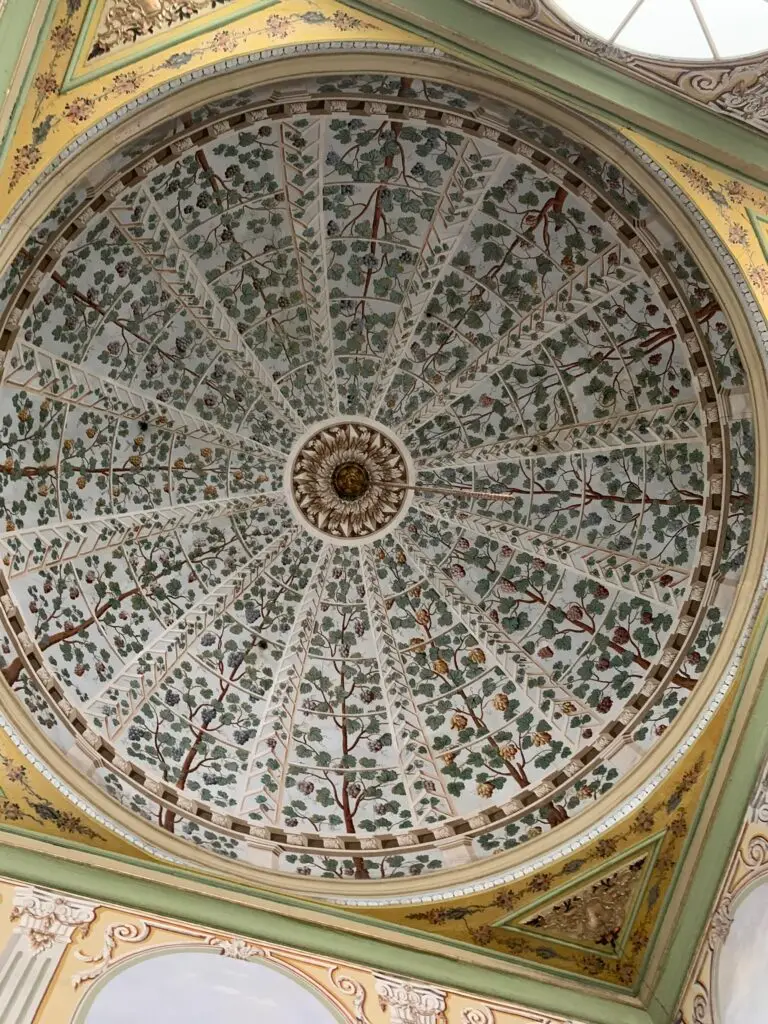
‘Harem’ literally means ‘forbidden’ or ‘private’ and was the imperial family quarters.  The Harem complex has six floors but only one can be visited.  It housed financial record, courtyards, privy chambers, dining rooms, apartements, dormitories for guards, and the imperial hall for audiences with the sultan. 
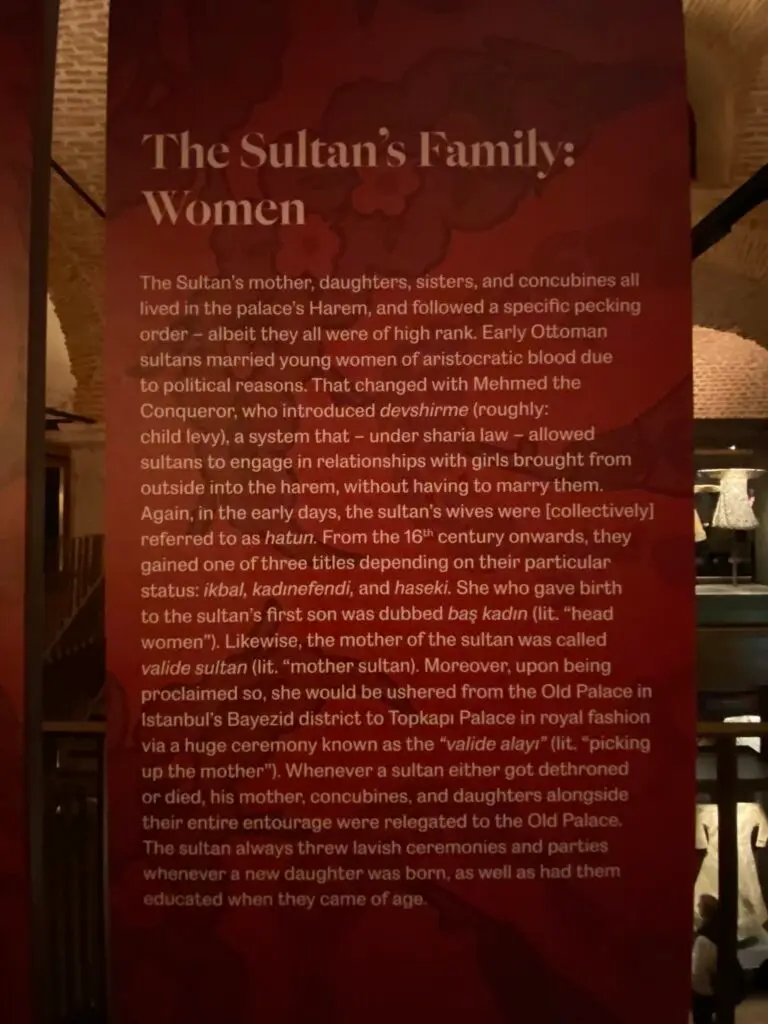
The Harem also housed some 300 concubines (many of whom never even got to see the sultan), who were guarded and waited upon by as many as 200 black eunuchs.
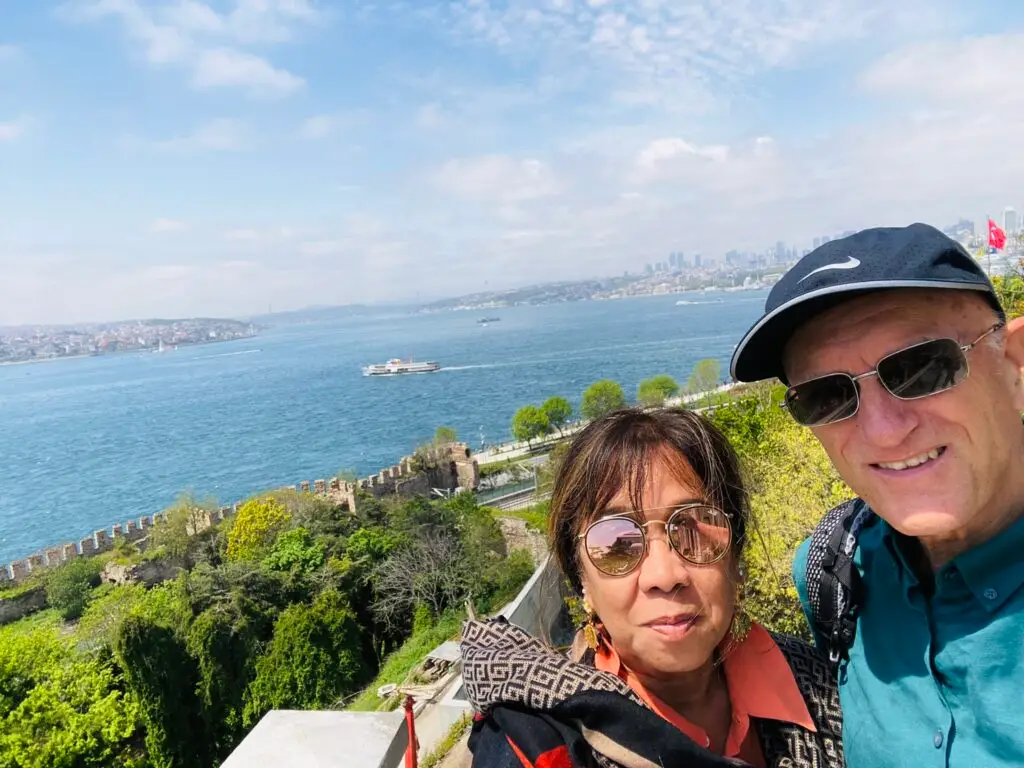
There are spectacular views over the Golden Horn from the marble terrace in the fourth court of the palace.
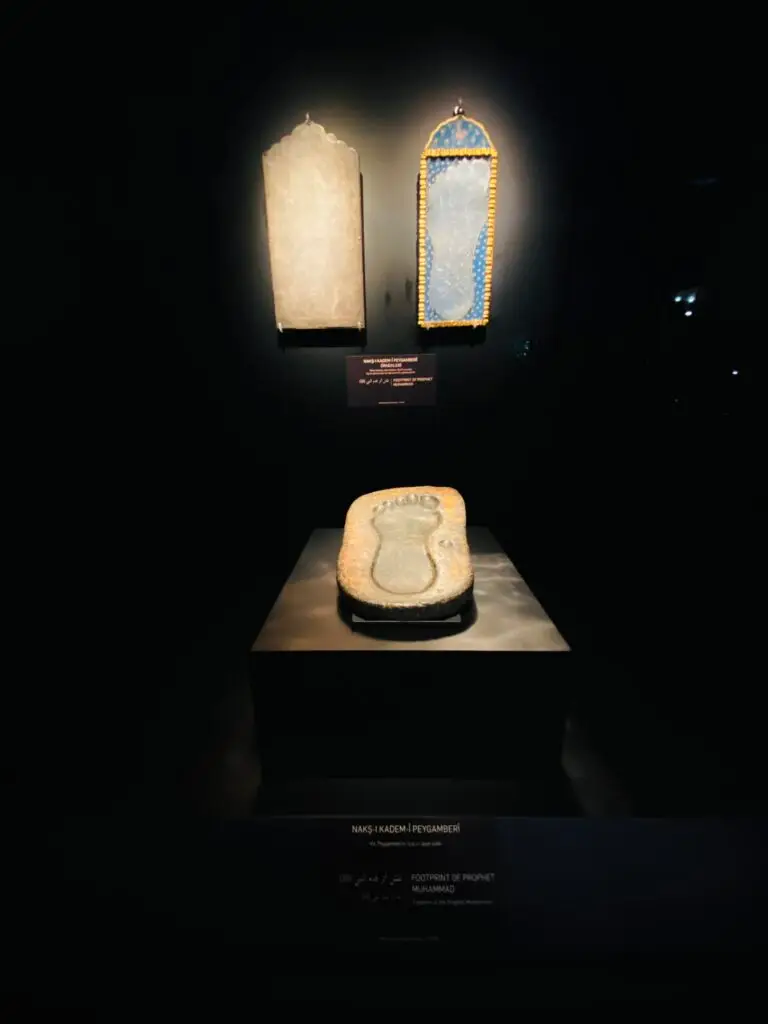
Among the items in the room of holy relics is this footprint of Mohammad
Basilica Cistern

The underground Basilica Cistern was designed to service the Great Palace and surrounding buildings and was built in 832.  It was able to store 80,000 cu meters of water delivered via 20km of aqueducts from a reservoir near the Black Sea.

The Cistern was constructed using 336 columns, many of which were salvaged from ruined temples and featured fine carvings such as this 'column of tears'.
Blue Mosque

The Blue Mosque was the grand project of Sultan Ahmet I who set out to build a monument that would rival the nearby Aya Sofia.  It was constructed between 1606 and 1616, more than 1000 years after Aya Sofia.

Aya Sofia
The Aya Sofia Mosque is right next door to the Blue Mosque. It was originally commissioned by Byzantine emperor Justinian, consecrated as a church in 536, converted to a mosque by Mehmet the conqueror in 1453 and declared a museum by Ataturk in 1935 and finally converted back into a mosque in 2020.
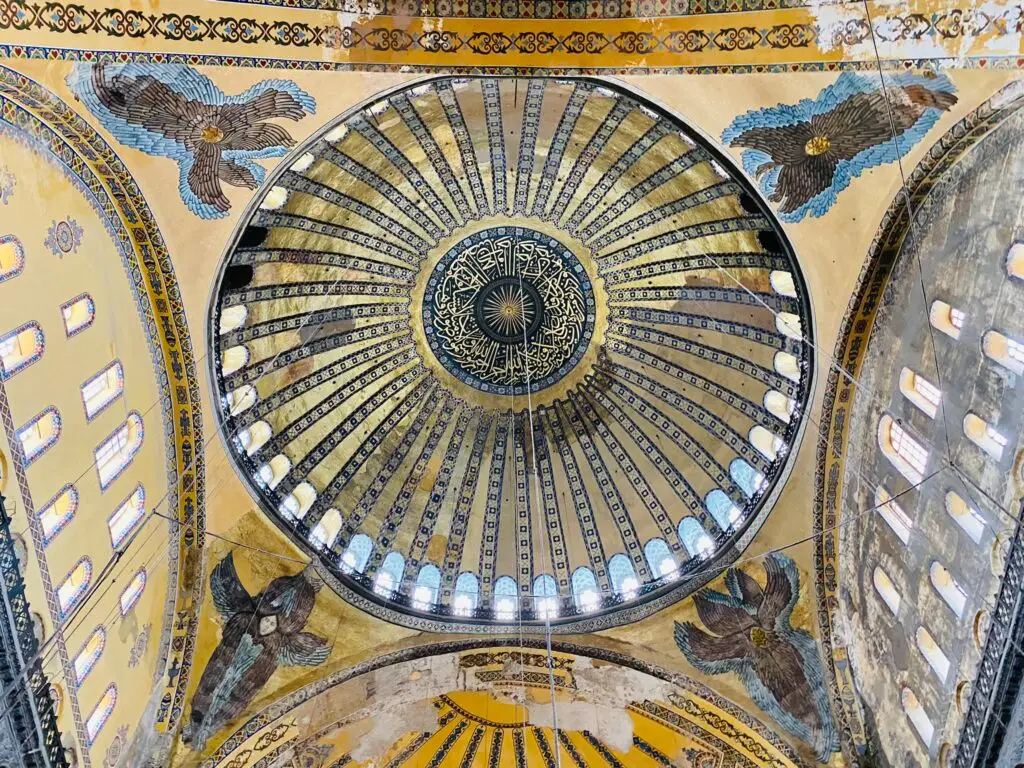
Aya Sofia's dome is 30m in diameter and 56m in height. Earthquake damage to the dome can also be seen.
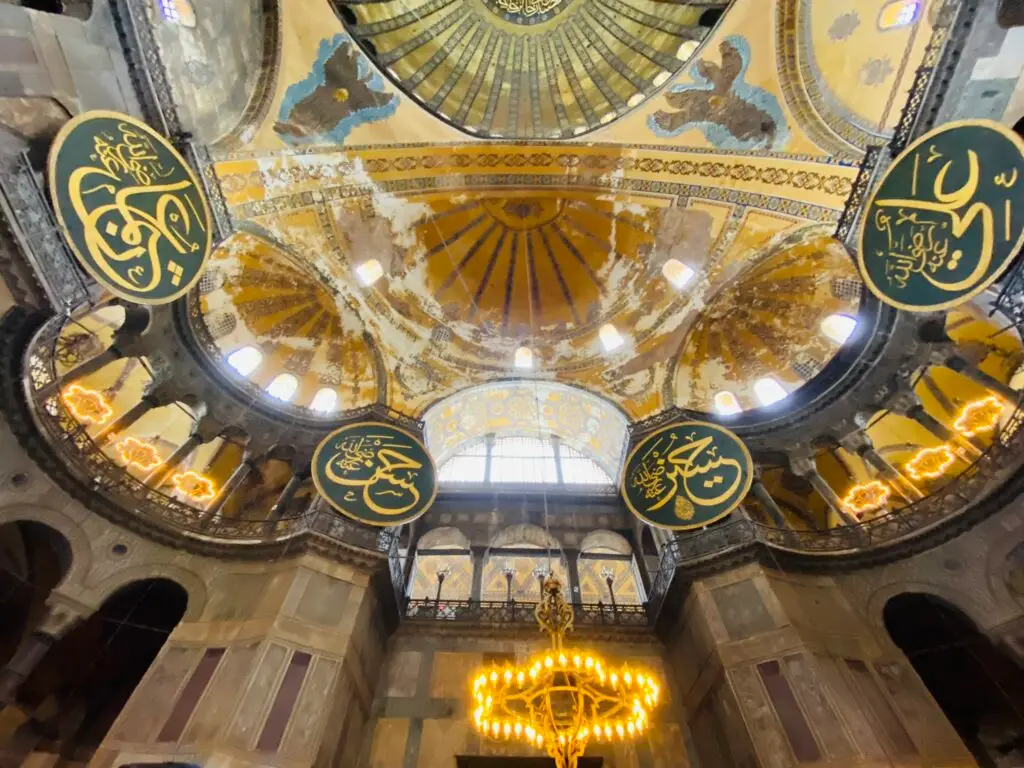
The large medallions are 19th century and are inscribed with the gilt Arabic letters for the names of Allah, Mohammed, and early caliphs Ali and Abu Bakr.
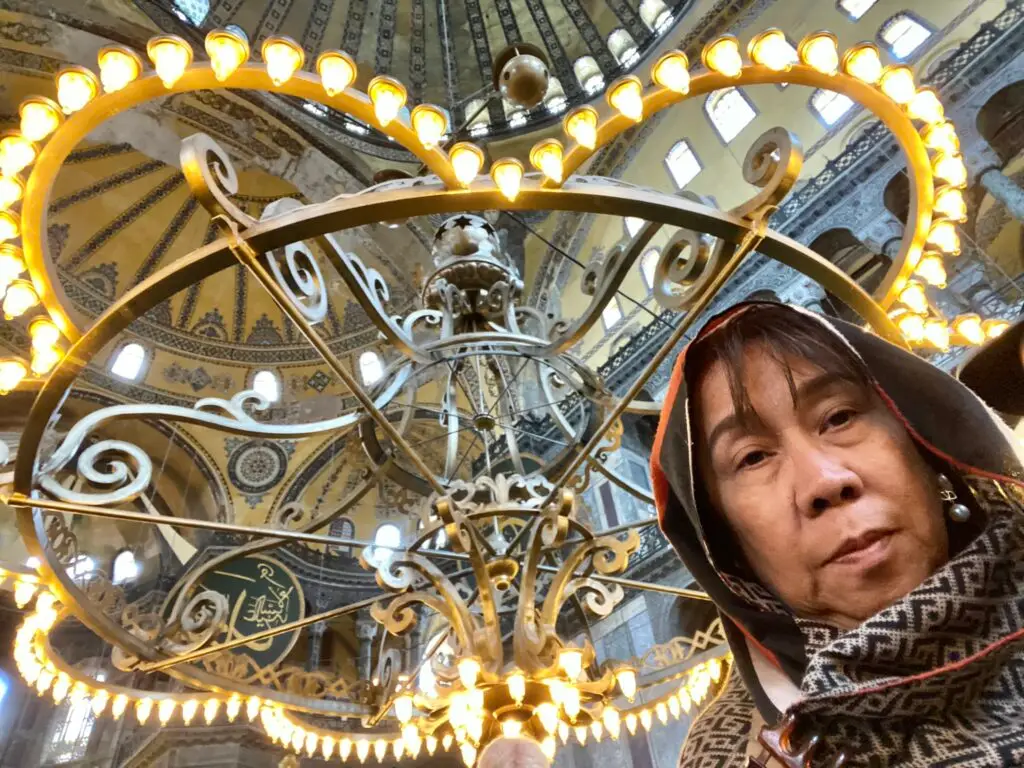
The prayer hall is covered by many of these large low hanging chandeliers
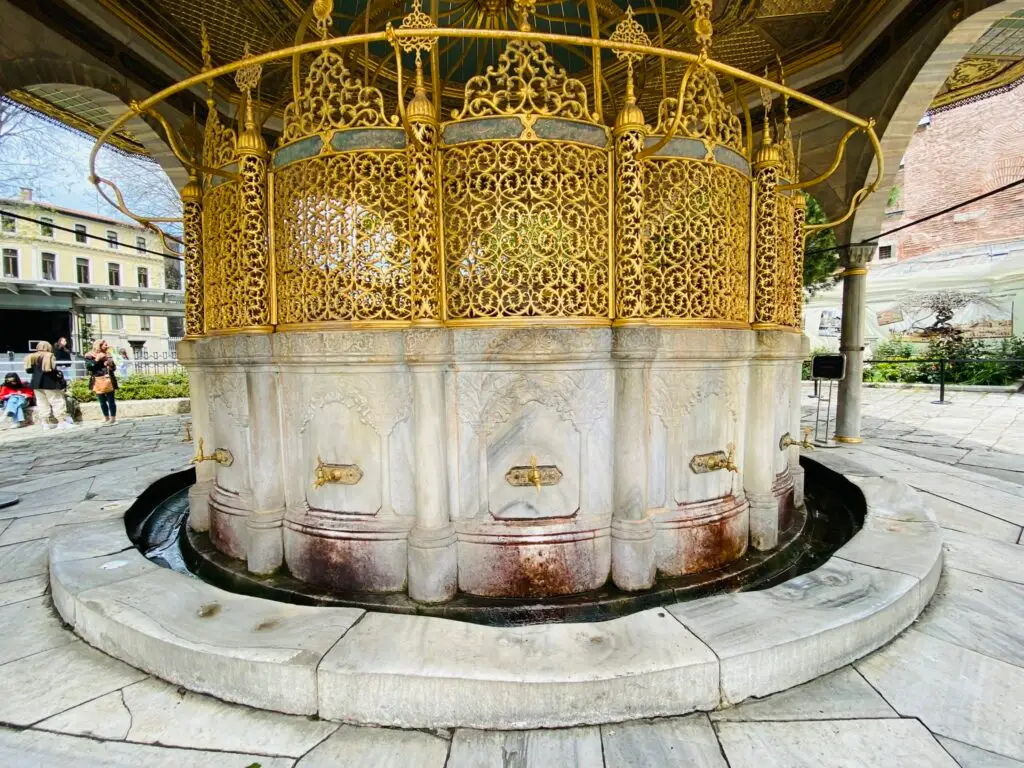
This rococo-style ablutions fountaindates from 1740 is just next to the mosque and is where the devout had to wash before praying at the mosque
Grand Bazaar
The Grand Bazaar was constructed in 1461and has grown to cover a vast area of narrow lanes. There are sections for antiques, jewellery, leather, gold, silverware, and carpets amongst many others.
Inside you can see artisans at work as well as all kinds of tourist tack.
Suleymaniye Mosque
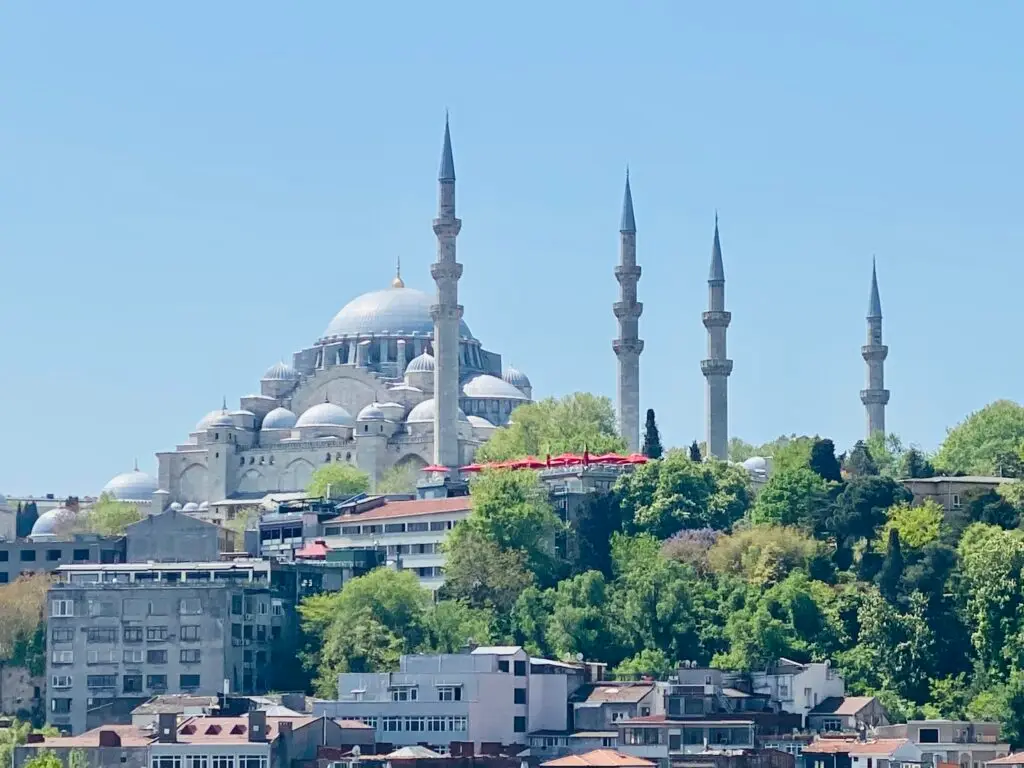
The mosques four minarets with their ten balconies are said to represent the fact that Suleyman was the fourth of the Osmanh sultans to rule the city and the 10th sultan after the establishment of the empire.

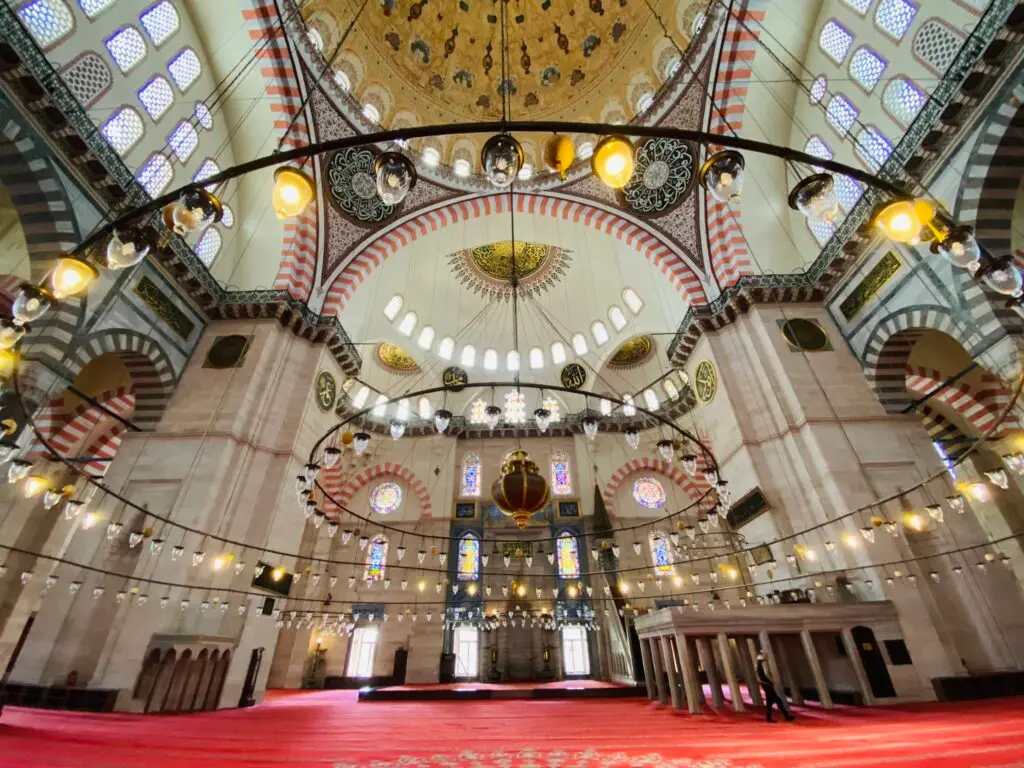
See this video of the interior of Suleymaniye mosque

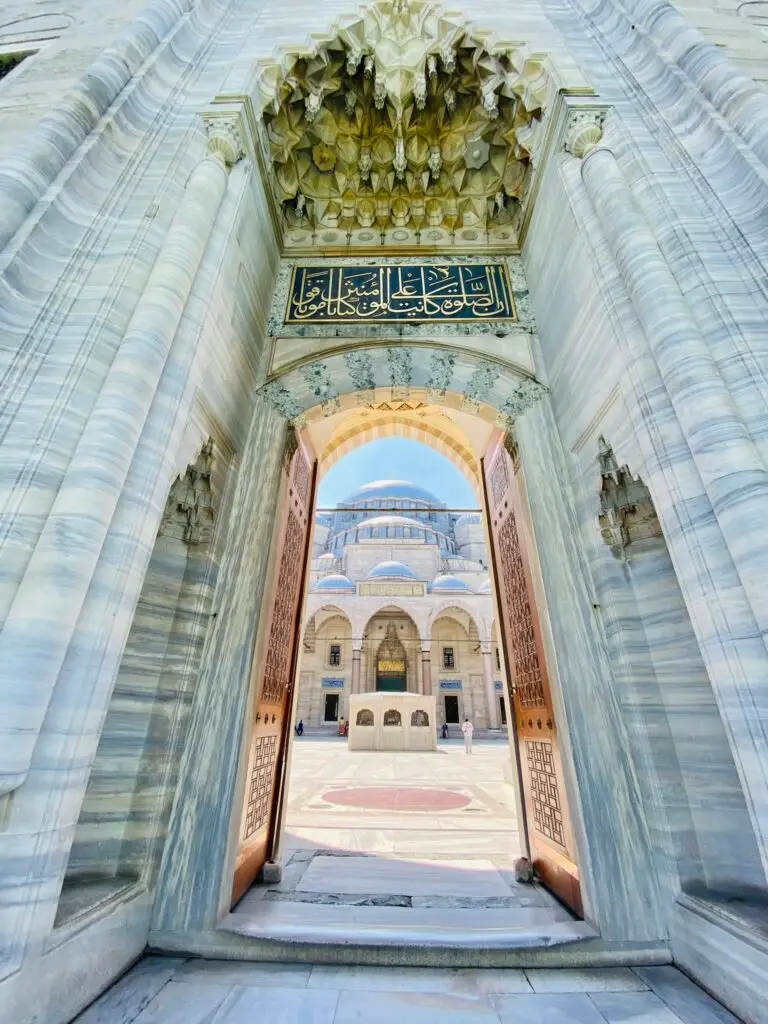
The mosque and surrounding buildings were designed by Mimar Sinan, the most famous of all imperial architects.
Construction occurred between 1550 and 1557.
Archaeological Museum

Chariot racing at the hippodrome arena (alongside Sultanahmet Park) was the favourite spectator sport of the Byzantine empire for 1000 years. Support for one of the rival teams was akin to membership of a political party and the hippodrome was where uprisings and protests would occur if things were going badly in the empire.

In AD 532 tens of thousands were massacred in the hippodrome by the imperial forces for daring to protest against Justinians high tax regime.

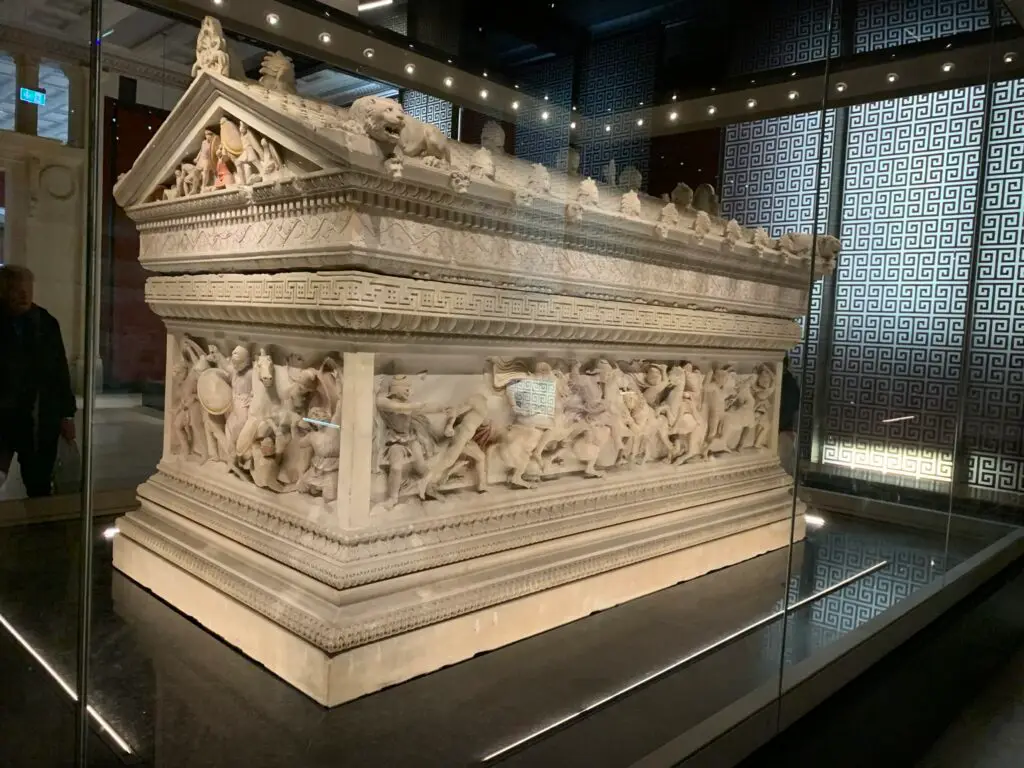
The Alexander Sarcophagus
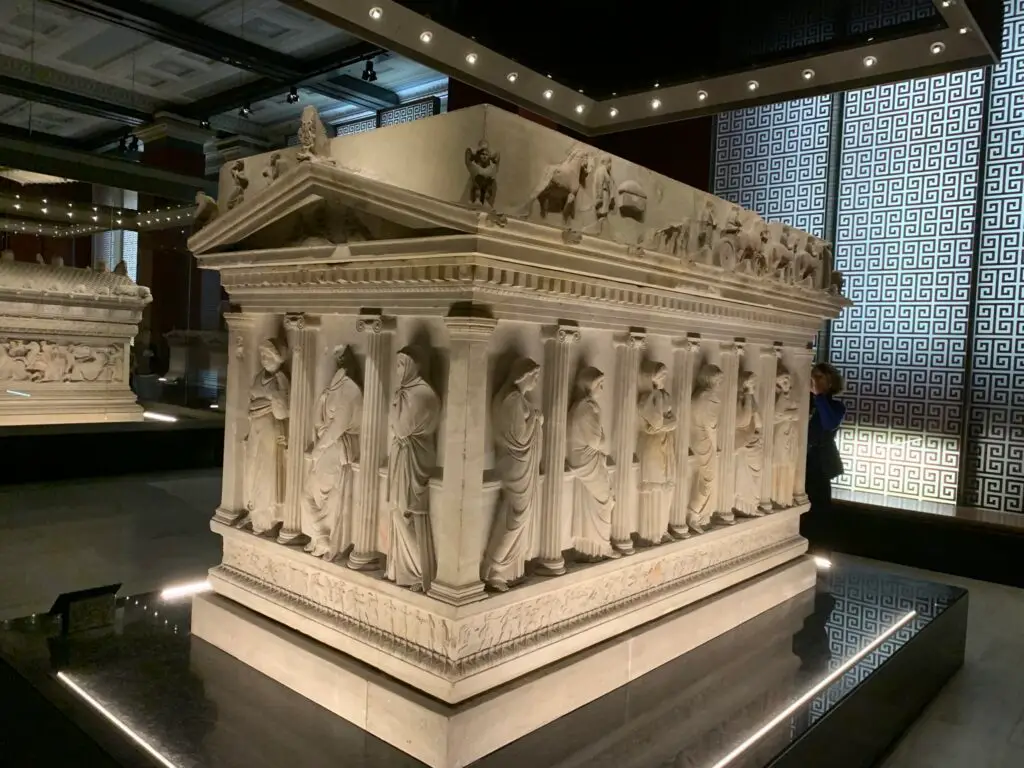
The mourning women sarcophagus
Some of the main exhibits are the Alexander Sarcophagus and Mourning Women Sarcophagus. These were unearthed in Lebanon in 1887 by Osman Hamdi Bey.

Leave a Comment

Your email address will not be published. Required fields are marked *